This guide explains how pollen and nectar work together to build healthy bee populations and reliable pollination outcomes.
Honey bees rarely fly below 55°F and forage more near 70°F, so hive placement and morning sun make a big difference in daily activity.
Larger colonies field more foragers and boost honey yield: a 30,000-bee unit outproduces two 15,000-bee units by about 1.5x, and the pattern scales with colony size.
We outline measurable standards—frames of bees, brood area, comb space—and field checks such as >100 incoming bees per minute at 65°F with low wind to confirm pollination-capable strength.
The guide previews plant groups (trees, native wildflowers, crops), seasonality across spring, summer, and fall, and practical levers like yard layout, sun exposure, entrance orientation, and targeted supplemental feeding.
Beekeepers and growers gain aligned tools to reduce risk and protect yields. For deeper pollen diversity data see this research study on pollen sources, and practical references are in this beekeeping resource guide.
Key Takeaways
- Pollen and nectar together drive brood growth, nurse jelly, and the forager force that underpins honey and pollination returns.
- Colony size and morning sun shift when foraging begins and how much nectar and pollen are gathered.
- Use measurable standards and simple field checks to set contract-ready strength expectations.
- Plan forage across seasons and mix trees, wildflowers, and crops to supply diverse nutrition.
- Supplemental feeding is a strategic backup when weather or dearths limit flight.
Why Pollen Drives Strong Colonies, Brood Rearing, and Honey Bee Health
Nurse bees turn collected floral protein into the jelly that determines brood output. This early nutrition controls worker gland development and the pace of brood rearing.
Protein and lipids for brood: pollen is the primary source of protein and fat that nurse bees convert into nutrient-dense jelly. When natural pollen is abundant, larvae are often “swimmin’ in jelly.” Scant jelly shows a protein shortfall and calls for better forage access or targeted supplementation.
Nectar vs. pollen: nectar supplies carbohydrates used for flight, thermoregulation, and honey stores. Pollen supplies the building blocks for tissue growth, immune strength, and longer-lived workers.
- Robust brood patterns yield more foragers in ~21 days, improving pollination contacts and resource intake.
- Diversified pollen diets outperform single-source diets for brood rearing and adult bee health.
- Watch jelly levels and beebread rings; add space, move hives, or feed patties if protein lags before key bloom.
Seasonal Forage Patterns in the United States: Spring Build to Late-Season Flows
Seasonal shifts in bloom and temperature set the tempo of hive growth across the year. Spring warmth and early pollen push rapid brood rearing, and strong hives will begin flight near 55–60°F. Aim hive entrances to morning sun to extend productive day hours.
Summer often brings regional dearths. In many parts of North America August is lean, which can reduce brood and invite robbing. Managers must monitor stores and consider moving yards or feeding when weather limits flight.
Fall flows from goldenrod and asters give a late nectar and protein boost in some areas. Yet those blooms do not always build a larger winter cluster; where autumn blooms are weak, targeted feeding helps develop winter bees with larger fat bodies.

| Season | Flight Thresholds | Typical Challenges |
|---|---|---|
| Spring | 55–70°F (morning sun advances start) | Rapid buildup; need pollen & nectar timing |
| Summer | ~70°F for strong foraging in midsummer | Regional dearths, drought, robbing risk |
| Fall/Winter prep | Daytime warmth still needed for flights | Autumn flows variable; feed where needed |
- Track local bloom calendars and phenology; adapt to weather windows.
- Plan contingencies when rain or cool snaps cancel key flights.
- See seasonal management details at state extension seasonal guide and practical task lists at seasonal beekeeping tasks.
Best pollen sources for strong colonies
A steady march of bloom across trees, meadows, and fields builds brood and nurse jelly early in the year.
Trees and shrubs such as alder and willows deliver critical early-season protein that kickstarts brood rearing. These species can keep a hive moving ahead of major crop bloom, though rainy January–February windows sometimes force beekeepers to add patties to maintain momentum.
Trees and shrubs: alder, willows, and similar early bloomers
Quick-start pollen from these plants helps nurses produce jelly and expand brood patterns before mass flowering begins.
Wildflowers and native plant mixes
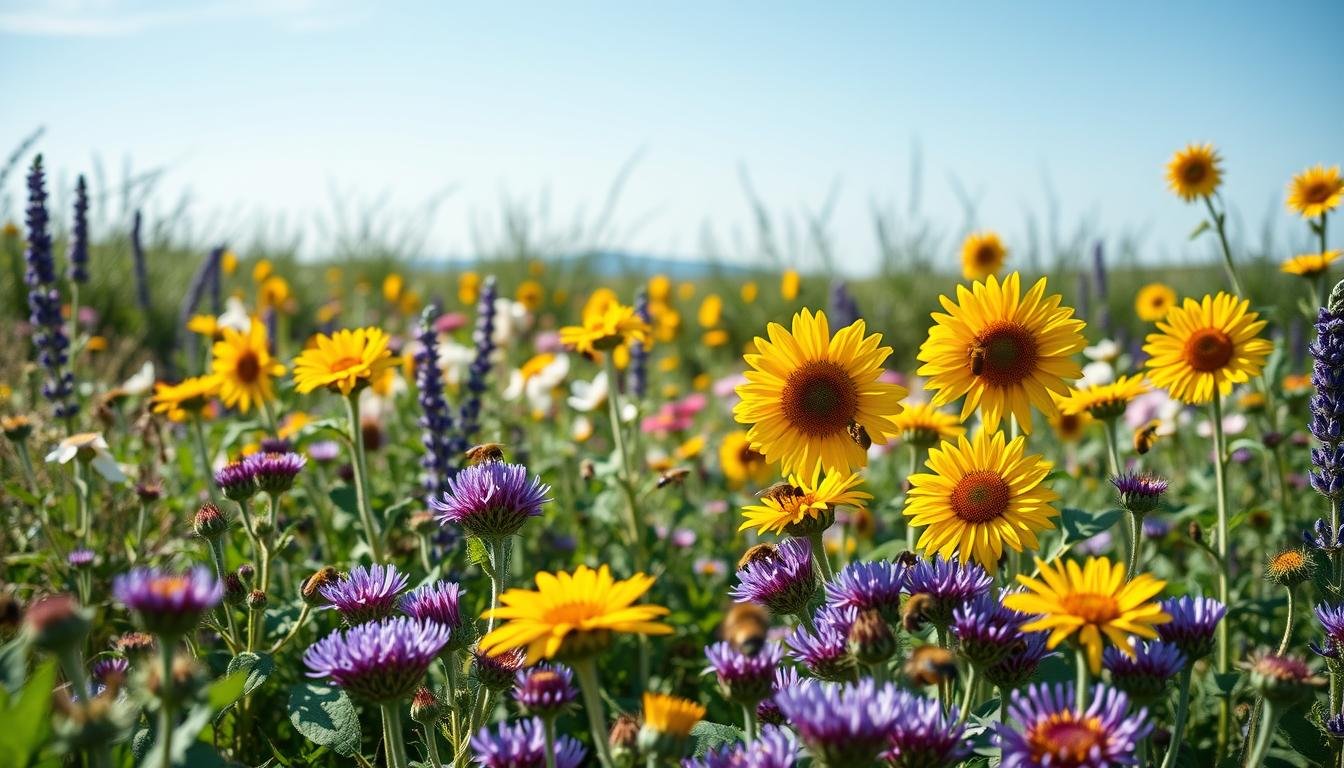
Mix native bee balm (Monarda spp.), purple coneflower, black-eyed susan, joe-pye weed, marsh blazing star, and wrinkleleaf goldenrod. Staggered bloom across these plants supplies steady protein and extends forage through spring, summer, and fall.
Agricultural crop timing and pollination
Almond orchards provide a major early pulse of pollen and nectar. Positioning hives in almonds can rapidly build workforce size ahead of later pollination work or honey flows.
“Urban and mixed-species plantings often outpace monoculture landscapes by offering continuous, varied forage that benefits managed bees and wild pollinators.”
- Mix species to broaden amino-acid profiles in collected pollen.
- Use local bloom maps and coordinate with growers on crop bloom timing; see practical notes on managing bees and pollination at managing bees for pollination.
- Measure success by incoming loads, brood quality, and later-season hive strength.
Optimizing Forage Collection: Colony Strength, Space, and Placement
Scaling up a colony raises the share of active foragers and improves per-hive collection efficiency. That shift changes how many pounds of honey a unit can bring in and how many pollination contacts each hive makes.
Colony size, forager ratios, and pounds as proxies
Larger populations deploy a higher forager ratio. A single 30,000-bee colony yields about 1.5x the honey of two 15,000-bee units combined. The pattern holds at 45,000 and 60,000 bees.
Providing storage space to prevent shutdown
Prevent bottlenecks by adding supers before comb fills. If storage is tight, foraging slows and nurses may backfill the brood nest.
Sun exposure, entrance orientation, and yard layout
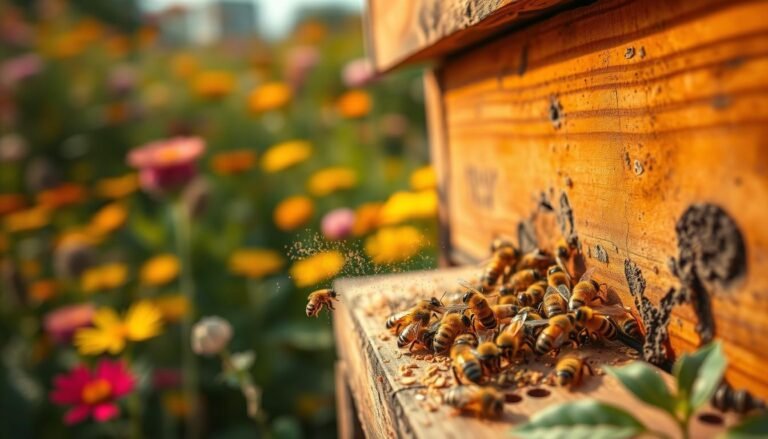
Place hives to catch morning sun and shelter entrances from prevailing wind. Early warmth extends the productive day, especially in cool weather.
- Distribute colonies across floral patches to reduce competition.
- Time moves to peak bloom and check incoming flight counts after placement.
- Avoid splits right before pollination windows to preserve available foragers.
Grade colonies before placement by frames of bees and brood to match the crop’s pollination needs. If activity lags, add space, shift orientation, or adjust spacing to restore throughput.
Supplemental Feeding Best Practices: Pollen Sub vs. Natural Forage
When cold or rain cut flight days, timely feeding can keep hive growth on schedule. Tie any feed to a clear goal date such as almond pollination or a major honey flow.
When patties pay off: a 3-lb pollen sub patty before almond bloom often preserves buildup and helps hives meet pollination grades. If natural pollen is abundant, patties usually add no value.

“Targeted patties restore nurse jelly fast and protect momentum when weather cuts natural forage.”
Risks and pairings
Dry-fed sub can become artificial beebread. Trials show aged artificial beebread may raise mortality and reduce thoracic growth versus natural beebread. Use dry feed with caution, especially in autumn.
Pair patties with light sugar syrup when hives lack nectar. A small syrup flow encourages patty uptake and boosts brood rearing.
| Method | When to use | Main risk |
|---|---|---|
| In-hive patties | Poor weather pre-bloom | Cost if unnecessary |
| Dry feeding | Short-term gap; erratic uptake | Artificial beebread aging |
| Syrup pairing | No honey on frames | Fermentation if stored |
- Monitor jelly and pollen rings; use the “swimmin’ in jelly” test.
- Prefer in-hive patties and document frames of bees and brood area.
- Read detailed notes at observations on pollen subs.
Regional and Seasonal Playbooks for Beekeepers in North America
Regional timing and weather shape when and how you should support hive growth each year.
Spring to early summer: In many regions natural spring flows supply enough nectar pollen to fuel brood growth. Avoid blanket patties during active bloom unless rain interrupts buildup.
Spring to early summer: avoiding unnecessary sub during natural flows
Use short weather forecasts to spot multi-day rain events before almond or contract dates. If several wet days threaten grade targets, place modest patties rather than full feeding campaigns.
Mid-late summer dearth: sustaining colonies without triggering swarms
August dearths need subtle responses. Keep nutrition steady but avoid heavy protein that spurs rapid brood bursts and crowding. Consider targeted moves to pockets of forage in your area.
Late season and winter bees: building fat bodies before cold weather
Where fall flows are weak, a late-season patty helps build winter bees with larger fat bodies. Align interventions with contract lead times—expect two brood cycles (~6 weeks) to show up in forager counts and pollination readiness.
| Season | Common risk | Recommended action |
|---|---|---|
| Spring | Rain during bloom | Bridge with small patties; monitor brood |
| Summer | Mid-late dearth | Stabilize feeding; avoid overstimulation |
| Late season | Weak autumn flows | Supplement to build winter bees |
- Localize plans by tracking bloom calendars in your areas and years of field notes.
- Document which moves and feeds produced reliable frames of bees and brood ahead of pollination.
- Coordinate placements and timing with growers; see a regional climate guide at regional beekeeping climates guide.
Field Indicators and Inspections: Measuring Pollen Intake and Colony Readiness
Simple on-site measures—jelly depth, incoming traffic, and brood area—outline readiness faster than lab tests. Use these checks to make objective decisions about placement, feeding, or contract sign-off.
“Swimmin’ in jelly” test
The easiest real-time gauge is larval jelly at the 2nd-instar stage. Abundant jelly around larvae shows good protein flow and healthy nurse activity.
Sparse jelly signals a need to improve forage or add targeted supplements before pollination windows.
Entrance counts, pollen baskets, and weather thresholds
Conduct entrance counts on a mild day at the same time each visit. Aim for >100 incoming bees per minute at ~65°F with winds <10 mph as a pollination-ready benchmark.
Watch returning workers for visible pollen baskets; a steady fraction carrying loads proves active protein intake supporting brood and future foragers.
Brood area, frames of bees, and minimum standards
Open hives in mild conditions only. Compare brood area and frames of bees against your minimum pollination standard before placement in high-value crops.
Standardize inspections by recording the same metrics each visit: brood, frames of bees, incoming counts, and pollen baskets. Share protocols with growers and keep clear records to support pollination agreements.
Planting for Pollinators: Landscape Recommendations for Beekeepers and Landowners
Designing diverse plantings helps landscapes deliver steady forage from spring through fall. A planned mix of trees, perennials, and annuals reduces gaps between crop blooms and supports managed hives and wild pollinators.
Staggered bloom is essential. Include spring, summer, and fall flowers so colonies never face long protein shortfalls. Use native species to match soil, moisture, and climate in each area.
Practical planting recommendations
- Prioritize bee balm, purple coneflower, black-eyed susan, joe-pye weed, marsh blazing star, and wrinkleleaf goldenrod to cover wide seasonal windows.
- Mix flower forms and heights to attract diverse pollinators and boost ecosystem services near crops.
- Use urban plantings to your advantage; neighborhood diversity often outperforms large monoculture tracts.
- Add water, windbreaks, and sunny exposures to extend daily foraging and improve comfort.
Consult the Xerces Society regional lists to tailor species to each service area. Track results by observing visited flowers, checking beebread diversity, and noting steadier brood patterns after new plantings.
“Diverse, region‑adapted plantings sustain pollinators and align landscape design with crop calendars.”
Conclusion
Clear metrics and timely actions turn seasonal bloom into dependable pollination results. Prioritize steady pollen and nectar across the season to fuel brood and nurse jelly—the foundation of a healthy colony and reliable pollination.
Use simple field checks: larval jelly depth, entrance counts (>100/min at ~65°F), and visible pollen loads to decide on space, placement, or a modest 3‑lb patty when rain threatens pre‑bloom buildup.
Plant diverse natives (bee balm, coneflower, black‑eyed susan, marsh blazing star and goldenrod) and align hive timing to crops. Allow two brood cycles (~6 weeks) to convert nutrition into extra foragers. Coordinate with growers to de‑risk contracts and maintain honey and pollination performance year after year.
FAQ
What role does pollen play in brood rearing and overall honey bee health?
Pollen supplies the protein and lipids nurse bees need to make royal and worker jelly. That nutrition fuels larval growth, builds fat bodies in developing bees, and supports immune function. Without steady access to diverse pollen across the season, brood rearing slows, disease resistance drops, and colony productivity declines.
How should beekeepers balance nectar and pollen needs when planning hive management?
Nectar provides carbohydrates for energy and honey stores; pollen provides protein for brood and bee development. Assess local bloom timing: during strong nectar flows reduce supplemental sugar, but ensure pollen availability via nearby flowering plants or patties to sustain brood. Pair light syrup feeds with pollen substitutes only when natural forage is scarce.
Which early-season trees and shrubs reliably supply pollen in temperate North America?
Willows and alders are consistent early pollen sources, often available as soon as temperatures allow first flights. Maples, fruit trees (apple, cherry), and some ornamental shrubs also provide critical spring pollen that jump-starts brood rearing after winter.
What native wildflowers should be planted to extend pollen availability through summer and fall?
Plant a mix that blooms across seasons: bee balm, coneflower (Echinacea), black-eyed Susan, Joe-Pye weed, blazing star (Liatris), and late-blooming wrinkleleaf goldenrod. This staggered mix supports foragers when single-species stands fade.
How does regional variation affect summer dearths and forage planning?
Climate zones and cropping systems create different dearth windows. Coastal and southern areas may have longer floral continuity; inland and northern regions often face mid-summer gaps. Monitor local bloom calendars and adjust supplemental feeding or planting to cover known dearth weeks.
When are pollen patties or substitutes most useful, and what precautions should be taken?
Use patties when natural pollen is scarce, weather prevents foraging, or you need to support rapid brood expansion before pollination contracts. Avoid overuse: dry feeding can create poorly preserved “artificial beebread” and upset gut microbiota. Rotate products, maintain hive hygiene, and remove spoiled patties promptly.
Can light sugar syrup improve pollen utilization, and when should it be paired with substitutes?
Light syrup simulates nectar and helps nurse bees process and store protein. Pair a 1:1 sugar solution with pollen supplements during dearths to prevent brood starvation and encourage consumption. Do not rely on syrup alone for long-term protein needs.
How does colony size and internal storage space influence forage collection efficiency?
Larger colonies with balanced forager-to-nurse ratios collect more pollen and nectar but need adequate comb space to store resources. If storage fills, foragers may stop collecting. Provide drawn comb or supers early to prevent forage shutdown and maintain collection momentum.
What field signs indicate adequate pollen intake and colony readiness for pollination work?
Look for abundant larval jelly (“swimmin’ in jelly”), filled pollen frames near brood, steady pollen baskets returning to the entrance, and strong frame counts of bees. Consistent entrance activity on suitable weather days signals readiness for pollination contracts.
How should beekeepers plan plantings to ensure staggered bloom across seasons?
Design landscapes with early trees (willow, fruit), mid-season wildflowers (bee balm, coneflower), and late bloomers (goldenrod, asters). Include native species adapted to your area and mix plant types (trees, shrubs, perennials) to create overlapping forage windows from spring through fall.
Are agricultural crops like almonds or canola important for pollen, and how does timing affect colonies?
Crops such as almonds provide massive nectar and pollen flows but are time-limited. Transport and preparation must match bloom windows to avoid nutritional gaps before or after bloom. Use supplemental feeding or nearby forage plantings to bridge those timing gaps and protect colony health.
What management changes help colonies during late-season pollen availability from goldenrod and asters?
Late-season blooms contribute protein for winter bee development and fat-body accumulation. Reduce brood interruptions, ensure adequate stores, and avoid heavy manipulations during this period. Supplement only if late blooms fail due to drought or land use changes.
How do entrance orientation, sun exposure, and yard layout affect early-day foraging?
South- or southeast-facing entrances and sunny yard locations warm hives earlier, enabling earlier forager flights on cool mornings. Place yards with wind protection and diverse nearby forage to maximize daily collection windows, especially in spring when temperatures limit activity.
What minimum frames of brood and bees are recommended for reliable pollination strength?
For pollination tasks, aim for multiple full frames of brood and strong adult bee populations—standards vary by crop, but a healthy colony should show continuous brood across several frames and active foragers. Measure by entrance counts, brood area, and pollen stores to confirm capability.
How can urban plantings aid beekeepers compared to rural monocultures?
Urban diversity often yields continuous, small-scale blooms across seasons—flowering ornamentals, community gardens, and native strips provide steady pollen and nectar. These diverse sources reduce reliance on monoculture blooms and help sustain colonies through dearth periods.