

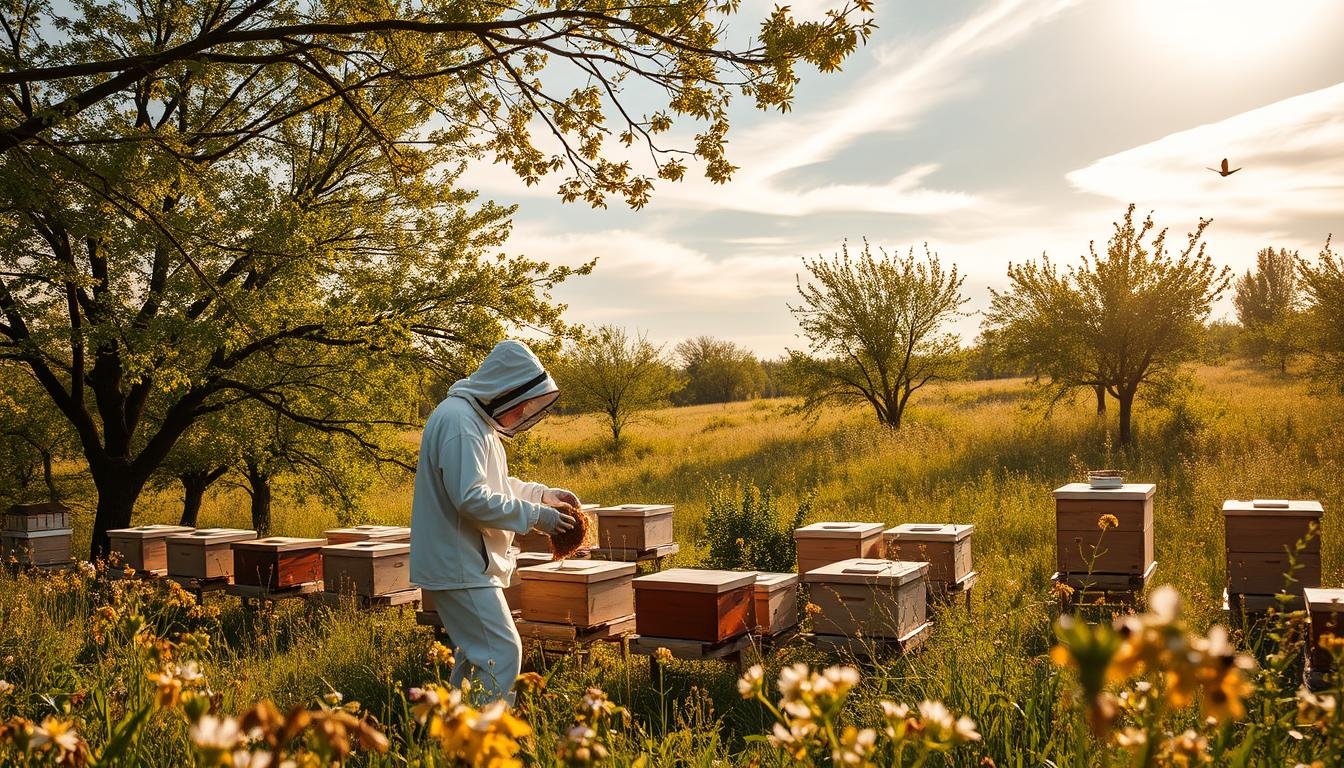
Ethical beekeeping centers on hive health and the wider ecosystem, not just higher yields. This approach puts bees first, seeking colony well-being through low-intervention care and sustainable harvests.
Responsible practice reduces stress on colonies and aligns management with natural behavior. That means taking only surplus honey, using organic disease controls, and siting hives away from pesticide drift to protect forage and wax.
Pollinators provide about one-third of our food, so healthier hives support biodiversity and human food systems. By avoiding over-harvesting and heavy manipulation, beekeepers help maintain long-term colony viability and resilient landscapes.
Throughout this guide you will find science-aligned, actionable advice on management, genetics, forage planning, seasonality, and community stewardship. For a deeper overview of sustainable practices, see a practical guide to responsible hive care for sustainable hives.
Key Takeaways
- Put bee welfare and ecosystem health ahead of output metrics.
- Minimize hive disturbance and harvest only surplus stores.
- Use low-chemical, organic disease and pest controls.
- Site hives away from pesticides to protect forage and honey quality.
- Ethical practices help secure pollination and biodiversity for years to come.
What Beekeeping Ethics Means Today and Why It Matters
ethical beekeeping today is a bee-first philosophy that places colony welfare above short-term extraction. A practical beekeeper aligns choices with nutrition, space, and stress reduction to support long-term survival.
Defining a bee-first philosophy versus yield-first practices
Bee-first practice leaves adequate honey for winter and limits inspections to necessary times. This contrasts with yield-first models that over-harvest, feed artificial syrups, and manipulate brood frequently. Those tactics can weaken queen performance and disrupt brood patterns.
How ethical beekeeping supports pollinators, crops, and biodiversity
When beekeepers prioritize bee health, pollinators and local species benefit. Healthier colonies boost pollination of food crops and flowering plants, helping ecosystems remain resilient over years.
“Leaving sufficient stores and planning forage helps colonies weather seasonal scarcity.”
- Less interference preserves thermoregulation and natural brood cycles.
- Thoughtful site choice reduces pesticide exposure and protects forage quality.
- Long-term gains include improved winter survival and reduced reactive treatments.
For a practical overview of benefits tied to responsible hive care, see this guide to hive benefits.
The Pillars of Ethical Beekeeping: Natural Approach, Sustainable Harvesting, Disease Management
A practical set of pillars guides humane hive care, balancing natural behavior with targeted support to protect colony resilience and long-term health.
Letting bees follow natural behaviors and minimizing intervention
Adopt minimal-intervention management by allowing natural comb architecture and avoiding micromanagement. This protects the brood nest and preserves colony thermoregulation.
Harvesting only surplus honey to protect winter survival
Remove only surplus honey so bees keep enough stores for nectar dearths and overwintering. Leaving proper reserves improves winter survival and preserves honey purity.
Managing diseases and pests with organic, low-chemical methods
Prioritize organic-first strategies: screened bottom boards, brood breaks, drone brood removal, and approved organic acids when needed. Intervene only for severe outbreaks and target treatments to limit chemical exposure.
Placing hives away from pesticides and chemical exposure
Site hives in clean forage areas and away from pesticide drift to protect learning, navigation, and queen fertility. Keep records of brood patterns, Varroa counts, food stores, and interventions to maintain a low-chemical profile.
These pillars reduce cumulative chemical load and support cleaner wax, purer honey, and healthier colonies over time.
Colony-Centered Management: Hive Size, Inspections, and Stress Reduction
A hive that fits the colony reduces stress and keeps workers doing productive tasks. Right-sizing means matching box volume and frame count to colony strength so bees avoid congestion or excessive empty space.
Right-sized setups prevent crowding and overheating
Signs of overcrowding include heavy bearding and brood backfilling. Those cues precede swarming and raise disease pressure.
Oversized configurations force bees to work harder to thermoregulate. That extra work pulls workers from forage and brood care, hurting overall health.
Inspection cadence that respects colony rhythms
Schedule checks by seasonal risk rather than rigid routines. Increase visits during swarm season and after dearths; reduce handling in stable periods.
When you open hives, move quickly, keep frames covered, and preserve propolis seals where possible to lower disturbance.
Practical apiary design helps. Level stands, morning sun, and windbreaks calm colonies and ease the beekeeper’s work. Thoughtful management improves brood patterns, lowers queen stress, and supports stronger, more resilient honey bee colonies.

For more on humane hive care, consult this practical guide for healthier hives.
Respecting the Queen and Supporting Genetic Diversity
A healthy apiary starts by honoring the queen’s role and protecting genetic variety across hives.
Allow the queen to fulfill natural lifespans unless clear health or performance failures occur. Frequent requeening or routine artificial insemination can disrupt pheromonal balance and raise stress in workers.
Encourage local strains and open mating to build resilience. Regional genetics match forage, climate, and disease pressures better than a narrow set of commercial lines.
Practical guidelines for stewards
- Replace queens only for poor laying, disease, or aggressive temperament.
- Prioritize laying pattern, temperament, and hygienic behavior over raw honey numbers.
- Use local breeding clubs and mentorship to source diverse, regionally adapted stock.
| Practice | Short-Term Effect | Long-Term Benefit |
|---|---|---|
| Allow queen longevity | Stable pheromones; fewer disruptions | Stronger colony cohesion over years |
| Open mating with local drones | Greater genetic mix | Improved disease resistance across species |
| Relying on narrow commercial stock | Predictable traits | Reduced adaptability and higher risk |
Respect for natural processes helps bees adapt and keeps honey quality and colony stability higher across the apiary. Beekeepers who invest in diversity protect both hives and the wider landscape.
Responsible Honey Practices: Leaving Enough for Bees and Timing the Harvest
Harvest timing and store management decide whether a colony finishes winter strong or needs emergency feeding.

Define “surplus” by verified capped honey frames only after you confirm brood nest needs and super totals meet overwinter consumption estimates.
Leave at least 30 pounds of honey per hive in temperate regions when possible. That reserve supports cluster metabolism and spring build-up without routine sugar substitution.
- Harvest late—after major nectar flows end—to avoid removing essential food.
- Preserve drawn comb during extraction to save bees the work of wax building.
- Feed supplements only in emergencies, prioritizing survival over replacing natural honey.
Keep equipment clean and handle frames gently to protect honey quality and hive humidity. Record harvest dates and weights; that data refines timing in lean years.
“Conservative harvests reduce spring feeding, improve winter survival, and keep honey quality consistent.”
| Practice | Short-Term Effect | Long-Term Benefit |
|---|---|---|
| Late-season harvest | Fuller stores at removal | Fewer emergency feeds, higher survival |
| Keep drawn comb | Less wax rebuilding | Faster spring buildup |
| Document weights/dates | Track seasonal trends | Smarter timing next year |
Beekeeping Ethics in Practice: Placement, Forage, and Seasonal Management
Place hives where a range of native blooms provides steady forage through the season. Site choice shapes colony health, honey quality, and how often you must step in.
Thinking local: siting hives near diverse, native plants
Pick locations with a mix of native plants that flower at different times. That variety gives bees a balanced pollen and nectar diet across seasons.
Also avoid pesticide-heavy areas and provide wind protection and morning sun. Proximity to safe forage reduces long flights and improves brood nutrition.
Providing clean water and seasonal resources for nectar dearths
Offer a shallow water source with landing stones so bees can drink safely. This lowers risky foraging at pools, drains, or HVAC condensate.
Plan succession plantings—native shrubs, trees, and perennials—to bridge nectar gaps. Consistent blooms mean fewer emergency feeds and steadier stores of honey.
Applying the 7/10 rule to avoid overworking colonies
The 7/10 rule: add a super when about seven of ten frames are drawn or filled. This keeps the hive appropriately sized without spreading the colony too thin.
Limit hive density in local areas to prevent forage competition. Work with neighbors and land managers to create pollinator corridors and timed mowing that help all colonies thrive.
“Local flora supports regionally adapted species interactions, improving nutrition and calmer colonies.”
- Site selection: diverse native bloom, water access, and low pesticide exposure.
- Water: shallow basins with landing stones to keep bees safe.
- Forage planning: succession planting to reduce nectar dearths.
- Management: use the 7/10 rule and control apiary density to protect forage.
Reducing Chemicals: Natural Disease and Pest Strategies
A prevention-first approach cuts disease risk and helps colonies stay resilient without routine synthetics. Early steps focus on hygiene, rotation, and selective breeding to lower pathogen pressure and residue buildup in wax and honey.
Rotating old frames and promoting hygienic behavior
Schedule frame rotation to remove old comb that concentrates pesticides and disease spores. Replace frames on a multi-year cycle to keep wax cleaner and reduce long-term contamination.
Promote hygienic stock by selecting colonies that uncap and remove unhealthy brood. That natural behavior cuts disease spread and lowers treatment needs.
Integrated, organic management before chemical interventions
Use continuous monitoring—Varroa counts and inspection thresholds—to time minimal responses. Favor mechanical controls such as drone brood removal, brood breaks, and screened bottoms first.
When treatment is necessary, choose approved organic options and follow label rates. Combine strict tool sanitation and swift dead-out removal to protect hive health and product purity.
Beyond the Hive: Ethical Beekeeping, Ecosystems, and Community Impact
Simple neighborhood projects create steady forage that supports bee populations year after year. Small actions by land stewards and gardeners add up. They boost local food webs and help pollinators thrive.
Planting native plants and advocating pollinator-safe landscapes
Encourage plantings of region-appropriate native plants to supply nectar and pollen across seasons. A variety of species reduces foraging gaps and supports healthy bee populations.
Advocate for reduced pesticide use and integrated pest management in public areas. This protects honey bee and wild pollinator health and lowers disease pressure on colonies.
Educating neighbors and supporting conservation initiatives
Offer talks, host a workshop, or partner with schools and garden clubs. Education spreads practical ways to help pollinators and keeps beekeepers connected to community needs.
“Local action stabilizes pollination for crops and wild flora, preserving biodiversity for years.”
- Promote community plantings and water stations to reduce conflicts and guide flight paths.
- Partner with conservation groups and citizen science projects to track seasonal bloom and pollinator activity.
- Share practical resources like a practical resources hub for new stewards.
| Action | Immediate Effect | Long-Term Benefit |
|---|---|---|
| Native plantings | More nectar year-round | Stable forage networks across neighborhoods |
| Pesticide reduction | Lower acute losses | Cleaner honey and healthier colonies |
| Community outreach | Fewer conflicts, informed neighbors | Broader stewardship and resilient pollinator populations |
Conclusion
Small changes—right timing, cleaner wax, and native plants—multiply into stronger colonies. Ethical beekeeping puts bee welfare first, values respect for natural rhythms, and favors low-impact care over heavy manipulation.
Take only surplus honey, time harvests for winter readiness, and use organic-first disease methods to cut residues and lower chemical load. These steps protect wax, microbiomes, and long-term survival of the colony.
Use right-sized equipment, gentle inspections, and smart placement near diverse plants and water to improve nutrition and reduce stress. Better management helps pollinators and supports nearby crops and species.
Act now: adopt one ethical improvement this season, document results, and share what you learn. For practical timing and seasonal tasks, see a short guide to seasonal tasks to help you keep bees responsibly and strengthen local bee populations.
FAQ
What does a bee-first philosophy mean compared to yield-focused practices?
A bee-first philosophy prioritizes colony health, natural behavior, and long-term survival over maximizing honey output. It means choosing hive practices, timing, and interventions that reduce stress and support the colony’s needs, rather than pushing bees to produce more than they naturally would. This approach supports pollinators, local crops, and biodiversity while maintaining sustainable honey production.
How does ethical hive placement protect bees and the environment?
Siting hives near diverse native plants, away from pesticide-treated fields, and near clean water reduces chemical exposure and supports year-round forage. Thoughtful placement also minimizes conflict with neighbors and helps bees perform their pollination role in local ecosystems, improving plant variety and resilience.
What is the recommended approach to harvesting honey so colonies remain strong for winter?
Harvest only surplus honey and leave ample stores for winter and periods of nectar dearth. Time extractions after nectar flows when frames are capped and the colony shows healthy brood patterns. Avoid removing brood frames or too many resources; provide supplemental feeding when natural stores are low.
How often should hives be inspected to respect colony rhythms?
Keep inspections purposeful and infrequent enough to reduce disturbance—typically every 7–21 days during peak season and less frequently during stable periods. Brief, focused checks for queen activity, brood pattern, and signs of pests or disease minimize stress while ensuring colony needs are met.
What nonchemical strategies work for managing pests and diseases?
Favor integrated measures: rotate old frames, encourage hygienic genetics, use screened bottom boards, apply heat treatments or mechanical controls where appropriate, and use organic acids like oxalic or formic acid per best practices. Treat only when necessary and follow label guidance to limit chemical residues in hives and the environment.
How can beekeepers support genetic diversity and queen health?
Allow queens to live natural, healthy lifespans when possible and source queens or nucs from local breeders that prioritize locally adapted traits. Encourage free mating with diverse drones and avoid repeated use of a single imported line to maintain resilience against disease and changing climate conditions.
What is the 7/10 rule for avoiding colony overwork?
The 7/10 rule advises keeping a balance between foraging demands and colony capacity: do not push colonies to forage more than about seven days out of ten during stressful periods. This prevents excessive depletion of stores and reduces mortality from overexertion, especially during late season or droughts.
Why is rotating frames and comb important for hive health?
Old comb accumulates pesticide residues, pathogens, and pesticide breakdown products. Rotating and replacing comb every few years reduces disease reservoirs, promotes hygienic behavior, and improves brood quality, all while supporting long-term colony vitality.
How should a beekeeper respond when chemical intervention becomes necessary?
Exhaust integrated organic and cultural controls first. If a chemical is required, choose products approved for apiary use, follow label directions precisely, treat only affected colonies, and document treatments. Aim to minimize residues and prioritize products with the least environmental impact.
How can beekeepers help their community and local ecosystems?
Plant native, pollinator-friendly species, provide education on pollinator-safe gardening, and partner with local conservation groups like Pollinator Partnership or Xerces Society. Supporting habitat, reducing pesticide use locally, and sharing responsible practices strengthens both colonies and surrounding biodiversity.
What steps protect hives from pesticide exposure?
Place hives away from areas of heavy agrochemical use, establish buffer zones with untreated forage, communicate with neighboring farmers about spray schedules, and choose sites surrounded by native plantings. Regularly test honey and wax if exposure is suspected and move hives if needed.
How much honey should be left to ensure colony survival through winter?
Required stores vary by climate and colony size, but a common guideline is to leave 40–60 pounds (18–27 kg) of honey in temperate regions for winter. Adjust this based on local conditions, hive insulation, and brood rearing schedules, and provide supplemental feeding when natural sources fall short.


