Balanced diet is the foundation for colony performance, immunity, and pollination services. Honey bees need a mix of proteins, carbohydrates, lipids, amino acids, vitamins, minerals, water, and sterols to build tissue and resist stress.
Proteins from pollen support brood development while nectar sugars fuel flight and foraging. Lipids and specific amino acids keep cell membranes and metabolism working. Minerals and water help regulation and waste removal.
Pollen quality varies widely — crude protein ranges from about 2.5% to 61% by plant species — and colonies often collect 10–26 kg per year, with higher reports up to 55 kg. Nectar sugar averages near 40% globally, with optimal ranges between 35–65%.
Poor diet diversity near monocultures shortens worker lifespan, reduces brood rearing, and raises disease risk. Supplements can help but do not fully replace polyfloral forage that supplies balanced amino acids, fatty acids, and bioactives.
Key Takeaways
- Complete diet matters: macro- and micronutrients drive immunity and productivity.
- Pollen and nectar quality vary; documented ranges guide feeding decisions.
- Diverse forage beats supplements for long-term colony resilience.
- Nutrition affects pathogen susceptibility and overall hive health.
- Practical guidance ahead will cover foraging cues, targeted supplements, and seasonal feeding.
Why Bee Nutrition Determines Colony Health and Productivity
Nutrient balance drives immune strength, brood success, and the daily output a hive can sustain. Good diet quality supports worker lifespan, disease resistance, and steady honey yields.
Intake maps directly to immune competence and brood viability. Adequate protein promotes gland development in nurses, while reliable energy from sugars fuels flight, thermoregulation, and wax production.
When food is scarce, honey bees cut brood feeding within a day. That rapid response reduces adult performance weeks later and weakens overall colony resilience.
Nutrition stress amplifies effects of parasites, pesticides, and habitat loss. Well-fed colonies show lower pathogen impacts and better overwinter survival than poorly fed colonies.
| Function | Primary Source | Impact When Lacking | Management Tip |
|---|---|---|---|
| Protein (brood, glands) | Pollen | Stunted brood, weak nurses | Provide diverse pollen or patties |
| Energy (flight, heat) | Nectar/Honey | Reduced foraging, poor thermoregulation | Feed syrup during dearths |
| Combined effect | Polyfloral forage | Higher disease risk, lower productivity | Enhance forage diversity |
Proactive management that keeps steady protein inflow and stable energy reserves is a key lever for beekeepers aiming for consistent yields and healthy colonies. Adjust feeding seasonally to sustain workforce strength and efficient division of labor.
Understanding Nutritional Requirements of Honey Bees
Healthy colonies depend on defined dietary requirements that supply building blocks and energy for growth and daily tasks. A clear nutrient map helps beekeepers plan feeding and forage enhancements across the season.
Core needs and what they do
Proteins form tissues, enzymes, and the jelly nurses make. Carbohydrates are the primary energy currency for flight and thermoregulation.
Lipids support membranes and energy storage. Amino acids and vitamins drive metabolic pathways and gland development. Minerals aid osmotic balance and signaling. Water enables digestion, brood temperature control, and nectar dilution. Sterols from pollen are essential for hormone synthesis and cannot be made by bees.
Balance, metrics, and resilience
Ratios matter: imbalanced amino acids or omega-6:3 ratios limit use of otherwise adequate totals. An individual worker needs roughly 11 mg of sugar per day; multiply that by colony size to see how energy demands scale during intense brood rearing.
Balanced diets shape hemolymph protein profiles and hypopharyngeal glands, which in turn support brood rearing and overall hive health. This framework informs seasonal feeding and supplement choices later in the guide.
Proteins and Pollen: The Foundation of Growth
Not all pollen is equal; plant source determines how well it supports growth and immunity.
Pollen quality and amino profiles
Crude protein in pollen ranges widely by flower species — roughly 2.5% to 61%. That span changes how useful a given pollen is for both larval feeding and adult maintenance.
Essential amino acids must be present in balanced proportions. If one amino is missing, overall protein use drops and growth stalls despite apparent protein totals.
Brood needs and colony pollen use
Each larva requires about 25–37.5 mg of protein to develop. At ~20% pollen protein, that equals roughly 125–187.5 mg of pollen per larva.
A typical colony collects 10–26 kg of pollen per year, with well-placed hives sometimes reaching 55 kg. Forcing factors include forage diversity, weather, and colony strength.
Bee bread, fermentation, and digestibility
Bees pack pollen with nectar and ferment it into bee bread. Lactic fermentation by microbes such as Lactobacillus and Saccharomyces lowers pH, stabilizes stores, and releases bioactives.
Polyfloral diets consistently boost worker longevity versus single-source pollens. Pollen also supplies lipids, vitamins, and sterols important beyond protein alone.
- Variable protein and amino profiles determine pollen usability.
- Larval protein needs translate to measurable pollen demand during strong brood periods.
- Annual collections depend on landscape, weather, and hive management.
- Fermentation improves digestibility and shelf stability of stored pollen.
- Mixed pollen from many flowers best supports honey bees over single-source diets.
| Measure | Range / Value | Practical note |
|---|---|---|
| Pollen crude protein | 2.5% – 61% | Source plants determine usability for brood |
| Protein per larva | 25 – 37.5 mg | Equals ~125–187.5 mg pollen at 20% protein |
| Annual colony pollen | 10 – 26 kg (up to 55 kg) | Higher with diverse forage and strong spring buildup |
| Fermentation agents | Lactobacillus, Saccharomyces | Lower pH, add bioactives, improve digestibility |
Action: Plan forage access or timed supplements to bridge gaps during peak brood windows.
Carbohydrates from Nectar and Honey: Energy That Powers the Hive
The hive’s energy budget hinges on nectar quality and the efficiency of turning floral sugars into stable honey. Nectar sugar ranges widely from 5% to 75%, though most samples fall between 25–40% and global averages near 40%.
Concentration matters: dilute nectar forces longer foraging trips and lowers net gain. Richer nectars cut flight cost per gram of sugar and speed honey ripening.
Conversion process: foragers add invertase and glucose oxidase. These enzymes split sucrose, form gluconic acid and hydrogen peroxide, and allow ripening. Honey is typically capped at ~17–18% moisture.
A single worker needs about 11 mg dry sugar per day. Scale that up and a 50,000-bee colony may consume the equivalent of ~1.1 L of 50% syrup daily during peak brood and cold-weather heating.
| Aspect | Value / Range | Implication |
|---|---|---|
| Nectar sugar | 5% – 75% (most 25–40%) | Affects collection efficiency and net energy |
| Honey moisture | ~17–18% | Safe storage, reduced fermentation risk |
| Foraging distance | Average ~1,408 m; can exceed 5 km | Long flights raise per-trip energy cost |
| Worker daily need | ~11 mg dry sugar | Colony demands spike with brood and comb building |
When blooms are sparse, waggle-dance data show longer flights and higher costs per trip. Monitor stores closely during dearths: low-quality nectar or low volume can force rapid consumption of honey and slow comb building.
Lipids and Fatty Acids: Membranes, Energy Storage, and Brood
Dietary fats influence membrane stability, immune signaling, and the quality of brood food produced by nurses. These compounds do more than store energy; they shape development and colony resilience.
Fat body reserves and functional roles
Fat bodies act as the main reserve for lipids and triglycerides. They are larger in larvae and nurse workers and support overwintering and recovery from stress.
Key fatty acids and balance
Pollen supplies fatty acids such as palmitic, linoleic (omega-6), and alpha-linolenic (omega-3). Trials show diets with ~4–8% lipids and an omega-6:3 ratio near 1 best support survival and brood rearing.
- Membrane integrity: lipids maintain cell function and signaling.
- Gland health: adequate lipids improve hypopharyngeal gland output and brood food quality.
- Floral variation: lipid content differs by plant, so diverse forage matters.
- Monitoring: watch brood patterns and adult condition as indirect indicators of fatty acid sufficiency.
Practical note: many commercial protein supplements lack balanced fatty acids. Addressing lipid balance alongside protein can improve overall hive health and brood outcomes.
Amino Acids and Vitamins in Bee Diets
Amino profiles in pollen and bee bread shape growth rates, immune readiness, and neural development across the colony.
Essential amino acids required by honey bees include arginine, histidine, lysine, phenylalanine, tryptophan, leucine, isoleucine, threonine, and valine.
These building blocks support growth, immune signaling, and neural function. Balanced mixes allow nurses to produce high-quality brood food and maintain hypopharyngeal glands.
Limiting amino principle: if one amino is scarce, colonies must eat more pollen to meet needs and still underuse total protein.
- Vitamins and trace minerals in pollen and bee bread, especially B-complex, power enzymes, metabolism, and stress responses.
- Vitamins A, D, E, and K are absent from royal jelly; pollen and bee bread supply broader micronutrients.
- Adequate amino acids and vitamins reduce sensitivity to pesticides and pathogens and improve overall health.
Practical tip: favor polyfloral forage and choose supplements that list amino profiles and vitamin content where possible.
Minerals and Water: Small Inputs, Big Impacts
Access to clean water and balanced trace elements often decides whether a hive weathers heat or winter stress. Water supports digestion, jelly production, brood thermoregulation, and the dilution and processing of stored carbohydrates. Foragers collect water on demand and shift effort when brood rearing increases.
Minerals act in tiny amounts but matter: they support nerve function, osmotic balance, and enzyme systems. Both deficiency and excess can impair adult function. Honeydew-derived honey may carry high mineral loads that trigger dysentery in winter clusters.
Watch winter stores and fecal staining as early warning signs. Ensure reliable, safe water near apiaries during hot spells to cut foraging stress and reduce contamination risks.
- Safe sources: shallow pools, moving water, or contained troughs with landing pads.
- Monitor: fecal stains on hives and the quality of winter honey stores.
- Balance: diverse pollen remains the primary way colonies meet trace mineral needs.
Consider season and local flora when assessing mineral exposure. Simple management of water access and forage diversity prevents a surprising number of mineral- and water-related problems for bees.
Bee Bread and Royal Jelly: The Colony’s Nutritional Engine
When foragers bring pollen home, workers convert it into a preserved, nutrient-dense paste for larvae. This processed store supports nurse glands and keeps the hive fed through short dearths.
From pollen to stable stores: workers mix pollen with nectar and microbes. Lactic fermentation by Lactobacillus and Saccharomyces lowers pH, cuts starch, raises reducing sugars, and adds phenolics and flavonoids. The result is easier-to-digest food with antimicrobial properties.
Royal jelly composition: it is roughly 67% water. Dry matter contains about 12.9% proteins, 12.1% carbohydrates, and 4% lipids. Major Royal Jelly Proteins (MRJPs) dominate the protein fraction and drive rapid larval growth from ~0.36 mg to ~160 mg before capping.
Hypopharyngeal glands in nurse bees convert processed pollen into this secreted feed. Together, processed pollen and jelly form a linked system: stored pollen sustains glands, glands produce larval food, and larvae develop into healthy adults.
Management cue: colorful, fresh pollen bands next to brood signal adequate inflow. Avoid prolonged pollen deficits; they weaken gland output and harm brood outcomes.
Nurse Bees, Foragers, and Vitellogenin: How Nutrition Flows
Within a hive, protein flows like currency—moving from pollen-gorged nurses to the rest of the colony through secreted jelly.
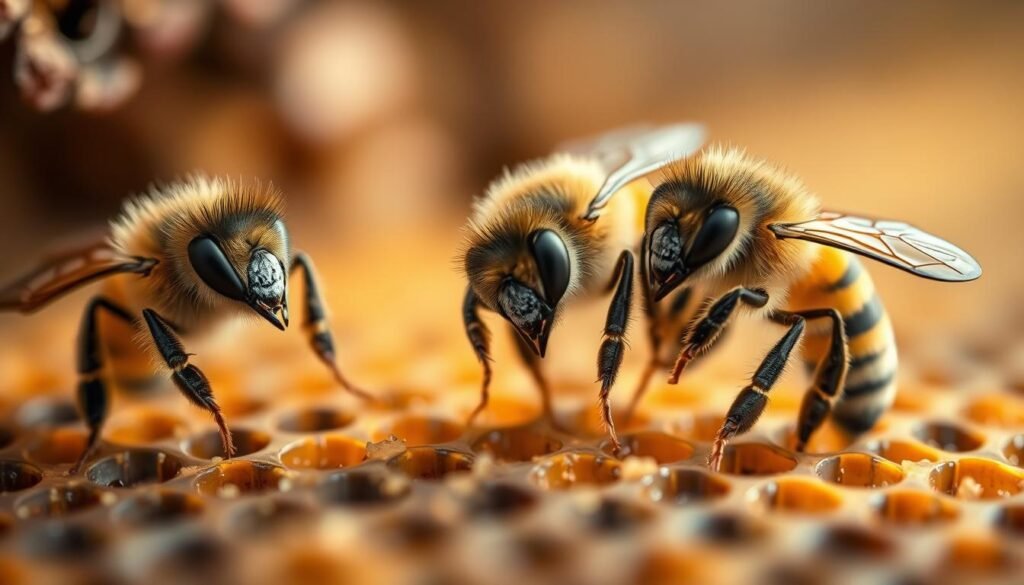
Hypopharyngeal glands and “jelly” as the currency of protein
Nurse bees digest pollen, develop hypopharyngeal glands, and make jelly that feeds larvae and other adults.
Vitellogenin transports stored protein and acts as a colony-wide reserve. It helps move amino acids and building blocks where they are needed.
Age-related digestion: why foragers can’t use pollen efficiently
Foragers lose the digestive capacity to process pollen. They rely on jelly from nurses for protein and many essential compounds.
When pollen inflow drops, jelly supply falls quickly and larvae get less feed. That creates weaker adults several weeks later.
“Vitellogenin links individual intake to colony-level supply, making young nurses the key processors of dietary protein.”
| Role | Function | Management cue |
|---|---|---|
| Nurse bees | Digest pollen, develop glands, produce jelly | Ensure steady pollen during brood peaks |
| Foragers | Collect nectar and pollen, depend on jelly | Monitor forager return rates and pollen loads |
| Vitellogenin | Stores and transfers protein across the colony | Watch gland size and brood patterns for deficits |
Takeaway: sustain pollen during nursing peaks to keep jelly flowing, preserve brood patterns, and stabilize hive performance.
Colony Population Dynamics Tied to Pollen Availability
Patterns of pollen inflow set the tempo for brood rearing and adult turnover across the year.
Population structure responds quickly: when pollen rises, nurses feed more larvae and brood volume expands.
In spring a turnover can occur. Older workers raise a large cohort of young adults. If pollen remains abundant, the hive shifts into a linear growth phase and workforce size climbs.
Seasonal cues and practical signs
Some regions face a mid-year collapse in floral resources. This “summer winter” stalls brood and shrinks colonies despite warm weather.
Track fresh bee bread bands and incoming pollen loads to forecast trajectories. There is a time lag: changes in inflow may take weeks to show in adult age mix.
| Phase | Pollen pattern | Colony response | Management tip |
|---|---|---|---|
| Spring turnover | Sharp rise in pollen | Brood > adult coverage; rapid cohort growth | Delay splits until inflow stabilizes |
| Linear growth | Steady, abundant pollen | Predictable workforce expansion | Super and plan honey flow timing |
| Summer winter | Pollen collapse | Brood halt, population contraction | Provide protein patties and reduce brood demand |
| Forecasting | Consistent inflow trends | Predicts year-long growth or decline | Align treatments and supering with trends |
Practical link: consult population tracking studies for methods that tie pollen inflow to demographic changes in honey bees.
Key takeaway: steady access to pollen cuts brood cannibalism and keeps queen laying at productive levels. Use inflow observations to time splits, feeding, and treatments for best results.
Seasonal Nutrition Calendar for U.S. Beekeeping
Seasonal shifts in floral resources force quick management decisions that shape hive outcomes. A compact calendar helps plan feeding, monitor stores, and time interventions through the year.
Spring buildup
Protein insurance matters in early spring. Provide patties or targeted supplements during cold snaps and heavy rain to keep nurses producing jelly and sustain brood growth.
Checklist: ensure early pollen access, check stores, and add patties when natural sources lag. Early support can raise honey yields and lower Varroa and Nosema impacts.
Summer dearth management
During dry spells, conserve brood at sustainable levels and avoid adding boxes without a nectar flow. Monitor stores, weight, and water for cooling and jelly production.
Fall preparation
Prioritize late-season pollen and balanced lipids to build fat bodies and long-lived winter bees. Top up stores so the colony enters winter with ample honey and protein reserves.
Regional nuances
West of the Rockies often faces extended late-summer and early-fall pollen gaps. East tends to have more fall blooms. Adjust timing and feed earlier or later based on local rain and bloom.
“A few cold or wet days in spring can shape workforce strength weeks later.”
| Season | Action | Key indicators |
|---|---|---|
| Spring | Add protein patties if inflow is low | Pollen bands, brood expansion |
| Summer | Conserve brood; supply water | Colony weight drops, reduced forager returns |
| Fall | Build fat bodies; ensure honey stores | Bee longevity, capped honey frames |
Monitor weight changes and bee bread presence as real-time cues and keep records to refine a local calendar. For a detailed seasonal task list, see seasonal beekeeping tasks.
Bee nutrition
Healthy hives rely on a full spectrum of inputs: macronutrients, micronutrients, and plant-derived bioactives from diverse floral sources work together to build resilience.
Management of diet is an operational task, not a single seasonal fix. Beekeepers should monitor both the volume and quality of incoming resources each week. Visible pollen loads are useful, but lab-like quality—amino profiles, lipid balance, and sterols—drives long-term outcomes.
Poor feeding amplifies the impact of pests, pesticides, and weather. Strong feeding practices support queen performance, lower pathogen effects, and extend worker lifespan.
- Holistic view: combine forage diversity with targeted supplements when gaps appear.
- Daily oversight: check stores, brood pattern, and bee bread freshness regularly.
- Quality over quantity: assess what incoming loads contain, not just how much arrives.
- Adaptive feeding: shift strategies in real time as colony needs change.
Balance supplements with efforts to place colonies where multi-floral forage is available. Consistent attention to diet supports predictable health outcomes across seasons and helps beekeepers meet production and conservation goals.
Smart Supplementation: Protein Diets and When to Use Them
Practical feeding choices combine timing, product selection, and clear goals for colony growth. Use patties when natural pollen is scarce: late winter, early spring insurance, and mid-season dearths to keep brood rearing steady.
Commercial options and crude protein targets
Brands such as Bee-Pro, Feed-Bee, and MegaBee vary in palatability and outcomes. Studies show reproduction gains with crude protein near 29.5–34%, though lower levels (~16.5%) can still stimulate brood.
Quality beats raw numbers: amino balance and digestibility determine whether a high-protein label converts to stronger colonies.
Soy-based versus non-soy formulations
Soy mixes often score high on cost and protein but may contain indigestible sugars like stachyose. That can reduce acceptance unless diluted or blended.
Non-soy patties may be more palatable and easier to digest for many hives. Check formulations and rotate if uptake stalls.
Natural forage versus patties: disease and wintering
Polyfloral pollen generally lowers pathogen load and improves overwinter survival compared to some substitutes. Use patties as a bridge, not a long-term replacement.
“Higher patty consumption usually predicts better brood and adult gains; monitor actual uptake closely.”
- Place patties near the brood nest and replace before spoilage.
- Alternate or blend diets to improve amino balance and acceptance.
- Track brood area, adult population, and hemolymph protein to judge efficacy.
Tip for beekeepers: treat supplements as a tactical tool—deploy early, watch consumption, and favor natural pollen whenever possible to support honey bees long-term.
Energy Feeding: Nectar Flow Gaps, Sugar Syrups, and Honey
Timely supplemental feeds bridge nectar gaps and keep colonies building comb and rearing brood. Use energy feeding to prevent starvation, to support comb construction, and to sustain spring growth until flows resume.
Sucrose vs. HFCS vs. honey: colony performance and oxidative stress
Trials show colonies given sucrose syrup built more comb, had heavier mass, and produced more spring brood than those fed HFCS.
Honey supplies microcomponents absent in syrups and can improve physiology, but availability and disease transmission are constraints. Syrups can raise oxidative stress markers in housed experiments, with HFCS often scoring worse than sucrose.
HMF risks, storage temperature, and toxicity thresholds
Hydroxymethylfurfural (HMF) forms when syrups or honey heat during processing or transport. Levels above ~30 ppm cause mortality in cage studies.
Actionable steps: avoid overheating feedstocks, verify freshness, and store syrups cool and shaded to limit HMF buildup.
- Use 1:1 sucrose for spring stimulation; use thicker 2:1 for fall stores.
- Place feeders near the brood nest but inside the hive to reduce robbing risk.
- Monitor colony weight, consumption, and brood response to adjust schedules.
| Goal | Feed Type | Mix / Ratio | Notes |
|---|---|---|---|
| Spring stimulation | Sucrose syrup | 1:1 (water:sugar) | Promotes comb building and brood expansion |
| Fall storage | Sucrose or honey | 2:1 (water:sugar) for syrup; use capped honey when safe | Thicker syrup stores better; honey adds microcomponents |
| Emergency fill | HFCS (last resort) | 1:1, fresh and cool | Higher HMF risk—verify source and avoid heat |
| Placement | Feeders near brood | Inside hive or entrance feeder | Reduces robbing, ensures access to food and water |
Remember: energy feeding complements protein access and does not replace pollen during sustained brood rearing. For practical forage planning, consult resources on foraging and nectar flows such as foraging for nectar.
Toxic and Low-Quality Food Sources to Avoid
Not all nectar and pollen are safe; certain plants and sugars can harm workers and brood. Learn to spot risky sources and manage them before they damage colonies.

Toxic nectars, pollens, and indigestible sugars
Indigestible or toxic sugars: rhamnose, xylose, arabinose, galactose, mannose, lactose, raffinose, melibiose, and stachyose. These can reduce palatability or cause mortality if present in supplements without proper dilution.
Toxic plants: Rhododendron, Aconitum (monkshood), Datura, and Aesculus californica produce nectar or alkaloids that harm adults and brood. Avoid placing apiaries near dense blooms of these species during peak flower.
- Check protein substitutes for stachyose and similar oligosaccharides; follow manufacturer dilution thresholds.
- Rotate apiary locations away from dominant toxic flora in critical spring or summer brood periods.
- Watch for unusual adult or brood deaths during specific bloom windows and act quickly.
Honeydew and mineral-related dysentery
Honey with high mineral loads (from honeydew) can raise potassium and phosphorus while low sodium links to paralysis and dysentery in winter clusters.
| Risk | Signs | Management |
|---|---|---|
| Indigestible sugars in feed | Poor uptake, loose stool, mortality | Verify ingredients; dilute or avoid products with stachyose |
| Toxic floral nectar | Sudden adult and larval deaths during blooms | Move apiary or block comb during peak bloom |
| Honeydew honey | Diarrhea-like staining, reduced winter survival | Replace stores before winter; feed clean sucrose if needed |
Practical rule: diversify forage, test or trust feed labels, and watch fecal staining after honey flows. These steps lower accidental exposure to acids and toxins and help sustain colony health.
Landscape, Foraging Diversity, and Multi-Florals for Resilience
A mosaic of bloom types across a landscape keeps foragers collecting varied nutrients year‑round. This variety buffers seasonal gaps and lowers the risk that a single crop will dominate available food.
How diverse sources stabilize diet: mixed sources smooth out swings in crude protein and lipid content. Multiple flower types supply complementary amino acids, improving overall balance so workers can convert intake into brood food and body reserves.
Practical benefits and placement
Studies show colonies fed mixed pollen live longer than those on single‑species diets. Greater floral variety correlates with lower parasite impact and stronger overwinter survival for bee colonies.
Management actions: plant edge habitats, add wildflower strips, and place hives near diversified landscapes. Work with landowners to stagger bloom times and map a local bloom calendar. Rotate apiary sites to keep access to multi‑floral supplies across the season.
Why it matters: bioactive compounds from many flowers can give antimicrobial and antioxidant support that supplements rarely match. Nutritional redundancy—many reliable sources—builds resilience against gaps, toxins, or crop failures and keeps honey bees healthier over time.
Monitoring Nutrition: Practical Metrics for Beekeepers
Simple, routine checks let beekeepers see trends quickly and act before colonies slip. A weekly walk-through focused on stores, brood area, and patty uptake gives actionable data in little time.
Visual and behavioral cues to watch
Bee bread bands that are colorful and adjacent to the brood signal steady protein flow. Uniform, capped brood patterns and regular frames of brood indicate good provisioning.
Note forager behavior: longer flights or heavier pollen searches often mean nurses lack resources. Reduced jelly sharing and more pollen trips are early warnings.
Simple checks that quantify need
- Inspect and record the number of frames with brood each visit and the time of inspection.
- Check nurse gland development on a small sample of nurses as a direct proxy for protein status.
- Track daily consumption of patties and syrups to set feeding volumes that match demand.
- Use entrance counts and weight changes to confirm trends seen inside the hive.
Action tip: keep a short log with date, brood frames, patties used, and visible pollen loads. Align interventions to observed metrics rather than calendar dates for more precise management of bees and stores.
Nutrition, Pathogens, and Pesticides: The Interaction Effect
Poor feeding immediately lowers individual defenses and sets the stage for faster pathogen growth across the colony.
How poor diets amplify Nosema, viruses, and stress responses
Immune weakening: limited protein and imbalanced amino acids reduce hemolymph factors and cut antimicrobial activity. That allows Nosema ceranae and viruses to replicate faster and become more virulent.
Synergy with pesticides: exposure to common agrochemicals lowers enzyme activity (for example, glucose oxidase) and impairs detox pathways. When pesticides and pathogens co-occur, longevity drops and colonies can crash quickly.
- Good protein access and balanced diets moderate Nosema loads and viral impacts.
- Key enzymes tied to colony defense depend on adequate diet quality.
- Diet deficits make individual bees more likely to self-remove, speeding collapse under multiple stressors.
Practical steps: ensure steady protein during treatment windows, restore high-quality forage after interventions, and reduce pesticide exposure near hives.
“Proactive feeding is an essential pillar of integrated pest and disease management.”
Where Research Is Heading: Supplements That Mimic Natural Diversity
Emerging work focuses on building feeds that include microbes and phytochemicals found in natural bee bread. Scientists want products that replicate not just protein totals but the fermented, bioactive mix that colonies use daily.
Priority areas include matching diverse amino and fatty acid profiles, adding beneficial microbes, and improving digestibility to meet real colony requirements.
Long-term, field-scale trials are needed in low-flowering agroecosystems to test survival and production over multiple seasons. Metrics of success should include sustained brood area, overwintering survival, pathogen loads, and honey yields.
Next steps for practical progress
- Design formulations informed by the microbiome and fermentation benefits of bee bread.
- Map local forage gaps so supplements target regional nutrient needs and seasonal requirements.
- Validate products under commercial conditions through collaborations among researchers, feed makers, and beekeepers.
“Supplements must complement habitat work; they are a bridge, not a replacement.”
For context on ongoing work, see research that tracks long-term colony resilience in simplified landscapes.
Conclusion
Strong, balanced feeding is the single management lever that most reliably keeps colonies resilient through shifting seasons.
Bee nutrition that combines diverse pollen sources, steady energy from honey or syrup, and adequate water, vitamins, and lipids underpins steady growth, immunity, and productivity.
Monitor simple cues — pollen bands, brood frames, patty uptake, and hive weight — and feed strategically during predictable gaps. Avoid feeds with indigestible sugars or nectar from known toxic plants.
Promote landscape diversity and smart hive placement so natural forage does the heavy lifting. Use targeted supplements as short-term bridges while research improves products that better mimic natural diets.
Plan, monitor, and adapt your program to meet changing needs and strengthen bees and your colony over the long term.
FAQ
What is the single most important dietary requirement for healthy colonies?
Protein from pollen is the foundation of colony growth. Nurse workers convert pollen proteins into glandular secretions that feed larvae and build fat bodies in winter bees. Strong pollen stores support brood rearing, worker longevity, and resilience to stressors.
How much pollen does a typical colony need in a year?
Annual colony pollen intake varies by region and colony size but commonly ranges from several to tens of kilograms. Peak demand occurs during spring buildup when brood rearing is intense. Beekeepers should monitor stores and supplement during prolonged dearths.
Why does pollen quality matter more than quantity?
Pollen differs in crude protein and essential amino acid profiles. A mixed floral diet supplies a better balance of amino acids, vitamins, and lipids, improving larval development, immune function, and overwintering success compared with a monofloral intake.
What role does bee bread fermentation play in nutrition?
Bee bread is pollen altered by lactic fermentation in the hive. Fermentation increases digestibility, preserves nutrients, and produces bioactive compounds that help nurse bees extract proteins and amino acids more efficiently.
How much carbohydrate do colonies need and when?
Carbohydrates from nectar and stored honey supply flight energy and thermoregulation. Needs spike during nectar flows, long foraging flights, and cold snaps. Beekeepers typically feed sugar syrup during early spring or late fall gaps to prevent starvation and support brood production.
When should I feed protein supplements and what targets matter?
Supplement during spring buildup, long rainy spells, or major dearths. Effective commercial diets aim for appropriate crude protein percentages and palatability to stimulate nurse activity. Match supplementation to colony strength and avoid overfeeding when natural forage is abundant.
Are soy-based patties a good long-term solution?
Soy-based diets can supply protein but vary in palatability and digestibility. Some blends include non-soy proteins and attractants to improve uptake. Use tested commercial products and rotate or combine with diverse floral forage where possible to reduce pathogen or digestive issues.
How do fatty acids and lipids affect colony health?
Lipids, including omega-3 and omega-6 fatty acids, support cell membranes, fat body reserves, and brood development. An imbalanced fatty acid profile can reduce survival and impair immunity, so diverse pollen sources help maintain appropriate ratios.
What essential amino acids do honey-producing insects require?
Worker development depends on a suite of essential amino acids (for example, lysine, methionine, and threonine). Deficits in any key amino acid limit protein synthesis, reduce hypopharyngeal gland output, and harm larval growth and colony reproduction.
How does water factor into hive nutrition?
Clean water is critical for diluting stored feeds, cooling during hot periods, and aiding digestion of concentrated foods like honey or syrup. Provide nearby freshwater to reduce foraging stress and prevent bees from sourcing polluted or suboptimal water.
Can poor diet increase disease and pesticide sensitivity?
Yes. Inadequate or low-quality food weakens immune responses and amplifies effects of Nosema, viruses, and pesticide exposure. Diverse, nutrient-rich diets help detoxification pathways and lower pathogen loads over time.
What are signs of nutritional stress I should watch for?
Watch for reduced brood patterns, small or pale nurse glands, increased forager numbers with short lifespans, cluster loss in winter, and rapid consumption of stores. Inspect bee bread bands and colony population trends regularly.
How do seasonal calendars affect feeding decisions in the U.S.?
Spring requires protein insurance for buildup; summer needs focus on dearth management and preventing overextension; fall emphasizes creating fat-bodied winter bees and adequate honey stores. Regional differences—West vs. East of the Rockies—change bloom timing and supplement needs.
Is honey or sucrose syrup better for energy feeding?
Natural honey is biologically preferable but can carry contaminants. Sucrose syrup is safe and effective for short-term feeding; high-fructose corn syrup (HFCS) may increase oxidative stress in some studies. Avoid feeding overheated syrups with high HMF levels.
What foods should be avoided because they harm colonies?
Toxic nectars and pollens from certain plants, contaminated honey, and feeds with high levels of indigestible sugars can cause dysentery or mortality. Also avoid poorly stored or moldy supplements and any feed with excessive HMF from overheating.
How can landscape management improve nutritional resilience?
Promote polyfloral plantings and continuous bloom windows to supply balanced amino acids and fatty acids. Hedgerows, native wildflowers, and diversified foraging patches reduce dependence on supplements and improve disease resistance.
What practical metrics help monitor colony nutrition?
Track brood pattern quality, bee bread band thickness, hypopharyngeal gland development in nurse bees, consumption rates of stored pollen and honey, and seasonal population dynamics. These indicators guide timely supplementation and forage enhancements.
What research directions should be on a beekeeper’s radar?
Look for advances in supplement formulations that mimic multi-floral diets, studies linking amino acid profiles to overwinter survival, and long-term trials in low-flowering agroecosystems to refine feeding strategies and commercial diet efficacy.