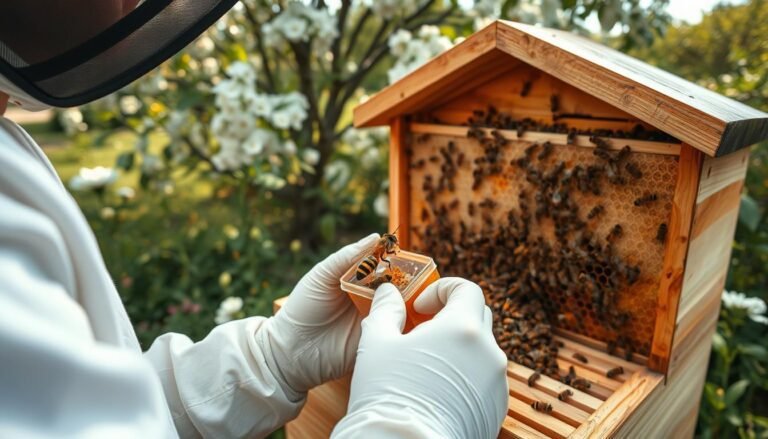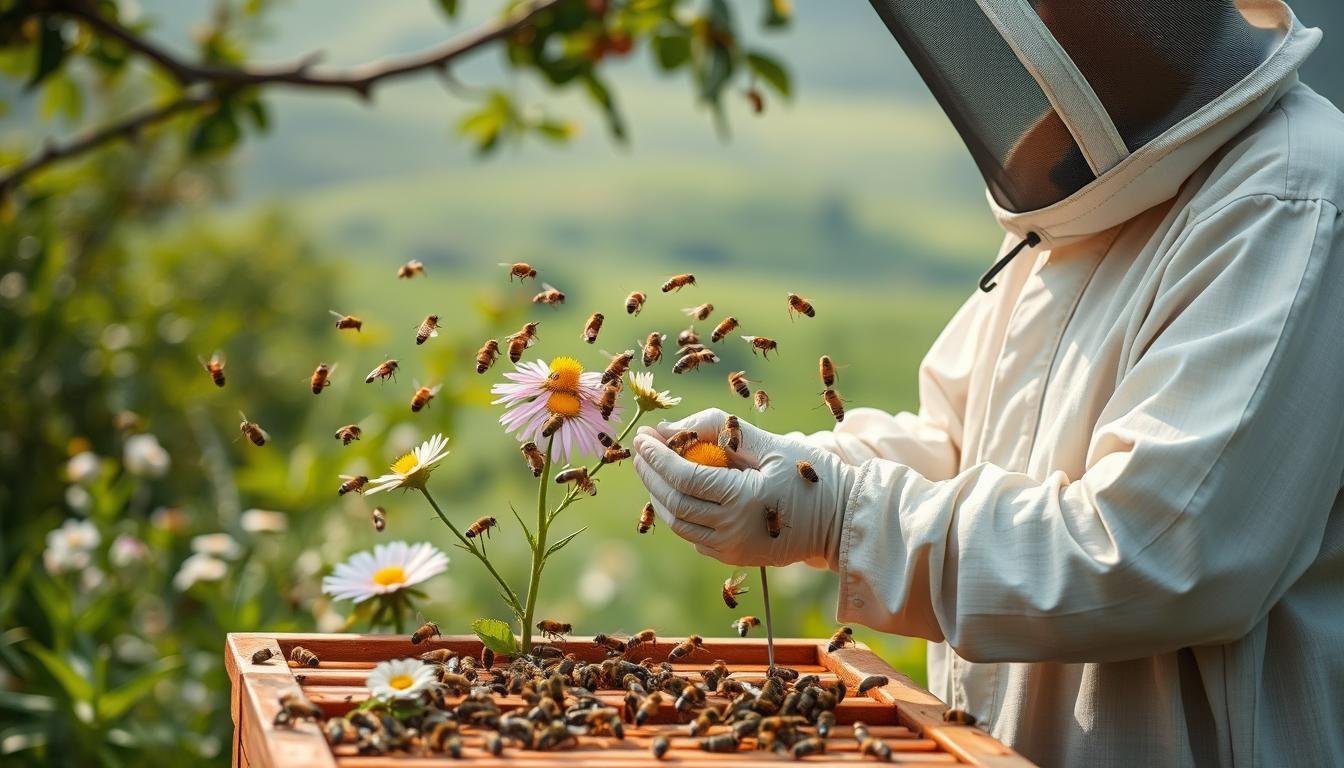
Many beekeepers assume a smoker is essential for every inspection. Experienced hands often finish a clear, safe check with slow movement, planning, and minimal disruption. A deliberate approach matters because removing covers and pulling frames disturbs the colony.
One sting can trigger alarm pheromone and escalate defenses. If that happens, step back and let the hive settle before resuming. Replace frames and boxes in the same order to respect brood and food patterns and reduce stress.
For chronically aggressive hives, requeening can change temperament with time. This guide delivers practical, step-by-step ways to work your hive and keep calm bees, highlighting professional technique, planning, and short, focused inspections. Follow these tips and your beekeeper experience will improve.
Key Takeaways
- Plan every inspection and limit time in the hive.
- Move slowly and replace equipment exactly as found.
- Pause and step away if alarm pheromone spreads.
- Requeening can transform an aggressive colony over time.
- Use minimal tools; handling often matters more than smoke.
- For safety guidance, see beekeeping safety precautions.
Why Calm, Smoke-Free Inspections Matter Right Now
Right now, minimizing smoke during an inspection reduces fire hazards and preserves hive scent cues. In drought-prone areas a stray ember is a real threat. That risk makes smoke-minimal methods more than a preference; they are responsible practice.
Sugar-water spritzing (1:1) is a practical alternative. A light spray distracts workers with grooming. That helps a beekeeper finish a focused inspection without agitating the colony.
- Health and scent: Less smoke means fewer respiratory irritants and clearer colony cues for reading brood, stores, and queen activity.
- Timing matters: Warm, calm weather and midday during a nectar flow usually give fewer guards at the entrance and smoother inspections.
- Public safety: Local rules and fire danger on hot days make non-smoke choices prudent and often required.
- Training benefit: New beekeepers gain lasting skill by learning slow, organized handling rather than relying on tools.
| Situation | Recommended Method | Priority |
|---|---|---|
| Dry, high fire danger | Sugar-water spray; no smoker | High |
| New package arrival | Light sugar spritz for acceptance | High |
| Midday nectar flow | Minimal disturbance, brief inspection | Medium |
| Experienced, calm colony | Optional entrance puff if needed | Low |
What Makes a Colony Defensive: Conditions, Cues, and Bee Behavior
A colony’s mood can flip quickly when weather, food supplies, or queen health put stress on the hive.
Seasonal patterns matter. During a nectar dearth or cool spells more foragers stay inside. That raises guard density and shortens the response time when the entrance or frames are disturbed.

Queen status and colony personality
A weak or missing queen, or genetics from hot lines, often makes a colony faster to alarm. Productive queens usually breed steadier workers over years, while problem queens can keep a hive on edge.
Alarm chemistry and spread
Isopentyl acetate is released near the stinger when a worker feels threatened. That chemical cue spreads at the entrance and inside the hive, recruiting nestmates and raising the alarm rapidly.
Beekeeper behavior that triggers alarm
- Soon jerky movements, dropped tools, or crushing a bee spike defenses.
- Long frame exposure and slow, awkward handling give more time for alarm pheromone to work.
- Different hives show different personalities; some need gentle handling or requeening.
Timing inspections during warm, steady weather and mid-forage times lowers guard numbers. Even then, one sting can change the colony mood; step back and wait for the alarm to fade before continuing.
How to keep bees calm without smoke: step-by-step techniques
A calm, efficient inspection starts with a clear goal and tools staged for fast work. Plan one primary outcome and set everything within reach. This reduces time the hive is open and lowers disturbance.
Prepare with purpose
Define the single most important task for this inspection. Lay out your smoker, sprayer, wrench, and frames nearby. Move quickly and finish in a brief, focused window.
Choose the right moment
Pick a warm, calm day during active forage. Midday checks often find fewer guards at the entrance and a quieter colony. Avoid cold, rainy, or high-wind periods.
Approach and open the hive
Use slow, methodical pressure when cracking seals. Anticipate frame looseness to prevent sudden pops. Keep frames oriented and return each one in original order.
Manage stings and alarm pheromone
If stung, set tools down and step back. Wait until the colony settles before resuming. This pause lets alarm pheromone dissipate and lowers recruitment.
Sugar water spray (1:1)
Mix sugar and water 1:1 in a clean sprayer. Apply a light mist across top bars and exposed bees so they begin grooming. Target clusters you handle and avoid soaking comb.
Combination technique
For sensitive operators or dry areas, pair a single minimal entrance puff with focused sugar spray during manipulations. Rely mostly on the spritz to occupy workers and reduce stress.
- Quick checklist: plan the task, choose good weather, move slowly, pause if stung, spray 1:1 sugar water, and replace frames as found.
- For further inspection technique, see this practical inspection guide.
Tools, setup, and safety to keep inspections calm at home
A tidy, staged workspace is the single best defense against rushed moves and upset hives. Set outer and inner covers where they can support a box off the ground and clear footpaths so nothing must be placed on soil.

Sprayers, veils, and workspace layout
Lay out tools in the order you’ll use them. Keep a well-fitted veil and gloves ready. Place the hive tool, frame rest, brush, and sprayer in a line that matches your workflow.
- Stage covers as temporary stands for boxes and arrange a stable frame stand nearby.
- Keep a dedicated, clean sprayer for sugar water so no residues clog nozzles or contaminate frames.
- Use a small bin for removed propolis and burr comb so reassembly is fast and accurate.
Fire-aware alternatives in dry weather
In high fire danger, consider skipping smokers entirely and rely on a light 1:1 sugar water spray to distract workers during a brief inspection.
If a smoker is necessary, pre-pack safe fuels like pine needles or burlap and confirm smoke is cool at your forearm before use. Avoid synthetic or bleached materials and keep a metal heat shield on hand.
Plan a post-inspection checklist: re-tighten boxes, confirm frame order, and return covers and tools. For an equipment refresher, see this essential equipment guide.
When smoke is still useful—and how to use it responsibly
A smoker remains a useful tool when brief, cool puffs can prevent defensive escalation. Used sparingly at the entrance, smoke masks alarm pheromone and reduces recruitment of guards. Bees often gorge on honey when exposed, which lowers the chance of stinging.
Signal your arrival with a couple of gentle puffs at the entrance, wait a few moments, then proceed. Over-smoking saturates the hive and slows recovery. Reserve heavier use for unusually defensive colonies or if a sting has already triggered alarm pheromone spread.
Safe fuels and practical technique
Choose clean-burning materials such as pine needles, burlap, small twigs, or corrugated cardboard. Avoid synthetic, bleached, or acrid materials that can irritate workers or taint comb and honey.
| Goal | Fuel | Notes |
|---|---|---|
| Light entrance masking | Pine needles, burlap | Cool, consistent smoke; low residue |
| Longer visit backup | Twigs, cardboard | Keep extra fuel; refill on a nonflammable surface |
| Emergency after a sting | Brief cool puff | Reduces further stings; don’t overdo it |
- Manage combustion: pack firmly, control oxygen with bellows, and test smoke on your forearm for temperature.
- Use respectful technique: a short entrance puff, a pause, then calm handling minimizes disturbance.
- Safety gear: a smoker with a heat shield and hook prevents burns and keeps visits consistent.
For background on why experienced beekeepers still carry a smoker, see this concise explanation about smokers and purpose. For swarming context where smoke use changes, consult a focused swarming preparation guide.
Conclusion
A concise plan and steady hands often make the difference between a quick inspection and a defensive reaction.
Plan each visit, move deliberately, and limit time in the boxes so hives stay orderly and honey stores suffer less. Use a 1:1 sugar and water mix in a clean sprayer for targeted misting; this helps workers groom and reduces alarm pheromone during manipulations.
New beekeepers should master handling first, then add minimal tools as needed. Reserve a smoker for moments when a brief, cool puff best protects the colony and people, and avoid any smoker use during high fire risk or package installs.
Finish every inspection with frames and boxes returned in order, secure the entrance, and note follow-up things for later days. Prioritize safety, steady technique, and consistent practice for better results over time. For seasonal guidance, see seasonal beekeeping tasks.
FAQ
Why are smoke-free inspections important right now?
Smoke-free inspections reduce fire risk during dry seasons, limit chemical and particulate exposure, and help new beekeepers learn low-stress handling. They also preserve natural colony behavior, making it easier to assess queen status and temperament without masking alarm pheromones.
What conditions make a colony more defensive?
Weather extremes, nectar dearth, late-season brood crunch, and recent disturbance increase defensiveness. Genetics and colony productivity shape temperament; a queen with aggressive stock or a colony under stress will react faster. High winds, cold mornings, or scarce forage escalate responses during inspections.
How does alarm pheromone spread and why is it critical?
Alarm pheromone, chiefly isopentyl acetate, releases when bees are crushed or disturbed. It disperses at the entrance and through air currents, rapidly recruiting workers. Minimizing sudden movements and crushed bees prevents rapid escalation during hive work.
What approach and movements reduce alarm during opening?
Move deliberately and slowly, avoid jerky “pops,” and lift frames gently. Keep tools and frames ready so inspections run quickly. Pause between tasks and allow time for bees to resettle before continuing to limit agitation.
When is it best to inspect without smoke?
Inspect on warm, sunny days with low wind during peak forage flow and mid-morning to early afternoon. Avoid nectar dearth, cool or wet conditions, and times when the colony is heavily crowded with incoming foragers.
How do I use sugar water spritz correctly?
Mix one part table sugar with one part water (1:1) until dissolved and cool. Lightly mist frames and bees from a distance to avoid drenching. The spray distracts foragers with feeding and reduces flight, but avoid overuse that creates stickiness or mold.
Can minimal smoker use be combined with sugar spray?
Yes. A few gentle entrance puffs of cool smoke can mask alarm pheromone while a light sugar mist occupies workers on frames. Use smoke sparingly and only when necessary to avoid overwhelming the colony and to reduce fire risk.
What tools and layout help calm hive work at home?
Use a fine mist sprayer, a quality veil, gloves if preferred, and an organized workspace with staged covers and boxes. Keep spare frames and tools within reach to shorten inspection time and maintain flow.
What are safe, fire-aware alternatives to smokers in dry weather?
Rely on sugar water spray, gentle handling, and timing inspections for favorable days. Use electric smokers with spark control only if necessary, and avoid burning materials or leaving embers in dry yards.
When is smoke still useful and how should it be applied?
Smoke remains useful when masking alarm pheromone during large manipulations or when colony temperament is unknown. Apply minimal, cool puffs at the entrance and allow a short wait before opening. Use natural fuels like pine needles or burlap and avoid treated or synthetic materials.
How should a beekeeper manage stings and pheromone release during an inspection?
If stings occur, step back calmly and wait for the colony to settle. Remove crushed bees immediately and avoid rubbing the sting area near the hive. Resume only after activity drops; rushing back in can amplify alarm pheromone spread.