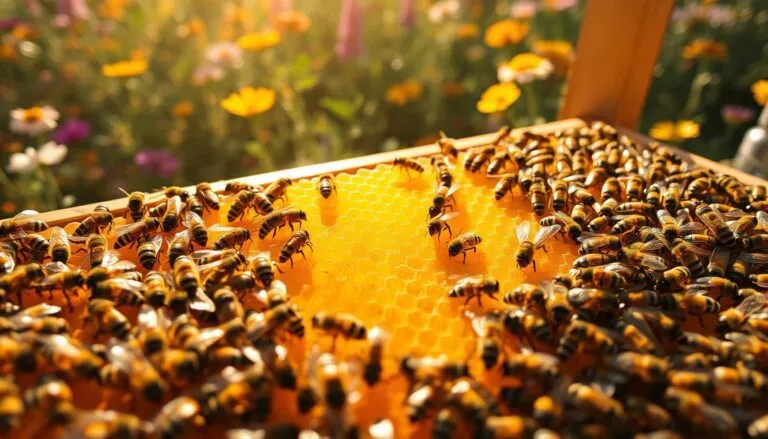
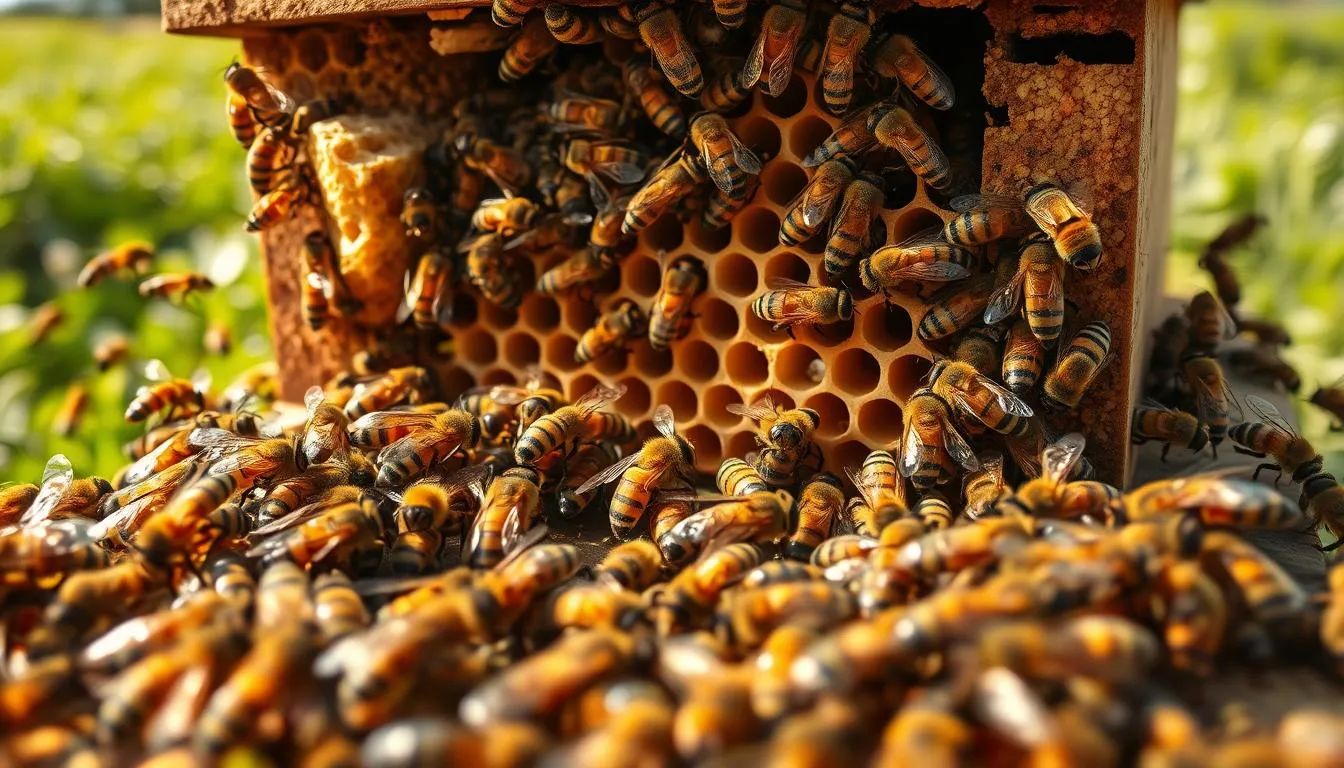
Swarming marks a strong, growing colony and often arrives during spring.
This section promises practical, field-tested signs that help beekeepers spot risk early and act fast. You will learn clear inspection clues and simple prevention steps that keep bees and production in your equipment.
Look for overcrowded frames, nectar filling brood cells, a spike in drones, and queen cups with eggs or royal jelly. Check frame bottoms in Langstroth boxes for swarm cells and watch entrance behavior for restlessness or bearding.
When brood cells cap, departure often follows on the next calm, sunny day. A timely split or adding drawn comb can prevent loss and preserve momentum for the season. For expansion tactics, see practical expansion tips.
Key Takeaways
- Early detection centers on frame bottoms, brood congestion, and entrance activity.
- Capped swarm cells often mean departure within a day or two.
- Add boxes, comb, and ventilation during spring to reduce pressure.
- Spot queen cups and a slimmed queen as high-risk signs.
- A timely split keeps bees in your equipment and maintains honey flow.
Understanding Swarming Today: Why Healthy Colonies Split in Spring
Spring often triggers strong colonies to divide when food, space, and worker numbers align. This natural reproductive move signals a colony’s health: plenty of honey, vigorous brood rearing, and a large population.
Natural reproduction vs. beekeeper goals
Swarming is essentially a show of strength for the species. Nature gains genetic spread and new homes, while beekeepers may lose honey, control, and hive continuity.
When and why swarms occur
Swarms form when the brood nest runs short on room, internal resources are abundant, and worker numbers surge. The colony reacts by building queen cups that become queen cells.
When a new queen develops and a day suits the bees, about half the workers leave with the original queen. Scouts then search for a suitable home — often a cavity near 1.5 cubic feet with a small entrance — and advertise options via waggle dances.
Practical notes for early spring management
Adding drawn comb, extra boxes, or frames gives immediate usable space. Drawn comb accepts brood and nectar fast; fresh foundation does not relieve pressure quickly.
Understanding the roles of room, resources, and population helps beekeepers decide when a split or simple box management will keep production steady. For step-by-step splitting guidance, see colony splitting methods.
How to Tell If Your Hive Is Preparing to Swarm
Quick, focused checks reveal a cluster of physical and behavioral cues that add up to a reliable sign the colony may depart. Read frames, the entrance, and queen condition together — the pattern matters more than any single clue.
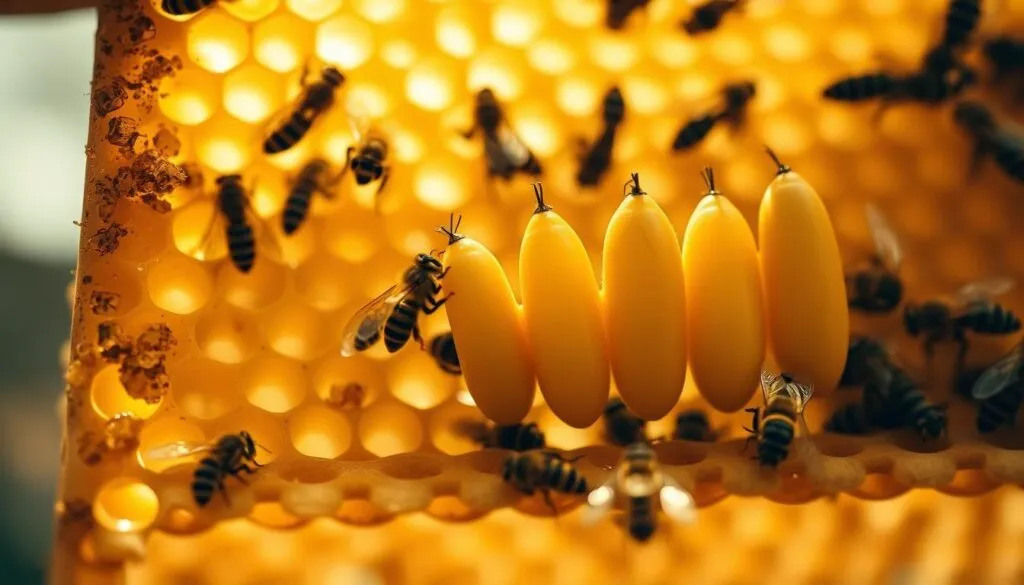
Queen cups versus queen cells
Bees build cups year‑round, but in spring early they multiply. If a cup contains an egg or a dot of royal jelly, it has become a queen cell.
In Langstroth gear, check the bottom of frames for those vertical cells. Finding several means the colony has moved beyond casual construction and is committed.
Backfilling brood with nectar
Backfilled cells look half to three‑quarters full with a concave nectar surface. That contrasts with true brood food, where larvae sit at the back in a thin, moist pool.
Such concave fills are often a countdown: less room for new brood and rising pressure for space, which encourages swarming behavior.
Drone spikes, entrance cues, and the slimming queen
Drone brood usually appears on frame margins and between boxes. A spike in drones signals reproductive investment and gives beekeepers a chance to inspect for Varroa.
At the entrance, look for a boiling population, restlessness, or bearding in mild weather — signs the colony lacks room inside.
Finally, note the queen: attendants slim her and reduce egg output so she can fly. Reduced laying, combined with the other signs, warrants immediate management action.
- Inspect queen cups with a flashlight; slit a cup edge if needed to confirm eggs or royal jelly.
- Scan frame bottoms in each brood box for swarm cells and count them.
- Differentiate brood food from nectar backfill; use that as a timing cue for intervention.
Confirming the Signs on the Frames and in the Brood Nest
“Check the bottom bars first — that’s where the colony writes its intent.” A close, calm inspection of frames reveals whether the colony is merely building or truly committed.
Locate swarm cells along the frame bottom in Langstroth gear; they often form in groups. Tip each frame in bright light and map which cells are open, charged with egg or jelly, or cells capped.
Reading congestion in the brood nest
Look for scarce open space for brood and nectar backfilling. If emerging areas are already filled, the brood box feels packed and nurse bees crowd the frames, the colony needs relief fast.
Using light and hive tool aids
Use a flashlight to catch the glint of royal jelly inside queen cups. When needed, gently slit a cup side with a hive tool to view contents without crushing the cell.
Find multiple charged queen cells across frames and you should act the same day.
- Note queen location and egg pattern; a reduced laying rate with many developing cells shortens the timeline.
- Prefer drawn comb in the brood box when adding space — it relieves pressure faster than foundation.
- For seasonal inspection checklists and timing, see seasonal tasks.
Preventing Swarming During Spring Inspections
Creating usable space and better ventilation during spring checks cuts swarm risk fast. During routine inspections, prevention focuses on giving bees room, steady airflow, and well‑placed resources.
Add drawn comb and an extra box when brood and bees fill most frames. Drawn comb accepts brood and stores honey immediately; bare foundation won’t relieve pressure quickly.
Improve ventilation by opening screened bottom boards partly on cool nights and cracking the inner cover when days warm. Better airflow reduces congestion and the stress signals that lead a colony toward departure.

- Reverse boxes so the queen shifts onto fresh open space below or above, matching her spring movement and giving room to lay.
- Prime the box above by moving a couple of outside-edge brood frames up only when temperatures stay mild; avoid moves during cold nights to prevent brood chill.
- Recheck quickly after changes to ensure honey and brood balance across frames and that congestion has eased.
Tip: Prioritize drawn comb and focused moves in the densest areas—this gives immediate room and keeps colonies productive. For a fuller plan, see our swarming preparation guide.
When Swarming Is Imminent: Act Fast with a Split
A committed colony gives clear signals; the right split at the right moment saves both bees and honey.
Decide quickly when multiple charged or cells capped appear low on the bottom of frames. The timeline is short and immediate action protects brood and stores.
Create an artificial swarm: find the queen and move the frame she occupies into a new hive. Add one frame of brood and one frame of honey or stores to jump‑start the split hive.
Create an artificial swarm
Place the queen, selected frame of brood, and a stores frame into fresh boxes. Position the split so returning foragers don’t all drift back.
Why removing swarm cells rarely works
Removing swarm cells wastes time. A committed colony will rebuild cells or use others. Leave developing swarm cells in the parent hive and let it rear a new queen.
After the split: brood break and mite management
The parent colony experiences a brood break while it raises a queen. That pause helps reduce Varroa reproduction and eases resource pressure.
Tip: Keep split entrances modest at first; the smaller unit needs time to establish guards.
| Item | Parent Colony | Split Hive |
|---|---|---|
| Queen status | Raises new queen from existing cells | Retains original queen |
| Brood pattern | Brood break reduces mite growth | Continuous brood supports immediate continuity |
| Forager return | Many leave at first, then stabilize | Position entrances to retain some returning bees |
| Urgency | Act same day when multiple charged cells present | Establish quickly with clean frames and comb |
Don’t Confuse It: Swarming vs. Supersedure vs. Absconding
Not every queen cell signals the same outcome. Read where cells form and how many appear before choosing a response. The pattern across frames and box levels gives the clearest clue.
Swarm cells versus supersedure cells
Swarm cells are often numerous and line the frame bottoms in Langstroth gear. Finding many charged cells across several frames usually means the colony plans to split and depart.
By contrast, supersedure cells are fewer. They usually sit in the middle of the brood area and indicate the colony will replace the queen without a mass exit.
Absconding red flags
Absconding is different: the entire hive can be left with brood and honey still inside. This often follows relentless disturbance, disease, heavy mite pressure, animal attacks, or poor ventilation at the site.
Urban swarms may settle in walls or attics and create removal calls. Use context — temperament, recent management, and ventilation — when deciding whether to add space, split, or improve the site.
Quick check: numerous, evenly aged swarm cells = act fast; a few central cells = evaluate queen quality.
| Sign | Swarming | Supersedure |
|---|---|---|
| Cell count | Many across frames | One to a few, central |
| Location | Bottom bars and multiple box levels | Middle of brood comb |
| Colony action | Large group departure | Queen replacement, no mass leave |
| Management | Add space or perform a split — see swarm control split | Assess queen; consider requeening |
| Risk factors | Congestion, slimmed queen | Failing egg pattern |
For broader reading on resources and manuals, consult our beekeeping resources guide.
Conclusion
Simple, focused inspections give a reliable roadmap for keeping colonies productive through spring.
Watch for converging signs: charged queen cells, nectar backfill, drone spikes, bearding, and a slimmed queen. Make sure to add drawn comb and the right box layout early so the colony has usable space and the pressure eases.
When preparations advance, act fast with a clean split. Move queen, brood, and stores into a fresh new hive, set entrances to retain foragers, and leave the parent to rear a new queen.
Reassess within a few days for temperatures, feed, and resources. Make sure recovery plans exist for wild swarms, and inspect the originating unit so both the split hive and parent colony can build back strong in your site.
FAQ
What are the earliest signs a colony will split in spring?
Look for increased queen cups on frame bottoms, more drone comb, and workers backfilling brood with nectar. Also watch for crowded brood nests and more bees clustering at the entrance. These cues usually show when the colony has grown fast and needs more space.
How can I tell queen cups from true queen cells?
Queen cups are small, open, and often empty. True queen cells hang vertically, are larger, and may contain royal jelly, eggs, or capped larvae. Check along the bottom of frames and the edges of brood comb to spot them.
What does backfilling brood with nectar indicate?
When workers fill brood cells with nectar, it reduces space for new brood. This often signals a colony preparing to send off part of its population. Find half-full, concave cells among the brood nest during an inspection.
Why does a spike in drone production matter?
More drone comb suggests the colony is investing in reproduction and may be gearing up to swarm. Drones are usually built on margins and top bars, so a sudden increase is a useful early indicator.
What entrance behavior shows restlessness or swarming intent?
“Boiling” populations, heavy traffic, rapid coming-and-going, and prolonged bearding on warm days point to restlessness. Scout bees may hover and explore nearby sites as well. These behaviors peak just before a swarm.
How does the queen’s condition change before a split?
The queen often reduces laying and receives fewer attendants, making her lighter for flight. You may notice a slimmer queen or less brood laid daily. Reduced laying helps the colony prepare for a reproductive flight.
Where are swarm cells most commonly located on frames?
Swarm cells are frequently built on the lower edges and face of frames, below the brood area. Capped swarm cells are larger and hang down; locate them by carefully examining the frame bottoms and comb faces.
How can I read brood nest congestion during an inspection?
Look for compacted brood next to stored honey and little empty comb for the queen to lay. If brood and stores crowd the brood nest, the colony lacks room and may initiate swarming preparations.
What simple tools help inspect queen cups safely?
Use a hive tool and a headlamp or daylight to lift frames gently and check the underside of comb. Work slowly to avoid crushing bees and keep inspections short, especially in cool weather.
How can I prevent a spring split by giving more space?
Add drawn comb or an extra brood box to relieve congestion. Providing space above the brood nest reduces the trigger for producing swarm cells and lets the queen continue laying.
What ventilation improvements reduce swarming pressure?
Install screened bottom boards or prop the inner cover to increase airflow. Cooler, better-ventilated hives discourage overcrowding and lower the colony’s drive to swarm on very warm days.
When should I reverse hive bodies to open laying room?
Reverse boxes when the brood nest becomes concentrated at the top of the lower box and stores sit above it. Moving the lower frames up gives the queen fresh comb and can delay swarm preparations.
What is careful brood “priming” and when is it useful?
Priming moves some brood into the upper box to expand the queen’s laying area without creating a full split. Do this on mild, calm days so nurse bees can tend the moved brood effectively.
How do I create an artificial swarm quickly?
Transfer the queen with a frame of brood, some nurse bees, and stores into a new hive. Leave the original hive with swarm cells, or manage them separately. Acting fast when swarming is imminent prevents losing bees to the wild.
Why won’t removing swarm cells always stop a committed colony?
Once a colony has committed, workers will rebuild cells repeatedly. Destroying cells delays but rarely prevents swarming if the underlying crowding and seasonal drive remain.
What benefits follow a successful split for mite and brood management?
A split creates a brood break that can reduce varroa populations and gives both units a chance to rebalance resources. Use the break to apply targeted mite control and monitor both colonies closely.
How do I distinguish swarm cells from supersedure cells?
Swarm cells appear in numbers and along frame bottoms or edges. Supersedure cells are fewer, often in the brood area near the existing queen, and used to replace her rather than split the colony.
What signs point to absconding rather than swarming?
Abandonment of brood and stores, heavy disturbance, disease, or extreme heat can cause absconding. Unlike swarming, absconding leaves the hive largely empty of bees and is usually not a controlled reproductive event.