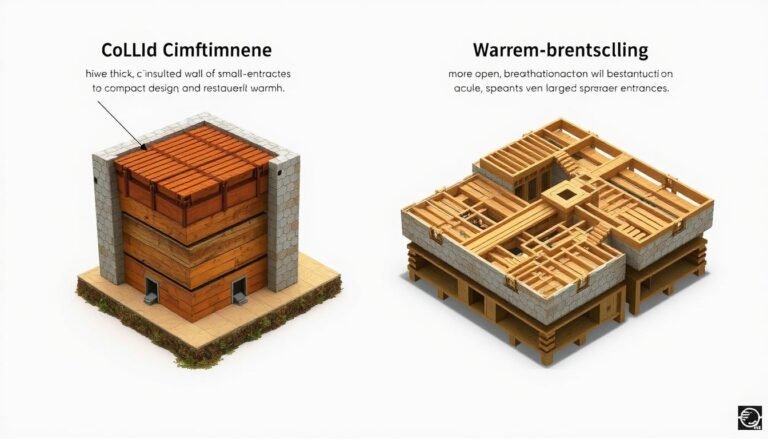
Start with safety and clear goals. This short guide shows how to attract and move a swarm while reducing fall risks and heavy lifts. Learn to choose manageable equipment and plan moves for the right time of day.
Understand what a swarm is: bees leave a hive and look for a temporary box that matches cues like volume, scent, darkness, and entrance size. Matching those clues raises success and keeps you safe.
The basic workflow is simple: build and bait the box, pick a safe site, attach and monitor, close the entrance in the evening, move at dawn, then transfer into a permanent hive with better comb. Check traps roughly once per week to avoid overly heavy boxes and to learn productive local spots over time.
For deeper prep and season planning, see this swarming preparation guide. The following sections give practical, U.S.-focused tips to help you scale from one capture to many.
Key Takeaways
- Prioritize personal safety: plan access and use manageable gear.
- Match box cues—volume, scent, darkness—to attract bees.
- Check traps weekly; close at dusk and move at dawn to reduce drift.
- Transfer bees promptly into quality comb and a permanent hive.
- Record locations and timing to improve success over seasons.
Safety-first mindset for catching swarms
Prioritizing safe access and retrieval changes how beekeepers choose sites and gear. When a box is higher it attracts more bees, but a deep box hung too high can be impossible to retrieve safely. Balance attractiveness with what you can lower from the ground.
Use stable platforms. Deer stands give secure footing and built-in ladders, but attach both stand and box to the tree with rated straps or bolts. Inspect attachment points before you climb.
Check traps about once a week. Once brood starts, a colony will stay put more readily. Still, avoid letting boxes become too heavy to lower.
- Plan access: if you can’t descend with one hand on the ladder and one on the box, change the site or method.
- Pack a minimal climb kit: straps, a pre-rigged hanger, a red-mode headlamp, and gloves.
- Teach helpers safe attachment, lifting technique, and exit routes from the ground.
| Risk | Mitigation | Why it matters |
|---|---|---|
| High hang height | Use shallower boxes or lower sites | Reduces fall and lift risk when retrieving colony |
| Unstable footing | Use deer stands or secured ladders | Provides controlled climbs and safer handling |
| Overweight box | Check weekly and combine inspections | Prevents dangerous lifts and colony loss |
For planning and reference, see this beekeeping resources and books to train new beekeepers and refine your way of working.
Build and bait: the gear and trap specs that actually work
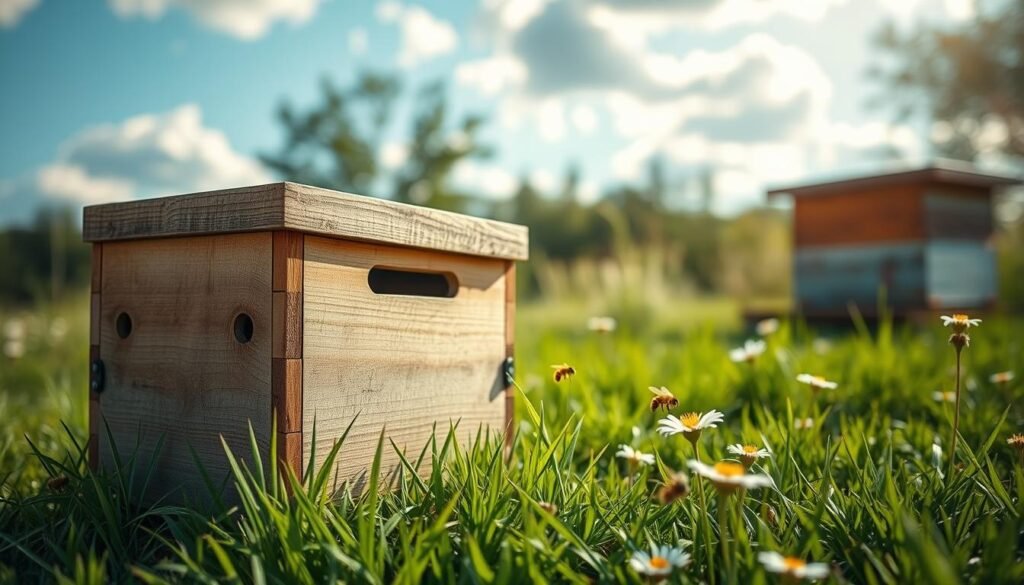
Choose a trap that scouts recognize and you can handle on a ladder. Aim for a volume between 40 and 60 liters; a 10-frame Langstroth deep is about 43 liters, while two nuc boxes joined reach roughly 46 liters.
Size and entrance matter. Use a low entrance near the bottom of the wall about 2 square inches—often a 1/2″ by 4″ slit. Tilt the box slightly forward to shed rain and reduce moisture inside.
Keep weight low—target ~15 lb or less—so one person can carry and lower the box without strain. Favor taller-than-wide profiles that strap easily to trunks and use a light exterior color to limit heat buildup.
Frames, comb, and interior cues
Fit 5–7 frames; foundationless frames work fine. Add one frame of dark comb that has been frozen 48 hours to boost attraction without adding pests.
Scenting: propolis, lemongrass, and lures
Rub propolis on interior surfaces and place a few drops of lemongrass oil in slow-release tubes. Commercial pheromone lures are effective but cost more. Use a telescoping top to keep the interior dry and ready for transfer into a permanent hive.
- Match proven size so scouts accept the cavity.
- Use a modest low entrance to mimic tree hollows.
- Include frames to make later transfer painless.
Picking the perfect site: height, shade, water, and distance
Find a site scouts can spot and you can manage. Choose a tree with a clear approach and a safe fall zone. Mount traps around 12–15 feet when possible, but never higher than you can lower alone.
Height, visibility, and shade
Visibility matters. If you cannot see the trap from about 100 feet, scouts may miss it. Full shade reduces heat inside the box and keeps a calmer interior.
Distance and “lucky trees”
Space traps across your area, several hundred feet to one mile from known colonies. To keep your own colonies, place traps at least 750 feet from your bee yard.
When a tree performs well, leave it unchanged. Preserve that site year to year to build repeat success.
Landmarks, entrance direction, and water
Pick landmark trees—forks, field edges, or fencerows—so scouts find the new home easily. Aim the entrance south over an open flight path.
Nearby water increases occupancy. If natural sources are scarce, add a slow drip within a few hundred feet.
| Feature | Recommended | Why it matters | Quick tip |
|---|---|---|---|
| Height | 12–15 feet | Attractive to scouts; reachable for retrieval | Never exceed safe lowering height |
| Visibility | Visible from ~100 feet | Helps scouts locate box | Trim low clutter, keep line of sight |
| Distance | Several hundred ft–1 mile | Reduces drift and targets desired colonies | 750 ft+ from your yard for own colonies |
| Water & entrance | Within a few hundred feet; south-facing | Water comforts bees; entrance directs flight | Add slow drip if dry |
For trap design tips and baiting methods, see this bait hive how to catch guide.
Setting and monitoring traps without risking a fall
Smart placement and simple hardware make setting traps faster and far less hazardous. Plan each hang so ladder time is minimal and each movement has purpose.
Attaching with straps, rope lifts, and limb rests
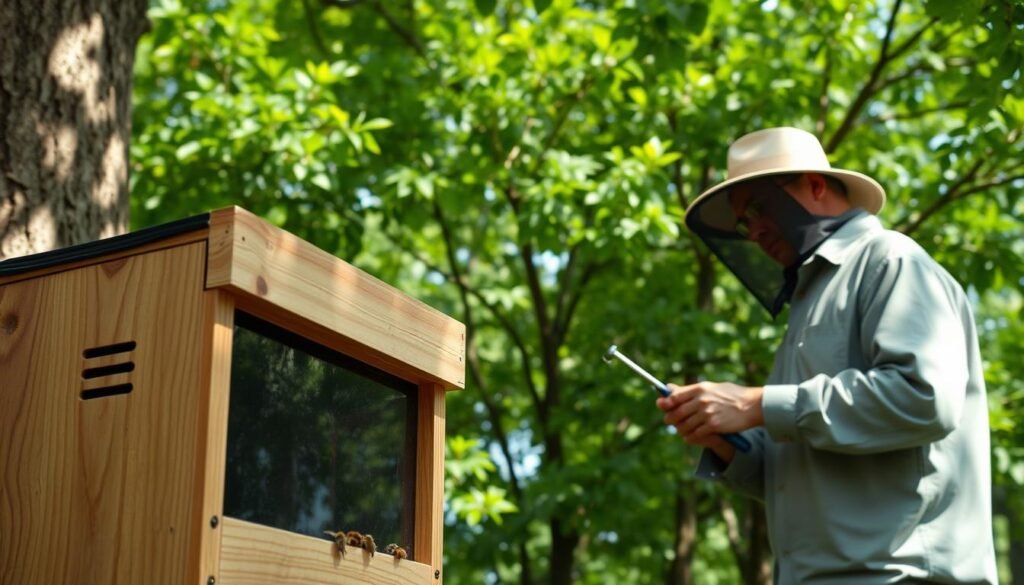
Quick attachment: run tie wire under the telescoping top to form a center loop. Hang the box on a screw, then lock it with a ratchet strap around the trunk.
Where a sturdy branch is present, rest the box on the limb while you secure two ratchet straps to the tree. This transfers weight and reduces arm fatigue.
For higher placements, use a rope lift: toss the line over a branch, tie under the box, hoist, then strap. This cuts ladder time and lowers risk.
Operational tips and monitoring cadence
Keep the box tilted slightly forward to shed rain. If you use foundationless frames, set it level side-to-side so comb draws straight.
- Pre-rig each box with a wire loop beneath the top so it hangs like a picture and ties down quickly.
- Work with a partner to spot, hand up straps, and steady the ladder.
- Choose a calm day with dry ground for installation — footing matters more than rushing the job.
- Adopt a once-per-week check from the ground: glass the entrance and watch for steady flight lines or pollen return.
Lowering and checklist: clear the area beneath the tree, control the descent hand-over-hand, and step down deliberately with a secure grip. Keep a short checklist for each trip: strap integrity, tilt, entrance clear, and top sealed.
43. catching a swarm safely: step-by-step capture and removal
Coordinate an evening seal and a dawn transfer to protect the queen and minimize forager loss. Plan the evening closure so returning foragers join the cluster; close the entrance after dark when flight has stopped.
Evening entrance closure and the dawn move
Confirm occupation from the ground before you climb. Watch for steady flight lines and pollen return to ensure the colony is committed.
Gently screen or plug the entrance after dark. Avoid jostling that could break comb starts or disturb the queen.
At first light, lower the box carefully. Transport it immediately to reduce heat stress and vibration that harms clustered bees.
When to act, how often to check, and avoiding overweight traps
Check traps once per week. Once brood appears, most colonies stay put, but don’t delay: boxes can become too heavy to lower safely.
- Keep spare boxes ready to split loads if multiple swarms arrive.
- Secure ventilation with screened entrances and strap loads to prevent tipping.
- For short moves, use reorientation methods at the destination to retain oriented foragers on day one.
Transfer promptly into better comb and a permanent hive. Protect the queen and document date, time, estimated size, and actions taken to improve future timing and success.
From trap to permanent hive: smooth transfer and placement
Set the permanent hive in place first. Position it in its final location, level side to side, and match the entrance direction used on the trap. This helps oriented foragers and reduces confusion during transfer.
Move frames carefully. Open the trap and shift frames into the permanent hive, keeping the cluster together. Use drawn comb or foundation to guide straight comb building and place one dark comb frame if available to speed acceptance.
Open brood versus a queen excluder
To reduce absconding, add one frame of open brood if you have it; brood anchors the colony without hindering the queen. If you prefer a temporary queen excluder, remove it as soon as open brood is present. Be cautious: a virgin queen must be free to fly for mating.
Feeding choices for new colonies in U.S. climates
Decide feeding by local forage. In strong nectar flows, skip supplemental feed and let bees work natural honey stores. In dearth or when rapid comb build is crucial, use internal feeders to avoid robbing and to give the colony energy to draw comb.
- Transfer frames while keeping comb snug to prevent swaying.
- Minimize smoke and avoid crushing bees on frame rests.
- Use an entrance reducer to match colony strength and reduce robbing risk.
- Consider a nuc for very small colonies, then expand as brood and comb increase.
Confirm the queen and brood pattern quickly. Look for eggs or open brood; if unseen, monitor for new comb, pollen return, and honey collection as positive signs the new home is accepted.
First week to first month: signs of success and light-touch management
In the first days after transfer, focus on brief checks that confirm the colony is feeding brood and building comb. Short visits reduce chill risk and help the cluster settle.
Open brood, foragers with pollen, and inspection cadence
Week one: watch entrances for steady traffic and foragers returning with pollen. These are early signs the hive is provisioning and storing honey.
By week two: look for open brood and eggs to confirm a laying queen. If you don’t see brood, allow time for virgin development before intervening.
- Keep inspections short and purposeful — verify brood, food, and space only.
- Plan checks every 7–10 days during build-up, then lengthen intervals as frames stabilize.
- Track nectar flows in your area; add space when honey storage accelerates to prevent crowding.
- Compare progress across colonies to spot slow builders needing queen or nutrition checks.
Note temperament and handling responses. Calm honey bee behavior at the entrance often signals good queen performance. Keep clear notes on weather, forage, and milestones so beekeepers refine timing and decisions over time.
For seasonal timing and task lists, see seasonal beekeeping tasks to align inspections with local flows and conditions.
Conclusion
Make each hanging, check, and transfer repeatable to turn luck into reliable results. Use light-colored, weather‑tight boxes with the right entrance and volume hung about 12–15 feet near water and clear flight paths. Keep weekly checks, plan evening closures and dawn moves, and move occupied boxes promptly into permanent hives with solid frames and supported comb.
Maintain productive trees by swapping in an empty box when you lower a full one. Standardize your boxes, attachments, and nuc gear so every lift, strap, and descent feels practiced. This consistency helps bees accept new homes and keeps your work controlled.
Finish each trip with the same checklist: straps tight, top sealed, entrance clear, and a safe route for lowering and transport. Track size, frames occupied, and timing, and share local site notes with fellow beekeepers. For coordination, keep one dedicated email for alerts and offers of productive locations.
FAQ
What protective gear should I wear when approaching a swarm?
Wear a full beekeeping suit, gloves, and a veil. Use sturdy boots and keep long sleeves and pants closed to reduce exposed skin. If you use a smoker, keep it controlled to avoid stressing the bees. Always have an assistant if you’ll be using ladders or working near trees to reduce fall risk.
What size box and frames work best for a temporary trap?
Use a deep hive body or nuc box sized to hold several frames. Standard Langstroth deep boxes accept eight or ten frames and give space for comb and brood. For nuc boxes, 5-frame or 8-frame configurations work well. Include foundation or empty frames for bees to build comb. Ensure the entrance is appropriate for airflow and defense.
How do I scent a trap to attract honey bees?
Use lemongrass oil sparingly on a cotton swab and place it inside the box. Propolis or old comb from healthy hives can help as a familiar scent. Commercial pheromone lures are effective; follow manufacturer instructions. Rotate lures weekly and avoid over-scenting to prevent deterring bees.
Where should I place a trap in terms of height and shade?
Place traps at chest to head height when possible, or higher in trees if safe and accessible. Aim for shaded locations to keep temperatures moderate. South-facing entrances help morning warmth, but avoid full sun in hot climates to prevent overheating the colony.
How far from my apiary should I set traps?
Place traps within a few hundred yards to a few miles of known bee activity depending on forage and landscape. Too close to your apiary can encourage drifting; too far reduces likelihood of attracting local swarms. Track local patterns and “lucky trees” where swarms commonly settle.
What nearby features improve trap success?
Water sources, landmarks like fence lines or large trees, and sheltered spots increase success. Bees often scout for sites near water and clear flight paths. Mark the trap with visible landmarks so you can find it quickly for checks or removal.
How do I attach a trap safely in a tree or on a post?
Use rated straps or rope and a secure platform. Anchor the trap to a sturdy limb, avoid overloading branches, and use a stable ladder with a spotter. Consider lowering a baited trap to check it at ground level rather than climbing frequently. Prioritize personal safety over immediate retrieval.
When should I close the trap entrance for transport or transfer?
Close the entrance late evening once most foragers return. Secure vents for transport and move the box at dawn if possible. Evening closure reduces queen loss and limits bee stress during handling. Keep the box level and ventilated during transport.
How often should I check traps and what signs indicate a successful baiting?
Check traps weekly, more often during peak swarm season. Look for bees exploring inside, increased activity at the entrance, and building comb or returning foragers with pollen. Avoid frequent disturbances which can cause scouts to abandon the site.
What weight limits should I consider to avoid overloading branches or boxes?
A full deep box with honey, comb, and bees can weigh over 40 pounds; nucs are lighter. Estimate potential weight and only attach boxes to limbs rated for the load. Use multiple straps or a cradle to distribute weight and prevent branch failure.
How do I transfer a trapped swarm into a permanent hive without causing absconding?
Move the box to the apiary and open the trap into a prepared hive with drawn comb if possible. If brood is present, transfer frames containing open brood and the queen into the permanent box. Minimize time out of the box and perform transfers in the evening to reduce flight risk.
Should I use a queen excluder during initial transfer?
Do not use a queen excluder when you first transfer a swarm. Allow the queen freedom to move with the brood and workers to reduce absconding. Introduce excluders later once the colony has settled and started laying in the new hive.
When is feeding a new swarm appropriate in U.S. climates?
Feed sugar syrup in spring or early season when nectar is scarce to help colony buildup. In warm climates or during nectar flows, avoid heavy feeding to prevent robbing. Use pollen substitute when pollen resources are low, but prioritize natural forage when possible.
What should I look for in the first week to month after transfer?
Expect reduced flight activity for a few days, then look for returning foragers with pollen, capped brood, and steady population growth. Inspect gently after one week, then again at two to three weeks to confirm the queen is laying and brood pattern is solid.
How can I tell if the colony includes open brood and a mated queen?
Open brood (eggs and larvae) indicates recent egg-laying; capped brood appears later. Spotting eggs at the bottom of cells confirms a laying queen. Presence of foragers with pollen and organized comb with brood are strong signs the colony is healthy and mated.
What risks should I plan for during hive establishment and early inspections?
Watch for robbing, wax moths, small hive beetles, and swarming impulses. Keep inspections brief, avoid leaving honey exposed, and provide adequate ventilation. Address pests quickly and ensure the queen is present to maintain colony cohesion.
How do I prevent swarms from absconding after relocating the trapped colony?
Provide adequate space with drawn comb, ensure abundant forage or supplemental feed, and avoid excessive disturbance. Keep the new hive shaded in hot weather and protected from predators. A confident, laying queen and plentiful brood reduce absconding risk.
Can I use nuc boxes versus deep boxes for long-term placement?
Nuc boxes are great for starting colonies and for ease of handling, but they may need expansion to deep boxes for long-term honey production. Plan to move frames into a permanent Langstroth deep box as the colony grows to prevent overcrowding and swarming.