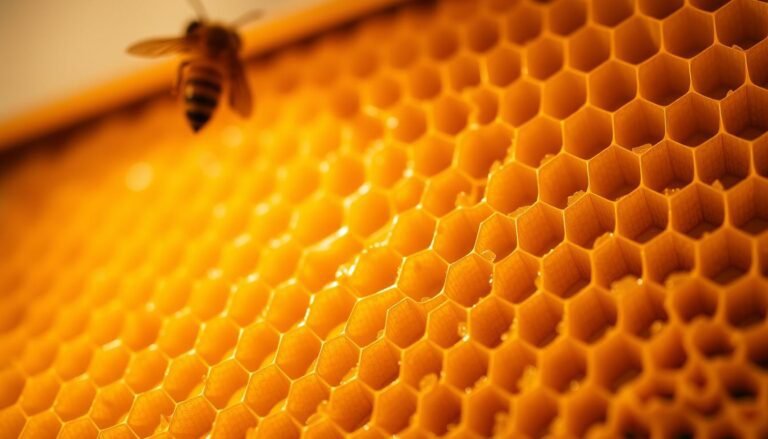
The queen is the biological engine of a colony. In a typical hive of up to 60,000 honey workers, her pheromones and steady egg laying keep social order and steady brood renewal.
Workers regulate her fate—they build cups and special cells, raise a successor, or reduce feeding before a swarm to prepare flight. These worker actions protect efficiency and let the group respond to change.
For practical beekeeping, monitoring the queen bee’s output and pheromone spread guides decisions that affect honey yields, disease resistance, and winter survival. Visible cues such as brood patterns, queen cups, and developing cells signal whether a colony is stable or shifting toward swarming or replacement.
Good inspections focus on presence, brood strength, and stores. That trio helps beekeepers spot trouble early and support long-term health.
Key Takeaways
- The queen drives brood production and pheromone balance that hold a colony together.
- Worker behavior—cups, cells, and feeding—controls swarming and replacement.
- Watch brood patterns and honey stores to assess productivity and overwinter odds.
- Regular checks help prevent queen failure, a known factor in winter losses.
- Use trusted resources, such as a comprehensive beekeeping guide, for deeper inspection methods.
Why the Queen Is Central to a Healthy Hive
Sustained egg laying by the sole fertile female fuels population turnover and seasonal growth. Continuous eggs ensure enough workers for nursing, comb building, and foraging so the colony can expand and store food.
Mandibular pheromones from that female coordinate behavior across the brood nest. These chemicals suppress worker ovary development, delay replacement efforts, and stimulate foraging to match brood needs.
Crowding can dilute pheromone distribution. When transmission falls, workers start making cups and later queen cells—early signs of a possible swarm. Beekeepers in the United States should time inspections to spot these signals and add space or split colonies.
Quality of the queen links directly to hive outcomes. A vigorous female usually means higher honey yields, fewer disease problems, and better overwinter survival. Drones supply mating, while worker bees handle daily care so one queen can focus on laying.
For hands-on guidance, see attending to the queen bee for inspection tips that help keep brood patterns consistent and the colony balanced over time.
Queen Bee Anatomy and Distinctive Traits
A queen’s body is sculpted for nonstop reproduction, with features you can spot if you know where to look. She measures about 20 mm and has wings that reach only halfway down an elongated abdomen. Those proportions help beekeepers identify her movement through the frames.
Size, stinger, and spermatheca: features that define her
The smooth stinger lets the queen sting multiple times during lethal encounters with rivals and to steady herself while laying in each cell. It is not a tool for foraging.
The spermatheca stores millions of sperm from mating flights. With 150–180 ovarioles per ovary, she can fertilize eggs for years and sustain steady brood production.
How anatomy supports egg laying and colony stability
Enlarged abdominal space and reproductive organs free the colony from constant replacement needs. Workers feed, groom, and clean her so she conserves energy for laying.
Wax cell architecture and frame orientation accommodate her size—vertical queen cells during rearing and regular worker cells for laying. These traits, plus pheromone output, keep workers organized and the colony stable.
From Egg to Emergence: Queen Cells, Royal Jelly, and Development
Detecting early wax work and larval feeding gives a clear signal that new reproductive females are being raised. Dome-shaped cups made of wax often appear before a full reproductive program begins.
Queen cups are small domes. When an egg sits inside and workers draw the wall downward, the cup becomes a vertical queen cell about 25 mm long. That architecture fits the larger developing female.
Royal jelly and early caste commitment
In the first three days, larvae destined to be queens receive continuous royal jelly from nurses. This rich secretion alters hormones and commits the larva to reproductive development.
Sixteen-day timeline and worker help
Development from egg to emergence takes 16 days, with cells usually capped around day 9. Beekeepers can track eggs, larvae, and capped cells to predict emergence.
- Vertical cells differ from worker cells in size and orientation to house the larger adult.
- Workers feed larvae, maintain royal jelly supply, and help thin the wax cap when a virgin chews out.
- Multiple reproductive females may be reared at once in crowded colonies; available nurses and honey influence success.
Understanding these benchmarks lets managers time splits or add space before capping to reduce swarming risk and align interventions with natural windows.
Mating Flights, Drones, and Genetic Diversity
A series of quick, well-timed flights lets a young reproductive meet many partners and return fully provisioned with sperm.
Orientation flights come first, followed by 1–5 nuptial flights over 2–4 days. These usually occur on calm, sunny mid‑afternoons. Virgins travel to drone congregation areas 2–3 km away where males gather.

Drone behavior and rapid mating
Groups of drones form aerial comets in these zones. Mating events are brief and fatal for each drone. A single female typically mates with about 7–17 drones in quick succession.
Sperm storage and reproductive anatomy
The oviducts shuttle semen to a compact spermatheca. There the sperm remain viable for years, letting a returned queen lay fertilized eggs from stored cells. She also carries 150–180 ovarioles to support high egg output.
Benefits of multiple matings
Polyandry boosts genetic diversity in the colony. Research links this diversity to higher productivity, reduced brood disease, and better survival. Weather and local drone numbers shape success, so good apiary management supports strong drone populations and optimal flight conditions.
Pheromones and Colony Coordination
Chemical signals from the laying female organize life inside the hive. These mandibular pheromones act on workers to hold social order and suppress worker ovary development.
Mandibular pheromones and worker fertility
Mandibular secretions directly inhibit workers from developing ovaries and from rearing replacement reproductives too soon. This suppression stabilizes the colony and keeps brood patterns steady.
Signals that shape behavior
Pheromones also temper swarming drives, stimulate pollen foraging, and sync brood rearing with available food. Production and spread change with queen age, mating status, season, and even time of day.
| Factor | Effect on Pheromone Signal | Colony Response |
|---|---|---|
| Age of queen | Signal weakens over years | Workers may start queen cells or supersedure |
| Mating status | Unmated or poorly mated emit altered cues | Reduced brood viability and changed foraging |
| Crowding | Coverage per bee drops | Higher chance of swarming and queen cell construction |
| Season/time | Daily and seasonal shifts in output | Foraging peaks and brood cycles adjust |
Workers sense gradients and reassign tasks—nursing, comb work, guarding—based on smell cues. Reduced signaling is a practical early warning for beekeepers to add space or split hives.
Beyond the nest, these same chemicals attract drones during mating flights, showing how a single role connects local coordination to reproduction. Understanding pheromone dynamics helps predict transitions toward replacement or reproductive swarming and protects honey and brood continuity.
Egg-Laying Powerhouse: Productivity, Patterns, and Seasonality
A top-layer reproductive can place eggs in cell after cell, shifting a colony’s growth in a matter of days. A high-quality queen commonly lays about 1,500 eggs per day under optimal conditions, and lifetime totals can reach into the hundreds of thousands.
Laying rates rise and fall with forage, workforce size, open comb, disease, and nutrition. When pollen and nectar are abundant, brood expands rapidly and capped brood frames can appear edge-to-edge during peak spring growth in the United States.
Workers regulate feeding to support output. Nurse bees feed her more often and for longer times as demand grows so she can sustain continuous egg laying.
What to watch: dense, consistent brood patterns signal strong productivity and balanced resources. Missed laying days from weather or congestion reduce worker numbers later and can lower honey yields during flows.
Keep ample drawn comb to avoid backfilling and delays between cycles. Regular checks at the right time help confirm eggs and young brood are present and link laying consistency to stronger overwintering and disease resilience.
For details on reproductive anatomy and how it affects these rhythms, see reproductive system differences.
Queen bee importance for Hive Health and Colony Longevity
Robust reproductive output speeds brood build-up and sets the pace for spring growth. A vigorous laying rate produces the foraging force needed to capture nectar and raise honey stores.
Links to honey production, disease resistance, and overwintering
Strong egg laying and steady pheromone output correlate with higher honey yields and lower disease levels. Dense, even brood leads to balanced age groups and better thermoregulation in winter.
Worker support roles: feeding, grooming, and distributing pheromones
Worker bees feed pre-digested food and royal jelly to the female and young larvae. They groom her and spread pheromones so the whole colony stays synchronized.
| Factor | Effect | Practical outcome |
|---|---|---|
| High laying rate | More workers in spring | Greater honey capture during flows |
| Strong pheromone spread | Stable social order | Fewer emergency queen rearing events |
| Good nutrition | Better larvae survival | Improved overwinter survival |
Monitor for declines in laying or scent signals. Early intervention protects honey yields and reduces winter losses across colonies.
Swarming: How Colonies Reproduce and Manage Queens
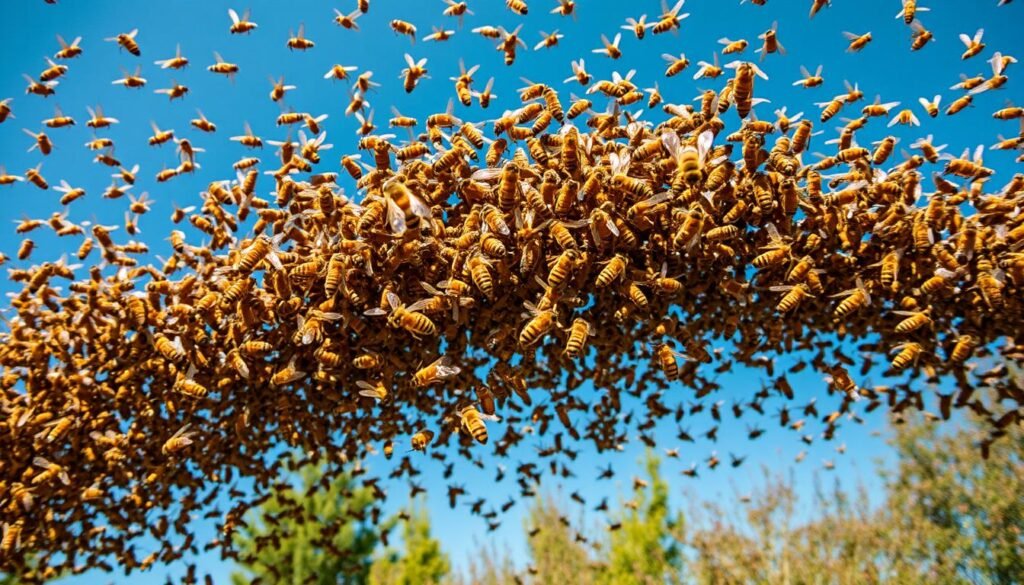
Swarming is the colony’s natural split: workers respond to crowding and diluted scent signals by building wax cups that can become full queen cells.
Pre-swarm signals include many cups, a tight brood nest, and weaker pheromone coverage. These signs often precede capping, which usually occurs around day 8–10. Watch bottoms of brood frames—many cells hide low on comb.
Prime swarms and what follows
At departure the old queen often sees reduced feeding so she is lighter for flight. The prime swarm typically leaves the hive the day of or just after capping.
About a week later virgins emerge. They may pipe, fight, or trigger afterswarms. Drones and good weather affect successful flights and mating.
Beekeeper mitigation
- Provide space: add drawn comb and supers in 1–2 week steps during flows.
- Remove uncapped cells to delay commitment and inspect frame bottoms for hidden cells.
- Create artificial splits to divert the hive into managed new colonies.
- Retain capped cells if a prime swarm has left—this secures a replacement and keeps one queen per hive.
“Timely, routine inspections during swarm season protect honey production and preserve colony continuity.”
| Signal | What it means | Action for beekeepers |
|---|---|---|
| Many cups | Early intent to rear reproductives | Increase space; inspect frames |
| Capped queen cells | Commitment to swarm (day 8–10) | Remove or split within days before flights |
| Crowded nest | Pheromone dilution | Add supers or split colony |
| Virgin piping | New queens present | Expect fights or afterswarms; monitor closely |
For a deeper primer on development timing and management, see this queen development guide.
Supersedure and Requeening: Replacing an Aging or Failing Queen
A clear plan for replacing a failing reproductive can stop productivity loss and restore colony balance quickly.
Recognizing decline: supersedure happens when pheromone spread falls, injury or disease impairs laying, or when too few fertilized eggs appear. Watch for spotty brood patterns, fewer eggs, and weaker scent coverage across frames.
Timing matters: intervene when plenty of young workers are present to feed and accept a new queen. Acting during a stable build-up period reduces rejection and limits disruption to honey flows.
Introducing a new queen and genetic considerations
Use a protected cage and allow gradual release to improve acceptance. Keep an eye for competing queen cells; colonies with entrenched cells or virgins often reject a purchased queen unless rival cells are removed.
Genetic refresh pays off. Requeening annually or selectively can boost laying rates, temperament, and disease resistance suited to local conditions.
| Signal | Meaning | Recommended action |
|---|---|---|
| Spotty brood | Reduced fertilized eggs | Inspect mating history; consider requeening |
| Fewer eggs | Declining laying rate | Introduce a well-mated new queen using gradual release |
| Competing queen cells | Colony already rearing replacement | Remove cells before introducing purchased queens or wait |
| Drone-only brood | Poor sperm storage | Requeen promptly; verify mating and sperm supply |
Confirm performance by checking that the new queen begins to lay eggs within a few weeks. If acceptance fails, reassess timing, colony status, or combine weak colonies with stronger ones.
For a deeper look at natural replacement timing, consult this supersedure primer for practical next steps.
Queen Loss and Laying Workers: Risks and Recovery
Losing the laying female triggers fast, visible changes in the hive that require immediate attention. Agitation, a roaring sound on opening, and rapid wax work are common behavioral cues that a colony is queenless.
Detecting queenlessness: behavior, brood signs, and timing
Look for emergency cups or fresh queen cells started over eggs or larvae; most are begun within two days. Check frames for eggs or the youngest larvae to estimate how long the hive has been without a laying adult.
Emergency queen cells and the 29-day recovery window
Workers can rear new queens from suitable eggs or very young larvae. Expect roughly 29 days from loss to resumed laying; during that span the adult population falls and vulnerability to pests rises.
Laying workers, drone-only brood, and salvage options
After about 23–30 days without brood, some worker bees begin laying many eggs per cell, producing mostly drones. These colonies rarely accept a new queen.
- Early fix: add a frame of eggs from another colony to prompt natural queen rearing.
- Salvage: shake out bees or transfer combs into queenright hives, watching for disease transfer.
- Careful inspections: avoid damaging emerging queen cells; disruption can delay recovery.
“Decisive, early action preserves viability; waiting risks irreversible decline.”
Assessing Brood Frames: Practical Diagnostics for Beekeepers
Reading the pattern of eggs, larvae, and capped brood helps predict short-term growth and honey prospects. A quick frame check saves time and guides management choices.
Reading brood patterns: concentric rings and skipped cells
High-quality frames show dense, edge-to-edge capped brood with concentric rings of similar-aged brood. Minimal skipped cells and pollen near the brood nest point to a strong laying female and well-fed workers.
Patchy frames, many empty cells, or mixed ages often signal poor mating, disease pressures, or nutrition gaps. One egg per cell is normal; multiple eggs suggest laying workers and need urgent correction.
Seasonal expectations in the United States and feeding support
In winter, brood is sparse. In spring it expands quickly with early forage. Add supers every 1–2 weeks during nectar flows to avoid congestion and swarming triggers.
If stores run low, offer sugar syrup and pollen patties to sustain brood rearing. Keep notes linking observations of eggs, larvae, and capped brood to actions taken. Early detection lets beekeepers correct space, nutrition, or queen issues before honey yields fall.
- Tip: view eggs with angled light to confirm one egg per cell.
- Tip: track brood trends across seasons to decide on splits or requeening.
Conclusion
A queen’s sustained laying, backed by stored sperm and steady pheromone flow, keeps a colony productive and cohesive.
Development, mating, and laying form a continuous process that builds a reliable workforce for foraging and honey collection. Multiple matings during nuptial flights boost genetic diversity and colony resilience.
Proactive beekeeping prevents disruptions: read brood patterns, watch for pre-swarm signals, and plan timely requeening when performance wanes.
Practical steps for U.S. apiaries include managing space ahead of flows, feeding as needed, and timing interventions to biological windows. Support from drones and good mating weather improves disease resistance and overwinter survival.
Focus on queen‑centered health metrics and attentive management to protect colonies, increase honey yields, and keep hives strong season after season.
FAQ
What role does the queen play in hive coordination and health?
The colony’s single reproductive female sets the reproductive rhythm by laying eggs and releasing pheromones. These chemical signals direct worker tasks like brood care, foraging, and guarding. Strong pheromone output correlates with cohesive behavior and steady brood production, which supports honey stores and disease resistance.
How does a new reproductive female develop from egg to adult?
Workers build special cells and feed a chosen larva rich royal jelly during the first three days, triggering developmental changes. The larva pupates and emerges around day 16 under worker care. Proper nutrition and uninterrupted cell development are critical for a robust adult that can lay fertilized eggs.
What are the differences between queen cups and full queen cells?
Queen cups are small wax hollows where workers may start raising a successor; they are frequently empty or contain early-stage larvae. Queen cells are larger, peanut-shaped structures built when a colony commits to rearing a new reproductive female. Timing and cell size indicate whether the colony plans supersedure, emergency replacement, or swarming.
Why are mating flights and multiple matings important?
Young reproductive females take nuptial flights to drone congregation areas to mate with many males. Multiple mates increase genetic diversity in the worker population, improving disease tolerance, task specialization, and overall colony resilience, which boosts survival and productivity.
How does sperm storage affect long-term egg laying?
After mating, sperm is stored in an internal organ called the spermatheca. A single successful mating period can provide enough sperm for years of fertilized egg laying. Sperm quality and quantity determine the colony’s ability to produce female workers versus drones over time.
What signals warn of impending swarming?
Signs include reduced pheromone concentration from the current reproductive female, many queen cups, overcrowding, and increased orientation flights by workers. Workers may also reduce feeding to prepare for a prime swarm that leaves with the original reproductive female and many workers.
How do beekeepers prevent swarming and manage splits?
Common methods include adding space with supers, performing timed splits to relieve congestion, and removing queen cells. Artificial splits let beekeepers control reproduction and introduce genetics they prefer, while maintaining honey production and reducing the chance of a natural swarm.
When should a hive be requeened or superseded?
Replace the reproductive female if brood patterns decline, pheromone strength weakens, laying becomes erratic, or disease issues persist. Many beekeepers requeen every 1–2 years to refresh genetics and maintain vigor, depending on seasonal brood needs and honey flows.
What happens when a colony loses its reproductive female suddenly?
Workers detect the absence through pheromone loss and may raise emergency queen cells from young larvae. It can take up to 29 days for a new fertilized breeder to produce a normal brood pattern. If no suitable larvae exist, laying workers may produce drone-only brood, creating long-term recovery challenges.
How can a beekeeper detect laying workers versus a healthy breeder?
Laying workers produce many unfertilized eggs and scattered drone brood across frames. A healthy reproductive female lays eggs centered in cells with consistent brood patterns and minimal empty cells. Inspect frames for egg placement and brood structure to diagnose the issue quickly.
How does brood pattern reflect colony health and seasonality?
Compact, concentric brood indicates steady egg laying and worker care, typical during peak season. Spotty or scattered brood suggests poor nutrition, disease, or a failing reproductive female. Seasonal expectations in the United States vary by region; supplemental feeding during dearths helps maintain brood production.
What worker roles support the reproductive female and colony longevity?
Workers feed and groom the reproductive female, distribute her pheromones through the hive, and tend brood frames. Nurse workers deliver royal jelly to developing larvae; house bees process pollen and nectar into food stores that sustain overwintering and disease resistance.
How does genetic diversity from multiple matings influence honey production and disease resistance?
Diverse genetics improve task allocation among workers and enhance immune responses across the colony. These traits promote efficient foraging, higher honey yields, and better collective resistance to parasites and pathogens, supporting long-term survival and productivity.
What are practical steps to assess brood frames during inspections?
Look for uniform, sealed brood with few empty cells, consistent egg placement, and evidence of different brood stages. Note any drone-laden patterns or spotty areas. Regular inspections during spring and summer help beekeepers time feeding, splits, or requeening to match regional nectar flows.
How do beekeepers introduce a purchased new reproductive female safely?
Introductions typically use a timed release cage to allow workers to acclimate to the newcomer’s scent. Monitor for acceptance over several days; reduce hive stress with adequate food and calm hive conditions. Consider the genetic traits and disease resistance of the source when selecting replacements.