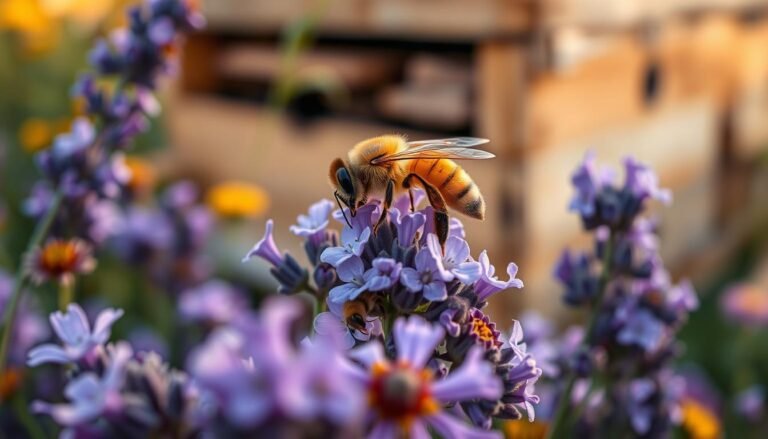
This practical guide outlines simple steps beekeepers can take today to align honey goals with broader ecological benefits.
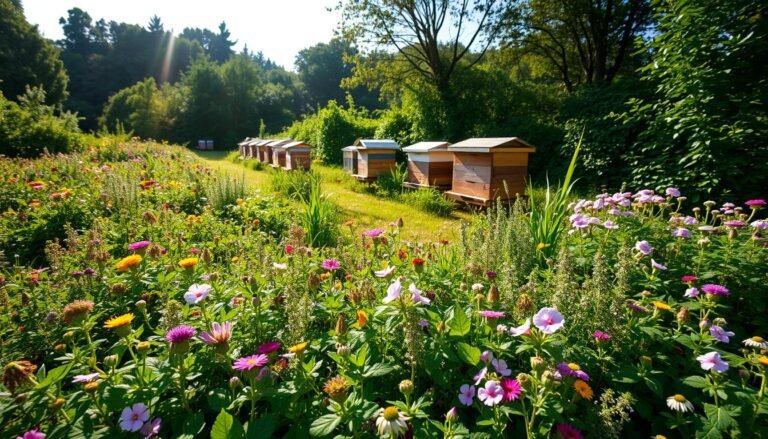
You will learn how bees and other pollinators use plants for nectar and pollen. The plan shows how to design a garden and surrounding habitat so managed colonies and local species thrive.
Small changes in site selection and forage enrichment can improve foraging behavior and reduce disease pressure. Planting trees and flowers that bloom across seasons delivers steady nectar for both honey-producing colonies and native bees.
This guide offers concrete actions for urban and rural areas, with a checklist from quick wins to longer projects. For deeper background on native bee needs, see a practical sanctuary resource at growing a wild bee sanctuary.
Key Takeaways
- Choose diverse, season-long bloomers to feed bees and other pollinators.
- Create nesting spots: bare soil patches and retained stems help many species.
- Provide clean, shallow water with landing stones for safe drinking.
- Limit pesticides and use organic garden practices whenever possible.
- Align hive placement and forage planning to balance honey yield and habitat health.
Why supporting wild pollinators near your apiary matters right now
A shrinking patchwork of bloom across landscapes raises immediate risks for both honey colonies and native bees.
Honey bees were introduced to North America in the 1600s and now share flowers with roughly 4,000 described native bee species. Most native bees nest alone in ground tunnels or hollow stems and rely on specific seasonal nectar flows.
When floral resources are limited, large numbers of managed foragers can dominate blooms. This creates competition that strains local populations and may reduce pollinator health.
- Competition: Dense colonies on small flowered areas reduce nectar availability for solitary species.
- Disease risk: Shared flowers raise chances of pathogen spillover among insects.
- Landscape view: Expanding continuous floral cover eases pressure and boosts resilience.
| Factor | Impact | Action |
|---|---|---|
| Limited blooms | Higher competition | Increase diverse plants |
| High colony density | More pests and disease | Limit colonies per area |
| Seasonal gaps | Food bottlenecks | Plant continuous bloom |
Practical note: Keep honey colonies healthy and expand floral acreage. For plant choices, see a curated list of best plants for honey bees.
How to support wild pollinators nearby your apiary
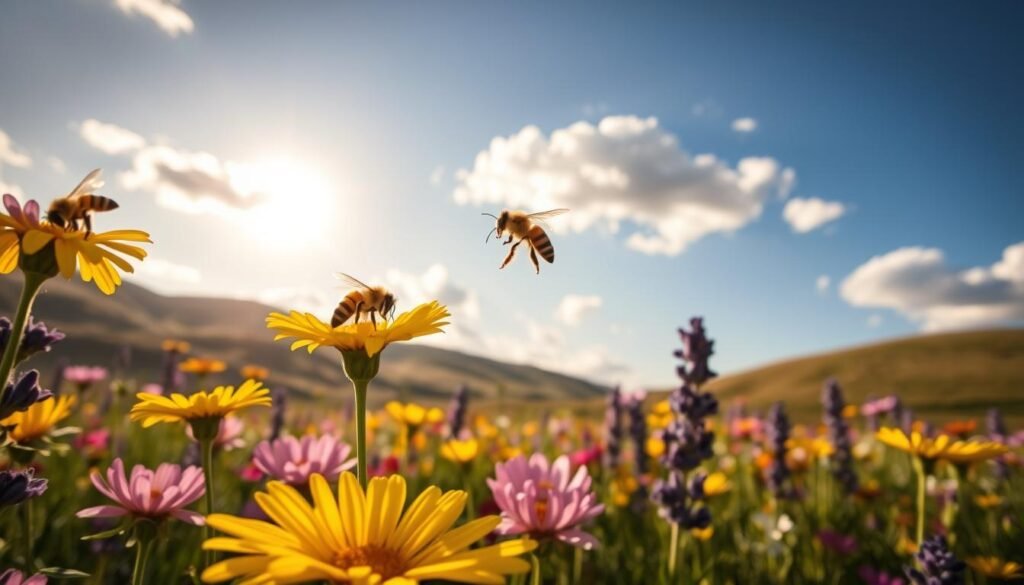
When floral acreage is scarce, honey bee recruitment can overwhelm local solitary species. This raises competition at shared blooms and increases the chance of pathogen spread.
Balance honey bee foraging with diverse floral resources
Map the foraging area by walking sites and using local bloom calendars. This shows whether flowers are plentiful through the season.
Expand plant diversity so pollinators of different species find steady food across peaks and gaps. Focus on nectar-rich, pesticide-free plants suited to your microclimate.
Site colonies where flowers are abundant and risks are lower
- Reduce colony numbers or relocate hives when neighborhood resources are thin.
- Create forage corridors connecting parks and private plantings to disperse forager traffic.
- Monitor pests and bee health closely; high hive density raises pathogen loads.
- Use temporary feeding or hive moves only during dearths; prioritize habitat fixes long term.
| Action | Benefit | When to use |
|---|---|---|
| Map foraging area | Identifies seasonal gaps | Spring and summer |
| Increase plant diversity | More food for bees and other species | Planting season |
| Limit hive density | Lower disease and pest pressure | Urban or crowded areas |
| Create corridors | Reduces local competition | Ongoing |
Collaboration works: encourage neighbors and use resources like help native bees for regional guidance.
Design a pollinator-friendly habitat: native plants, trees, and continuous bloom
Small green patches can become vital corridors that keep insects moving through built areas. Prioritize regionally adapted choices that offer nectar and pollen from early spring through fall.
Choose regionally native plants for steady forage
Regionally native plants provide the best match for local soils, climate, and pollination needs. Select species that bloom in early spring, midseason, and late season so food is continuous for bees and other species.
Don’t forget woody plants: trees and shrubs matter
Layer canopy trees, shrubs, perennials, and annuals. Trees such as willow and fruit trees offer major nectar pulses and serve as host plants for butterflies and other insects.
Small spaces count: balconies, window boxes, and curbside strips
Nearly any green area can help. Use window boxes, curbside strips, and porches as stepping stones that connect larger habitat patches.
Add shallow water features for cooling and hydration
Provide shallow water with landing stones and refresh it often. This gives birds and bees a safe drink and reduces heat stress on hot days.
“Choose pesticide-free seeds and starts, and verify that plants are not treated with systemic chemicals that can taint nectar and pollen.”
- Choose pesticide-free seeds and starts and consult extension services for vetted lists.
- Include early spring bloomers and late-season asters or goldenrods for continuity.
- Use trees and shrubs as structural habitat and major forage sources.
For curated plant lists and planting guidance, see native bee-friendly plants.
Create and protect nesting sites for native bees and other pollinators
Nesting sites matter as much as flowers when building resilient insect communities.
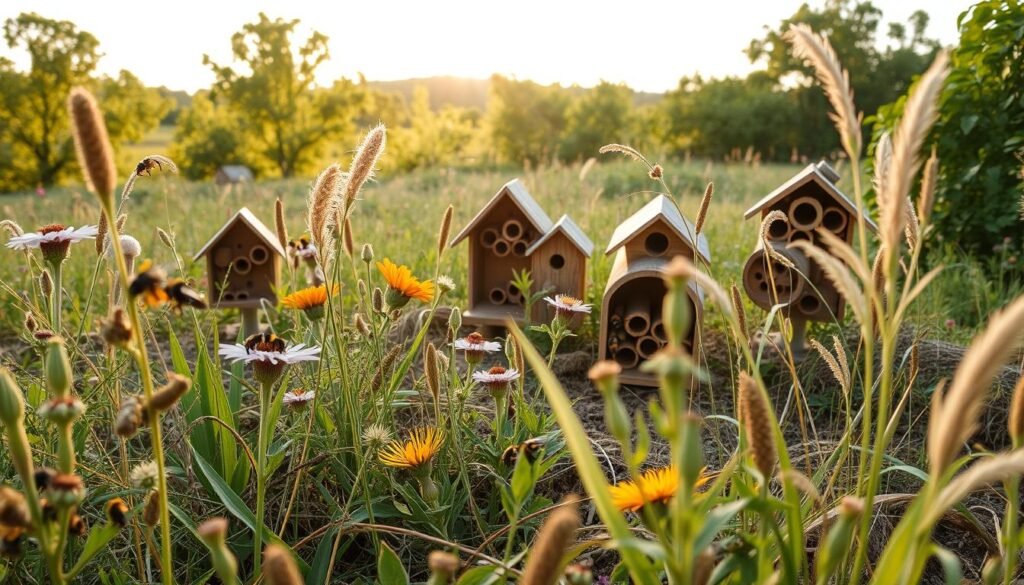
Ground nesters prefer sunny, well-drained bare soil. Designate south-facing patches away from sprinklers and high foot traffic. Keep these areas undisturbed through spring emergence.
Cavity and stem nesters use dead wood, hollow stems, and leaf litter. Leave some logs, stumps, and cut stalks in place. A layer of leaves insulates overwintering larvae and improves soil.
- Retain wood features where safe; avoid over-tidying landscapes.
- Cut stems at varied heights in fall so spring-emerging adults find hollow tunnels.
- Cluster nesting substrates within short flight distance of bloom patches.
Mason bees and leafcutters accept bee hotels, but maintenance matters. Use cleanable inserts and rotate or replace materials yearly. Site units out of driving rain and hot afternoon sun, and monitor occupancy to reduce parasites.
| Nest type | Key feature | Placement |
|---|---|---|
| Ground nest | Well-drained, bare soil | South-facing, low traffic |
| Stem/cavity | Hollow stems, dead wood | Protected from heavy rain |
| Artificial nests | Replaceable inserts, cleanable | Near diverse flowers |
Reduce pesticide risks with integrated pest management
Pesticide decisions shape local insect communities and farm production alike. Adopt an integrated pest management mindset that makes chemical controls the last option. Start by identifying the actual pest and set clear action thresholds before applying any product.
Start with non-chemical controls and healthy gardening practices
Prevention is the backbone of IPM. Use hand removal, pruning, exclusion, clean mulch, crop rotation, and targeted watering schedules to reduce pest pressure.
Encourage natural enemies by adding flowering strips and leaving refuge areas undisturbed. Choose nursery stock confirmed free of systemic pesticides to avoid hidden residues in nectar and pollen.
If a pesticide is unavoidable, follow timing and application guidance to protect pollinators
- Pick products with lower toxicity to bees and apply in the evening when foragers are least active.
- Avoid spraying open blooms and prevent drift into adjacent habitat or community plantings.
- Follow the label exactly, communicate planned treatments with neighbors, and monitor results so adjustments can be made.
| Step | Why it matters | Practical tip |
|---|---|---|
| Identify pests | Prevents unnecessary treatments | Use scouting and thresholds |
| Promote beneficials | Reduces chemical need | Plant diverse blooms and shelter |
| Targeted application | Limits bee exposure | Evening sprays, no bloom contact |
“Make pesticides a last resort; often a few cultural fixes keep damage below economic or ecological thresholds.”
For detailed guidance on balancing invasive pest control with pollinator protection, consult MSU’s resource on managing invasive pests. For broader reading and reference materials, see this beekeeping resources collection.
Engage your home and community: citizen science, resources, and certification
Community observations of bloom dates and bee visits build useful local records for conservation planning. Enroll a home landscape in national projects and add data that benefits regional efforts.
Join monitoring projects and volunteer networks
Nature’s Notebook, Project Budburst, and Monarch Watch welcome entries from beginners and trained volunteers. National wildlife refuges also run local programs with hands-on roles.
Use local expertise to plan a garden that works
Native plant societies and extension services offer plant lists, site advice, and seasonal tips. They help match species choices to climate and soils for better outcomes.
Pursue certification and share resources
Habitat-at-home kits and certification programs give signage, checklists, and recognition that inspire neighbors. Toolkits simplify planting, prep, and maintenance steps.
| Action | Benefit | Who can help |
|---|---|---|
| Record phenology | Local data for planners | Nature’s Notebook, Project Budburst |
| Follow plant lists | Better habitat for bees and butterflies | Native plant societies, extension |
| Get certified | Motivates ongoing care | Habitat-at-home programs |
For a compact field guide on project-based learning and conservation, see citizen science as a tool.
Conclusion
Take practical steps, and your planting choices will steady food for many bee species from early spring through fall.
Leave lawn edges a bit wilder. Retain stems, a piece of wood, and some leaves so native bees and mason bees find nesting spots. Add trees and a mix of plants that bloom at different times so flowers, nectar, and pollen are available across seasons.
Provide clean water, cut pesticide use, and site hives where floral areas are ample. Coordinate with neighbors, add seeds or starts, and share observations. Small, steady actions build resilient insect populations, help honey production, and improve pollination for crops and backyard gardens.
FAQ
Why is supporting wild pollinators important near an apiary?
Wild pollinators increase pollination resilience, boost crop and garden yields, and add diversity that complements honey bee services. Native bees, butterflies, and other insects help sustain ecosystems and buffer against disease or forage shortages that can affect managed colonies.
What floral strategy balances honey bee foraging with diverse pollinator needs?
Plant a sequence of nectar- and pollen-rich species that bloom from early spring through fall. Include different flower shapes and colors to serve bumble bees, solitary bees, butterflies, and hoverflies. Mixing native perennials, annuals, and flowering trees supports overlapping flight periods and reduces competition.
Where should I site my hives to minimize disease risk and maximize forage?
Place colonies where wind and sun provide good ventilation, near abundant but diverse floral resources, and away from areas with heavy pesticide use. Avoid low, damp sites that encourage brood problems and maintain buffer distances from crop-sprayed fields when possible.
Which native plants and trees are best for continuous bloom?
Choose regionally native species adapted to local climate and soil. Early bloomers like willows and red maples, midseason natives such as coneflowers and asters, and late-blooming goldenrods and sunflowers keep nectar and pollen available across seasons. Consult your state extension or native plant societies for lists by ecoregion.
Can small spaces meaningfully support pollinators?
Yes. Balconies, window boxes, and curbside strips planted with compact native wildflowers and herbs can provide critical resources, especially in urban areas. Even narrow corridors add connectivity between larger habitat patches.
How should I provide water for bees and other pollinators?
Offer shallow water sources with landing pads—rocks, cork, or twigs—so insects can drink without drowning. Keep water clean and change it regularly. Solar ponds or small basins with graded sides work well in warm months.
What steps protect ground-nesting bees on the property?
Leave patches of bare, well-drained soil in sunny, south-facing spots and avoid frequent tilling. Minimize foot traffic and mowing in these areas during nesting season, and do not cover them with mulch where ground-nesting species are active.
How do I support cavity and stem nesters like mason bees?
Retain dead wood, old stems, and leaf litter in safe places. Provide clean, well-maintained bee houses with appropriate-sized tubes or cavities, and monitor them annually for parasites and mold. Replace or sterilize nesting materials when needed to reduce pest buildup.
Are bee hotels effective for mason and leafcutter bees?
Properly designed and maintained hotels can help mason and leafcutter populations. Use smooth, capped tubes of the right diameter, keep units dry and shaded, and remove brood cells or replace trays each season to prevent mites and fungal growth.
What non-chemical pest controls protect pollinators?
Practice integrated pest management: encourage natural predators, use physical barriers, rotate crops, and employ cultural controls like sanitation and resistant varieties. Monitor pest levels and act only when thresholds are exceeded to minimize chemical use.
If a pesticide is necessary, how can I reduce harm to pollinators?
Apply products at night or early morning when pollinators are less active, choose targeted formulations with lower toxicity, and avoid spraying flowering plants. Strictly follow label directions and coordinate with neighbors and applicators to protect foraging periods.
Which citizen science projects and resources help me get started?
Join initiatives such as Nature’s Notebook, Project Budburst, and Monarch Watch to monitor pollinators and flowering times. Use local native plant societies, university extension services, and resources from the Xerces Society for practical guidance and plant lists.
How can neighborhoods scale pollinator habitat effectively?
Coordinate with community groups, schools, and parks departments to create corridors and patchwork plantings. Pursue habitat certification programs like the National Wildlife Federation’s Garden for Wildlife and use toolkits from state extension offices to guide planning and outreach.
What maintenance helps keep pollinator habitat healthy long-term?
Regularly remove invasive plants, prune when necessary, replenish native seedlings, and monitor for disease and pests. Maintain nesting substrates, refresh nectar sources each season, and adapt plant choices over time to match observed pollinator use.
Can planting native trees near hives affect honey production?
Native trees can provide abundant nectar and pollen at key times and often enhance honey flows. Species such as black locust, basswood (linden), and tulip poplar are valuable in many North American regions, but local recommendations vary, so consult extension resources for best choices.