

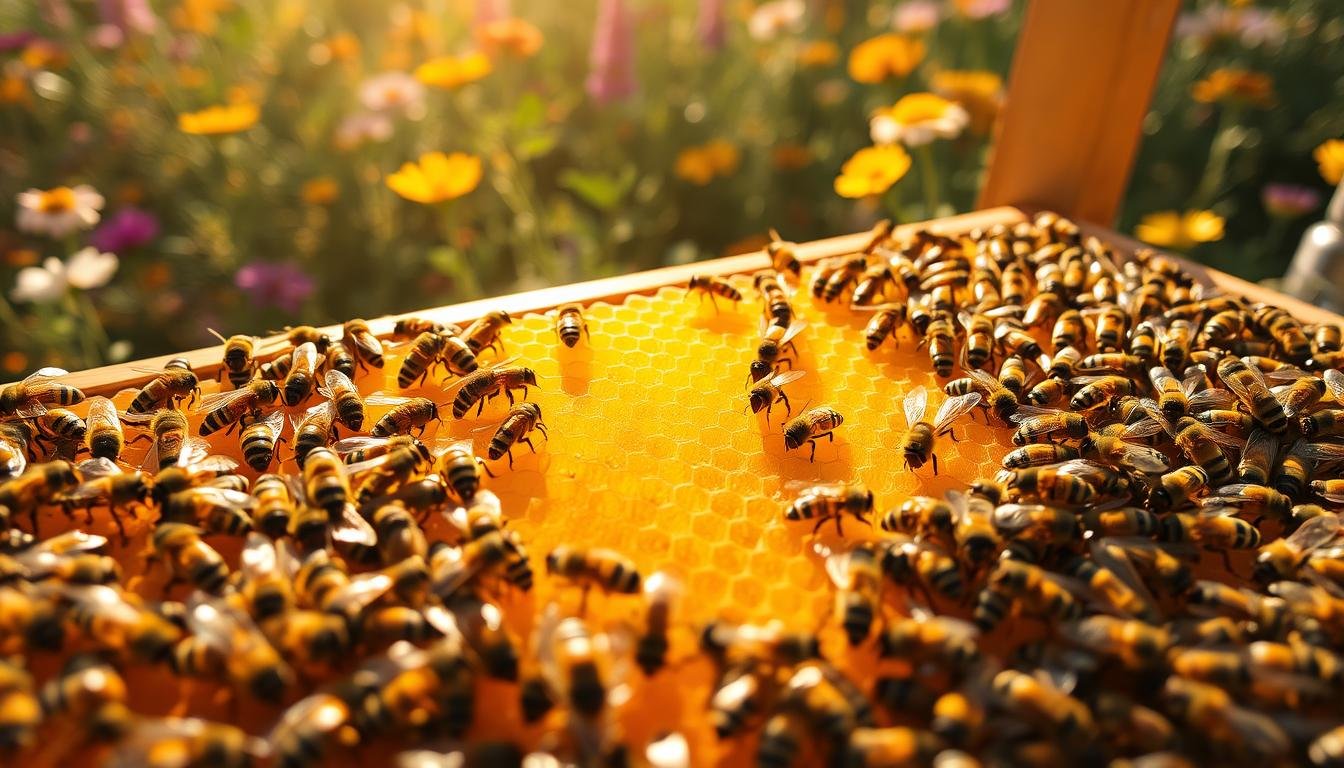
Comb is the hive’s backbone. It takes real energy for a colony to make wax and shape cells for brood, honey, and pollen. A beekeeper who times support well can spark steady comb building without harming production.
Successful comb building depends on numbers and need. A young, productive queen, low mite levels, diverse nectar flows, and crowded space push a honey bee colony toward construction. Feeding syrup alone rarely triggers new wax if drawn comb already exists.
Set clear goals: give space when brood and nectar flows demand it, avoid adding boxes too early, and watch for signs like heavy incoming nectar and fresh white wax. These signals show the colony is ready to invest in new cells.
Expect tradeoffs: speeding up building can shift short-term honey storage but increases future capacity. Use targeted, timely actions and match them to local forage and season for the best results.
Key Takeaways
- Create favorable conditions: queen health, low mites, and good forage.
- Add space only when the colony shows real need and congestion.
- Feeding syrup won’t replace the cue of available nectar and demand.
- Watch for white wax and incoming nectar as build signals.
- Balance short-term honey production with long-term comb capacity.
Understand search intent and set expectations for comb building speed
Match your expectations with the colony’s seasonal rhythm before asking for new comb. Spring often brings rapid expansion, while the hive contracts in fall. Late in the year, many hives backfill brood cells when the queen slows egg laying.
Comb building happens when a colony needs brood or storage and when nectar is abundant. During a strong nectar flow, visible progress can occur in days. In a dry season, even active management may yield little change.
- Set realistic timelines: changes now may take days before the colony shows new comb.
- Work with local bloom and nectar flow for the year to get the best response.
- Document weather, bloom, and intake so future timing improves results.
| Season | Typical colony focus | Recommended action |
|---|---|---|
| Spring | Expand brood and storage | Add frames during surge; time pushes with nectar flow |
| Summer | Maximize honey and maintain brood | Monitor flow; add space sparingly |
| Fall | Contracting; backfilling common | Avoid late add-ons; plan next year’s needs |
| Year-round planning | Local bloom timing guides success | Record conditions and align interventions; see beekeeping expansion tips |
Diagnose your colony before you push for comb building
Begin by judging whether the colony has the resources and vigor to expand its nest.
Productive colonies share five traits: a dense population, negligible mite loads, a young productive queen, diverse nectar sources, and low pesticide exposure. If those pieces are missing, urging expansion wastes effort.
Strong population, young productive queen, and negligible mite loads
- Confirm a packed workforce and steady brood patterns over several days.
- Check the queen’s performance and keep mite numbers low before adding frames.
Nectar flow, forage diversity, and pesticide exposure
Local forage and an honest nectar flow drive motivation. Pesticide pressure can shut a hive down even when space exists.
Do you truly need more comb or are bees backfilling drawn comb?
Inspect boxes and drawn comb closely. If empty cells exist, syrup and feeding will often end up in those stores rather than prompting new wax secretion.
“Watch for fresh white wax and congestion near brood—the colony will tell you when it’s ready.”
| Indicator | What it means | Recommended action |
|---|---|---|
| Dense population | Workforce ready | Add frames or space when brood is congested |
| Poor brood pattern | Queen or health issue | Investigate queen quality and mites before expanding |
| Available drawn comb | Space exists | Avoid additional boxes; monitor for white wax |
Comb biology 101: how bees decide to draw comb
A chain of internal cues — from young-worker physiology to nectar traffic jams — prompts comb drawing. This section explains the biological triggers so you can match interventions with real colony readiness.
Age, nutrition, and gland activation
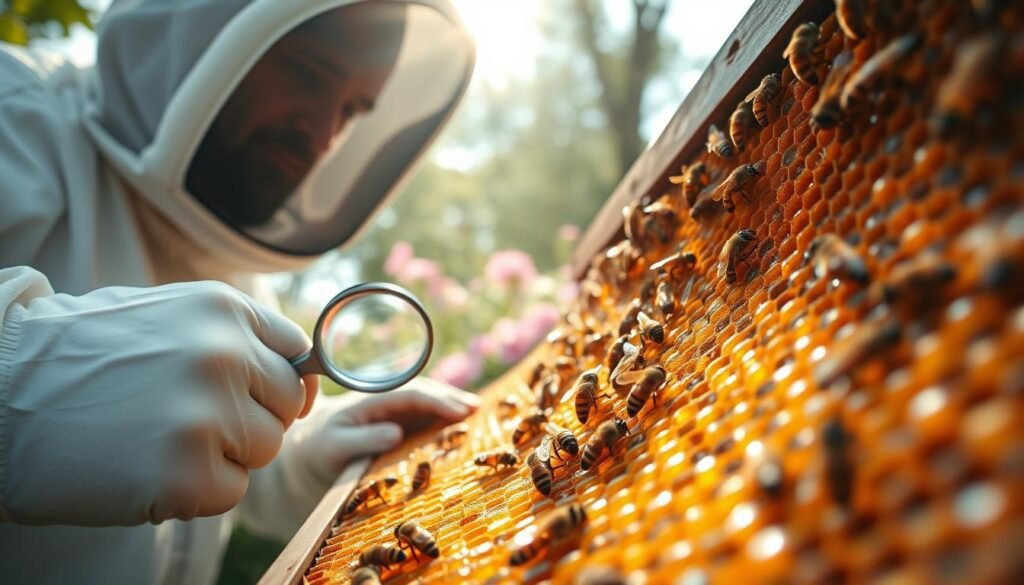
Young bees produce most wax. Workers in weeks two and three activate wax glands after strong pollen intake during their first five or six days. That early feeding builds fat bodies and enables later wax production.
White wax, receivers, and space pressure
Nectar receivers that cannot unload quickly because of crowding trigger wax glands and surface white wax flakes. This visible sign is a clear go-now indicator that the colony will extend comb across available frames.
- Support brood with pollen so a steady stream of young workers can make wax.
- Remember syrup alone often fails unless colony signals demand new cells.
- Avoid breaking nectar receiver flow; crowding near brood is part of the natural cue for comb building.
“White wax and slowed nectar flow are practical signals that comb extension is underway.”
How to encourage bees to build comb faster
Strategic pressure at the brood nest and a steady nectar signal will prompt steady wax work. Start with small, targeted changes rather than large, sudden expansion. That keeps the workforce focused on extending cells near existing drawn comb and brood.
Apply smart space management
Avoid adding a super too early. Too much open space dilutes labor. If many core frames are not well covered, foundation in an empty super often sits unused.
Concentrate the colony in brood boxes
Move frames so the brood nest is compact. Crowding at the brood edge raises space pressure and nudges workers into building along adjacent frames.
Time your push with nectar flow or simulate it
Match interventions with natural nectar flow when possible. If you simulate a flow with syrup, feed consistently. Sporadic feeding breaks the signal and stalls building.
Prevent swarming while increasing momentum
Watch for queen cells and intense brood congestion. Use staged expansion—add frames or a single super only when most core frames are bee-covered. That balances building with swarm prevention.
- Place foundation next to drawn comb at brood margins.
- Support brood nutrition so young workers can produce wax.
- Revisit the hive every few days and adjust space based on activity.
“Place frames of foundation right beside drawn comb; bees will extend existing lines faster.”
For further reading on colony management and resources, see this comprehensive guide.
Feeding strategies that actually trigger comb drawing
A steady influx of sugar alters receiver behavior and nudges workers toward wax production.
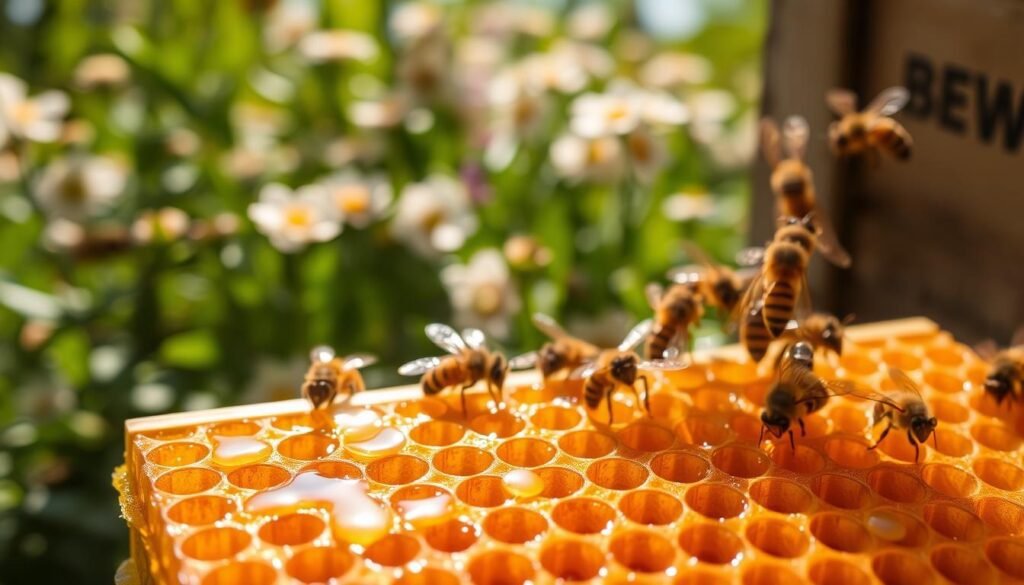
Sugar syrup works best when it reinforces a real need for space and a steady intake signal.
Sugar syrup basics: when feeding helps and when it doesn’t
Feed with purpose: syrup encourages draw comb only if the colony lacks room or senses continuous nectar. If empty cells exist, most syrup will be stored rather than prompting wax work.
Light vs heavy syrup for comb building
Field trials found no significant difference in final comb or weight gains between light (~38.5%) and heavy (77%) syrup. Light syrup often is consumed faster, but total comb drawn was similar across runs.
Volume and storage outcomes
Estimate roughly 0.5 gallon of 77% syrup per deep frame on wax-coated foundation. Expect about 55–70% of fed syrup to end up stored as honey in comb.
Practical tips: feeders and pacing
- Give continuous access with simple feeders; gallon chick waterers with straw floats work well.
- Maintain feed over several days rather than pulses to keep the behavioral signal steady.
- Position feeders and manage space so lower boxes feel slightly crowded; that nudges work onto adjacent foundation.
“Sustained intake, not syrup strength, is the stronger cue that leads colonies into comb extension.”
| Factor | Practical note | Expected outcome |
|---|---|---|
| Syrup strength | Light taken faster; heavy slower but similar results | No clear advantage in total comb drawn |
| Volume per deep frame | ~0.5 gallon of 77% per deep wax-coated frame | Predictable planning for one hive |
| Storage share | 55–70% of feed stored in comb | Account for added box weight and placement |
| Feeder type | Continuous-access feeders reduce drowning and speed intake | Sustained feeding signal; steady comb work |
For additional operational tips on stimulating comb draw, see this practical guide.
Frames, foundation, and hive configuration choices that speed up results
Choosing the right foundation and arranging frames wins work from a colony more reliably than random additions.
Wax-coated plastic foundation often draws well when colonies have continuous syrup access and modest space pressure. Field runs showed that with steady feeding and careful placement, plastic foundation was drawn effectively.
Beeswax foundation can require less new wax deposition but still needs heat and some rework by workers. If you prefer minimal finishing, use beeswax where straight comb and early production matter most.
Frame and box layout that guides work
Place frames of foundation directly beside drawn comb at brood nest margins. Workers favor extending existing lines rather than starting isolated sections.
Configure brood boxes so traffic concentrates where you want new cells. Slight crowding near the brood nest nudges real effort onto adjacent frames.
| Choice | Why it matters | Practical tip |
|---|---|---|
| Wax-coated plastic foundation | Durable; draws quickly when motivated | Use next to drawn frames; feed continuously during pull |
| Beeswax foundation | Less finishing by workers; traditional feel | Warm frames in early spring; expect some rework |
| Frame placement | Directs comb lines and maintains straightness | Alternate foundation with drawn frames at brood edge |
| Super timing | Limits workforce dilution across boxes | Add only when lower hive is well covered with bees |
Keep frame spacing consistent and seat foundation tightly under top bars. This prevents burr wax and saves production time later.
“Let the colony’s performance guide whether plastic or beeswax foundation is best.”
Seasonal timing in the United States: align effort with the year
Seasonal timing shapes when hives will invest in new comb. Spring is the clear prime window. Colonies expand rapidly then, so adding foundation during this season usually yields the best comb and honey production.
Use regional bloom calendars to match additions with local nectar flow. When the flow is active, even small interventions convert incoming nectar into drawn cells within days.
- Target spring for maximum impact; colonies focus on expansion and brood.
- Expect solid results during strong summer flows; during dearths, maintenance wins over new construction.
- Avoid late-season pushes in fall; hives often backfill as egg-laying slows and storage shifts downward.
- Give a few days of steady syrup or nectar intake before judging progress; comb growth often lags initial feeding.
- Account for microclimates—valleys may extend bloom windows; cool sites require earlier action.
“Plan material prep and foundation placement ahead of the main flow to avoid rushed, late-season attempts.”
Conclusion
Wrap up your plan by focusing on rhythm, placement, and steady resource flow.
Start with diagnosis: confirm a healthy colony, good brood pattern, and visible white wax or receiver congestion before adding foundation or a box.
Match timing with nectar flow and create mild space pressure at the brood edge. Place frames of foundation tight against drawn comb so workers draw comb along existing lines.
Feed steadily when needed. Expect roughly 0.5 gallon of 77% syrup per fully drawn deep frame, with about 55–70% of that feed stored as honey.
Keep layout neat, monitor for swarm signals, and check progress every few days. Follow this simple sequence and your hive will reliably produce new wax and usable comb.
FAQ
What factors set realistic expectations for comb drawing speed?
Comb production depends on colony strength, nectar flow, and season. A large, healthy workforce with many young bees and a good pollen supply produces wax glands secretions faster. Natural forage and warm temperatures speed wax work, while cold, pesticide exposure, or low pollen slow it. Expect gradual progress over days to weeks rather than instant results.
How can I tell if my colony is ready to draw new comb?
Inspect for a strong adult population, a laying queen, and low mite levels. Look for stored pollen and frequent nurse activity. If brood covers much of the frames and workers are plentiful, the colony has resources and motivation to form comb. Weak colonies often ignore empty foundation.
Could my bees be filling drawn comb with honey instead of building new comb?
Yes. During forage surges, bees prefer storing nectar in existing drawn comb. If you need more comb, reduce unused super space and concentrate the cluster in frames without much drawn wax so they must draw new cells rather than backfilling.
What biological triggers make workers produce wax and start comb construction?
Wax production peaks in young nurse and mid‑aged workers with abundant pollen and protein. Fat bodies and active wax glands are stimulated by nursing brood and a steady nectar supply. A colony with lots of open brood and plenty of pollen promotes gland activation and comb building.
What role does “white wax” and space pressure play in drawing comb?
“White wax” refers to fresh wax flakes produced by young workers. Space pressure — concentrating bees on fewer frames — creates an urgency to build. When bees feel crowded and have nectar coming in, they invest those wax flakes into new cell construction to make storage and brood space.
When should I avoid adding a super if I want comb drawn quickly?
Don’t add supers prematurely. Extra empty boxes scatter the workforce and reduce draw pressure. Keep bees concentrated in brood boxes until they draw sufficient comb. Only add a super when bees are actively working the top frames and you need harvest space.
How can I concentrate my colony in the brood chamber to increase comb drawing?
Remove excess empty boxes and place frames with limited drawn comb where the cluster is centered. Position frames so the queen and nurse bees stay in the target area. Reducing available space makes workers allocate labor to construction rather than defending or filling distant frames.
When is the best time to push comb building with a nectar flow or simulated feed?
Align efforts with natural spring or summer flows for fastest results. If no flow exists, simulate it at the start of a building push with light syrup to mimic incoming nectar. Start feeding when brood rearing is active and ambient temperatures support wax production.
How do I prevent swarming while trying to increase comb production?
Manage congestion by monitoring queen laying, providing adequate but not excessive space, and performing timely inspections. Consider splitting strong colonies or providing swarm prevention measures like checkerboarding or adding frames of brood. Maintaining good ventilation and forage access reduces swarm impulses.
When does sugar syrup actually trigger comb construction?
Syrup works when the colony has enough young workers and pollen. Light syrup (1:1) simulates nectar and encourages comb drawing during nectar‑less periods. Avoid feeding heavy syrup (2:1) early in a build push because it directs energy to storage rather than wax production in some cases.
Which syrup strength is best for drawing comb, light or heavy?
Light syrup (equal parts sugar and water) typically works best to stimulate wax secretion and comb construction because it resembles natural nectar. Heavy syrup suits later storage needs. Field trials and beekeeper experience favor 1:1 for encouraging new comb during spring buildup.
How much syrup should I expect to influence comb drawing per deep frame?
Volume varies by colony size and activity. Offer continuous access rather than a fixed volume per frame. A colony actively drawing comb may consume several quarts over several days. Monitor intake and adjust; rapid consumption signals a positive response and likely wax production.
What feeder types and practices improve comb drawing outcomes?
Internal frame feeders, top feeders, or entrance feeders work if bees take syrup quickly and safely. Keep feeders clean, accessible, and refill before they run dry. Continuous, steady availability mimics a nectar flow best. Avoid spillage and robbing risks by using secure feeders.
Should I use wax-coated plastic foundation or beeswax foundation for faster drawn comb?
Beeswax foundation or foundationless frames often yield faster, natural comb drawing because bees trust the scent and texture. Wax‑coated plastic helps some colonies start but may slow full cell construction. Foundationless frames let bees build straight comb but require careful frame spacing.
How does frame placement and hive configuration influence comb drawing?
Place frames with the least drawn comb in the active cluster area. Keep brood boxes compact and avoid empty boxes above until brood chamber comb is drawn. Proper frame spacing and a consistent brood pattern encourage uniform comb construction and reduce unwanted cross comb.
When is the best seasonal timing in the United States for pushing comb building?
Spring buildup aligns best with brood rearing and rising forage. Late spring into early summer flows provide natural nectar to accelerate drawing. Avoid major pushes in fall when colonies shift to winter preparations; bees deprioritize new comb then.
What common mistakes slow down comb drawing?
Common errors include over‑expanding hive space too early, feeding the wrong syrup strength, adding empty supers above the cluster, and using unfamiliar foundation types without gradual transition. Poor timing during cold spells or pesticide exposure also stalls progress.


