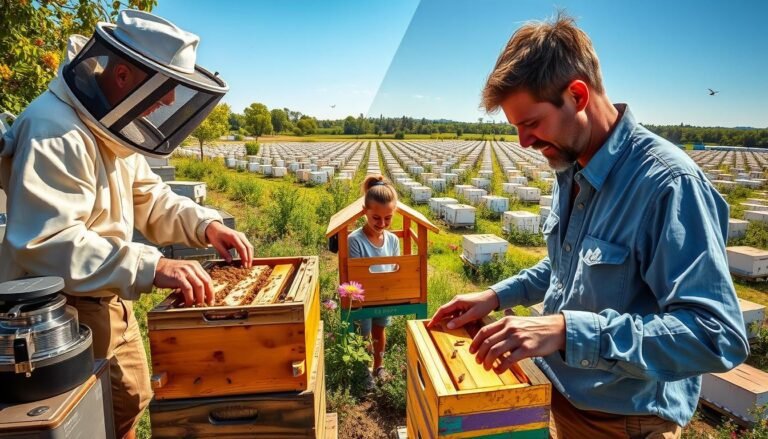
Protecting natural flavor and enzymes starts with clear temperature control at every stage of the process. Beekeepers who keep steps gentle and monitor heat closely keep their product bright, floral, and stable.
Simple methods matter: warm uncapping tools, measured spinner speeds, and bottling at room temperature all limit damage. Check moisture before work begins so fermentation risk stays low and tanks get time for bubbles to rise.
Use calibrated thermometers or IR gauges and well-maintained extractors to reduce friction and needless warming. Avoid hot rooms, direct sun on frames, and aggressive spinning that raise temperatures above hive levels.
This guide lays out practical steps any US beekeeper can use to keep quality high and flavor true. Follow a disciplined process and your final product will reflect careful handling and trustworthiness.
Key Takeaways
- Keep temperature control central to every step to preserve enzymes and flavor.
- Perform moisture checks before processing to lower fermentation risk.
- Use warmed uncapping tools, gradual spinner speeds, and room-temperature bottling.
- Monitor with calibrated thermometers or IR guns and maintain extractors.
- Avoid direct sun, hot rooms, and aggressive spinning that add heat.
- Let tanks settle so air bubbles rise before bottling for clearer, stable product.
Why Overheating Honey Matters for Quality, Flavor, and Shelf Life
Temperature control shapes the difference between a bright jar and one with dull, cooked notes. Elevated heat speeds chemical reactions that darken color and mute flavor. That loss lowers perceived quality and market value.
Raw honey kept near natural hive ranges (about 95–110°F in warm supers) preserves more enzymes and character. Extended exposure above roughly 120°F will hasten enzyme decline and create caramelized notes.
Moisture and heat act together. Moisture above ~19% raises fermentation risk, especially when temperatures climb. Use a refractometer to check water content before harvesting and processing.
- Risk: color darkens, foam increases, and wax particulates may deform when comb softens.
- Shelf life: overheating plus excess moisture shortens storage life and may cause off‑flavors.
- Preserve enzymes: limit thermal exposure from hive through bottling for premium product appeal.
| Condition | Typical Range | Impact | Action |
|---|---|---|---|
| Natural supers in heat | 95–110°F | No enzyme loss; normal color | Monitor, harvest promptly |
| Short spikes | 110–120°F | Minimal change if brief | Pause processing; cool room |
| Prolonged high heat | >120°F | Darkening, enzyme loss, shorter shelf life | Reduce exposure; test with refractometer |
For judges and consumers, lower moisture and intact enzymes signal quality. For guidelines on grading and standards, consult this grading overview.
Pre-Extraction Prep: Moisture, Timing, and Environment
Good preparation centers on accurate moisture checks and planned timing. Begin by measuring the moisture content of each batch with a refractometer. Aim near 17–18.5% to lower fermentation risk and improve shelf life.
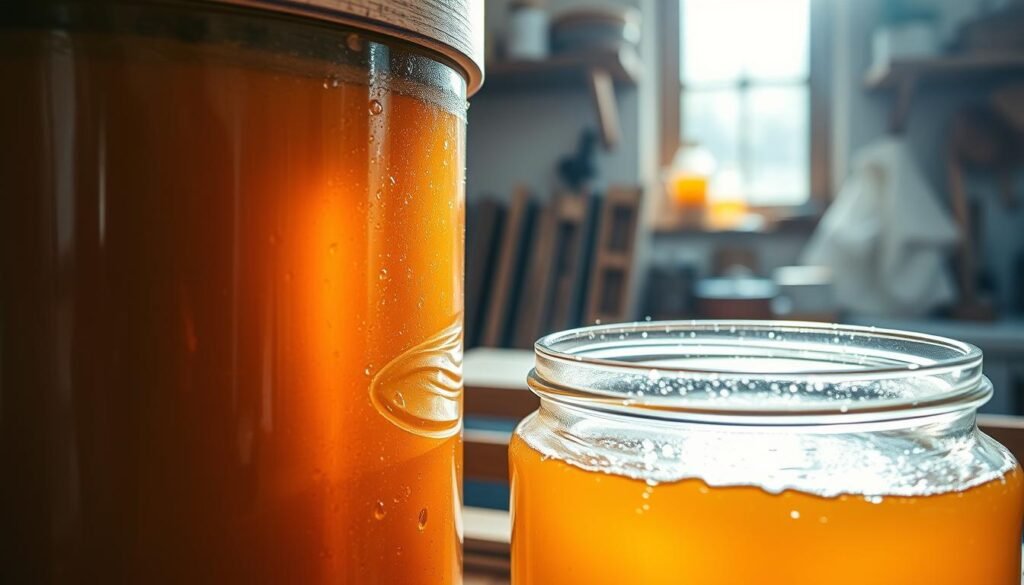
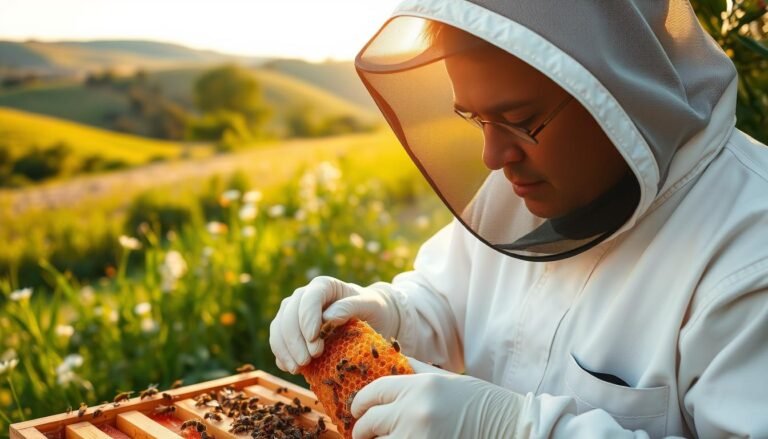
Harvest only frames that are mostly capped — roughly 80–90% or more. Mature frames mean bees have finished ripening the product and water levels are lower. In humid regions, capped supers can still sit near the upper safe limit, so verify every lot with your refractometer.
Set up a cool, clean room with low humidity and steady air control. Keep tanks covered while settling; honey is hygroscopic and will pick up water from moist air. Sanitize strainers, uncapping tools, and containers ahead of time so handling is fast and efficient.
“Measure first, move quickly, and keep lids on settling tanks.”
Plan your workflow: stage frames, supers, and staging tables in sequence. Segregate partially uncapped frames for later use or returning to the hives. For seasonal guidance on timing, consult this honey harvesting schedule.
Equipment Setup That Minimizes Heat Buildup
A calm, controlled workspace begins with the right extractor and sharp tools. Choose gear that runs smoothly and keeps friction low. Clean, lubricate, and inspect moving parts before you start.
Choose and maintain tools
Select purpose-built equipment such as a reliable extractor, sharp uncapping knives, and fine strainers. Well-maintained parts spin with less resistance and reduce unwanted heat.
Measure and control temperature
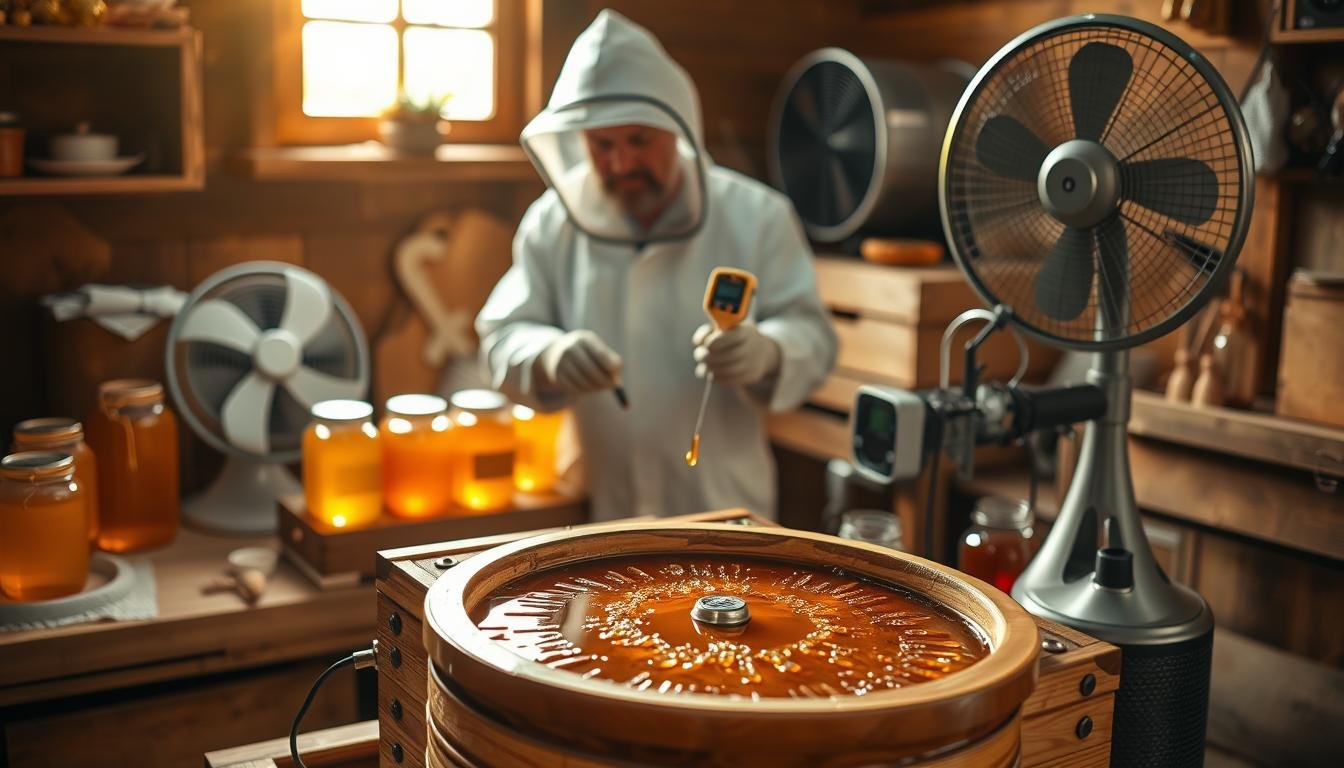
Use calibrated thermometers or an infrared gun to track both ambient and product temperature. If motors or tools warm noticeably, pause the process, vent the room, and let things cool.
- Keep uncapping knives warmed near hive levels so wax moves cleanly without scorching.
- Ramp spinner speeds slowly and balance loads to protect frames and limit friction.
- Stage supers out of direct sun and away from hot motors; have spare strainers ready to avoid bottlenecks.
“Good equipment choices and simple ventilation protect aroma, clarity, and shelf life.”
For seasonal workspace tips and ventilation guidance, read keeping your hive cool.
How to avoid overheating honey during extraction
Manage room climate and equipment pace so jars keep natural flavor and enzymes. Stage frames indoors briefly to reach room temperature, but never leave them in direct sun or near hot motors.

Staging and uncapping
Bring frames inside just long enough for flow to improve. Keep air moving and humidity low so moisture stays stable.
Warm uncapping knives to roughly 95–110°F. That range lets wax slice cleanly without scorching and limits added heat to the product.
Spinning and monitoring
Ramp extractor speeds slowly and balance loads. Gradual ramps cut friction and protect comb structure.
Check temperature often with a probe or IR gauge. Pause if readings approach 110–120°F, then vent and cool equipment before resuming.
- Move honey promptly from drum to strainer and settling tank to reduce dwell time near motors.
- If extractor feels hot, stop immediately and let the room recover.
- Keep spare filters and clean containers handy to speed the process.
Rule: short, paced sessions beat one long, warm run every time.
For compact, reliable tools that help control heat and wax handling, check quality bee wax tools.
Post-Extraction Handling Without Heat Damage
Let the product rest in covered tanks so clarity improves without added warmth. Strain promptly through a fine mesh to remove wax and cappings fragments. This step should be quick and gentle to limit any heat from equipment friction.
Let it settle in sealed tanks for hours or several days until air bubbles rise and foam can be skimmed. Covered tanks reduce moisture pickup from ambient air and help maintain quality and shelf life.
Practical bottling and moisture control
Bottle only at room temperature into dry, sterilized glass with airtight lids. Warm filling invites condensation inside jars; cool, dry jars keep the product stable on the shelf.
- Keep headspace minimal and lids sealed for longer shelf life.
- Watch for fermentation signs such as sour aromas or froth and test water content with a refractometer if unsure.
- Stop and cool any hot extractor or motor before resuming; overheated equipment risks damaging the batch.
Rule: patience in settling preserves enzymes and flavor better than heat.
Store cappings cool and process them separately so residual wax warmth does not affect finished jars. For more on gentle finishing and quality handling, see this extraction tips and wax safety guidance at beekeepers realm.
Quality Control: Detecting Heat Stress and Preserving Enzymes
Quick checks at key stages catch thermal stress before it harms flavor or enzymes. Keep a disciplined routine of readings and sensory checks so problems are obvious early.
Temperature thresholds matter. Treat roughly 95–110°F as a safe, hive-like handling range. Anything trending toward or above 120°F for extended periods raises real risk of quality loss.
Recognize signs of thermal stress
Watch jars and tanks for darker color, caramel or cooked notes, and increased foam. Those sensory cues often match enzyme decline and compromised product.
Practical corrective tactics
- Pause the process if readings climb; ventilate and cool motors and room air.
- Use slower spinner settings and balanced loads to cut friction heat.
- Keep finished product covered while cooling to limit moisture content changes and water uptake.
Measure widely: sample at the extractor, during transfer, and in settling tanks. If unusual foam or aroma appears, recheck moisture content with a refractometer and act.
“Short, measured sessions reduce cumulative hours of heat exposure and protect comb structure and enzymes.”
| Metric | Safe Range | Action |
|---|---|---|
| Handling temperature | 95–110°F | Monitor and proceed |
| Warning zone | ~120°F+ | Pause, cool, resume slower |
| Signs | Dark color, foam | Check moisture, reduce heat |
Seasonal and Regional Considerations in the United States
Regional weather patterns should drive your schedule for taking off supers and moving frames indoors.
Time extractions to weather. Choose warm, dry days with stable conditions so ambient moisture stays low and many foragers are out of the hive. That lowers stress on bees and reduces water pickup in the product.
Follow local nectar flows for better-ripened frames. Harvesting during main blooms gives beekeepers more capped honey supers and less risky moisture levels.
Regional store and handling rules
- Leave adequate stores: plan roughly 40–60 lb for winter in northern zones and 20–30 lb in warmer regions.
- Avoid rainy or humid periods; wet weather raises ambient moisture and complicates harvesting.
- Use escape boards 24–48 days before removal to clear supers and make handling quicker on harvest days.
Manage supers regionally: in humid areas keep supers covered or indoors before processing. Move frames from supers to the extraction room quickly and out of direct sun.
“Record your dates, weather, and results; patterns in your own microclimate will refine timing and protect colonies.”
| Region | Typical winter stores | Action |
|---|---|---|
| Northern | 40–60 lb | Harvest after major nectar flows; reserve stores |
| Southern / warm | 20–30 lb | Harvest earlier; monitor late-season blooms |
| Humid coastal | Varies | Cover supers, keep indoors before processing |
Conclusion
Temperature management from frame to jar is the single best defense for product quality.
Start with mature frames and confirm moisture content with a refractometer. Beekeepers who check water levels cut fermentation risk and improve consistency.
Use gentle methods: warm uncapping tools, gradual spinner speeds, and regular temperature checks during extraction. Strain, settle in covered tanks, and bottle at room temperature in dry, sterilized glass.
Plan harvests around nectar flows, leave adequate stores for winter, and record results so each season refines your process. Consistent methods protect flavor, enzymes, and jar appearance.
For practical guidance on timing and technique, see this guide on harvesting honey. A disciplined process yields content honey that keeps customers returning.
FAQ
What temperature range protects flavor and enzymes when harvesting honey?
Keep honey near natural hive temperatures — roughly 95–110°F — while handling. Short, occasional rises are less harmful than sustained heat. Avoid letting product exceed 120°F for any prolonged period, since enzymes and volatile compounds degrade and flavor and color can change.
What moisture level should I target before removing supers?
Aim for 17–18.5% moisture as measured with a refractometer. Frames capped at about 80–90% are usually mature enough. Higher moisture increases fermentation risk in storage and reduces shelf life.
How can I prepare frames and the extraction room to limit heat exposure?
Stage frames indoors briefly so they reach ambient room temperature. Use a cool, dry, well-ventilated room and keep extractor, knives, and strainers ready to shorten processing time. Avoid direct sun and high-humidity spaces that add moisture and heat.
What practices reduce frictional heat from extractors and tools?
Maintain bearings and motor drives, spin at low speeds initially, and ramp up gradually. Use sharp uncapping knives and well-lubricated extractors to cut resistance. Choose equipment sized to your volume so runs remain short.
How warm should uncapping tools be when working with comb?
Warm knives or electric uncappers to roughly hive temperature — about 95–110°F. That softens cappings without melting wax or scorching comb. Avoid hot tools that create visible steam or darken wax.
What is a safe monitoring routine for honey temperature during processing?
Use a calibrated thermometer or infrared gun aimed at the honey mass. Check frequently and pause if temperatures near 110–120°F. If heat builds, reduce spinner speed, stop to cool equipment, or move tanks to a cooler spot.
After spinning, what steps protect product quality while settling and bottling?
Strain hot or warm honey once, then cover tanks to prevent moisture uptake and let air bubbles rise. Allow honey to settle at room temperature before bottling into sterilized glass. Avoid heating for thinning; use room temperature handling and gentle straining instead.
How can I spot honey that has suffered heat damage?
Look for darker color, cooked or caramelized flavor, reduced floral notes, loss of foaming control, and lower activity in enzyme tests. Refractometer readings for moisture remain useful, but sensory changes often reveal heat stress first.
What corrective actions help if honey temperatures climb too high mid-process?
Stop extraction, move tanks to cooler air, stir gently to even temperature, and allow rapid but controlled cooling. Reduce extractor speed and fan the room or use air conditioning. Do not attempt rapid boiling or apply more heat.
Does regional weather affect extraction timing and technique?
Yes. In humid or rainy areas, wait for dry windows and harvest during warm, low-humidity days. In hot climates, extract early morning or late evening in a cooled space. Align harvest with local nectar flows and leave adequate stores for the bees.
What equipment choices help preserve quality at scale?
Opt for well-built stainless-steel extractors with low-friction bearings, calibrated thermometers, quality strainers, and reliable uncapping tools. Commercial operations often use programmable speed controls and temperature monitoring systems to standardize runs.
Can reheating reclaimed honey or wax fix heat-damaged flavor?
No. Reheating may further degrade flavor and enzymes. For wax, gentle rendering can be done for non-edible uses, but flavor defects in honey are permanent. Focus on prevention through controlled handling and cool processing.
How long can properly handled honey be stored without quality loss?
When moisture and temperature control are maintained and containers are dry and airtight, honey can remain stable for years. Protect it from heat, light, and moisture to preserve enzymes, aroma, and color over long-term storage.