Start here for a clear, practical tour of a bee’s body—from head to abdomen—and how each structure supports survival and colony life.
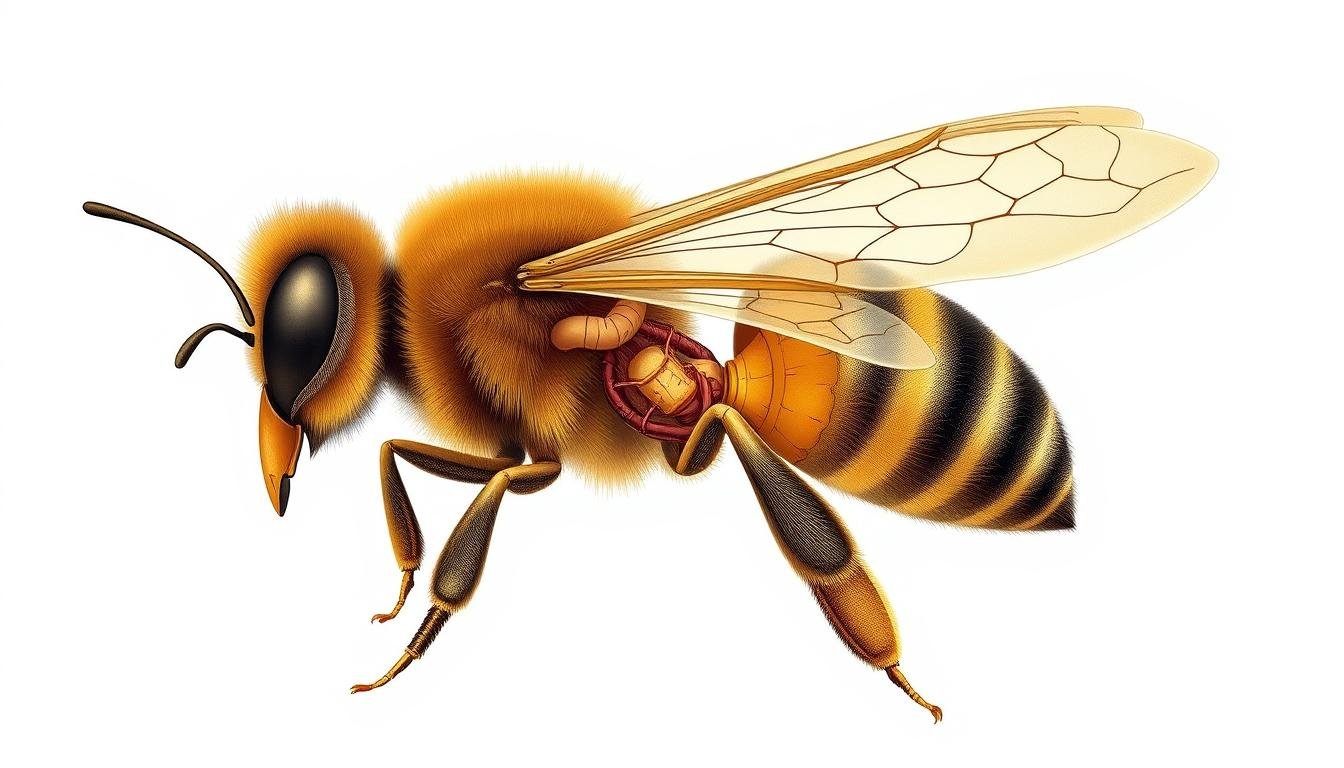
The guide shows external parts like compound eyes, antennae, legs, and two pairs of wings. It also previews internal systems such as the crop, midgut, tracheae, and the open circulatory tube that moves hemolymph.
You’ll learn why the hard exoskeleton and segmented body enable movement, protection, and task specialization. The head’s vision and antennae process polarized and UV light and scents to aid navigation and foraging.
Expect step-by-step field insights that link anatomy to behavior, hive roles, and honey production. For a deeper technical reference on bee parts, see this detailed overview on bee structure and systems.
Key Takeaways
- Examine head, thorax, and abdomen to connect form with function.
- Spot external features (eyes, antennae, wings) that guide navigation and sensing.
- Understand internal routes for food, respiration, and circulation that power activity.
- Recognize caste differences—workers, queens, and drones—affect structure and roles.
- Use anatomy knowledge to interpret field behavior and hive productivity.
How to Use This Guide to Explore a Honey Bee’s Body
Begin each observation by locating the three clear body segments and noting the overall sheen of the exoskeleton. Use short looks in good light to avoid startling the subject and to catch fine details.
Quick orientation: exoskeleton and the three sections
Start with the section plan: head, thorax, and abdomen. Note the relative size and the gloss of the shell. This helps you set a baseline for worker honey bee measurements.
What to look for first: size, hairs, and light conditions
Scan for hairs that trap pollen and aid thermoregulation. Use diffuse daylight so glare does not hide tiny structures.
- Identify the head: watch for antennae, compound eyes, and ocelli.
- Check the thorax: observe the pairs of wings and the three pairs of legs.
- Observe the abdomen last: keep distance to note the stinger area and wax glands.
| Section | Key marks | Field tip |
|---|---|---|
| Head | Antennae, eyes, ocelli | Face into light for detail |
| Thorax | Wings (two pairs), legs (three pairs) | Look for micro-movements |
| Abdomen | Stinger, wax glands | Observe from a safe angle |
Pro tip: Use short observation intervals and jot notes on size, body hair density, and light to improve repeatable records.
Honeybee anatomy
A bee’s body is a compact toolkit where each part has a clear job that supports the hive.
Why structure matters: linking body parts to function
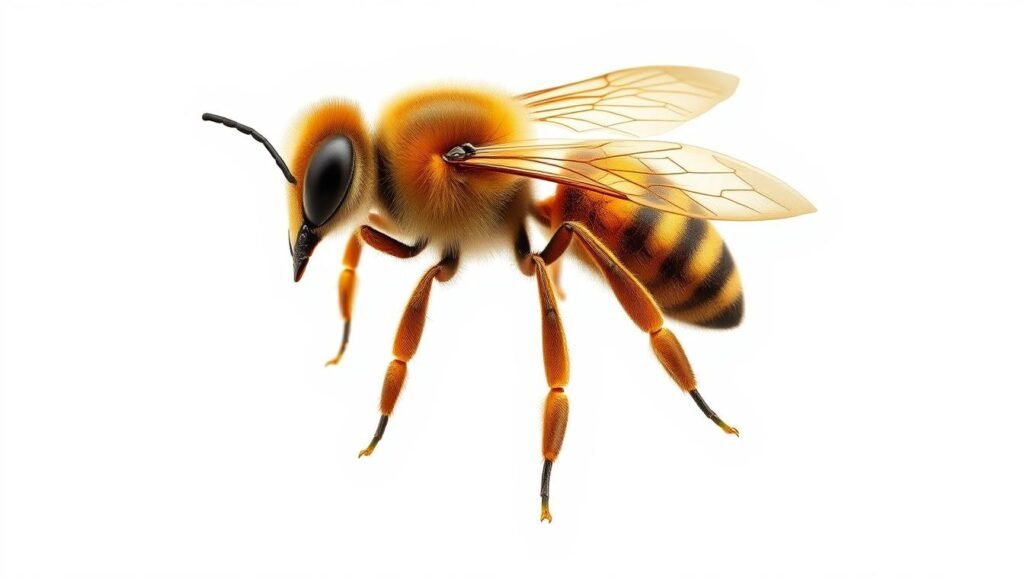
The exoskeleton divides the insect into head, thorax, and abdomen. Each region performs distinct tasks that sustain the colony.
The head handles sensing and feeding. Antennae, eyes, and mouthparts find flowers and collect nectar and pollen. The crop stores nectar before it moves through the proventriculus to the midgut for digestion.
The thorax is the locomotor center. Powerful muscles drive wings and legs so workers can forage and return with food. Internally, tracheae and open circulation deliver oxygen and hemolymph to keep flight active.
- Head → sensing and ingestion
- Thorax → movement and load carriage
- Abdomen → reproduction, wax secretion in cells, and defense
Caste differences shape function: a queen carries reproductive features and a smooth stinger, while a worker has wax glands and a barbed stinger for colony defense.
| Region | Main role | Field tip |
|---|---|---|
| Head | Sensing flowers, handling food | Watch antennal motion during foraging |
| Thorax | Flight and walking; muscle power | Note wing beats and leg pollen loads |
| Abdomen | Storage, wax, reproduction, stinger | Observe fanning and comb work from a distance |
Head: Sensing the World and Handling Food
A bee’s head acts like a command center for sensing, feeding, and social exchanges.
Antennae carry mechanoreceptors for touch and vibration and about 170 odor receptors for smell. Males have 13 segments; females have 12. In the field you will mostly watch female workers use antennae to sample floral cues and nestmate signals.
Antennae: touch, smell, taste, and vibration “hearing”
These organs decode scent, taste, and air-borne vibrations that guide flower choice and social contact.
Eyes: compound eyes, ocelli, and polarized/UV light
Compound eyes form mosaics from many ommatidia for motion and navigation. Three ocelli sense light intensity and UV to sharpen landing and orientation.
Proboscis and glossa: sipping nectar and grooming
The straw-like proboscis averages about 6.5 mm. It extends to draw nectar and then retracts for grooming.
Mandibles and labrum/maxilla: chewing pollen, working wax
Mandibles cut, shape wax, and handle pollen. Workers have smoother mandibles for comb work; queens and drones show sharper types.
Brain and glands: navigation, memory, and royal jelly production
The brain supports learning and route memory. Hypopharyngeal and salivary glands produce royal jelly and processing fluids for brood and food handling.
| Structure | Main function | Field tip |
|---|---|---|
| Antennae | Smell, touch, vibration | Watch sweeping and cleaning by the foreleg |
| Eyes & ocelli | Vision, polarized/UV sensing | Observe flight approach to flowers in bright light |
| Proboscis & mandibles | Nectar intake, grooming, wax work | Note extension during feeding and retraction for grooming |
| Brain & glands | Memory, navigation, secretions | Link foraging routes to repeated flower choices |
Thorax and Locomotion: Wings, Legs, and Flight Muscles
Movement in bees begins in the thorax, the compact engine that links wings and legs.
The thorax anchors two pairs of wings dorsally and three pairs of legs laterally. This layout makes the midsection the movement hub for takeoff, flight control, landing, and walking.
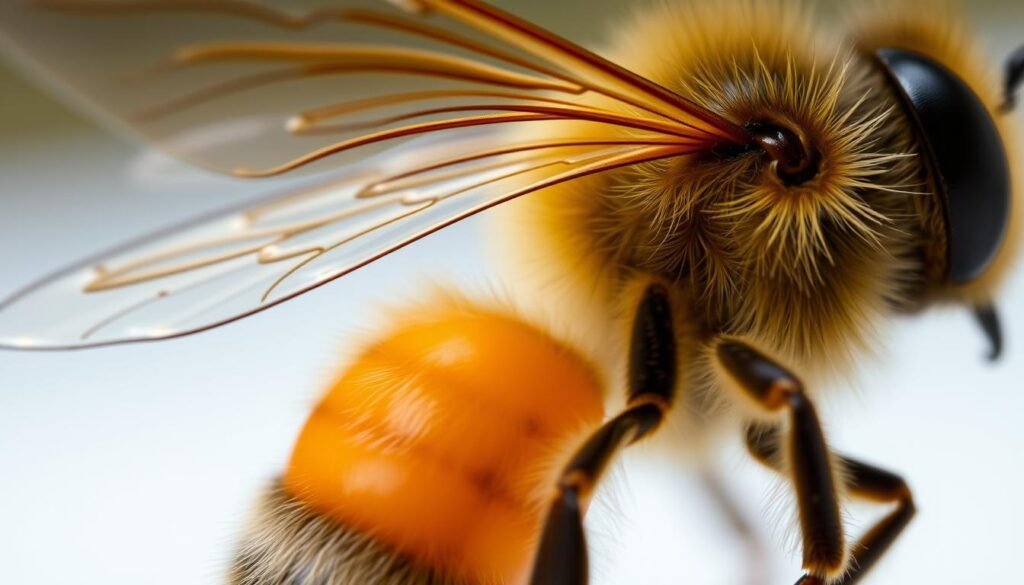
Two pairs of wings: hooks, venation, and flight control
Fore and hind wings connect via tiny hooks so the two wings on each side act as a single surface. That coupling improves lift and stability for trips up to about 5 miles.
Flight muscles: rapid beats and buzz pollination
Powerful thoracic muscles oscillate the wing box and can reach ~230 beats per second. These muscles let bees reach speeds near 15 mph and, in some species, produce buzz pollination for stubborn flowers.
Leg anatomy and specialized tools
Each leg has coxa, trochanter, femur, tibia, and tarsus, ending in claws and sticky pads for sure footing. The foreleg includes an antenna cleaner to sweep sensors free.
Worker hind legs carry the press, brush, auricle, and a tibial pollen basket (corbicula) to collect and pack pollen for transport.
“Observe departures and landings: steadier wing beats usually mean a heavier load.”
| Feature | Role | Field tip |
|---|---|---|
| Wings (paired) | Lift, control | Watch coupling in flight |
| Muscles | Power & buzz | Note speed vs. payload |
| Legs | Grip, groom, carry | Look for pollen baskets on workers |
Abdomen and Specialized Organs
The abdomen packs multiple systems—wax secretion, reproduction, venom delivery, and water recovery—into one compact region.
Wax glands, segments, and exoskeleton hairs
Identify the abdomen by its tapered segments and dense hairs. The underside of worker bees bears wax glands that begin secretion around day 12 after emergence.
Workers produce multiple wax scales per day; scales harden on exposure and many are needed to make 1 gram of wax. Hairs along the rear trap pollen and aid thermoregulation during cool mornings.
Stinger and venom apparatus
Stinger design differs by caste. Workers have a barbed stinger that often lodges in skin. Queens carry a longer, smooth stinger for intra-colony conflicts; drones lack a stinger.
The sting canal links to a venom sac and gland. Even after a worker detaches, the apparatus can continue to pump venom briefly into the target.
Reproductive anatomy: ovaries, eggs, and storage
In queens, ovaries mature in the first one to two weeks and the spermatheca stores sperm to fertilize eggs over seasons. Worker ovaries stay mostly inactive, letting the queen focus the abdomen’s capacity on egg laying and comb work.
| Feature | Role | Field tip |
|---|---|---|
| Wax glands | Comb construction | Look for fresh scales on young workers |
| Stinger & venom | Defense; venom delivery | Keep distance from the abdomen when bees are agitated |
| Ovaries & spermatheca | Egg production and storage | Queen inspection at safe distance; note egg pattern in comb |
Inside the Bee: Digestive, Respiratory, Circulatory, and Nervous Systems
Compact internal organs let a small insect handle big tasks: store nectar, fuel flight, and feed the brood. This section maps how systems link to keep the hive working.
Food path and water conservation
The food canal runs from mouth to crop where nectar and honey are held briefly. The proventriculus meters flow into the midgut for digestion and nutrient uptake.
Malpighian tubules remove wastes and the rectum reclaims water before defecation, keeping flight weight and hydration efficient.
Gas exchange and direct oxygen delivery
Spiracles open to tracheae and air sacs that push oxygen straight to tissues. This explains how muscles sustain rapid wing beats during long foraging trips.
Open circulation and nerve centers
An open circulatory system uses a heart tube and aorta to move hemolymph that bathes organs and cells. The brain stores maps and memories while the ventral nerve cord relays commands.
Note: hypopharyngeal and salivary glands mix with processed honey to feed larvae and workers.
| System | Key parts | Role |
|---|---|---|
| Digestive | Crop, proventriculus, midgut, hindgut | Store nectar, digest, reclaim water |
| Respiratory | Spiracles, tracheae, air sacs | Deliver oxygen directly to muscles and cells |
| Circulatory / Nervous | Heart tube, aorta, brain, ventral cord | Transport hemolymph; coordinate flight and navigation |
For a more technical read on physiology, see this deep dive into physiology.
Workers, Queens, and Drones: How Anatomy Varies by Caste
Structural differences across castes explain who does which job in a colony. These physical traits connect form to daily tasks like building comb, laying eggs, or mating.
Worker features: tools for forage and defense
Workers bear wax-producing glands on the abdomen that secrete scales used for comb. Their hind legs include a pollen basket (corbicula) to pack and carry loads back to the hive.
Workers have a barbed stinger used for colony defense when needed. Watch returning workers with full baskets—it’s a sign of active foraging and rising honey stores.
Queen design: reproductive focus
The queen has developed ovaries and a spermatheca to store sperm after mating. Egg laying begins about one to two weeks after mating flights and continues for years.
Her stinger is smooth, allowing multiple uses, but she typically deploys it only in colony conflicts.
Drone form: single-purpose mating
Drones lack a stinger and carry enlarged mating organs used once during copulation. Males have 13 antennal segments, while females have 12—a useful cue when identifying specimens.
| Caste | Key traits | Field cue |
|---|---|---|
| Worker | Wax scales, corbicula, barbed stinger | Full pollen baskets on legs |
| Queen | Ovaries, spermatheca, smooth stinger | Consistent egg pattern in comb |
| Drone | Mating organs, no stinger, 13 antennae segments | Bulkier body, larger eyes |
Foraging in Action: How Head, Thorax, and Abdomen Work Together
Foragers stitch together senses and motion to turn floral signals into carried resources for the hive.
Finding flowers: antennae and eyes guide to nectar and pollen
The head samples scent and vibration with antennae while compound eyes and ocelli use polarized and UV cues for precise approach to flowers.
Watch a bee orient first, sweeping antennae to lock onto floral odors and tiny vibrations that mark reward-rich blooms.
Collecting and carrying: glossa, legs, and corbicula
The glossa extends to sip nectar while forelegs groom and move pollen toward the hind-leg basket.
Worker bees often mix a little nectar with pollen to bind loads for safe transit during flight.
Returning resources: crop, regurgitation, and wax comb building
Nectar goes into the honey stomach (crop) for carriage; some is used for in-flight energy, the rest reaches the hive for processing.
Foragers regurgitate nectar to nestmates who pack it into cells and fan with wings to reduce water until it becomes honey.
- Head senses locate flowers; thorax and wings control precise landings.
- Legs and the pollen basket secure loads; the brain stores routes to rich patches.
- Full baskets and heavy loads signal abundant pollen, active brood, and more comb cells needed by the colony.
Field Identification Tips: Spot Key Structures Safely
A fast visual check under steady light gives the clearest clues for ID without disturbing bees.
Distinguishing head, thorax, and abdomen quickly
Begin with a three-part scan. Spot the head by the antennae and large compound eyes. Move to the thorax and note the attached wings and legs. End at the abdomen, which tapers and may show the stinger in stinging castes.
Noting pairs: wings, legs, and antennal segments
Count visible pairs to confirm you are looking at a bee: two pairs of wings and three pairs of legs are reliable markers.
When possible, check antennal segments in photos or with a macro lens; this helps confirm sex and caste in careful observations.
Look for the hind leg basket on worker hind legs — a concave, hair-rimmed area on the tibia that fills when pollen loads are heavy.
Safety first around stingers and venom
Assume a worker can sting. Keep distance from the abdomen and avoid sudden moves near hive entrances.
If a worker stings, remove the stinger promptly to limit venom delivery. Remember: drones cannot sting, but do not handle specimens unless you know what you are doing.
“Use light and rest posture to guide safe, low-impact observation—calm bees give the best identification window.”
- Use light to cut glare and reveal wing edges, antennal bases, and leg details.
- Observe bees at rest or while grooming: folded wings and steady legs reduce risk.
- Record features quickly, step back, and leave flight paths clear to avoid provoking defensive behavior.
For a compact field reference, download the Beginner bee field guide: Beginner bee field guide.
Essential Terms and Structures at a Glance
A short list of essential terms helps you label photos and notes during a fast hive check.
Exoskeleton — the external support that protects organs and anchors muscles. It defines the three main sections: head, thorax, and abdomen.
Head — houses compound eyes (many ommatidia), ocelli for light sensing, the brain, and antennae for odor and vibration detection. Mouthparts (labrum, mandibles, maxilla, glossa, proboscis) handle feeding and grooming.
Thorax — attachment site for two pairs of wings and three pairs of legs. Large flight muscles power wing beats and fanning to evaporate water from nectar into honey.
Abdomen — contains wax glands (workers), reproductive organs and spermatheca (queens), the stinger apparatus, hindgut water recovery, and Malpighian tubules for waste.
| Term | Role | Field cue |
|---|---|---|
| Compound eyes | Motion & pattern detection | Watch approach to flower |
| Crop & proventriculus | Nectar storage & flow control | Full crop on return |
| Spiracles / tracheae | Direct respiration | Active during flight |
Quick ID tips: count pairs of wings and legs, note leg features like the corbicula, and remember venom and water balance are tied to observed behaviors.
Conclusion
An integrated body plan lets individual workers turn floral rewards into comb, brood care, and stored honey.
The guide mapped how head sensing, thoracic flight, and abdominal specialization create a working system. This clear link between structure and body function explains why bees perform tasks so efficiently in a colony.
From nectar intake to honey ripening, wings and internal systems move water and energy into stored honey. Wax production and comb building house larvae and eggs, while the stinger and venom protect the nest.
Keep observing seasonal shifts and short rest periods to see anatomy at work. Use this section as a quick reference to match visible behavior with the internal design of the honey bee.
FAQ
What are the three main body sections of a honey bee and why do they matter?
The insect’s body divides into the head, thorax, and abdomen. Each section houses specialized systems: the head holds sensory organs and feeding structures, the thorax carries wings and flight muscles, and the abdomen contains reproductive organs, wax glands, and the stinger. This division links form to function and explains how tasks like flying, foraging, and egg laying are possible.
How do antennae help bees find food?
Antennae detect touch, odors, and chemical cues, plus vibrations that act like hearing. They guide bees to flowers, allow recognition of hive mates, and help assess nectar and pollen quality. Antennal cleaners on the legs keep them effective during foraging.
What roles do compound eyes and ocelli play in navigation?
Compound eyes provide wide-angle vision and detect movement and color patterns, including ultraviolet light common in flowers. Ocelli are simple eyes that sense light intensity and help stabilize flight. Together they aid orientation, landing, and locating floral targets.
How does the proboscis work for feeding and grooming?
The proboscis and glossa form a tubular feeding apparatus for sipping nectar. Muscular control and capillary action draw liquid into the food canal and crop. The same structures assist in grooming and spreading secreted substances like royal jelly or wax.
What are the main tools on a bee’s head for manipulating materials?
Mandibles and the labrum/maxilla complex act like jaws and spatulas. Mandibles cut wax, shape comb, and handle pollen; maxillae and labrum help manipulate food and assist in grooming and communication behaviors.
Where is the bee brain located and what does it control?
The brain sits above the digestive tract in the head and coordinates sensory processing, learning, memory, and navigation. It works with hormone-producing glands that influence caste development and behaviors like foraging and nursing.
How do the wings and flight muscles enable busy foraging flights?
Bees have two pairs of hooked wings with strong venation and quick wing beats driven by powerful indirect flight muscles in the thorax. These muscles compress the thorax to produce rapid oscillation, allowing sustained flight, hovering, and buzz pollination.
What features on the legs help collect and carry pollen?
Legs include segments from coxa to tarsus with claws and adhesive pads for grip. Specialized structures—pollen brushes, the pollen press, and the corbicula (pollen basket) on the hind legs—collect, compact, and carry pollen back to the hive.
How do wax glands and wax scales function?
Wax glands on the underside of the abdomen secrete liquid wax that hardens into scales. Worker bees chew and shape these scales with their mandibles to build comb used for brood rearing and honey storage.
What is the difference between worker, queen, and drone stingers or lack thereof?
Worker stingers are barbed and connect to a venom sac, making stings often fatal to the worker when used on mammals. Queens have smoother stingers used primarily against rival queens; drones lack a stinger entirely and serve reproductive roles.
How does the digestive system process nectar into honey?
Nectar travels down the food canal into the crop (honey stomach) where enzymes begin converting sugars. Foragers regurgitate partly processed nectar to house bees, which further enzymatically refine and evaporate it into honey in comb cells.
How do bees breathe without lungs?
Gas exchange occurs through spiracles—small openings along the thorax and abdomen—connected to a network of tracheae and air sacs. Oxygen diffuses directly to tissues and carbon dioxide exits through the same system.
What does open circulation mean for these insects?
Bees have an open circulatory system where hemolymph (insect “blood”) bathes organs in body cavities. A dorsal vessel acts as a heart tube to move hemolymph forward toward the head and through the aorta, supporting nutrient and hormone distribution.
How does reproductive anatomy differ between castes?
Queens possess well-developed ovaries and a spermatheca for long-term sperm storage, enabling continuous egg laying. Workers have reduced ovaries and rarely lay fertilized eggs. Drones are built for mating and house specialized genitalia but no stinger.
What sensory and motor systems coordinate foraging behavior?
Eyes and antennae locate flowers; the proboscis and mandibles handle nectar and pollen; thoracic muscles power flight; legs pack pollen into corbicula; and the crop stores nectar for transport. Neural circuits and memory ensure efficient routes and communication via dances.
How can I identify head, thorax, and abdomen in the field safely?
Look for the rounded head with antennae and eyes, the muscular thorax bearing wings and three pairs of legs, and the segmented abdomen with wax scales and a possible stinger. Observe from a distance and avoid sudden moves to reduce sting risk.
What key terms should I remember when studying bee structure?
Useful terms include exoskeleton, corbicula (pollen basket), proboscis, glossa, spiracles, tracheae, venom sac, spermatheca, wax glands, and flight muscles. These help link visible features to their functions during foraging and colony maintenance.