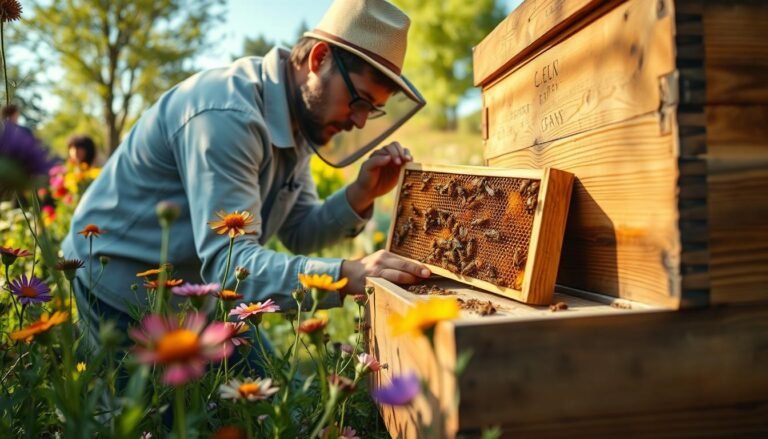
Start smart. Building a resilient beekeeping roadmap aligns your operation with environmental care, steady economics, and better bee health. The goal is clear: reduce avoidable losses, cut replacement costs, and improve honey returns over time.
This guide walks one practical step at a time. You will learn how to set goals, choose local stock, site permanent yards with sun and water, and time management tasks to limit stress on colonies. Examples like overwintering extra colonies and selling surplus nucs show how seasonal loss can flip to profit.
Think of sustainability as disciplined work: non-chemical harvesting, durable gear, and solar fencing lower inputs and support long-term success. Track winter survival, colony health, and local bee availability to measure progress. With steady attention and data-driven adjustments, your bees thrive and honey yields become more predictable.
Key Takeaways
- Align beekeeping with conservation and reliable economics.
- Follow clear steps: goals, local stock, smart siting, and timely care.
- Overwintering and selling nucs can convert losses into income.
- Durable gear and low-impact methods cut costs and stress on bees.
- Measure success with winter survival, colony health, and honey yields.
Define your sustainability goals and align them with your beekeeping values
Start by recording what matters most to you as a beekeeper and let those values shape measurable goals. Write down priorities for animal welfare, economic stability, and reduced environmental impact. These notes become the 기준 for decisions about colonies and daily work.
Set clear, countable targets. Aim for winter survival thresholds, routine colony health scores, and a commitment to make excess bees available locally. Many clubs report 50–100% annual losses; accept no more than 15% without changing your management.
Match the number of colonies to the time you can reliably invest. Success depends on timely management: feeding, Varroa treatments, supering, and swarm control. Small-scale beekeepers can avoid cross-country movement by sourcing locally and sharing splits.
- Document values and convert them into goals that prioritize welfare and reduced footprint.
- Track mite loads, brood patterns, and food reserves as part of health monitoring.
- If annual losses exceed 15%, revise practices before adding more colonies.
| Objective | Measure | Target |
|---|---|---|
| Winter survival | Surviving colonies / total | ≥ 85% |
| Colony health | Inspection score: brood, disease, stores | Routine “satisfactory” on each inspection |
| Local availability | Splits/nucs produced | Meet local demand before importing |
For practical guidance on greener honey practices, see tips to go green. End each season with a review and adjust your targets, time commitments, and training needs before the next cycle.
Site your apiary for bee health and productivity
Good siting begins with morning sun, steady wind protection, and a reliable water source close by. These three factors help raise internal temperature quickly, get foragers active earlier, and reduce stress during brood rearing.

Sun exposure and orientation
Aim for 6–8 hours of sun. Face each hive entrance southeast or east so bees warm up with the morning light. Warmer boxes start flights earlier and can improve honey flow over the season.
Wind protection and microclimate
Use trees, hedges, or terrain as windbreaks to lower wind stress. In open sites, add artificial screens to create a stable microclimate that helps brood development and conserves bee energy.
Water access
Provide a clean water source within a quarter mile. Add pebbles, cork, or wood chips so bees land safely and avoid drowning while collecting water to cool the colony.
Layout, spacing, and safety
Keep at least 3 feet between hives and allow 25–50 foot buffers from property lines and walkways. Use fencing or hedges to raise flight paths above head height and reduce interactions with people and pets.
- Plan vehicle access and enough clearance for honey supers and maintenance.
- Consider horseshoe layouts for easy inspections and movement during harvest.
- Rooftop yards can offer excellent sun and fewer disturbances but still need wind buffering and water for pollinators.
Confirm local zoning and setbacks before you place hives. For detailed site rules and best practices, follow this proper siting guidance.
Creating a sustainable apiary plan: prioritize local stock and resilient genetics
Prioritizing nearby stock strengthens your yards and cuts disease risk quickly. For small-scale beekeepers, avoiding long-distance movement lowers pathogen spread and reduces stress on queens during transport.
Reduce cross-country movement: source local colonies and share splits
Every strong overwintered colony can yield at least one split for local distribution. Commit to local sourcing and a culture of sharing splits so regional apiaries gain resilience.
Build resilience with selective queen rearing and hygienic, gentle stock
Treat genetics as core infrastructure. Wendell Honey’s queen program targets hygienic behavior, gentle temperament, winter survival, and above-average honey yield. That strategy produces healthy colony performance and cuts the need for purchased packages.
| Goal | Metric | Target |
|---|---|---|
| Local replacement pipeline | Splits produced per strong colony | ≥ 1 split |
| Genetic selection | Breeder records over seasons | Documented improvement in health and honey |
| Yard management | Permanent apiaries with buffers | Reduced disease exchange |
- Adopt written breeding objectives and mating controls.
- Share proven practices with your club to reduce spring demand spikes.
- Track outcomes and compare local stock versus imported packages.
Use these steps in this post to align genetics with good management. That pairing helps bees thrive and keeps honey production steady.
Plan for losses and build your own replacements
Model likely winter losses now and use late-season splits to secure your target hive numbers. Start with an honest loss rate from past seasons. If losses top 15%, change your management before adding outside stock.
Account for typical losses and model scenarios
Run simple math. For 10 hives, a 30% loss leaves seven in spring. By overwintering 20 colonies via late splits, even a 50% loss can still meet a 10-hive spring target without buying packages.
Overwinter nucleus colonies and support neighbors
One overwintered nuc per overwintered hive is a good rule of thumb. Selling surplus nucs locally can turn a typical $405 replacement cost into a $700 return, swinging your finances by over $1,100.
Seasonal timeline and spring reallocation
- Split after peak build-up; raise nucs with young bees and stores.
- Overwinter nucs with ventilation, food, and shelter.
- In spring, refill deadouts first, then offer extras for local sale after disease checks.
Limit purchases to first-year starts, specific queen genetics, or post-disaster recovery. For step-by-step timing and tasks, see seasonal beekeeping tasks.
Implement timely, sustainable colony management
Timely interventions are the single best defense against common hive losses. Delayed work on feeding, Varroa control, or supering lets problems escalate. Adopt an ethic of prompt action: inspect, record, and decide the same day.

Integrated pest management for Varroa and disease reduction
Measure first, treat second. Institute an IPM routine that monitors mite levels and uses targeted methods before populations spike. Rotate treatments, use screened bottom boards when useful, and keep clear records to learn what works.
On-time feeding, supering, and swarm control
Build a calendar of critical times: feed before dearths, add supers before flows, and act on swarm impulses early. Timely space management prevents congestion and preserves honey production.
Winter preparation: insulation, entrance sizing, cluster strength
Confirm cluster strength and balance stores across colonies. Add insulation or wraps as needed, set the entrance to block pests but keep ventilation, and avoid heavy manipulations in low temperature windows.
- Standardize inspection methods so every beekeeper follows the same maintenance checks.
- Train helpers on decision thresholds to prevent procrastination.
- Keep concise records linking interventions to outcomes for continuous improvement.
For a seasonal task calendar tied to these critical times, consult our beekeeping calendar.
Minimize environmental footprint in daily operations
Daily choices on the yard add up to measurable reductions in waste and fuel use. Focus on low-impact routines that protect bees and keep honey quality high. Small changes in how you harvest and maintain gear yield big environmental gains.
Non-chemical harvesting methods and gentle bee handling
Adopt staged, non-chemical harvesting to cut exposure. Use queen excluders to keep brood below and remove honey supers in the morning so foragers clear the frames. Then use gentle air blowers to move remaining bees before loading.
Avoid chemical boards and repellents during harvest. That protects food quality and reduces residues in comb. Train teams in calm inspections and predictable routines to keep colonies relaxed.
Permanent yards, solar fencing, and durable wooden equipment
Favor permanent yards to cut transport and stabilize forage across apiaries. Wendell Honey overwintered colonies outdoors to avoid needless movement and indoor heating.
- Install solar-powered electric fencing to deter bears humanely.
- Mow instead of using herbicides to keep entrances clear and airflow steady.
- Use paraffin-dipped, durable wooden equipment and repair rather than discard.
Track inputs and outputs to verify gains. Monitor fuel, materials, honey yield, and survival to show this post’s practices reduce your environmental footprint while supporting healthy bees, nearby plants, and wind-protecting trees.
Conclusion
Close by turning targets into scheduled tasks that protect bees and yield honey reliably. Set simple checkpoints for inspection times and winter readiness. This step-wise approach helps beekeepers and the beekeeper on duty keep records that matter.
Align values with action: site hives well, favor local stock, raise nucs for replacements, and act on swarm or mite warnings on time. When colonies are tended on schedule, winter losses fall and colony health improves.
Build durable infrastructure: grouped hive yards, standard gear, documented genetics, and seasonal checklists. Share surplus and methods with neighbors and consult resources like the sustainable beekeeping proposal and this beekeeping resources guide.
Challenge yourself: review last season’s data, set numeric targets for winter survival, and schedule tasks now. When beekeepers form good habits, pollinators, food systems, and people all benefit.
FAQ
What are the first steps to develop a sustainable apiary plan?
Start by defining clear goals for animal welfare, economic viability, and environmental impact. Choose measurable targets such as winter survival rate, colony health indicators, and local hive availability. Match the number of colonies to the time and resources you can commit to regular inspections, feeding, and maintenance.
How do I choose the best site and hive orientation for bee health and productivity?
Pick a location with good morning sun and southeast or east-facing entrances to warm hives early. Provide wind protection with hedges or natural windbreaks and consider microclimates. Ensure a reliable water source within a quarter mile and space hives for easy access, legal buffers, and safe movement.
Why is sourcing local stock important and how do I build resilient genetics?
Local stock adapts to regional pests and climates, reducing the need for long-distance movement. Use selective queen rearing, hygienic lines, and gentle stock to increase resilience. Sharing splits and raising nucs from local colonies helps maintain genetic diversity and local disease resistance.
How should I plan for colony losses and replacements?
Model expected losses and build a timeline to maintain target hive numbers. Overwinter nucs to replace winter deadouts and offer support to neighboring beekeepers. Schedule splits and nuc production in spring and late summer so replacements are ready when needed.
What sustainable practices reduce disease and Varroa mite pressure?
Implement integrated pest management: monitor mite levels, use mechanical controls like drone brood removal, rotate treatments, and favor hygienic queens. Maintain strong colonies through timely feeding, space management, and minimizing stress to lower disease susceptibility.
When should I feed and super colonies to prevent shortages or swarming?
Feed when nectar dearths occur and before heavy winter to build stores. Super colonies during spring nectar flows and add honey supers only when brood nest pressure is high. Time splits and swarm-control measures in early spring or after main nectar flows to avoid colony loss from swarming.
What winter preparations support cluster strength and survival?
Strengthen colonies in fall by ensuring adequate honey and pollen stores, reduce hive entrances to limit drafts and robbing, and insulate where necessary. Keep clusters strong by combining weak colonies when appropriate and preserving brood warmth without sealing hives completely.
How can harvesting reduce environmental impact and protect bee health?
Use non-chemical extraction methods and gentle handling to limit stress. Return clean equipment to service, avoid single-use plastics, and harvest at times that leave sufficient stores for bees. Proper comb management and sanitary practices reduce disease spread.
What equipment and yard setup minimize maintenance and environmental footprint?
Invest in durable wooden equipment, solar-powered electric fencing where livestock interaction is an issue, and permanent yard layouts to reduce frequent movement. Centralize tools and have clear pathways for quick inspections to save time and fuel.
How do I balance time investment with colony numbers for long-term success?
Align colony count with realistic weekly and seasonal time commitments. Smaller operations allow detailed management per hive; larger ones require delegated tasks, trained helpers, or automated systems. Track labor hours and adjust hive numbers to maintain quality care and sustainability.
What legal and community considerations should I address when siting hives?
Check local ordinances on hive placement, required setbacks, and registration. Communicate with neighbors about forage availability and safety, post clear signage, and create legal buffers to reduce conflicts and ensure compliance.
How can I support local pollinators and forage availability year-round?
Plant a variety of native flowering trees, shrubs, and herbaceous plants to provide continuous bloom. Coordinate with nearby landowners, orchards, or municipal programs for pollinator corridors. Avoid broad-spectrum pesticides and encourage habitat features like hedgerows and wildflower strips.
What record-keeping practices improve colony health and management decisions?
Keep simple, regular records of inspections, mite counts, treatments, queen performance, honey yields, and feed events. Use paper logs or apps like BeeKeepTrack or HiveTracks to spot trends, forecast needs, and refine management timing.
How do I implement non-chemical methods for mite control effectively?
Combine strategies: drone brood removal, brood breaks via careful queen management, powdered sugar dusting in some climates, and selecting hygienic stock. Monitor mite thresholds and apply chemical controls only when necessary as part of an integrated plan.
What training and safety measures should be in place for people working the apiary?
Provide basic bee biology and handling training, use proper protective gear from companies like VIVO or Mann Lake, and train in first-aid for stings. Establish safe lifting techniques and clear emergency procedures for allergic reactions and site hazards.