


Practical chemical-free management means focusing on husbandry, monitoring, nutrition, and stock selection to support healthy colonies without routine synthetic inputs.
Experienced beekeepers stress outcomes over ideology. Learn to keep colonies alive and thriving first, then explore alternative methods. Nature and varroa are not kind to bees, and rigid dogma can harm results.
Success needs skills and consistent action, not a “do nothing” stance. A veteran beekeeper warns that neglect spreads pests and disease to neighbors, so your way must be responsible and data-led.
Align goals with colony health: stabilize brood temperatures, provide fuel and protein, and time interventions to the hive’s rhythm. Monitor mites and use simple treatment thresholds so decisions are repeatable and clear.
This short roadmap will build your experience stepwise. You’ll learn placement, calendar cues, monitoring, non-chemical tactics, and realistic seasonal plans to improve overwinter survival and long-term health.
Key Takeaways
- Prioritize husbandry, nutrition, and stock selection to support bees.
- Monitor regularly; you cannot manage what you don’t measure.
- Responsible, data-led practice beats hands-off neglect.
- Use treatment thresholds to guide decisions even when minimizing inputs.
- Build skills stepwise for better overwinter survival and colony health.
Understand your goal: healthier bees through smart, chemical-free management
Aim for measurable colony resilience—stable brood, steady stores, and low mite counts.
Define success by these indicators rather than by ideology. Strong colonies show clear brood patterns, adequate winter stores, and steady population growth. These outcomes come from good husbandry more than blanket treatments.
Keep mind that nature is not kind to colonies. Parasites and thin forage can overwhelm hives quickly, so regular checks and data-based actions matter.
“Focus on keeping bees alive and healthy first, monitor mite levels, and have a backup plan.”
Adopt a simple decision hierarchy: optimize placement and nutrition, monitor mites, use non-chemical tactics like splits or brood breaks, then evaluate targeted organic options if thresholds are passed.
- Set explicit mite and nutrition thresholds so your plan guides actions.
- Track outcomes each season to refine your approach and preserve options.
- Remember neighbor responsibility: unmanaged hives raise regional pressure.
For further reading on methods and resources, see this comprehensive guide.
Set up for success: apiary placement, sun exposure, and warm “bedrooms”
A hive sited for sun and shelter needs less energy to keep brood warm and healthy. Morning sun dries dew, reduces mold and pests, and helps the cluster warm earlier in the day. A warm, dry cavity improves survivorship through cold snaps and long winter nights.
Morning sun, dry equipment, and tight boxes
Orient entrances toward morning light so the hive warms on cool days. Keep boxes tight and joints sealed to cut drafts. Dry, weatherproof equipment makes it easier for bees to hold steady temperatures.
Fuel for heat: combs of honey within reach
Place frames so honey sits adjacent to the cluster. That gives instant access to fuel when bees need heat. Vertical stacks help clusters move upward with heat convection and lower starvation risk.
- Elevate stands to avoid ground dampness and pests.
- Use windbreaks to reduce heat loss on exposed sites.
- Provide nearby water to support cooling and food mixing.
| Feature | Benefit | Practical action |
|---|---|---|
| Full sun | Reduces moisture and pest pressure | Face entrance east or southeast |
| Tight, dry boxes | Stable brood temperatures | Seal joints; weatherproof covers |
| Honey adjacent | Immediate heating fuel | Arrange frames so cluster can access stores |
Note: For more on site choices and local experience, see this apiary placement guide.
Know your bees’ calendar: spring swarms, summer slowdowns, and winter realities
Seasons change the game: spring booms, summer lulls, and winter tests each hive differently.
Spring triggers fast brood expansion and repeated swarm impulses. Manage builds early to keep production high and cut lost swarm numbers.
After major nectar flows, summer often brings a slowdown. Queens reduce laying, the adult population drops, and mite-to-bee ratios can climb.
Track the fall transition closely. The same mite load on fewer bees raises infestation risk and endangers winter readiness.
“In northern areas, a December dead-out is commonly tied to mite-driven virus cascades.”
- Time brood breaks or splits in spring and early summer to interrupt varroa reproduction.
- Align feeding with forage cycles so late-season cohorts are robust and well-provisioned.
- Prepare wintering by consolidating brood, ensuring honey proximity, and reducing drafts.
| Season | Risk | Action |
|---|---|---|
| Spring | Swarm impulses, rapid growth | Increase inspections; consider splits |
| Summer | Egg-laying slowdown; mite ratio rises | Check nutrition; repeat mite counts |
| Fall/Winter | Population contracts; winter collapse risk | Target mites early; finalize wintering setup |
Chemical-free beekeeping tips: the core principles you’ll follow
Start with a clear plan. A proactive beekeeper stays ahead of problems by monitoring regularly and preparing simple contingency plans. Set realistic goals for each hive—growth, honey, or queen selection—and align every action to those goals.
Put husbandry first. Set inspection routines and recordkeeping so decisions follow data, not dogma. Quick, purposeful checks cause less stress and reveal trends before they become a major problem.
Prioritize monitoring, adapt, and act
- Monitor mites routinely and act when thresholds are met; delayed responses can let a small issue become a regional one.
- Use interventions that fit the situation—splits, brood breaks, and targeted nutrition often resolve troubles without a formal treatment.
- Define a backup plan early: list your threshold numbers and step-by-step responses so you won’t hesitate when conditions worsen.
Protect neighbors and keep expectations real
Experienced voices warn that a hands-off approach can create “mite bombs” that harm others. Share timing and findings with nearby beekeepers to reduce cross-apiary pressure.
“Focus on keeping bees alive and healthy first, monitor mite levels, and have a backup plan.”
Avoid unnecessary exposure to substances by letting good management do most of the work and reserving last-resort treatment for documented need. Coordinate with safety and responsibility guidance to protect your apiary and others in the area.
Monitor mites the right way before you act
Before any action, collect reliable counts so your response fits the actual mite pressure. Good sampling prevents guesswork and focuses interventions where they matter most.
Sugar roll vs. alcohol wash — collecting ~300 bees safely
Collect about a half cup of bees—roughly 300—from the brood area. First shake them into a tub to ensure the queen isn’t in your sample.
Sugar roll preserves the bees and works well when you want to release them. An alcohol wash dislodges mites quickly and can be slightly more thorough if done correctly. Both methods are valid when performed consistently.
Reading results and recognizing risky levels
Count mites, then divide by 300 to get a percent. For example, 23 mites ÷ 300 ≈ 7.6%. That exceeds common thresholds.
- Many operations use ~3% as a mid-season trigger and ~5% in late season.
- Standardize tools: a marked jar at the half-cup line, fresh powdered sugar or alcohol, and a timer.
- Document each colony so you link levels with signs like deformed wings.
Seasonal timing: why counts jump as colonies contract
As a colony shrinks in late summer and fall, mite percentages often rise even without new mites entering. Schedule counts across the year and retest after any intervention.
Use your numbers to choose the least invasive next step—brood break, split, drone removal, or a targeted treatment—and coordinate yard-wide responses to limit reinfestation.
Build resilient stock: local queens, survivor lines, and practical selection
Good stock starts with local adaptation and realistic selection goals. Aim to source genetics that already handle your climate and pests rather than chasing ideology.
Choosing sources: packages, nucs, and wild swarms
Packages can look strong the first year but often falter by the second. Nucs may arrive useful but sometimes carry higher mite loads and die the first winter.
Wild swarms from true feral survivor lines usually show the best fit when available. Prefer locally adapted stock and regional treatment-free programs where possible.
Breeding mindset: evaluate, requeen, and improve at home
Evaluate colonies on mite tolerance, brood pattern, temperament, and resourcefulness. Requeen from top performers and replace underperformers promptly.
- Focus selection on queens and drones to improve genetics without sacrificing whole worker populations.
- Track parentage and results by year so you know which matings produce resilient bees.
- Use splits and coordinated exchanges with nearby beekeepers to spread proven lines and maintain diversity.
“Select for outcomes, not dogma.”
Non-chemical mite reduction tactics that actually help
Small, planned disruptions to brood development often yield large reductions in mite population. Use a mix of husbandry moves rather than a single fix. Time actions to the colony’s cycle and record results.
Brood breaks and splits
Planned brood breaks—queen caging or creating splits—interrupt varroa reproduction. These moves lower mite loads and can stand alone or pair with oxalic timing.
Drone brood and comb management
Pull capped drone brood where mites concentrate. Use foundation and spacing to limit excess drone comb and keep worker comb quality high.
Site and hive environment
Place hives in full sun to reduce moisture-linked disease and pests. Strong ventilation and dry interiors cut chalkbrood and nosema expression.
- Time brood breaks so most mites are phoretic; follow with monitoring.
- Use splits to shift resources and remove emerging brood that carries mites.
- Include these steps in your annual plan for predictable population control.
| Action | Primary effect | Practical note |
|---|---|---|
| Planned brood break | Interrupts mite reproduction | Use queen caging or short-term splits; log dates |
| Drone brood removal | Reduces mite buildup | Pull capped drone comb every 2–3 weeks during peak season |
| Full-sun placement | Lower disease and pest pressure | Site hives with morning sun and good airflow |
Nutrition that changes outcomes: pollen, nectar, and “fat” winter bees
What bees eat in the fall directly shapes their ability to survive cold months and resist infection. Late-season nutrition is about building quality, not just bulk numbers.
Why protein matters
Newly emerged workers need protein to develop robust immune systems. Without it, DWV levels in young bees can rise ~700x; supplementation reduces those levels and natural pollen can drive them to non-detectable amounts.
Late-season feeding strategy
Provide real, clean ground pollen in weather-protected dispensers. Grind pellets, place inside an internal feeder, and watch consumption. Some operations stopped routine fumagillin and found better nosema tolerance once pollen was prioritized.
Winter bee biology
Winter bees carry larger fat bodies, enlarged food glands, and higher sugar and fat reserves. These traits improve thermoregulation and months-long survival, making protein timing critical.
“Feed for quality so winter cohorts develop the reserves they need to carry your colony through cold snaps.”
- Balance protein with honey or syrup so brood rearing stays supported.
- Time feeding ahead of the winter bee rearing window for best results.
- Use monitoring to adjust quantities and confirm uptake.
| Action | Primary effect | Note |
|---|---|---|
| Ground pollen feeders | Higher protein uptake | Protect from moisture |
| Carb support (honey/nectar) | Energy for brood | Maintain stores near cluster |
| Targeted timing | Stronger winter population | Feed 3–6 weeks before cold |
See research on how protein reduces virus levels and plan feeding in concert with your mite-management strategy.
When “organic” mite treatments make sense—and when they don’t
Treat only with purpose: confirm mite levels and choose the least disruptive option for the yard. Organic products can work well, but they are tools, not a substitute for good management.
Formic acid (MAQS): short window, temperature limits
MAQS runs about seven days and can be used with supers on. It leaves little residue when applied per label, but avoid use above ~85°F to reduce queen and brood harm.
Wear gloves and a respirator and follow PPE guidance—this protects both the beekeeper and the hive.
Oxalic acid vaporization: broodless timing for best effect
Vaporized oxalic is most effective when colonies are broodless, often in late fall or early winter. It targets phoretic mites but will not reach mites inside capped brood.
Use a proper vaporizer and treat only after confirming brood status to avoid collateral brood damage.
Thymol wafers: schedule and practicality
Thymol products typically require three applications spaced 7–10 days apart. They act as corrosive vapors and demand multiple visits, so factor labor into your plan.
- Use MAQS for short, decisive control when temperatures allow.
- Apply oxalic vapor only during broodless windows for near-maximum impact.
- Choose thymol when you can commit to multi-visit application schedules.
Minimize harm: data-driven, sequenced, and safe
Confirm counts before any treatment and retest after to verify results. Avoid stacking products or rushing from one application to the next.
Remember: organics still stress queens and workers if overused. Sequence actions sensibly and make treatment the last step in your management hierarchy rather than the end goal.
“One well-timed, evidence-based treatment beats repeated, unnecessary applications.”
What to avoid: synthetic strips and residue build-up in wax
Synthetic strips can seem convenient, but their long residence in wax carries hidden costs. These products must stay in the hive for weeks to reach mites under cappings. That prolonged contact raises residue and resistance risks.
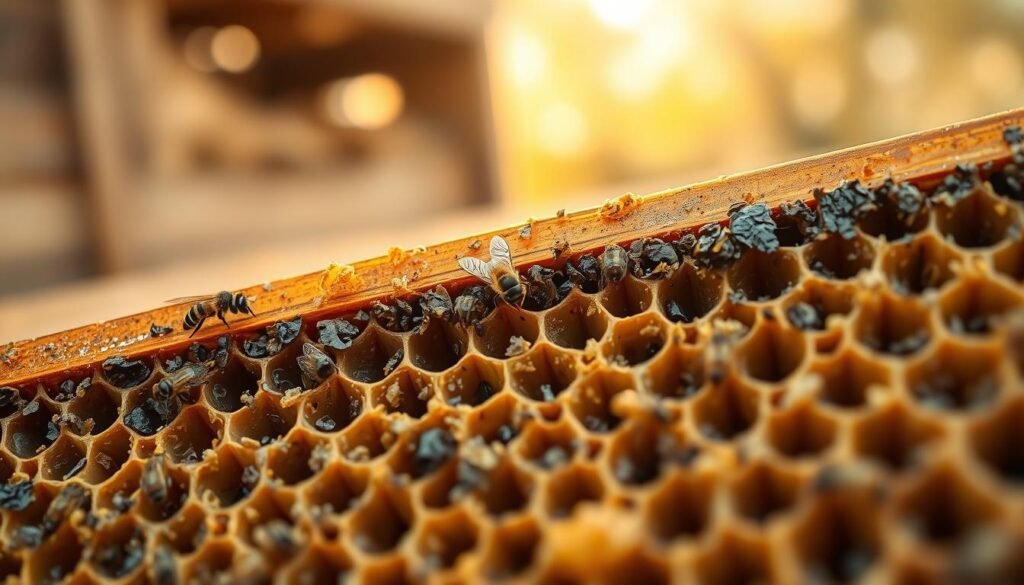
Think of wax as a sponge. Repeated use lets chemicals accumulate and persist beyond a single season. That buildup can affect developing brood and stored honey quality.
- Avoid strips that require long exposure; they raise the chance of persistent chemicals in comb.
- Recognize collateral damage: extended-contact products can shorten queen life and impair drone fertility.
- Factor resistance risk into decisions—repeated use of one mode of action promotes mite adaptation.
Some sublethal exposures impair orientation, immune response, and brood viability, a problem that may be hard to trace. Reserve any intervention for documented need and prefer options that do not linger in hives.
“One well-documented, minimal-exposure move beats routine, long-term strip placement.”
| Concern | Effect | Action |
|---|---|---|
| Residue | Wax contamination | Limit strip duration |
| Collateral harm | Queen and drone loss | Prioritize management moves |
| Resistance | Lower efficacy | Rotate strategies |
Record every product you place in a hive and communicate your low-residue standards when selling nucs or honey. A well-managed yard reduces reliance on treatments and protects long-term colony resilience for the beekeeper and the bee community.
Plan for dearths and disease pressure without routine chemicals
During forage gaps, a clear nutrition plan keeps colonies functioning and lowers disease risk. Focus on timely protein and simple carbohydrate backups rather than default medications.
Nosema context: stronger bees tolerate more—why protein beats prophylactic antibiotics
Nosema can persist in many yards, but well-nourished bees show far better tolerance. Some operations stopped fumagillin and instead fed real pollen; incidence did not always fall, yet colonies handled infection with fewer clinical signs.
Real food supports immune function and durable winter cohorts. Prioritize protein before reaching for routine antibiotics, and measure outcomes—brood pattern, forager vigor, and visible disease expression—to guide action.
Feeding without substitutes: sourcing, grinding, and weather-protecting real pollen
Source clean pollen (Yukon is one example) and grind pellets finely so bees can consume it. Protect feeders from rain with simple covers—cut soda bottles work well—and place dispensers inside the hive when weather is poor.
- Prepare for dearths: set a nutrition window—late summer into fall—to build winter bees.
- Protect food: use covered dispensers and coordinate feeding across the yard to limit robbing.
- Integrate carbs: ensure honey or syrup during acute shortages while keeping protein the priority.
“Replace prophylactic mindsets with measurement and response; treat disease signs as management signals for nutrition first.”
| Action | Primary effect | Practical note |
|---|---|---|
| Feed ground pollen | Improves immune resilience | Use clean sources; grind to fine texture |
| Covered dispensers | Maintain dry, accessible food | Cut bottles or internal feeders shield from rain |
| Yard-wide coordination | Reduces robbing and stress | Synchronize feeding and monitor outcomes |
Track results and adjust the plan by yard and season. For broader strategies on pests and disease, see a practical pests and disease prevention resource.
Realistic expectations for beginners in the United States
Begin with survival goals: your first priority is keeping colonies alive through their first winters. Treat the first year as practice in routine checks, timely feeding, and clear recordkeeping.
Learning first: keeping colonies alive precedes advanced goals
Accept that treatment-free approaches are attractive, but many beginner yards lose hives without solid management. Learn inspections, mite counts, and basic nutrition before trying advanced breeding or minimal-intervention programs.
Backup plans: monitor, set thresholds, and preserve promising queens
Write a simple plan with threshold numbers for action. If counts rise above your set point, follow the steps you pre-defined. That reduces hesitation and protects yard-level health.
- Source risks: packages can look strong in year one and fail in year two; nucs may arrive with mites and struggle in their first winter.
- Preserve good queens and requeen underperformers to build resilient stock.
- Keep colony-level records to link actions to outcomes and speed learning.
- Seek local mentorship and club knowledge to shorten your learning curve.
- Close each season with an end-of-year review: identify keeper queens and retire weak lines.
“Aim for healthy overwintered colonies first, then scale breeding and advanced tactics.”
| Beginner focus | Why it matters | Practical action |
|---|---|---|
| Survival first | Establish repeatable, low-loss practices | Inspect monthly; track honey and mite counts |
| Source awareness | Different inputs carry distinct risks | Monitor nucs early; test second-year packages |
| Written thresholds | Faster, consistent decisions | Define % mite triggers and stepwise responses |
| Queen preservation | Improves yard over time | Requeen from top performers; split survivors |
Step-by-step seasonal plan to keep bees chemical-free
Plan the year in clear seasonal blocks so actions match colony needs and measurable goals.
Spring: evaluate stock and set your early baseline
Assess overwintered strength and verify queen performance. Establish an early-season mite baseline with a reliable count.
Manage swarm impulses by providing space, making splits, or interrupting queen cells. Equalize resources between colonies to balance growth.
Summer: repeat counts and manage nutrition
Repeat mite counts through the summer as flows taper and population shifts. Monitor food and add real pollen during dearths to support brood and foragers.
Consider timed brood breaks or splits to lower mites without immediate treatment. Keep hives in full sun and dry interiors to limit disease pressure.
Late summer/fall: reduce mites and build winter bees
Act before winter bee rearing peaks; late-summer counts often rise as populations contract. If thresholds are exceeded, choose the least disruptive treatment available.
Bolt on quality protein so bees develop fat reserves, and place honey frames near the cluster for easy access.
Winter: conserve stores and check smartly
Reduce drafts, keep frames arranged so honey sits adjacent to the cluster, and avoid unnecessary inspections. Spot-check weight and entrance activity instead.
Plan any broodless-timed treatments only when data and local conditions justify them; the goal is control, not eradication.
- Document counts, nutrition, and queen notes throughout the year.
- End-of-year: identify best colonies for next spring’s splits and queen rearing.
Conclusion
Finish the season with clear records and a simple plan that guides your choices each year.
Prioritize husbandry: site hives well, feed strategically, and measure mite pressure so you act with confidence.
Use non-chemical tools — sun exposure, planned brood breaks, splits, and focused nutrition — to keep bees resilient while avoiding routine inputs.
Keep mind that responsible practice protects your yard and others nearby. Nature is not kind; steady routines and records reduce avoidable losses.
If counts exceed thresholds, choose the least invasive treatment to restore balance and preserve cleaner wax and honey.
Invest in local stock, preserve your best queens, and share what you learn through natural beekeeping guides and training and courses. With a clear way and disciplined execution, you can keep bees with fewer interventions and better long-term results.
FAQ
How do I begin keeping healthy hives without routine chemicals?
Start with strong basics: choose a sunny, dry apiary site with good airflow and easy access. Source local queens or nucs when possible, monitor mite levels regularly, focus on nutrition with clean pollen and nectar sources, and use husbandry steps such as timely splits and brood breaks before resorting to treatments. Build a written plan that lists monitoring methods, action thresholds, and requeening criteria.
What monitoring method should I use to check varroa levels?
Use either the sugar roll (for live recovery) or alcohol wash (for maximum accuracy). Collect about 300 bees from the brood area, follow the protocol closely, and calculate mites per 100 bees to get a percentage. Repeat counts seasonally so you can spot trends and act when levels rise toward your predetermined threshold.
When are mite counts most likely to spike?
Counts often rise in late summer and early fall as brood rearing declines and mites concentrate on the remaining adult bees. Seasonal events such as queen failure, high brood breaks, or nearby collapsing colonies can also cause sudden increases. Monitor more frequently during these risk periods.
Can placement and hive design reduce pest pressure?
Yes. Full-sun locations warm hives early in the day, discourage damp conditions, and speed brood development. Tight, dry equipment maintains stable brood temperatures. Placing honey comb adjacent to the cluster helps bees fuel heat production and maintain colony strength through cold snaps.
Which non-chemical mite reductions actually work?
Practical measures include planned brood breaks via splits, drone brood removal to trap reproductive mites, frequent requeening with locally adapted stock, and strategic spacing or comb management to limit mite reproduction sites. These tactics lower pressure over time when combined with monitoring and selective use of organic options.
How important is nutrition for disease tolerance?
Critical. Protein from diverse pollen improves immune response and virus tolerance and helps bees build larger fat bodies for winter. Provide supplemental pollen or high-quality pollen patties during dearths, and avoid sugar-only substitutes that lack micronutrients. Timely late-season feeding produces sturdier winter bees.
When should I consider organic treatments like oxalic or formic acid?
Only after monitoring shows your thresholds are exceeded and when conditions match the treatment’s effective window. Oxalic acid works best when brood levels are minimal; formic acid can treat brood and mites but requires careful temperature control and following product instructions like MAQS. Always weigh benefits vs. risks to queens, drones, and overall colony heat stress.
What simple winter preparations help colonies survive without chemicals?
Ensure adequate honey stores near the cluster, reduce excessive ventilation that causes chilling, and consolidate weak frames so bees can maintain a tight cluster. Maintain healthy protein reserves heading into winter so bees develop robust fat bodies. Periodic spot checks (without disturbing clustering) are safer than routine opening in cold weather.
How do I choose stock that thrives with minimal treatments?
Favor locally raised queens and survivor lines that show natural mite tolerance and good honey production. Buy from reputable breeders or split your best-performing colonies. Evaluate colonies over several seasons and requeen from those that consistently survive with low intervention.
What should beginners realistically expect in the United States?
Expect a learning curve. First priority is keeping colonies alive through their first year. Master monitoring, basic husbandry, and seasonal timing before pursuing strict treatment-free goals. Have backup plans, including thresholds for intervention and methods to preserve promising queens if problems arise.
How do I avoid creating problems for nearby beekeepers?
Monitor and manage mite levels to prevent collapsing colonies from becoming “mite bombs.” Requeen failing colonies, remove or combine weak hives, and communicate with neighbors about swarm prevention and apiary boundaries. Good management protects both your operation and the local bee population.
Are synthetic miticide strips never acceptable?
Synthetic strips control mites but can leave residues in wax and select for resistant mites. Use them only with clear need and understanding of long-term impacts. Prefer integrated approaches and organic options when possible, and rotate strategies to reduce residue buildup and resistance risk.
How often should I test for nosema and how do I address it without antibiotics?
Test when colonies show chronic dysentery, poor spring buildup, or unexplained winter losses. Improve nutrition, provide clean pollen and reduce stressors; strong, well-fed bees tolerate nosema better than weakened stocks. Use hygienic management, replace old combs if heavily contaminated, and avoid routine antibiotic prophylaxis.
What’s a simple seasonal action list to follow?
Spring: assess queens, perform early mite baselines, and control swarms. Summer: repeat mite counts, manage nutrition, and use brood breaks or splits as needed. Late summer/fall: prioritize mite reduction before winter bee production and increase protein feeding. Winter: conserve heat and honey, and check survival indicators without excessive disturbance.


