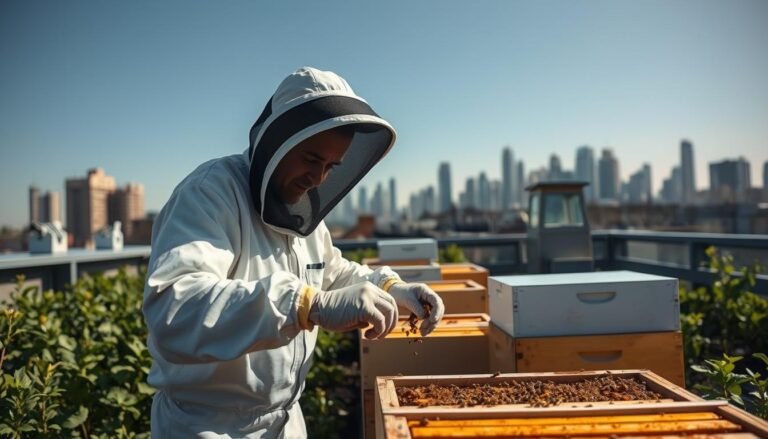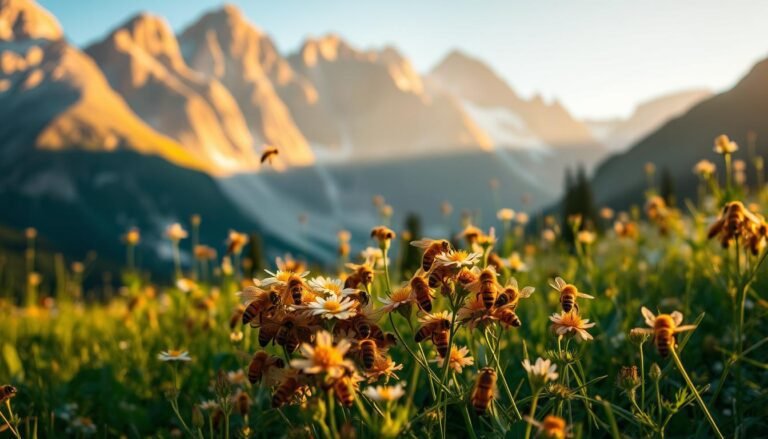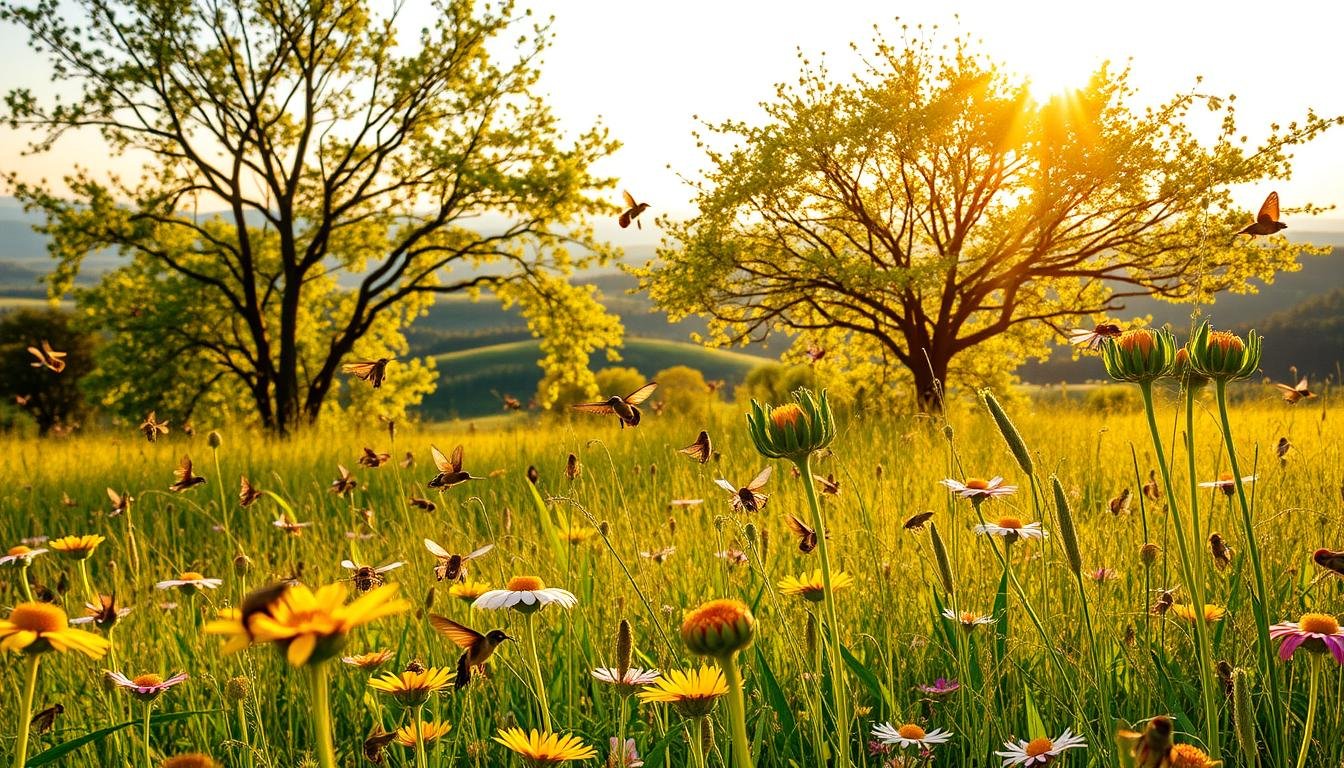
This guide shows how long-lived trees can sustain bees and other pollinators while supporting farm and garden goals.
Pollination by animals underpins about one-third of our food supply, from apples to coffee and chocolate. Many native bees are solitary, nest in ground or stems, and rarely act aggressively.
Pollinators face habitat loss, pesticides, and disease. Simple actions — planting flowering trees rich in nectar and pollen and cutting back pesticide use — make a big difference over time.
What this buyer’s guide delivers: clear criteria to select trees that provide steady flowers, canopy habitat for shelter and nesting, and species choices matched to regional conditions. Expect practical species recommendations, bloom-timing tips, and stewardship steps that boost pollination and benefit local populations.
Key Takeaways
- Support pollinators by choosing long-lived plants that flower across the season.
- Canopy habitat helps with shelter, nesting, and overwintering.
- Reducing pesticides and planting nectar-rich species aids honey bees and native bees.
- Match species to site conditions to ensure performance and resilience.
- Simple stewardship yields high impact for food systems and wildlife.
Best reforestation trees for pollinators: how to choose the right species
Choose species that offer steady bloom and a balanced pollen-nectar mix so local bees and beneficial insects have continuous forage from early spring into summer. Prioritize woody plants that flower reliably, are structurally sound in wind, and fit your U.S. climate zone and soil moisture.
Prioritize pollen and nectar: fueling bees, butterflies, and beneficial insects
Select trees that provide both pollen and nectar. This mix supports larval growth and adult energy needs. Willows (goat willow, pussy willow) and red maple supply early spring forage when pollinator colonies emerge.
Native trees vs. non-native: biodiversity and resilience
Favor native trees to strengthen habitat and biodiversity. Well-behaved non-natives can fill bloom gaps, but avoid sterile cultivars that do not produce flowers or pollen.
Match species to climate, soil, and space
Match each species to your landscape zone, sun exposure, and drainage. For maples, prefer red maple and sugar maple; avoid Norway maple for invasiveness and silver maple for weak structure.
Avoid invasive or pest-prone species
Exclude species that commonly need pesticide treatments. Plant male tupelo to prevent fruit that can attract pests. In windy sites, skip black willow and choose sturdier willow selections.
“Start with flowering species that reliably offer both pollen and nectar; a diverse mix buffers climate variability and supports a wider range of pollinator guilds.”
| Trait | Good examples | Avoid |
|---|---|---|
| Early spring forage | Goat willow, Pussy willow, Red maple | Sterile ornamental willows |
| Wind-exposed sites | Sugar maple, Littleleaf linden | Silver maple, Black willow |
| Low pesticide risk | American basswood, Male tupelo | Species prone to chronic pests |
- Plan spacing to allow full crowns and robust bloom.
- Use conifers as screens to reduce spray drift near flowering plantings.
- Adopt IPM and avoid pesticide use during peak bloom and at low wind speeds.
Top tree choices for pollinators in U.S. reforestation projects
Layering long-lived flowering species provides continuous food and habitat for bees and other insects. Below are reliable options that supply early pollen, steady nectar, or seasonal gaps that sustain wild bee communities and honey bees.
Lindens (American basswood, littleleaf linden) — excellent nectar sources that can yield light, fruity honey with mint and green-apple notes. They mature into large shade producers and attract a wide variety of bees.
Maples (red and sugar) — front-load spring with pollen and occasional nectar. Avoid Norway maple for invasiveness and silver maple where structure is a concern.
Willows (goat, pussy) — vital very early pollen; they root easily from dormant cuttings and suit moist edges. Skip sterile ornamental willows and black willow in high-wind sites.
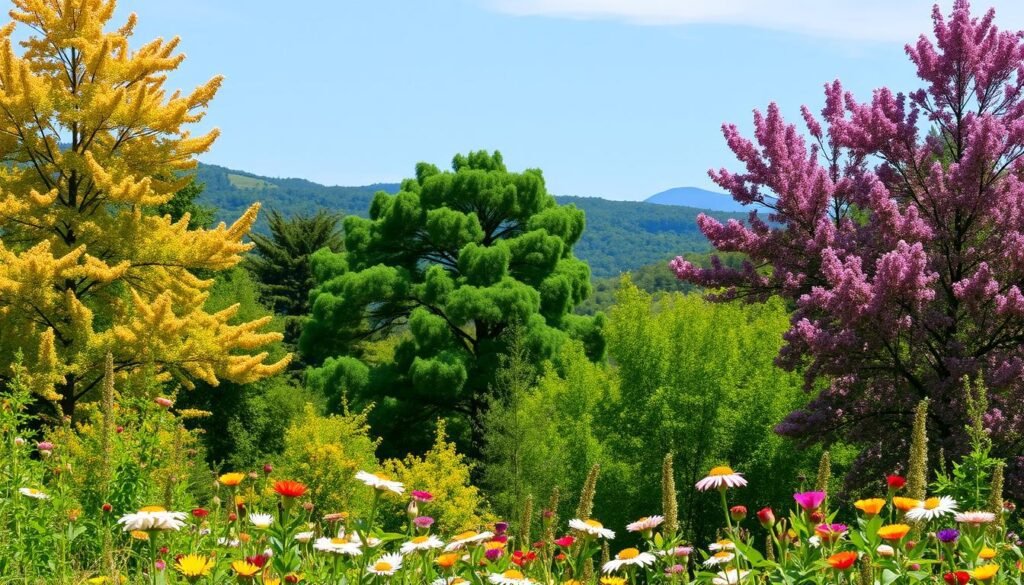
Tulip poplar — abundant late-spring nectar and fast canopy growth on moist, well-drained soils. Tupelo (black gum) gives spring nectar and brilliant fall color; plant male trees to avoid unwanted fruit.
Catalpa, redbud, and serviceberry — catalpa offers large summer blossoms but needs pruning; redbud and serviceberry deliver early bloom and bird-friendly fruit that extend forage and wildlife value.
Sumac, black cherry, and oaks — sumac fills mid-summer dearths; black cherry links insect-pollinated flowers to berries that feed birds; oaks supply spring catkins and habitat resources.
Hawthorn (‘Winter King’), black locust, sourwood, and late bloomers — these species add late-spring to summer flows, fragrant clusters, and celebrated honey. Consider Japanese tree lilac, golden rain tree, and seven sons flower to round out season-long variety and support bees and butterflies.
For more detailed species selection and regional notes, see a comprehensive guide at bee-friendly tree recommendations.
Build a season-long bloom calendar for pollinator nutrition
A planned sequence of bloom keeps nectar and pollen available from early spring through fall. Start by anchoring early spring with willows and red maple to give pollen and a touch of nectar when few other sources bloom.
Late winter–early spring
Early season
Include Cornelian cherry dogwood and American elm to add pre-fruit flowering that steadies forage before orchard bloom. These species help honey bees and wild bees build strength as colonies grow.
Late spring
Sequence lindens, tulip poplar, and ‘Winter King’ hawthorn so flowers overlap. Add Japanese snowbell and black locust to broaden nectar output and extend honey-producing time.
Summer into early fall
Summer
Plant catalpa, sourwood, and sumacs to sustain midseason bees and butterflies. Japanese tree lilac and golden rain tree tolerate tough sites and keep flowers coming when others pause.
Late summer–fall
Regionally, crape myrtle and seven sons flower offer late bouquets that support late-season pollinators. Tupelo contributes spring bloom and adds fall color, making it a multi-season source.
“Design clusters to stagger bloom windows, track outcomes season by season, and adjust species mix to maintain steady forage.”
Designing windbreaks that protect crops and boost pollinators
Windbreaks reduce wind speed, curb erosion, and help retain soil moisture while creating valuable habitat along field edges.
Layered plantings of mixed heights and species add strength, manage snow deposition, and widen seasonal forage for bees and butterflies.
Layered heights and mixed species
Combine tall trees with mid‑story shrubs and low flowering plants to slow winds and protect crop canopies.
This mix spreads snow more evenly in winter, increasing spring moisture and aiding young tree establishment.
Wildlife corridors and usable space
Design corridors that supply nesting material, overwintering shelter, and continuous bloom to provide food across seasons.
A varied palette also supports birds and a greater variety of insects while lowering reliance on pesticides.
Conifers as drift screens
Place conifers beside flowering rows to cut spray drift and create safe space for active bees during bloom.
| Function | Benefit | Suggested plants |
|---|---|---|
| Wind reduction | Protects crop fruit and tree health | Sugar maple, littleleaf linden |
| Snow management | Boosts spring soil moisture | Open single-row willows, mixed shrubs |
| Pollinator habitat | Seasonal nectar and pollen | Linden, serviceberry, native shrubs |
- Mix bloom times so flowers are present through the season.
- Avoid berry-bearing species that can host spotted wing Drosophila near crops.
- Keep edges accessible for pruning and gap replacement.
- See regional plant lists at plant lists to select suited species.
Planting, spacing, and stewardship best practices
Prepare planting sites so young specimens develop wide crowns and steady bloom in coming years.
Site prep, spacing, and establishment
Conduct a site assessment to correct compaction, drainage, and pH before digging. Healthy soils help trees establish quickly and produce quality nectar and pollen that support bees and honey bees.
Space each tree to its mature crown so light reaches lower leaves and flowers. Allow room to avoid crown competition and to reduce disease pressure that can invite pesticides.
Use wide planting holes, keep the root flare at grade, and avoid deep collars of mulch. Stake only when needed, and water on a schedule that moves from frequent establishment irrigation to deep, as-needed soakings to build resilience.
Pesticide drift mitigation and integrated pest management
Implement integrated pest management: scout, set thresholds, and favor least-disruptive controls. Eliminate pesticide applications to flowering specimens whenever possible.
If treatment is unavoidable, apply when trees are not in bloom, at low wind speeds, and with calibrated sprayers. Consider conifer rows as drift screens to protect adjacent flowering plantings and nearby bee habitat.
“Track bloom timing, flower counts, and insect visits to refine species mixes and maintain steady seasonal forage.”
| Practice | Why it matters | Action |
|---|---|---|
| Site prep | Faster root growth, reliable flowers | Decompact, adjust pH, improve drainage |
| Spacing | Light for leaves and blooms | Match spacing to mature crown |
| IPM & drift control | Protects bees and pollination services | Scout, avoid sprays in bloom, use conifer buffers |
| Maintenance | Long-term canopy health | Prune for structure; track performance annually |
For stewardship resources on conserving honey bee populations, see importance of honeybee conservation.
Conclusion
A thoughtful planting plan turns scattered specimens into a resilient network of floral resources.
Select staggered blossoms rich in nectar and pollen to support bees and butterflies across the season. Blend native trees with well-chosen non-natives to fill gaps and boost landscape resilience.
Use clear filters — site fit, structural strength, and low pest pressure — and design connected habitat patches so pollinators move safely between food and shelter. Protect blossoms and developing fruit through careful stewardship, then monitor and adapt species mixes over time.
Plant with purpose now to accelerate recovery for pollinators and local populations and to secure long-term canopy benefits. See research on restoration outcomes and timelines at restoration benefits.
FAQ
Which tree species provide the most nectar and pollen through the growing season?
A mix of early-, mid-, and late-season bloomers delivers steady food. Include willows and red maple for early pollen, redbud and serviceberry in early spring, lindens and tulip poplar in late spring, and catalpa, sourwood, and sumacs through summer. Add seven sons flower, Japanese tree lilac, or golden rain tree for late-season nectar.
Should I prioritize native species when choosing plants for pollinator habitat?
Yes. Native species support local insects, birds, and soil microbes better than most non-natives. They co-evolved with native bees, butterflies, and birds and often require less maintenance. When a native option isn’t suitable, choose non-invasive, well-tested alternatives like Japanese tree lilac or golden rain tree.
How do I match species to my U.S. climate zone and soil conditions?
Check USDA hardiness maps and local extension service guides. Select species adapted to your zone’s winter lows, summer heat, and typical moisture—willows for wet soils, oaks and black cherry for drier uplands, and tupelo for moist, acidic sites. Test soil pH and drainage before planting.
Are any commonly used species problematic or invasive?
Avoid known invasive trees or aggressive cultivars in your region. Invasives can harm biodiversity and displace native food plants. Consult state invasive species lists and choose species like serviceberry, native maples, and oaks over plants flagged as invasive.
How can I reduce pesticide risk to bees and other pollinators near flowering trees?
Use integrated pest management: monitor pests, use targeted biological controls, and apply pesticides only when necessary. Never spray during bloom and choose products with lower toxicity to bees. Establish buffer zones and communicate with neighbors about drift risk.
Which trees are best for early-season forage when bees first become active?
Willows, red maple (Acer rubrum), Cornelian cherry dogwood, and certain elms bloom very early and supply critical nectar and pollen for emerging queens and solitary bees.
Can fruit- and berry-producing species help both pollinators and wildlife?
Absolutely. Serviceberry and black cherry provide early nectar for pollinators and later berries for birds and mammals. Sumacs and tupelo yield fruit that feeds wildlife while offering midsummer and fall nectar resources.
How do I design a season-long bloom calendar on a planting site?
Map bloom windows for candidate species and arrange plantings so different trees flower in succession: early (willow, redbud), late spring (linden, tulip poplar, hawthorn), summer (catalpa, sourwood, sumacs), and late (seven sons flower, tupelo). Aim for overlapping flowers to prevent forage gaps.
What role do oaks play in pollinator-focused plantings?
Oaks support insects through spring catkins and, more importantly, as keystone habitat: they host hundreds of caterpillar species, provide nesting sites, and supply long-term structural benefits for birds and beneficial insects.
How should I space and place trees to maximize pollinator benefit and long-term health?
Follow species-specific spacing to allow mature canopy development and air flow. Group diverse species to create layered structure—understory shrubs and small trees near larger canopy trees—so pollinators find continuous forage and nesting habitat. Consider sunlight, soil moisture, and wind exposure during layout.
Are there windbreak design tips that also enhance pollinator resources?
Yes. Build mixed-species windbreaks with layered heights to reduce wind, trap snow, and create habitat. Include flowering shrubs and deciduous trees in the mid- to understory and conifers as outer drift screens to protect flowering plantings and nearby crops.
Which tree species produce notable honey or support honey bees specifically?
Linden (basswood) and sourwood are famed for high-quality monofloral honeys. Black locust and tulip poplar also yield substantial nectar. Still, diverse plantings that provide continuous forage usually produce better colony health than reliance on a single source.
How do I protect new plantings from pests and diseases without harming pollinators?
Use proper site preparation, select resistant varieties, and establish good cultural practices to reduce stress. Monitor pest populations and favor targeted, least-toxic controls. Apply treatments at times when trees aren’t blooming and avoid broad-spectrum insecticides.
Can ornamental trees like Japanese tree lilac or golden rain tree be used in pollinator-friendly landscapes?
Yes. Both attract bees and beneficial insects and tolerate urban stress. Use them as complements to native species, especially in challenging sites where native options struggle.
What habitat features besides flowers should I provide to support pollinators year-round?
Include nesting sites (bare ground, brush piles, bee blocks), water sources, and undisturbed leaf litter or dead wood for overwintering. Plant a diversity of shrubs, perennials, and grasses to supply pollen, nectar, and shelter across seasons.