Commercial growers need reliable, measurable ways to boost yields and uniformity. Managed hive deployment links precision timing with field coverage to support seed set and fruiting across diverse crops.
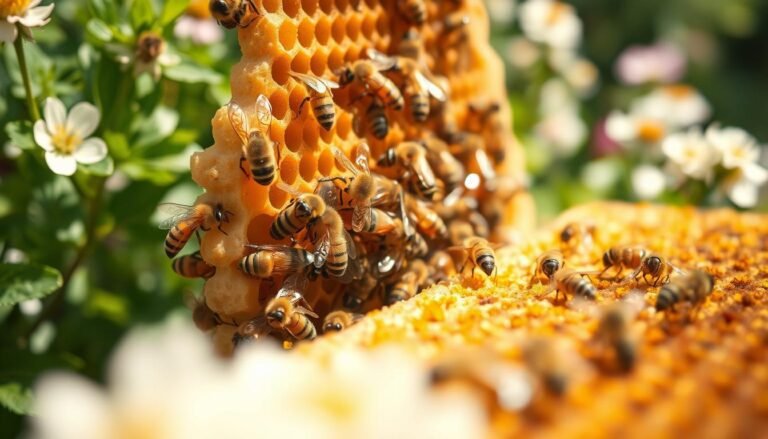
Experienced operators use palletized hives, night moves, and targeted placement to avoid crop damage and speed logistics. A strong hive “boils over” with bees on six to eight combs and at least five brood combs, which drives sustained foraging and better honey returns.
From planning to pickup, the turnkey approach aligns calendars, pesticide windows, and neighbor communication. Professional beekeeping practices and data-driven placement keep bees focused on target plants and reduce competition from other species.
Nationwide coordination and proven logistics matter for large-area production. For standards on hive strength and economic impact, see the guidance on hive strength standards.
Key Takeaways
- Managed hive deployment improves yields and seed set for many crops.
- Strong hives with ample brood sustain steady foraging and honey production.
- Night moves and palletized placement speed safe, damage-free setup.
- Turnkey coordination covers planning, scheduling, and neighbor safety.
- Data-driven placement directs pollinators to target plants and areas.
Trusted honey bee pollination that maximizes crop yields and quality
Aligning strong colonies with peak bloom delivers clear, measurable gains in fruit set and uniformity for high-value crops.
Commercial production hives often reach 4–6 boxes and roughly 100,000 individuals at peak. Those populations supply abundant foragers during the narrow bloom window.
Renting colonies lets growers access that force without year-round hive management. Professional beekeeping oversight ensures colonies arrive at the right strength and with active brood to drive pollen collection.
Targeted placement and proper hives-per-block staging spread foragers evenly so fields receive full floral visitation. That reduces misshapen or undersized fruit and improves lot-to-lot consistency.
- Higher yields: synchronized timing increases set and marketable fruit.
- Better quality: even visitation improves size and uniform grades.
- Lower risk: dependable colonies reduce reliance on wild species and weather-driven variability.
Why farmers choose our pollination service for reliable results
Farms rely on managed colonies to convert brief bloom windows into predictable harvest dates and stronger returns.
Data-backed benefits: higher yields, better uniformity, improved seed production
Consistent ROI comes from improved fruit set, tighter maturity windows, and stronger seed fill. California leads nationally in 48 crops that need honey bee pollination and grows about 75% of U.S. vegetable and flower seed requiring that aid.
Strong colonies — those that “boil over” across six to eight combs with at least five brood combs — reliably deliver higher per-acre results. Growers see measurable gains in yields and uniformity when placement, stocking rate, and timing are professionally managed.
Crops that require or benefit from bee visitation
Some crops must have bee visitation to set fruit: cucumbers, squash, and watermelon. Others, such as strawberries, okra, and grapes, show clear yield and quality gains with added bees.
- Require visitation: cucumber, squash, watermelon.
- Benefit with higher yields: strawberries, okra, grapes.
- Seed production: large-scale vegetable and flower seed crops in California rely on managed colonies for predictable seed fill.
| Crop Group | Dependence Level | Typical Stocking | Expected Outcome |
|---|---|---|---|
| Cucumbers, Squash, Watermelon | High (must be visited) | 3–6 hives/acre | Reliable fruit set, reduced misshapen fruit |
| Strawberries, Okra, Grapes | Moderate (benefit) | 1–3 hives/acre | Higher yields, improved uniformity |
| Seed Crops (vegetable/flower) | Critical (production focus) | Variable — planned by beekeepers | Stronger seed fill, predictable harvest timing |
Our beekeeper teams set stocking rates, schedule moves, and follow up through bloom to protect results. For practical grower guidance, see farmer guidance and a comprehensive beekeeping guide.
Bee pollination services coverage and seasonal availability in the United States
Operators now match scale to need across varied U.S. growing areas. Western firms run palletized fleets on bobcats and use patented universal boxes to cover large tracts efficiently.
From Western U.S. field crops to local gardens: scalable solutions for diverse areas
Seasonal timing centers on spring through early summer bloom. Many commercial hives and 5-frame nucs are listed as available starting in April, with peak availability in high-demand weeks.
Scalable options let growers pick production hives for broadacre crops or compact nucs for a garden. Nucs occupy less than 2 square feet and fit tight space without blocking access.
- Large-area deployment: modular equipment and palletized hives speed load-outs and pickups across variable terrain.
- Local coordination: regional beekeepers support quick mobilization to match bloom windows and regional crop calendars.
- Booking advice: reserve hive resources early in the season to avoid shortages during peak weeks.
These approaches also support honey production and protect colony health while delivering predictable pollination outcomes for fields and small yards alike.
How our Bee pollination services work from delivery to hive pickup
Night transfers and strategic siting let colonies orient quickly and deliver steady coverage across the field.
Colony options and right-size choices
Production hives saturate large fields with foragers and can stand 4–6 boxes high at peak. They suit broadacre crops where maximum coverage matters.
5-frame nucs hold five frames with queen, brood, workers, and stores. They occupy minimal square feet and fit a garden or tight plots.
Scheduling, timing, and stocking benchmarks
We deliver hives at night when bees are calm and temperatures are cooler. Place colonies after initial flowering to train foragers to the target crop.
Start with one hive per acre as a practical benchmark. Scale up for less-attractive blooms, poor weather, or low wild pollinator counts.
Placement, pallets, and field logistics
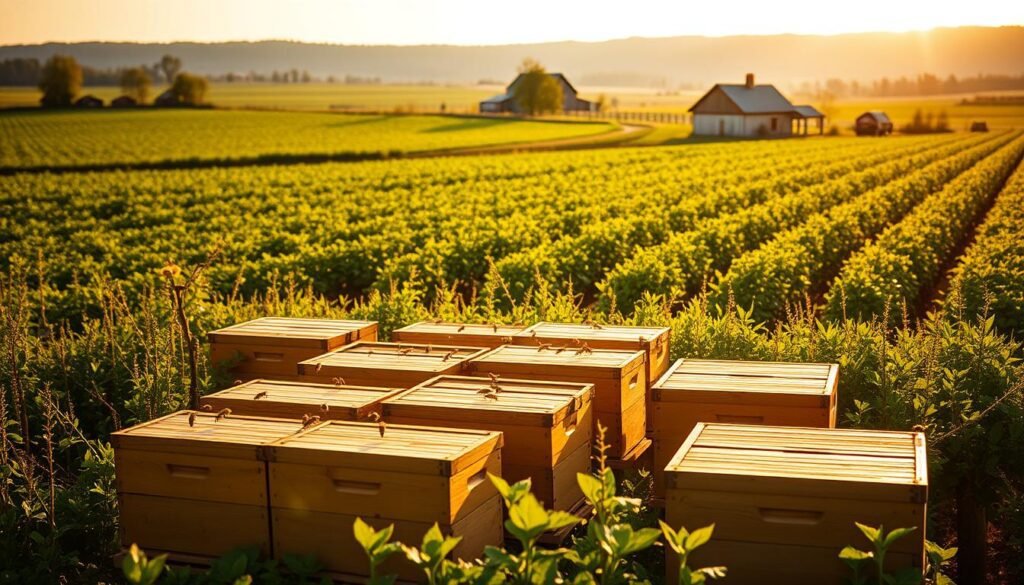
Operators group hives on pallets (four per pallet) and use forklifts or bobcats for safe moves. Nets secure loads during transport.
- Even in-field placement establishes consistent foraging and protects spray lanes.
- In-season checks and nuc swaps keep colonies productive and control swarming.
Standards, equipment, and hive quality that drive superior pollination
A well-built hive combines dense worker populations with active brood to generate the high foraging pressure growers need.
What high-quality pollinating hives look like
Quality metrics include visible “boil over” across six to eight combs and at least five brood frames. That brood presence triggers intense pollen collection and higher flower visits.
“A strong hive blanketing multiple combs shows the population needed for dependable field results.”
Modern equipment and placement
Standardized boxes speed loading and reduce handling time. Operators use universal boxes, pallets, and forklifts or bobcats for grouped placement and fast setup. Night moves lower flight activity and ease orientation.
Ongoing maintenance and readiness
- Swarm prevention: routine checks and queen assessment keep colonies stable.
- Frames & stores: inspect brood frames and feed stores to ensure season-ready strength.
- Rapid response: beekeepers swap or supplement weak hives to protect crop outcomes.
Investment in proper equipment and experienced beekeeping yields better on-plant activity, stronger honey returns, and reliable pollination across the season.
Safety, pesticides, and grower coordination to protect bees and crops
Clear, written protocols cut risk by aligning spray windows, hive positioning, and crew access across the farm.
Pesticide policies: evening applications, residual risk, and protected bloom periods
Avoid treating flowering plant tissues whenever possible. Most poisonings occur when foragers visit treated blooms and bring toxic pollen home.
When insecticides are needed, prefer evening applications so residues degrade overnight. Granules and solutions generally pose less immediate risk than dusts.
Contracts commonly require 24–48 hour notice before treatments; this gives beekeepers time to protect hives and plan mitigations.
Worker and neighbor safety: flight paths, sunlight placement, and space considerations
Site hives in sunlight and on high, dry ground to keep entrances clear and healthy. Orient entrances to create predictable flight paths away from work areas, gates, and livestock.
Position colonies so bees gain altitude quickly and avoid direct crossings over public spaces or a neighbor’s garden.
Clear communication: placement plans, access, and 24-48 hour treatment notifications
Share a written plan that covers season timing, placement, treatment windows, and contingencies for irrigation or weather.
- Define pesticide coordination standards: avoid spraying blooms, prefer evening use, and notify 24–48 hours ahead.
- Provide clear access for beekeepers: gates, turnarounds, and after-hours entry for night moves and checks.
- Include signage and neighbor outreach so farm crews and the public know hive locations and flight paths.
“Slower-acting toxins are especially hazardous because contaminated pollen is fed to young workers and weakens colonies for weeks.”
A short, shared plan protects honey yields and keeps hives productive while safeguarding workers, neighbors, and crop health. For practical stewardship guidance see the best-practice stewardship guide and a comprehensive beekeeping resource.
Conclusion
Smart scheduling and right-sized hives turn narrow bloom windows into reliable crop gains. A turnkey program aligns timing, logistics, and colony strength so every block gets consistent visits and better outcomes.
Use production beehives for broadacre fields and compact 5-frame nucs for tight garden space. Providers in the western U.S. use universal boxes and palletized placement to speed moves and meet April start dates.
Robust hive strength, healthy frames and stores, and an active queen are nonnegotiable for steady pollinating performance during critical bloom weeks.
Coordinate with experienced beekeepers on placement, evening treatments, and advance notifications to protect colonies and sustain nectar and pollen flows.
Get started by booking seasonal hive allocations, confirming colony specs, and reserving deployment slots well before bloom to secure the best results for crops and seed goals.
FAQ
What area does your professional honey bee pollination cover and when is it available?
We provide coverage across major U.S. production regions, from the Western field crops to Midwest and Eastern specialty farms. Availability follows regional bloom windows and varies by crop and climate. Contact us early in the year to reserve hives for your season.
Which crops benefit most from honey bee pollination and how much can yields improve?
Fruit, seed, and many vegetable crops see the greatest gains—apples, almonds, alfalfa seed, blueberries, cucurbits, and canola among them. Data-backed results show higher fruit set, better uniformity, and improved seed production when adequate colonies are placed at the right time.
How do you determine the number of hives needed per acre for my crop?
We start with crop-specific benchmarks and adjust for bloom density, field size, and local floral resources. Initial recommendations are a baseline; we scale colonies up based on observed visitation and target yield goals.
What colony options do you offer and how do I choose between production hives and 5-frame nucs?
We supply full production hives for heavy-demand crops and 5-frame nucs for smaller fields or staggered bloom. Choice depends on field size, desired pollination intensity, and logistics—our team advises the best fit.
How are colonies delivered, placed, and picked up to ensure full-area pollinating coverage?
We transport colonies on pallets and place them at night or early morning to reduce stress. Placement plans optimize flight paths and coverage, using forklifts or bobcats for fast setup. Pickup occurs after bloom or per contract terms.
What quality standards and equipment do you maintain for pollinating hives?
Hives meet strict standards for brood frames, population strength, and food stores. We use universal boxes and modern handling gear to protect colonies and ensure quick field placement. Regular inspections verify season-ready condition.
How do you prevent swarming and maintain colony health during the contract period?
Ongoing maintenance includes frame management, monitoring stores, and timely interventions to reduce swarm risk. We schedule checks and perform necessary treatments to keep colonies focused on foraging and crop visitation.
What pesticide policies and grower coordination practices do you require to protect colonies?
We require advance notification of planned treatments, prefer evening applications, and observe protected bloom windows to reduce residual risk. Growers agree to 24–48 hour treatment notices and follow integrated pest management practices when possible.
How do you address worker and neighbor safety when placing hives near fields or homes?
Placement plans consider flight paths, sun exposure, and safe distance from workers and neighbors. We mark locations, provide access instructions, and coordinate timing to minimize interactions with people and machinery.
What happens if weather or bloom timing changes unexpectedly during the season?
We remain flexible—adjusting placement, adding or removing colonies, and changing schedules to match bloom shifts. Close communication with the grower helps us respond quickly and maintain effective crop coverage.
How do you measure success and provide data to growers after pollination?
Success metrics include colony strength at placement, observed visitation, and post-pollination crop assessments such as fruit set or seed yield. We provide concise reports and recommendations for future seasons.
How do I get started and reserve colonies for my farm?
Contact our operations team early—ideally months before bloom—to discuss crop needs, field size, and timing. We’ll draft a placement plan, select appropriate colony types, and confirm delivery windows to secure your reservation.