Published November 27, 2025 · Last Updated September 4, 2026
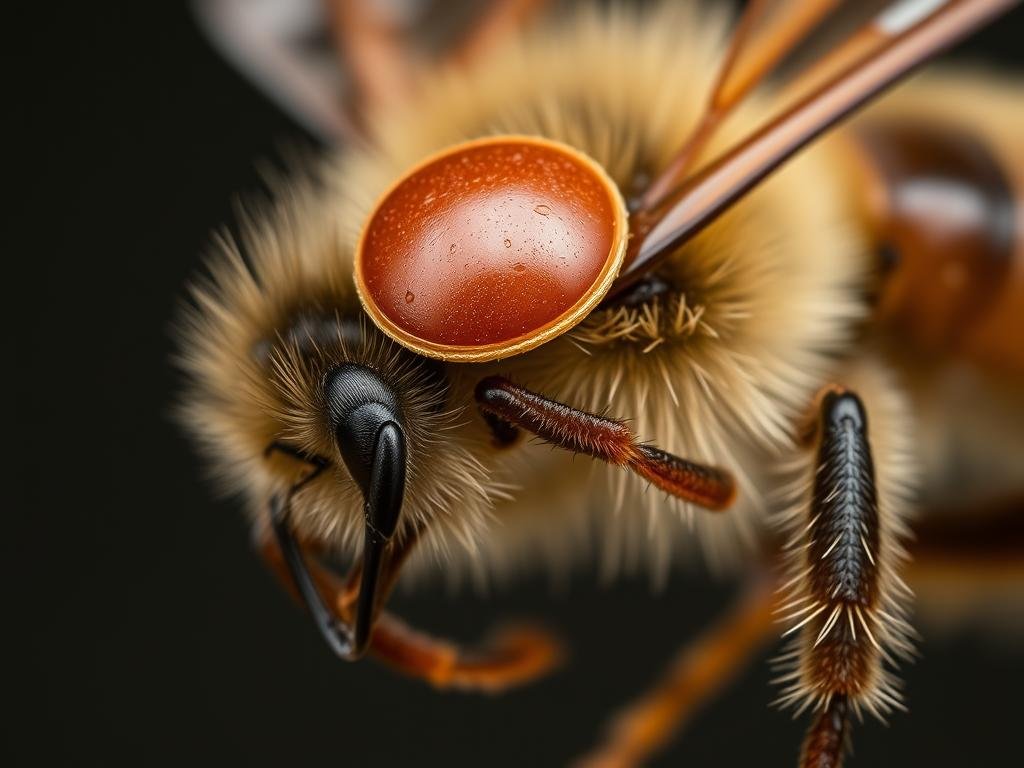
Varroa destructor remains the single biggest threat to managed honey bee colonies in the United States today. The mite feeds on the fat bodies of developing and adult bees, weakens their immune response, and spreads a range of viruses — deformed wing virus in particular — through the colony as it moves between bees. Left unmanaged, a healthy-looking, productive hive in July can collapse entirely by winter with little visible warning beforehand. Managing varroa well is less about finding one perfect treatment and more about running a consistent system: monitor, decide against a threshold, act, and confirm the action worked, season after season, rather than treating any single intervention as a permanent fix.
Table of Contents
- The Four Core Pillars of Varroa Management
- Why Monitoring Comes First
- Choosing a Treatment
- Common Mistakes That Undermine Treatment
- Resistance and Genetics
- Building a Season-Long Program
- Sources
The Four Core Pillars of Varroa Management
Every workable, genuinely durable varroa program rests on the same four legs. Skipping any one of them is usually why a colony that “was treated” earlier in the season still ends up collapsing regardless.
- Monitoring. Regular mite counts using an alcohol wash, sugar roll, or sticky board — see how to test for varroa mites and testing timing and thresholds. Purpose-built tools like the Varroa EasyCheck speed up alcohol-wash sampling considerably compared to improvised jars and screens.
- Cultural controls. Requeening with hygienic stock, minimizing drift and robbing between colonies, and managing splits and nucs so mites don’t concentrate unnoticed — see varroa management for splits, nucs, and requeened colonies.
- Mechanical controls. Drone brood removal and brood breaks interrupt the mite’s reproductive cycle without chemicals — see drone brood removal for varroa control.
- Chemical treatment. Organic acids, essential oils, and synthetic miticides, chosen and rotated deliberately — see varroa treatment options compared and the seasonal treatment calendar. Full application guides are available for Apiguard thymol gel, Apivar amitraz strips, and Formic Pro and MAQS strips.
Why Monitoring Comes First
You cannot manage what you haven’t measured. In spring, up to 80% of a colony’s mites can be hidden inside capped brood, which means counting only adult bees will consistently undercount the real infestation. The standard field sample is a half-cup (roughly 300 bees) taken from a frame of open brood, using either an alcohol wash or a sugar roll. A rough conversion: divide the mite count from a 300-bee sample by 3 to estimate percent infestation.
Worked example: an alcohol wash of a 300-bee sample that turns up 9 mites works out to roughly 3% infestation (9 ÷ 3 = 3), which lands squarely in the “treat promptly” range in the table below regardless of season. Because so many mites are sequestered inside capped brood specifically to reproduce, a single count taken during a heavy brood-rearing period can understate the true colony-wide mite load — see our explainer on varroa mites in capped brood for why this matters for timing your sample.
| Season | Typical action threshold |
|---|---|
| Spring / early summer (brood building) | 2–3 mites per 100 bees |
| Late summer (winter bees being reared) | 1–2 mites per 100 bees |
| Fall / going into winter | <1 mite per 100 bees |
| Any season, high-risk count | 3%+ (roughly 9+ mites per 300-bee sample) — treat promptly |
These thresholds are guidelines, not laws — colony strength, regional mite pressure, and whether you’re running resistant stock all shift the number where you should actually act. Full detail on timing and interpreting counts is in the testing frequency and thresholds guide.
Sample location within the hive matters more than most beekeepers realize: a sample taken from a frame of open brood near the brood nest generally reflects the colony’s true mite load far better than bees sampled from a honey super or the outer edges of the cluster, where phoretic mite density can be meaningfully lower simply because fewer nurse bees and less brood-tending activity happens there. Sampling the same relative location each time also makes counts more comparable across a season, since a shift from month to month partly reflects real trend and partly reflects where exactly the sample happened to be taken.
Choosing a Treatment
No single product works in every situation, because temperature limits, brood presence, and honey supers all rule certain treatments in or out at certain times of year.
Brood presence specifically drives a lot of this decision-making, since most active treatments work primarily on phoretic mites riding adult bees rather than mites sealed under brood cappings reproducing undisturbed. A colony broodless in late fall or after a deliberate brood break is, somewhat counterintuitively, one of the easiest times to get a genuinely high treatment efficacy from a single oxalic acid application, since there’s no capped-brood reservoir of mites to survive the treatment and re-emerge afterward.
| Treatment | Type | Typical duration | Temperature window |
|---|---|---|---|
| Formic acid (e.g. Formic Pro) | Organic acid | 14–20 days | 50–85°F (10–29°C) |
| Oxalic acid (vaporization or dribble) | Organic acid | Single treatment, repeatable | Above 37°F (3°C); most effective broodless |
| Thymol (e.g. Apiguard) | Essential oil | 28 days (two applications) | 60–105°F (15–40°C) |
| Amitraz (e.g. Apivar) | Synthetic miticide | 42–56 days | No restriction, but resistance is a growing concern |
Formic acid and thymol are the only treatments effective against mites reproducing under brood cappings; oxalic acid mainly kills phoretic mites riding on adult bees, which is why it works best when little or no brood is present. The full comparison, including natural and non-chemical options, is in varroa treatment options compared. Hop-derived products like HopGuard fill a specific niche as an option that remains safe to use with honey supers on during an active nectar flow, when most other treatments are ruled out by label restrictions.
Rotating between different active-ingredient classes across a season and across years, rather than defaulting to the same product every time, is one of the more overlooked parts of treatment selection — using the same miticide repeatedly gives mites more consistent selective pressure to develop resistance, which is exactly what has already happened with some older synthetic miticides in parts of the country.
A practical rotation might alternate an organic acid (formic or oxalic) with a synthetic miticide across successive treatment rounds within a season, or alternate active ingredients from year to year even when using the same category, rather than reaching for whatever product is already on the shelf out of habit. This is a genuinely different mindset than simply “picking the best treatment,” since no single product stays the best choice indefinitely once local mite populations have had repeated exposure to it.
Common Mistakes That Undermine Treatment
Most “treatment failures” beekeepers report trace back to one of a handful of recurring mistakes rather than the product itself being ineffective:
- Treating without a baseline count. Applying a treatment because it’s “that time of year” rather than because a count actually crossed threshold wastes product and gives mites unnecessary exposure to build resistance.
- Not confirming the treatment worked. A post-treatment mite count, taken a week or two after treatment ends, is the only way to know whether a treatment actually knocked the population down — see what to do after a high mite count if a follow-up count still comes back elevated.
- Ignoring temperature windows. Formic acid applied above its upper temperature limit can kill brood and even queens; thymol applied too cold barely volatilizes and does little. Matching the product to actual forecast conditions, not just the calendar season, matters.
- Treating only the symptomatic hive. Mites drift between colonies in the same yard via robbing and drifting bees, so treating one heavily infested hive while ignoring neighboring colonies often just re-seeds the “treated” hive within weeks.
- Underdosing to save product. Splitting strips or shortening a treatment’s label duration to stretch a package further reduces efficacy without meaningfully reducing cost, and can leave surviving mites exposed to a sublethal dose — exactly the condition that favors resistance developing.
Resistance and Genetics
Selective breeding has produced commercially available stock with meaningfully higher mite tolerance — Varroa Sensitive Hygiene (VSH) lines, grooming/”mite-biting” behavior, and Suppressed Mite Reproduction (SMR) traits. These bees don’t eliminate the need to monitor, but they can reduce how often you need to treat. If you’re managing without chemical treatment at all, or want to understand what that approach actually requires, see varroa management strategies for treatment-free beekeepers.
Several named breeding lines have become commercially available specifically for their mite-resistance traits, each built around a somewhat different mechanism: Saskatraz hybrids combine several resistance traits from Canadian breeding programs; Russian honey bees descend from populations that co-evolved with varroa in their native range and show naturally elevated tolerance; Purdue “Ankle Biter” bees were bred specifically for a mite-biting behavior that physically damages mites’ legs; and USDA’s Pol-line program has focused on hygienic Italian stock. Our deeper explainer on VSH as a specific genetic trait covers the mechanism behind the broader VSH category these lines often draw on, and the future of varroa-resistant bee genetics looks at where breeding programs are headed next.
Building a Season-Long Program
The four pillars above only work as a genuine system when they’re scheduled across the full season rather than applied reactively whenever a problem becomes visible. That typically means baseline counts at colony spring buildup, a mid-summer check before the window for raising healthy winter bees closes, a fall count before any late-season treatment, and a post-treatment confirmation count each time a threshold is crossed and a treatment applied. Keeping records of counts and treatments across seasons — not just within one — makes it far easier to spot whether a particular yard or colony line is consistently running hotter mite pressure than others, which is exactly the kind of pattern a fixed one-time count can’t reveal. Digital record-keeping platforms like the one covered in our guide to HiveTracks make this kind of season-over-season comparison considerably easier than paper logs once an operation grows past a couple of hives.
Regional pressure also genuinely varies, and a program built entirely around generic national guidance can miss local conditions that matter: areas with longer brood-rearing seasons, more managed colonies in close proximity, or more established robbing pressure between yards tend to run higher baseline mite pressure than isolated apiaries in shorter-season regions, which is part of why the seasonal thresholds above are explicitly framed as starting points rather than fixed rules. Beekeepers who track their own multi-year data eventually develop a much better sense of what “normal” and “concerning” actually look like for their specific yards than any generic threshold table can provide.
Sources
This guide draws on published field methodology from Randy Oliver (ScientificBeekeeping.com), USDA and university extension guidance, and product label data for the treatments named above. Always follow the current product label and any state or local regulations, which can vary by region and change over time. Treatment labels and approved active ingredients do change periodically as new research and regulatory reviews come through, so treating any specific product list as permanently fixed rather than checking the current label before each application is itself a common, easily avoided mistake.
FAQ
What’s the single most important thing in varroa management?
Regular monitoring. Without a mite count, you’re guessing — and by the time visible damage shows up, the infestation is often already severe.
How often should I treat for varroa?
Only when a count exceeds your threshold for the season, not on a fixed calendar. Treating on a schedule regardless of actual mite pressure wastes treatments and accelerates resistance.
Can resistant bee genetics replace treatment entirely?
For some beekeepers running VSH or similar hygienic stock with careful management, yes. Most still monitor and treat occasionally — resistant stock raises the threshold, it doesn’t remove the mite.
What’s the biggest mistake beekeepers make with varroa treatment?
Treating on a fixed calendar rather than an actual mite count, and skipping the post-treatment count that would confirm the treatment actually worked — both waste product and leave real infestations undetected.
Do all beekeepers in a shared yard need to treat at the same time?
It’s strongly recommended. Mites move between colonies via robbing and drifting bees, so treating one hive while a neighboring colony in the same yard goes untreated often just re-infests the treated hive within weeks.