Last Updated August 26, 2026
Healthy honey bee colonies start with sharp eyes and steady routines. Early recognition of threats keeps brood, honey stores, and long-term colony productivity intact. Quick checks can tell you when a queen is strong or when varroa and disease need action.
Look for pearly white, C-shaped larvae with a glistening sheen and convex, unpunctured cappings. A tight brood pattern signals a vigorous queen and balanced colony dynamics. Adult bees with deformed wings often point to high varroa mite loads and deformed wing virus.
Not every arthropod in an apiary harms colonies. Many insects share space harmlessly. Still, vertebrate threats such as mice, skunks, and bears can chew frames, scratch entrances, and destroy combs and honey.
This guide introduces an integrated approach—routine inspections, clear thresholds, cultural and mechanical controls, and labeled treatments adapted by region. Use consistent notes so each colony’s path is data-driven and manageable.
Key Takeaways
- Routine inspections protect brood and honey yields.
- Recognize healthy brood patterns and signs of disease early.
- Many insects are benign; focus on true threats and vertebrate damage.
- Adopt integrated management: cultural, mechanical, and approved treatments.
- Keep consistent records to guide timely, data-driven actions.
Start here: inspecting bee colonies and recognizing healthy vs. problem signs
Begin inspections by observing flight activity and entrance traffic to gauge colony strength before lifting a frame. A steady stream of foragers, many with pollen, usually means good food stores and an active queen. Note weather and nectar flow so you can compare visits over time.
External cues save time: watch for scattered dead bees, robbing, or sharp fermenting odors that suggest slimed honey from small hive beetle larvae or a brood problem.
How to structure routine inspections
- Work from strong to weak hives; log date, weather, and observations.
- Inside, confirm eggs and young larvae; healthy larvae are pearly, glistening, and C-shaped.
- Look for a tight brood pattern with medium-brown, convex cappings and few skipped cells.
Healthy cues vs. red flags
Scan combs for punctured cappings, sunken brood, or ropey, “snot-like” larvae. Twisted or off-color larvae and webbing point to wax moth or severe damage. Adult bees with deformed wings indicate varroa and possible DWV and demand prompt action.
Close each visit by documenting frames of honey, pollen, brood stages, and an action list for varroa checks, comb cleanup, or follow-up inspections. For a seasonal checklist, see seasonal beekeeping tasks.
Integrated pest management for honey bee colonies: a practical framework
A practical pest plan begins with scheduled checks and clear thresholds. Use simple monitoring—mite counts, sniff tests for fermenting honey, and visual checks for webbing—to flag problems before they escalate.

Monitoring and thresholds
Schedule mite counts through the season and note deformed wings or sudden drops in adult population. Record fermenting odors from slimed honey and any wax webbing as trigger points for action.
Cultural and mechanical controls
Strengthen colonies first: ensure good nutrition, a vigorous queen, and proper space. Screened bottom boards let dislodged mites fall away and reduce reinfestation. Grooming aids such as the Bee Gym boost mite removal by bees.
When and how to use approved treatments
Escalate to labeled products when thresholds are exceeded. Apiguard (thymol) and Apivar (amitraz) can lower varroa mites effectively. Always follow label directions to protect bees and honey quality.
| Control | Use | Maintenance | Notes |
|---|---|---|---|
| Screened bottom | Reduce mite rebound | Keep clear of debris | Works with monitoring |
| SHB traps (oil/soapy) | Catch adult beetles | Refresh liquids regularly | Check so they don’t attract bees |
| Chemical treatments | Lower varroa load | Apply per label timing | Avoid during major honey flows |
Document outcomes after each intervention. Good records let the beekeeper refine timing, protect honey stores, and keep the apiary resilient against bee pests and diseases.
Varroa mites: identification and step-by-step control to protect brood and adults
Varroa infestations undermine colony strength by feeding on fat bodies of adult bees and developing brood. These parasites also spread viruses such as deformed wing virus (DWV), which produces adults with twisted or shrunken wings.
Identify symptoms quickly
Watch for hallmark signs: adult bees with deformed wings, patchy brood with sunken or uncapped cells, and a dwindling adult population. Uncapped pupae and ropey larvae can point to combined varroa and virus pressure.
Reduce varroa populations
- Confirm presence with standardized mite counts and drone brood inspection.
- Apply proven treatments like Apiguard (thymol) or Apivar (amitraz) per label, timing to avoid honey harvest conflict.
- Layer mechanical measures: run screened bottom boards and add grooming aids (for example, Bee Gym) to boost mite removal between chemical windows.
Seasonal timing and colony strength
Plan interventions before late-season decline. Healthy queens, adequate pollen, and strong nutrition help bees express hygienic behavior and protect brood. After treatment, repeat mite checks, inspect combs for recovery, and document counts so future actions match colony population and forage conditions.
For practical varroa control protocols, see varroa mites guidance and review broader disease prevention strategies.
Small hive beetle management from hive to soil
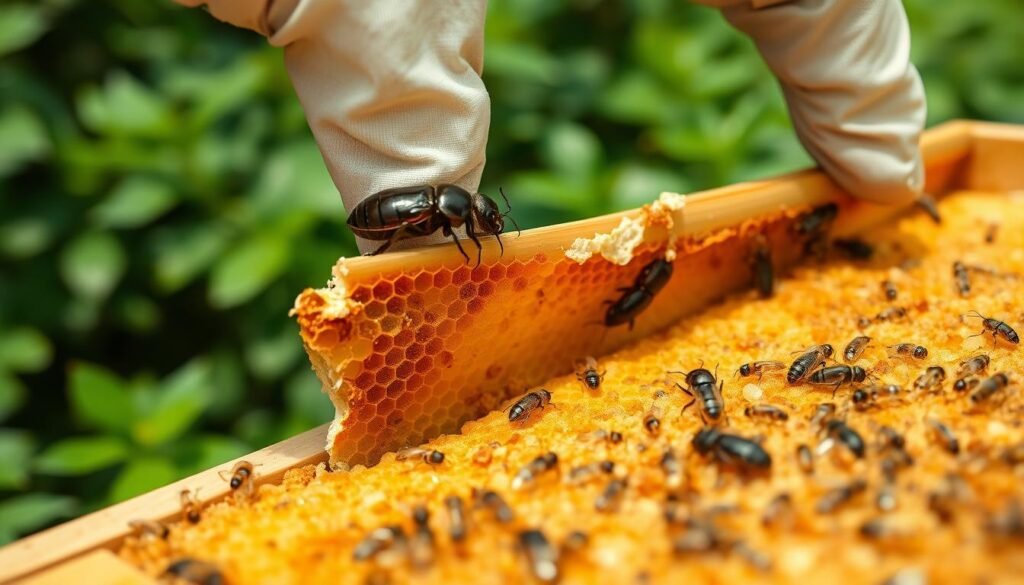
Timing interventions to the beetle life cycle—egg, larva, pupa, adult—gives beekeepers the best chance to protect comb and honey. Adult beetles lay eggs in cracks or on pollen and brood; eggs hatch in 2–4 days and larvae feed 7–10 days. Larvae slim honey with yeast, producing a fermenting, decaying odor that can trigger absconding.
In-hive traps and barriers
Install traps suited to your equipment. Frame or between-frame traps (AJ’s Beetle Eater, Beetle Blaster, Beetle Jail Baitable) and under-screen oil or soapy water trays drown adults and cut numbers quickly.
Entrance devices such as Beetle Baffle or Beetle Jail Entrance Trap reduce incoming beetles when fits are tight, but strong colonies remain the first line of defense.
Soil-level and site treatments
Mature larvae leave comb to pupate in the top 3–4 inches of soil for 3–6 weeks. Apply entomopathogenic nematodes (Heterorhabditis indica or Steinernema carpocapsae) where soil conditions allow.
When warranted, use directed permethrin (GuardStar) drench 18–24 inches in front of bee hives at dusk and follow label directions carefully.
Protecting supers and equipment
Extract quickly. Remove supers and extract within two days, freeze wet cappings, and stash combs to stop larvae from ruining honey stores.
Remove uneaten pollen patties and seal cracks in equipment. Keep notes by colony and site to track which traps and soil treatments lower beetle counts and reduce damage.
“A combined approach—strong colonies, targeted traps, soil nematodes, and fast extraction—keeps honey safe and bee populations healthy.”
For further reference on beekeeping practices and resources, see beekeeping resources and books.
Common Hive pests beyond mites and beetles: wax moths, mice, skunks, bears, and ants
Watch for silk webbing and tunneled combs as an early sign that wax moth larvae or nocturnal animals are active. Strong colonies remove larvae, but dark, unused combs invite damage and rapid deterioration.
Wax moth prevention and cleanup
Keep colonies tight and vigorous. Moths target old brood combs where larvae spin silk and make cocoons. Freeze infested frames 48–72 hours to kill eggs and larvae. Heavily damaged frames should be scraped or replaced; plastic foundations can often be cleaned and rewaxed.
Protect stored combs
When you cannot freeze stacks, use para-dichlorobenzene (Para-Moth) crystals only on clean, extracted supers. Never fumigate comb that contains honey. Air treated equipment for at least two weeks before reuse.
Discouraging vertebrate threats
Install snug mouse guards before temperatures drop near 57°F and raise stands to deter skunks. For bears, a well-maintained electric fence offers the most reliable defense—one shock often stops repeat attacks.
Minor nuisances and simple deterrents
Ants, earwigs, and spiders are usually nuisance-level only. Reduce vegetation, use moats or petroleum jelly on stand legs, and avoid unnecessary treatments when food and colony strength keep these visitors in check.
For practical field tips on small invaders, see what’s bugging you.
Conclusion
Conclude inspections by confirming healthy brood and setting a clear action plan.
Check for pearly, C-shaped larvae and convex cappings, then record egg-to-adult progress and the queen’s laying curve. Prioritize varroa checks and use proven tools like Apiguard or Apivar plus screened bottom boards and grooming aids when thresholds rise.
Protect honey and comb with prompt extraction, freezing wet cappings, and correct Para-Moth use for stored supers. Suppress small hive beetles with in-hive traps, soil nematodes, or targeted GuardStar drenches when needed.
Reduce vertebrate risk with mouse guards, raised stands, barriers, or electric fences. Keep concise notes on interventions and outcomes so future choices are faster, evidence-based, and tailored to your colonies. For practical disease and pest guidance, see common bee diseases and pests prevention.
FAQ
How do I start inspections and what should I look for in healthy bee colonies?
Begin with a quick external check for activity at the entrance, note water and pollen foragers, and listen for normal buzzing. Open boxes briefly during warm, calm weather. Look for a compact cluster of brood, clean comb, and a steady population of workers. Healthy cappings are even and slightly domed; larvae lie in a C-shape and glisten. Strong stores of honey and pollen support recovery from stress. Watch for foul odors, scattered brood, or large gaps in adult bees—these are red flags that require a detailed internal inspection.
How should I schedule routine inspections in a working apiary?
Structure inspections by season and colony strength: more frequent checks in spring buildup and flow, lighter checks during dearth. Use a consistent checklist—queen status, brood pattern, food stores, signs of disease, and varroa level. Limit inspection time to reduce chilling brood. Record findings and treatments in a simple log. Rotate equipment maintenance tasks, like cleaning supers and replacing damaged frames, during low-activity periods to reduce disruption.
What monitoring methods and thresholds should I use for Varroa mites?
Use alcohol or sugar rolls, or sticky boards, to quantify mite loads. Treat when counts exceed established thresholds—commonly 3%–5% infestation for adult bees during active season or higher thresholds when colonies are weak. Regular monitoring every 2–6 weeks helps track trends. Also watch for indirect signs: spotty brood, deformed wings, and shrinking adult populations that suggest virus problems linked to Varroa.
What practical cultural and mechanical controls reduce pest pressure?
Maintain strong colonies by providing adequate nutrition and replacing poor queens. Use screened bottom boards, solid entrance reducers, and well-fitted equipment to limit pest entry. Rotate combs, replace old foundation, and practice good apiary sanitation. Traps and grooming frames reduce beetle and mite load. Routine maintenance of extractors, supers, and feed stores prevents secondary infestations.
When is it appropriate to use chemical treatments and how do I protect honey and bees?
Only use approved acaricides or miticides according to label directions and local regulations. Time treatments to avoid contaminating honey supers—remove or harvest supers if labels require. Follow dosage, temperature, and exposure instructions closely. Alternate treatment classes seasonally to limit resistance. Store-treated equipment separately and observe withdrawal periods to protect food for humans and bee brood.
How can I reliably identify Varroa mites and associated virus symptoms?
Varroa appear as small, reddish-brown dots on adults or brood. Use an alcohol or sugar wash to dislodge and count. Virus signs include deformed wings, shortened abdomens, reduced foraging, and sudden population decline. Combine visual checks with regular mite counts to confirm cause, since multiple factors (nutrition, Nosema, pesticides) can mimic symptoms.
What are effective options to reduce Varroa populations in colonies?
Combine chemical and nonchemical tactics: licensed treatments like amitraz strips (Apivar) or thymol gels (Apiguard) where labeled, plus mechanical options such as screened bottoms and drone brood removal. Promote hygienic stock and encourage grooming behavior with selective queens. Use timed treatments based on monitoring and seasonality to maximize efficacy while protecting brood and honey.
How does seasonality and colony strength affect mite management decisions?
Treating during brood breaks, late summer, or early fall often yields better mite reduction because fewer protected pupae exist. Strong colonies tolerate mite pressure better; weak colonies need earlier intervention. Consider forage availability and treatment label temperature limits. Aim to lower mite loads before winter to reduce virus transmission and overwinter losses.
What is the life cycle of the small hive beetle and why is it risky?
Female beetles lay eggs in crevices or comb. Larvae tunnel through comb and feed on brood, pollen, and honey, producing a slimed, fermenting mess that can cause colonies to abscond. Mature larvae drop to soil to pupate before emerging as adults. Risk increases with weak colonies, poor sanitation, or warm climates that favor rapid reproduction.
What in-hive trapping and barrier options limit small hive beetle damage?
Use oil or soapy water trays in entrances and under frames, employ frame or entrance traps, and maintain tight-fitting equipment. Traps placed on the bottom board or between supers capture roaming adults. Regularly check and empty traps to prevent beetle escape and reduce population pressure inside the boxes.
Which soil-level interventions work against beetle pupae under hives?
Beneficial nematodes applied to the soil around hive stands can reduce pupae. In high-pressure situations, targeted insecticide drenches under hives—applied according to label and local law—help control emerging adults. Keep stands elevated and use bare, tilled soil where feasible to limit pupation sites.
How should I protect supers and processing areas from beetle-related honey loss?
Extract wet supers promptly, freeze infested cappings, and clean equipment thoroughly. Store supers off the ground and in cool, dry areas. Quick extraction and proper storage prevent sliming and fermentation, preserving honey quality and reducing food losses.
How do I prevent and recover from wax moth infestations?
Keep colonies strong and avoid long-term storage of uncapped brood combs. Freeze or heat-treat suspect frames before reuse. Replace badly webbed combs and return weak or damaged equipment to rotation. Regular inspection of stored comb and prompt action at first sign of webbing limits spread.
What are best practices for protecting stored comb from pests and molds?
Freeze combs for 48–72 hours to kill eggs and larvae. For Para-dichlorobenzene (Para-Moth) use, follow manufacturer instructions and never treat boxes that will hold food or honey without proper airing and safety measures. Label and separate treated materials and avoid contaminating brood or supers intended for extraction.
How can I discourage mice, skunks, bears, and other vertebrate pests?
Fit mouse guards for winter, raise stands to reduce rodent access, and use electric fencing or certified bear-deterrent strategies in bear country. For skunks, reduce ground-level hiding spots and avoid unnecessary night inspections that attract predators. Secure honey houses and store equipment to limit attraction to food sources.
When are ants, spiders, or earwigs a real threat, and how should I manage them?
Small nuisance species rarely threaten strong colonies. Use simple deterrents—moats, sticky barriers, or relocating feeders—to reduce ant pressure. Clean up spilled syrup and honey that attracts them. Monitor but prioritize interventions for larger risks like Varroa or small hive beetles.