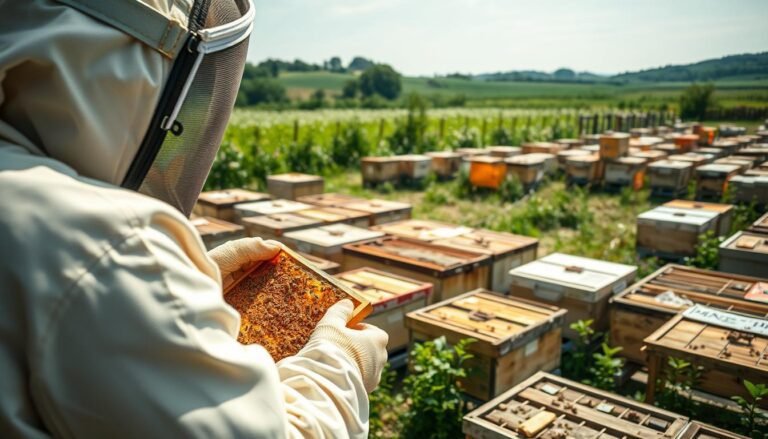
This guide sets realistic expectations for anyone who wants to keep bees and still sleep well at night. Honeybees are usually calm when left alone, but a disturbed hive can turn defensive. New beekeepers often start by wearing a bee suit, veil, and gloves to cut the chance of stings.
Practical steps matter: pick gentle honeybees like Italian or Carniolan, place hives away from walkways, and learn to use a smoker with patience. These moves lower agitation and make inspections easier.
We will offer clear information on gear, hive layout, inspection timing, and first-aid after a sting. With the right knowledge and calm handling, you protect yourself, your neighbors, and your honey.
Key Takeaways
- Bees are calm when undisturbed; plan every action around reducing stress.
- Use proper equipment—bee suit, veil, and gloves—to protect face, feet, and hands.
- Choose docile honeybees and place hives away from foot traffic.
- Master the smoker; patience improves inspection results.
- Wash stings with soap and water and move away to avoid alarm pheromones.
Start Safe: Risks, Allergies, and Choosing Gentle Honeybees
Understanding allergic risk and animal behavior before you start helps you work with more confidence. Talk with a physician about allergy testing; some people will be prescribed an EpiPen as a precaution in case they get stung. Establishing this medical baseline is a smart first step.
Choose gentle stock. Favor Italian, Carniolan, Caucasian, or Russian lines when sourcing honeybees. These breeds tend to show calmer behavior and fewer defensive stings during routine checks.
If a hive becomes aggressive, requeening with milder stock can change colony temperament in about six weeks. Use a smoker sparingly—calm handling and timing are equally important to reduce alarm pheromones that invite more bees to defend.
Lean on local knowledge. Join a local community of beekeepers to get area-specific information on breeders, disease pressures, and the best way to source bees for your climate. Their experience is the quickest way to learn practical, proven methods.
- Consider an allergy evaluation and plan what to do in the case of serious bee stings.
- Know the difference between honeybees and other stinging insects; genetics shape behavior.
- Create a simple safety plan and emergency contacts before you open your first hive.
Essential Beekeeping Safety Gear and Tools You’ll Use Every Day
Well-chosen apparel and a practiced routine make working bees far more predictable. Start each hive check by confirming your kit is ready and clean. Gear removes many surprises, but calm handling completes the job.
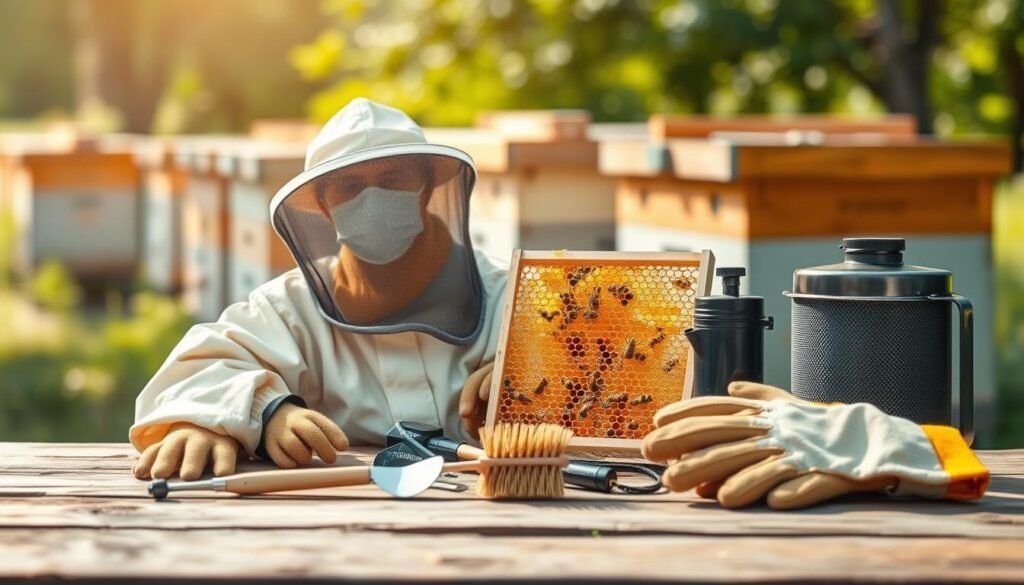
Bee suit and veil: coverage for face, hands, and feet
Choose a well-fitted bee suit that zips fully and leaves no gaps at cuffs. A clear veil keeps sight lines open and protects your face while you move slowly through inspections.
Gloves and boots: protection without losing hand control
Pick gloves that balance dexterity and defense so your hand work with frames is secure. Add sturdy boots and tucked cuffs to protect your feet from crawling bees.
Mastering the smoker: fuel, smoke, and timing
Practice lighting fuel and giving a few gentle puffs at the entrance and under the cover. The right smoke calms bees without masking your way of reading colony behavior.
Hive tool, first aid kit, and emergency contacts
Keep a hive tool ready to pry frames and lift boxes. Stock a first aid kit with antihistamines, bandages, tweezers, and personal meds. Wash stings with soap and water when needed.
- Clean gear regularly to remove alarm odors and keep vision through the veil clear.
- List emergency contacts, including your physician and a mentor safety precautions trusted locally.
- Practice with tools and smoker at home so your muscle memory helps during the first live hive checks.
Setting Up Your Apiary: Location, Flight Paths, and Weather
A calm site helps colonies work and reduces conflict with people and pets.
Choose a spot that guides flight up and away from walkways. Position hives where foot traffic is minimal and use fences, hedges, or trees to direct bees’ flight path. Face entrances away from sidewalks and play areas to keep interactions low.
Keep the landing area in front of each beehive clear so returning bees do not collide with you. Elevate stands for drainage and a better working height. This simple layout lowers agitation and improves your way of working with boxes.
Schedule inspections on warm, sunny days when forage is available. Bees become more tolerant in stable weather, so limit open time and use minimal smoke when needed. Wear gloves and approach from the side or rear to avoid blocking flight lanes.
| Factor | Recommendation | Benefit |
|---|---|---|
| Placement | Away from foot traffic, sheltered by hedges | Guides flight, reduces neighbor issues |
| Entrance orientation | Face away from sidewalks and play areas | Fewer collisions and alarm behavior |
| Timing | Warm, sunny days; short inspections | Lower defensive behavior and better visibility |
| Handling | Side/back approach, light smoke, gloves | Less disruption and safer honey harvests |
Observe bee behavior around the apiary and adjust entrances or barriers if traffic patterns change. Stay mindful of local rules and neighbors; offering a water source can keep bees away from communal gardens. For expansion advice and layout ideas, see expansion tips.
29. beekeeping safety for beginners USA: How to Handle Hives Step by Step
Start inspections with a calm, deliberate routine so bees stay predictable.
Move slowly — no swatting or sudden motions. Approach from the side or rear, lift the cover gently, and plan the order of tasks so the colony has time to adjust. Keep your hand movements steady and use the hive tool instead of force.

How to use a smoker without overdoing it
Give a few soft puffs at the entrance and under the lid. Let smoke guide bees downward instead of flooding the box. Overuse can push bees deeper and make frame work harder.
Hydration, heat, and staying calm
Work on warm, sunny days and take shade breaks. Hydrate before and during inspections; heat drains focus and can affect hand control.
“Pause between moves to let the colony settle — patience improves your outcome.”
- Wear a suit and gloves while you gain confidence.
- Read the hive by sound and movement; if agitation rises, close up and return another time.
- Focus each visit on a single goal — queen check, brood, space, or honey — to limit disruption.
For more practical tips on inspection routine and gear, see inspection and safety tips.
What to Do If You Get Stung During Hive Work
When a bee pierces skin during a check, the right immediate moves cut risk and discomfort. Stay calm and move away from the hive at once. Alarm pheromones can draw more bees, so create distance before you treat the wound.
Move away, remove the stinger, and wash the area
Step back quickly but calmly to exit the odor plume that may attract other bees. Remove the stinger promptly by scraping it out with a fingernail or a flat card—avoid pinching, which can squeeze more venom.
After removal, wash the sting area with soap and water. Clean water helps clear debris and reduces infection risk. Apply a cold compress to limit swelling and check personal medications from your first aid kit.
Recognizing serious reactions and when to seek medical care
Most stings stay local: pain, redness, and swelling at the spot. Watch for systemic signs that require urgent care. These include hives spreading beyond the sting site, difficulty breathing, dizziness, or throat tightness.
“If symptoms escalate, use prescribed medication immediately and call emergency services.”
- Carry emergency contacts and an action plan in your kit.
- Do not rely on more smoke to stop a chase—distance and closing the session are better.
- After you’re safe, note weather, hive crowding, or handling choices that led to the event and adjust future visits.
| Action | Why it matters | Timing |
|---|---|---|
| Step away from hive | Removes you from pheromone plume, prevents more stings | Immediate |
| Scrape stinger, wash with soap and water | Reduces venom transfer and infection risk | Within minutes |
| Apply cold compress, monitor | Limits swelling; detects escalation | First hour |
| Use prescribed meds / call EMS | Treats systemic allergic reactions quickly | At signs of breathing trouble, hives, fainting |
For realistic reaction examples and community notes, see a beekeeper discussion of normal sting responses at typical sting reactions. For guidance on handling wax and tools after incidents, consult wax-extraction precautions at wax extraction safety.
Conclusion
Plan each visit, prepare gear, and work calmly, then finish every inspection by resetting tools and noting what the colony needed that day.
Consistent habits—gentle handling, clean gloves and suit, smart hive placement, and short inspections on warm days—cut risk and help bees stay productive. Keep goals tight: brood, space, or stores. Record a quick post-check note and ask a local beekeeper when questions arise.
With steady practice you will read hive cues faster, protect the beehive and people, and enjoy more honey seasons. Use this post as a checklist to build knowledge and a safer way to work with each bee and colony.
FAQ
What should I do before I ever open a hive?
Get an allergy test if you’ve never been stung and learn how to use an epinephrine auto‑injector if you’re allergic. Join a local beekeeping club or extension office to learn area‑specific regulations and tips. Start with gentle, docile honeybee stock like Italian or Carniolan and plan to requeen if the colony shows aggressive behavior.
What personal protective equipment do I need daily?
Wear a full bee suit with a veil that seals around the neck, plus closed boots. Use fitted gloves that balance protection and dexterity; many keepers choose leather or nitrile liners with gauntlets. Keep a first‑aid kit and a list of emergency contacts nearby.
How do I use a smoker correctly?
Light clean, dry fuel (pine needles, burlap, or untreated wood) and produce cool white smoke. Puff twice at the hive entrance, then gently lift the lid and add a few puffs inside the top box. Use smoke sparingly—too much can overheat bees and obscure your view.
When is the best time to inspect hives?
Inspect on warm, calm, sunny days when many foragers are out. Late morning to early afternoon is ideal. Avoid inspections on cold, rainy, or windy days because bees are more defensive and fussy about temperature changes.
How should I position hives on my property?
Place hives away from driveways, play areas, and high foot traffic. Face hive entrances toward a clear flight path and, if possible, add a tall hedge or fence so bees fly upward immediately. Ensure good drainage and some afternoon shade to prevent overheating.
What’s the right way to move and handle frames?
Move slowly and deliberately. Pry frames gently with a hive tool, hold them close to the top bars, and inspect without dropping frames. Avoid sudden movements, swatting, or breathing directly over the brood area to reduce agitation.
What do I do if I get stung while working the hive?
Step away calmly to avoid attracting more bees. Scrape the stinger out with a fingernail or credit card—don’t use tweezers if possible, which can squeeze more venom in. Wash with soap and water, apply a cold compress, and use an over‑the‑counter antihistamine or pain reliever as needed.
When is a sting a medical emergency?
Seek immediate care if you develop difficulty breathing, swelling of the face or throat, dizziness, rapid pulse, or widespread hives. If you carry an EpiPen, use it and call 911. Allergic reactions can escalate quickly—don’t delay.
How can I reduce aggressive behavior in a colony?
Requeen with a calmer strain, remove nearby predators or pests, and avoid crushing guard bees at the entrance. Keep routine inspections short and consistent so bees acclimate to your presence. Use smoke thoughtfully to mask alarm pheromones.
What tools should I always have at a hive inspection?
Bring a hive tool, smoker with fuel, a brush or gentle bee escape, a frame grip if you use one, gloves, water, and a fully stocked first‑aid kit. Also carry your phone and local emergency numbers in case of severe reactions or injuries.
How can I work in hot weather without overheating in gear?
Inspect during cooler parts of the day, like morning. Use lightweight, ventilated suits and take frequent breaks in shade with water. Remove layers when safe and avoid long inspections that raise your body temperature and stress the bees.
Should I wear gloves for every task?
Gloves protect from stings but reduce finger sensitivity. Wear them for hive openings and heavy work if you’re nervous, but consider lighter gloves or no gloves for delicate manipulations once you’re confident and steady-handed.
How do I notify neighbors or the community about my hives?
Inform immediate neighbors before installing hives, post clear signage, and register with local authorities if required. Offer education about bee behavior and provide contact info so people know who to call with concerns.
What steps help prevent robbing or drifting between hives?
Keep entrances small during nectar dearths, space hives so strong colonies don’t overwhelm weak ones, and avoid spilling honey. Requeen aggressive colonies and use entrance reducers or screened bottom boards to control access.
How often should I inspect a new colony versus an established one?
Check a new package or nucleus colony every 7–10 days early on to monitor queen laying and food stores. Established, healthy colonies can be inspected every 2–3 weeks during the active season unless you suspect problems.