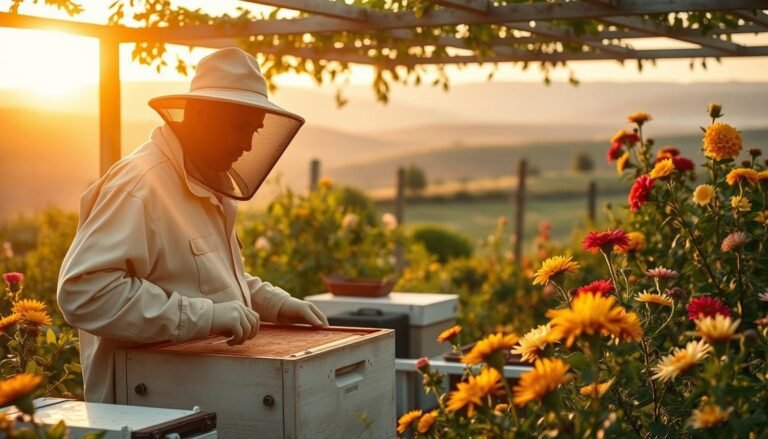
Pollinators support roughly 35% of all agricultural land, and bees handle about 90% of that pollination. Honeybees provide nearly $15 billion of annual agricultural work for growers, linking apiary care with farm productivity.
Recent storms and extreme weather destroyed thousands of hives, flooded crops, and left many colonies short of pollen. Managed hive losses have topped 60% in a year, driven by Varroa mites, pesticides, habitat loss, and climate extremes.
This guide frames best practices for ethical colony care and climate resilience. It connects day-to-day apiary work to pollination services, farm yields, and food access. For integrated science on pollinators and development, see this review: pollination and ecosystem services.
Key Takeaways
- Healthy bees are essential for pollination and crop productivity.
- High hive losses show urgent need for resilient colony care.
- Practical apiary steps can reduce pest, pesticide, and weather risks.
- Good management links directly to farm work and food security.
- The guide offers evidence-based, ethical practices for the future.
Why sustainable beekeeping matters now in the United States
Healthy pollinator networks now sit at the center of farm productivity and food reliability. Pollinators support 35% of agricultural land, and honeybees perform about 90% of that work. In economic terms, honeybee services equal roughly $15 billion a year for crop production.
Pollination, agriculture, and food security
When pollination falters, fruit set and yields fall. That reduces supply and raises prices. Protecting pollinators is therefore a food-security issue as much as a conservation goal.
Present-day pressures
Extreme weather events like hurricanes and flood seasons destroy colonies and cut forage. Habitat conversion and pesticide exposure further weaken colonies.
- Numbers: Roughly 35% of invertebrate pollinators face extinction risk.
- Trend: One analysis found a 25% drop in reported bee species over a decade.
- Losses: Managed hives saw over 60% losses in a recent year, driven by Varroa, toxins, and climate stress.
Acting now with practical, resilient practices links ecological health to stable markets and stronger farms. For practical reading and tools, see beekeeping resources and books.
Ethical foundations: applying the Five Freedoms to bee colonies
Applying animal welfare principles to apiary work helps beekeepers balance harvest and colony survival. The Five Freedoms can be translated into clear, practical expectations for colonies under care.

Freedom from hunger and thirst
Becoming a responsible beekeeper means leaving enough stores and feeding when forage drops. Surplus honey must be calculated by season, hive strength, and local dearth risk.
Timely feeding with syrup or patties prevents starvation without replacing good forage practices.
Freedom from pain, injury, and disease
Ethical management requires humane Varroa control. Research and practice show intervention reduces suffering and viral loads.
“Preventable disease and needless loss are not acceptable parts of responsible apiary work.”
The Modified Bond Method offers a way to select for resistance while avoiding mass colony losses that strict non-treatment can cause.
Freedom to express normal behavior
Respecting natural behaviors matters, but letting swarms fend for themselves leads to high loss rates and elevated DWV levels. Wild survival after one year is low.
Proven equipment choices, like Langstroth hives, help overwintering and reduce avoidable mortality. For seasonal checks and practical tasks, see seasonal tasks.
Habitat-first practices: forage diversity, native plants, and pesticide-free yards
A nature-forward yard filled with native blooms keeps foragers strong from spring to summer.
Prioritize diverse, regionally adapted plants that provide nectar and pollen across seasons. Layer trees, shrubs, perennials, and annuals to extend bloom windows and support many species of pollinators.
Planting bee gardens with nectar- and pollen-rich species across seasons
Choose plants that bloom early and again in midseason. This buffers gaps when food is scarce and lowers colony stress.
- Mix bloom times to cover spring through late summer.
- Include water sources and nesting spots to complement forage.
- Place habitat patches near apiaries and throughout neighborhoods.
Reducing chemical risk: avoiding toxic pesticides and protecting communities and trees
Keep yards pesticide-free and coordinate with neighbors to reduce drift. Safe landscapes protect bees, trees, and your community from accidental exposure.
“Continuous bloom and pesticide-free planning not only feed colonies but also shield nearby nature and people.”
| Action | Benefit | Season |
|---|---|---|
| Layered plantings (trees, shrubs, perennials) | Supports diverse bee species; extends bloom | Spring–Summer |
| Pesticide-free yard policies | Reduces poisoning and robbing; protects trees | All year |
| Habitat patches near hives | Improves foraging efficiency; lowers energy costs | Spring–Late Summer |
For regional planting guides and practical grant-supported projects that help build habitat-first landscapes, see this resource on pollinator-friendly practices: pollinator habitat support.
Smart nutrition: feeding strategies that protect colony health
Practical feeding choices keep colonies strong through seasonal gaps and emergencies. Use closed feeding to limit robbing and disease spread. Closed feeders also let a beekeeper control timing and quantities without attracting neighbors’ bees.

Closed feeding, timing, and seasonal checks
Set feeding windows on warm days and inspect stores with quick, low-disruption checks. Estimate remaining honey and act before cold snaps force emergency moves.
Leave adequate honey before harvest. Resist over-harvesting so a colony avoids late-winter starvation. Avoid feeding honey taken from other local colonies to reduce the way pathogens move between hives.
Emergency supplements and novel solutions
Use sugar syrup, fondant, or dry sugar as short-term food. Choose high-quality protein supplements or pollen substitutes when natural pollen is scarce.
New tools like a CRISPR-enabled yeast enriched with essential sterols can support brood rearing during prolonged forage collapse. These supplements offer a practical way to maintain colony numbers until plants recover.
- Recommend closed feeders and clear seasonal timing protocols.
- Perform routine checkpoints for at-risk colonies and follow region-based numbers targets for minimum stores.
- Integrate emergency food with overall nutrition planning to speed recovery.
“Protecting stores and feeding wisely helps colonies recover faster after stress events.”
For detailed methods and recipes for syrup and patties, consult this guide on feeding bees.
25. sustainable beekeeping in the United States: resilient colony management
Resilient colony care starts with routine checks and precise, evidence-based responses. Practical protocols reduce virus amplification and keep operations ready for stress events.
Monitoring and treating for pathogens and Varroa mites with evidence-based tools
Standardize mite monitoring using alcohol or soap wash and set clear thresholds that trigger treatment. Unchecked infestations drive viral loads, so act fast when counts cross limits.
Rotate approved treatments to reduce resistance. Time interventions to protect brood and queens and to limit residue buildup.
Hive choices and configuration: adaptable designs without compromising wintering
Langstroth designs have long records of success; horizontal formats can be harder to winter. Check materials: wooden beehive bodies may trap moisture after floods and raise pathogen risk.
- Adopt selective breeding (Modified Bond Method) to boost mite resilience.
- Match insulation and ventilation to local climate to keep brood dry and warm.
- Keep spare equipment and nucs so you can respond quickly after loss.
“Routine monitoring and smart equipment choices shorten time-to-intervention and protect colonies.”
Climate resilience in action: storm, flood, and heat strategies for hives
Preparing for floods and high winds starts long before clouds gather. Plan sites, secure stands, and map access routes so crews can reach apiaries during events. Quick moves matter when storms strike and forage is stripped away.
Preparing for extreme events: site selection, anchoring, and access planning
Choose elevated, well-drained sites away from floodplains and falling trees. Mark vehicle and foot access for emergencies. Anchor stands, strap equipment, and secure lids to cut wind and water displacement.
Innovations like buoyant modular beehive designs
New gear can reduce losses. The Beekon buoyant hive uses recycled plastic and a central mast so it floats when waters rise. This self-activating solution lowers drownings and equipment loss without urgent relocation.
This story shows how design can protect colonies and reduce financial losses after floods.
Aftermath protocols: assessing colonies, stabilizing food, and protecting beehives
After floods or heat waves, assess queen status, brood area, and stores fast. Dry wooden equipment quickly—moist wood holds pathogens and invites pests.
- Bridge forage gaps with safe supplements, including sterile protein and sterol-enriched yeast.
- Document damage to refine future site choices and gear selection.
- Coordinate with neighbors about pesticide use during cleanup to avoid compounding losses.
Act now with these practical solutions to protect bees, preserve honey reserves, and build resilience for the future.
Conclusion
A clear plan that mixes habitat, nutrition, and monitoring keeps bees healthier year after year.
Prioritize colony welfare: leave enough honey, time harvests, and use humane Varroa steps to cut pathogen risk.
Plant seasonally mapped plants and avoid pesticides to boost forage through spring and summer and help local populations.
Standardized monitoring and rapid, evidence-based responses reduce losses and lower long-term risk for hives and nearby animals.
Individual beekeeper choices scale up to support pollination, agriculture, and community food security. For data-driven policy and wider industry context, see this status report on honey bee health.
Keep learning, share results, and adapt each year—aligning science with nature is the best way to protect honey, bees, and species for the future.
FAQ
What is ethical colony care under the Five Freedoms for beekeepers?
Ethical colony care applies animal welfare principles to hives. It means ensuring colonies have access to food and water, minimizing pain through humane Varroa and disease management, allowing normal behaviors like foraging and brood rearing, and protecting colonies from preventable risks such as extreme weather and pesticide exposure.
How do forage diversity and native plants help hive health?
Diverse forage provides continuous nectar and pollen across seasons, boosting immune function and brood success. Planting native wildflowers, clover, goldenrod, and native trees supports local bee species and reduces reliance on monoculture crops that cause nutritional gaps.
What are practical ways to reduce pesticide risk near hives?
Avoid applying systemic insecticides and neonicotinoids in bee flight zones, communicate with neighbors and growers, create pesticide-free buffer zones with native plants, and time any necessary treatments for when bees are least active, such as late evening.
When should beekeepers feed colonies, and what methods prevent robbing?
Feed during nectar dearths, early spring buildup, or before winter when stores are low. Use closed feeders or entrance feeders with screens to limit robbing. Feed small, frequent amounts and monitor colony strength to avoid attracting robbers from nearby hives.
What emergency supplements work when pollen is scarce?
High-quality protein patties and pollen substitutes can sustain nurse bees when natural pollen is unavailable. Choose products with minimal fillers and rotate to avoid nutrient imbalances. Use supplements only as short-term support while improving forage options.
How should Varroa and other pathogens be monitored and treated?
Regular monitoring with sugar rolls or alcohol washes gives accurate mite counts. Use integrated pest management: cultural controls, screened bottom boards, drone brood removal, and evidence-based chemical options like formic acid or oxalic acid when thresholds are exceeded.
What hive designs support wintering and climate resilience?
Insulated hives, adequate ventilation, and adaptable configurations help colonies survive cold and heat. Raised stands prevent moisture and pest access. Modular designs allow adding or removing space to match colony size without stressing bees.
How can beekeepers prepare for storms, floods, or extreme heat?
Choose elevated, sheltered sites with good drainage and windbreaks. Anchor hives to prevent wind damage, provide shade during heat waves, and have an emergency plan to move hives or use buoyant supports in flood-prone areas.
What steps follow a flood or storm to stabilize colonies?
Assess colony condition quickly, dry frames and remove dead comb, provide emergency food if stores are lost, requeen weak colonies if needed, and treat for secondary infections or mites, which can spike after stress events.
How do management choices affect pollination services and agriculture?
Healthy colonies provide reliable pollination, increasing yields for crops like almonds, berries, and apples. Practices that reduce stress and disease improve foraging efficiency and longevity, supporting both commercial agriculture and native plant reproduction.
What role do community actions play in reducing colony losses?
Community planting of nectar and pollen corridors, reducing pesticide use, and creating hive-safe green spaces all lower risks. Local beekeeping groups and extension services provide education and coordinated responses to disease outbreaks and extreme events.
How often should colonies be inspected to balance intervention and disturbance?
Inspect weekly to biweekly during active seasons, focusing on brood pattern, stores, queen status, and mite levels. Minimize hive opening time and avoid unnecessary inspections during high-stress periods like extreme heat or heavy nectar flows.
Are there scalable innovations for flood-prone apiaries?
Yes. Buoyant modular hives, elevated racks, and quick-move pallets allow rapid adaptation. These innovations reduce losses and facilitate relocation, especially for smaller operations and community apiaries in vulnerable landscapes.
How can beekeepers balance honey harvests with colony needs?
Leave sufficient winter stores based on local climate and colony size. Harvest only surplus honey after assessing brood rearing and future forage availability. When in doubt, prioritize colony survival over maximized yields.
What evidence-based tools help manage colony health without overusing chemicals?
Use monitoring data to set treatment thresholds, cultural practices like requeening and hygienic stock selection, mechanical controls such as screened bottom boards, and targeted organic acids or essential oil treatments when appropriate.
How does climate change alter beekeeping practices year to year?
Warmer winters, erratic springs, and intense summer storms shift nectar flows and disease cycles. Beekeepers must adjust timing for feeding, splitting, and treatments, and invest in site resilience and forage planning to respond rapidly to changing conditions.
What are best practices for selecting hive locations for long-term success?
Select sites with diverse nearby forage, water access, good drainage, and protection from prevailing winds. Avoid low-lying flood zones and areas with heavy pesticide use. Ensure legal compliance and good neighbor relations.