Commercial beekeeping demands clear systems and reliable routines. Each colony acts as its own unit, so predictable workflows protect bees and save labor.
Standardized inspections let you spot queen issues, population shifts, disease signs, and honey yield fast. Digital records turn these checks into usable trends that guide day-to-day choices.
Match inspection cadence to seasons—weekly loops in spring and lighter monthly reviews in winter. Integrated pest protocols, like monthly Varroa monitoring in active months, stop costly losses before they spread.
Equipment standardization —interchangeable boxes, frames, and scheduled part replacements—reduces downtime and keeps crews moving. Track KPIs such as honey per hive, survival rates, and cost per pound to steer expansion.
For practical tools and data-driven dashboards, see a widely used app that helps beekeepers keep records and analyze KPIs: Apiary Book.
Key Takeaways
- Use standardized systems to protect each colony and increase productivity.
- Keep digital records to speed decisions and reveal trends.
- Adjust inspections to seasonal needs—more often in spring, less in winter.
- Monitor Varroa monthly during active months to reduce losses.
- Standardize equipment and schedule replacements to cut downtime.
- Track KPIs to turn field actions into business growth.
Why Time Management Matters in Multi-Hive Operations Today
A disciplined schedule of hive checks turns small issues into simple fixes before they spread. Regular monitoring of temperature, humidity, and movement reveals early warning signs that affect colony health and productivity.
Temperature near 93°F (34°C) is vital for brood development. Deviations signal ventilation or insulation problems that demand fast decisions. Catching these shifts early reduces brood stress and downstream losses.
Commercial beekeeping benefits from seasonally consistent inspection cadence: weekly in spring and monthly in winter. Monthly Varroa checks are a compact, practical task that lowers collapse risk and treatment costs.
- Faster response: quick checks of conditions protect bee health across many hives.
- Better profitability: early detection cuts treatment bills and preserves peak production windows.
- Consistent results: standardized checklists let every beekeeper deliver uniform outcomes.
Treat the apiary as both an agricultural system and a business. Clear routines align labor with measurable outcomes and make large-scale operations manageable without sacrificing the bee colony or returns.
Design a Standardized Hive Management System that Saves Hours Weekly
A clear, repeatable workflow that logs every colony detail saves hours and prevents missed issues.
Core records to track: queen status, population strength, disease presence, and honey production. These fields become the track key that lets beekeepers compare colony performance and set priorities quickly.
Make a season-based inspection cadence: weekly checks during spring buildup and monthly reviews in winter. Keep each inspection short with a checklist to reduce on-site time and improve data quality.
Operationalize integrated pest control with monthly Varroa monitoring during active months. Use alcohol washes or sticky boards, log results, and map treatment windows to the calendar so interventions stay timely.
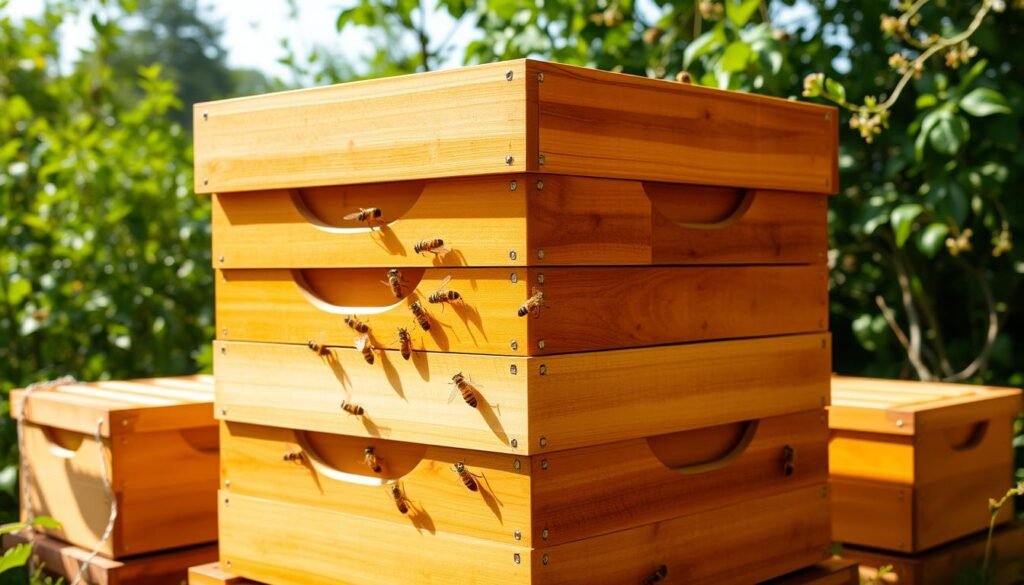
| Record | Cadence | Action | Cycle |
|---|---|---|---|
| Queen status | Every inspection | Mark, replace if failing | Ongoing |
| Population strength | Weekly (spring) / Monthly (winter) | Split or combine | Seasonal |
| Disease & Varroa | Monthly (active) | Test, treat in window | Annual review |
| Equipment | Annual inspect | Rotate, clean, replace bottom boards | Replace bottom boards every 2 years |
Use digital logs to tie inspection findings to honey production and survival rates. Train teams on SOPs so any member can service hives efficiently and keep records consistent.
To see recommended data workflows, optimize hive records.
Build Seasonal Workflows that Align Labor with Colony Needs
Plan tasks around biological cycles so labor aligns with when colonies need the most attention.
Spring
Rapid expansion demands tight loops. Organize weekly inspection bursts to spot strong colony candidates for splits and to install new queens.
Pre-assemble frames and hive bodies. Stage equipment near yards to avoid repeat trips across the same season.
Summer
Center work on honey production peaks and swarm prevention. Set population-control checkpoints to protect yield while keeping densities manageable.
Schedule supering and removal windows to match regional nectar flows for smooth extraction throughput.
Fall
Plan harvest timing and consolidation to right-size colonies ahead of winter. Use production records to guide which hives get combined.
Create winter feeding plans based on current stores and prioritize vulnerable colonies for supplements.
Winter
Audit the past year’s data and refine SOPs. Order supplies and complete repairs on standardized equipment to avoid mid-season failures.
“Consistent seasonal scheduling balances labor with biological cycles and keeps operations efficient.”
Leverage Data, Monitoring, and Dashboards to Prioritize the Right Hives
Use live sensor feeds and compact dashboards to surface urgent hive issues before they escalate. Real-time monitoring of temperature, humidity, and movement helps flag anomalies such as deviations from the ~93°F brood target or moisture problems that harm colony health.
Real-time signals
Temperature, humidity, and activity streams reveal at-risk colonies early. Movement spikes can indicate swarming, while steady temperature drops warn of insulation or ventilation faults.
Track key metrics
Rank work by honey per hive, survival rates, cost per pound, and inspection outcomes. These metrics let managers allocate visits where they yield the biggest return.
Map-based triage and automation
Use a live map with location filters to route crews by apiary and hive status. Configure automated reminders and reports so beekeepers receive to-dos and treatment windows without manual chasing.
- Sensor-driven insights: surface at-risk hives before problems compound.
- Historical analysis: benchmark and schedule inspections during high-risk windows.
- Feedback loop: feed inspection outcomes to refine dashboard priorities.
“Good dashboards turn scattered readings into clear, prioritized action.”
Optimize Field Time: Routing, Task Batching, and On-Site Efficiency
Plan routes that cluster yards together so crews spend more minutes working at each hive and fewer driving between sites. This simple shift raises productivity and reduces fuel and labor waste.
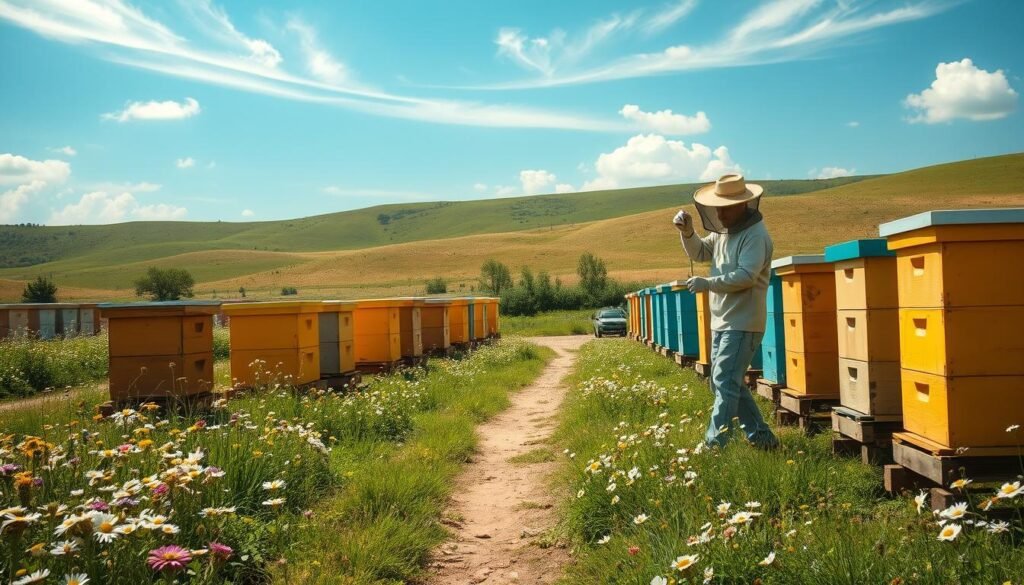
Route planning across locations to reduce windshield time
Group stops by location and apiary to cut transit. Use a map view to order visits and handle urgent inspections first. HiveTracks and similar tools speed route creation and sync to mobile to-dos.
Batch tasks by hive status and season to cut setup and tool swaps
Schedule work by common goals: queen checks, super additions, or mite treatments. Batching reduces tool changes and mental shifts, so beekeepers complete more tasks per stop.
Staging supplies and interchangeable parts for fast, consistent service
Standardize kits with interchangeable hive bodies, frames, and spare parts. Pre-load vehicles with seasonal spares—feeders, supers, mite treatments—so teams service hives efficiently without return trips.
- Quick protocol: check key metrics first, then expand only if issues appear.
- Aligned maintenance: rotate bottom boards at two-year marks within regular routes.
- Log on the go: use mobile inspection templates to capture data fast and keep records consistent.
“Streamlined routing and staged supplies turn travel-heavy days into efficient service windows.”
Time management for multi-hive apiaries: From Insights to Profitable Decisions
Dashboards that blend current feeds and historical records make it easy to spot which hives deserve attention first. Use those visual cues to convert raw readings into prioritized actions that increase profitability.
Use dashboards to spot trends and benchmark hives and apiaries
Set clear metrics — honey production per hive, survival rates, and cost per pound — and display them as trend lines. Historical data helps benchmark colonies across seasons and informs breeding, feeding, and treatment choices.
Create feedback loops: data-driven adjustments to inspections, feeding, and treatments
Adjust inspection frequency, feeding plans, and treatment timing based on recent data. Then re-measure outcomes to confirm improvements.
Scale confidently with roles, to-dos, and priority support for larger teams
Standardize roles and checklists so any team member can execute tasks. Tie labor hours to outputs to see how interventions change cost and production.
- Convert dashboard insights into prioritized decisions that raise profitability.
- Use metrics to trigger actions and document corrective steps for underperforming colonies.
- Leverage trend lines to anticipate supplies and deploy crews so hives efficiently receive attention.
“Automated reports align teams, focus labor, and make decisions measurable.”
Technology Stack to Support Beekeepers Without Adding Complexity
Start with mobile records and live maps so data flows from the hive to the dashboard without delay.
Mobile records and to-dos equip the beekeeper to finish inspections fast and keep entries accurate. HiveTracks gives mobile app and web portal access, live map filters, and in-field recommendations to cut paperwork latency.
Customizable dashboards and filters
Use tiered views that segment nuc units, hives, and apiary groups. The Hive tier adds dashboard customization and automated reports to focus crews on high-priority status flags.
Integrations and long-term planning
Sensor monitoring from HiveBeat tracks temperature, humidity, and movement. Pair sensors with hive scales to plan feeding and harvest windows using historical data.
SOPs that unify tools and roles
- Match SOPs to platform workflows so tech amplifies routine work instead of complicating it.
- Use live map status filters to route crews and shrink travel time.
- Set platform reminders for equipment cycles—replace bottom boards on a two-years cadence and check hive bodies annually.
- Pick a tier: Nuc (map, filters, to-dos), Hive (dashboards, reports), Apiary (priority support, unlimited users).
“A simple stack with clear SOPs turns data into action and reliable customer reporting.”
Conclusion
, Consistent records and sensor signals let beekeepers spot trends and cut costly surprises.
Summary: Disciplined beekeeping across an apiary converts limited effort into gains in bee health, honey, and productivity. Standardized records, clear inspections, and monthly Varroa checks stabilize colony outcomes across multiple hives.
Use dashboard insights and simple metrics to steer decisions and measure improvements in honey production and cost. Adopt technology that fits your operation—mobile to-dos, nuc and hive dashboards, and sensor integrations—without extra complexity. See practical beehive guidance at beehive management best practices and growth tips in this beekeeping expansion guide.
Align tasks with seasons, close the loop with automated reports and team communication, and codify SOPs. Assign owners and schedule reviews so decisions turn into repeatable gains in production, pollination benefits, and long-term business health.
FAQ
How can I standardize hive records to save hours each week?
Create a concise checklist that captures queen status, population strength, disease presence, and honey production. Use a single digital form for all inspections so entries stay uniform and searchable. Standardized records reduce repetitive note-taking and speed decision-making during busy seasons.
What inspection cadence should I follow through the seasons?
Inspect weekly during spring buildup to catch swarm impulses and queen issues early. Move to biweekly or monthly checks in summer depending on honey flow and hive stability. In fall and winter, shift to monthly or planned data-driven visits to minimize disturbance while focusing on feed and insulation needs.
How do I manage Varroa across many sites without wasting effort?
Implement an integrated pest program with scheduled Varroa monitoring and treatment windows. Use pooled monitoring data to target treatments only where thresholds are exceeded. This reduces unnecessary treatments and concentrates resources on hives that actually need intervention.
What tech gives the best return for prioritizing at-risk hives?
Lightweight sensors that monitor temperature, humidity, and movement provide early warning of issues like queen loss or brood chill. Combine those signals with hive scales and inspection outcomes on a dashboard to prioritize field visits and rescue actions where they matter most.
How can routing and task batching cut field hours?
Plan routes by apiary and status so you visit nearby hives with similar needs in one trip. Batch tasks — for example, all queen-related work or all honey checks — to reduce tool swaps and setup time. Staging supplies and interchangeable parts at each location speeds on-site service.
What metrics should I track to measure productivity and profitability?
Track honey per hive, survival rates, cost per pound, and inspection outcomes. Monitor labor hours per hive and per apiary to calculate cost-efficiency. Use these metrics on dashboards to benchmark performance and guide consolidation or expansion decisions.
How do I scale inspections and treatments for a team of beekeepers?
Define roles and SOPs that map who inspects, who treats, and who records. Use shared to-dos and automated reminders so everyone follows the same cadence. Assign priority support for larger apiaries and tier tasks by urgency to keep teams coordinated.
Can dashboards really replace some physical checks?
Dashboards provide triage—highlighting hives with abnormal weight, temperature swings, or activity drops. They won’t replace hands-on checks but they reduce unnecessary visits by directing attention to hives that show risk signals, improving field efficiency.
What should be included in SOPs to make field visits consistent?
SOPs should list inspection steps, decision thresholds for splits or treatments, equipment checklists, and cleaning routines. Include timing windows tied to season and role responsibilities so every team member performs the same reliable service.
How do I optimize harvest and consolidation choices in fall?
Use honey yield data and colony strength metrics to decide which hives to combine or harvest. Prioritize consolidating weaker colonies into stronger ones and schedule harvests to leave sufficient stores for winter. This reduces overwinter losses and improves per-hive productivity.
What integrations are most valuable in a beekeeper’s tech stack?
Prioritize integrations with hive scales, sensor feeds, GPS mapping, and inspection apps. Historical analytics tied to these sources help forecast production and survival trends. Choose tools that sync automatically to minimize duplicate data entry.
How do I keep data entry simple during inspections?
Use mobile forms with dropdowns and preset options for common observations. Limit free-text fields to brief notes. Pre-fill repeated fields like apiary name and hive ID to speed entries, and sync when a connection is available to avoid delays.
How can monitoring improve decisions about pollination contracts?
Use survival rates, honey production, and foraging activity to price and assign hives for pollination. Hives with consistent performance and low treatment needs command better rates and reduce liability for growers, making contracts more profitable.
What are quick wins to reduce equipment-related downtime?
Standardize parts across boxes and keep a rotating stock of common replacements. Schedule routine maintenance cycles and log repairs. Having interchangeable components and a preventive checklist prevents unexpected breakdowns that cost hours in the field.