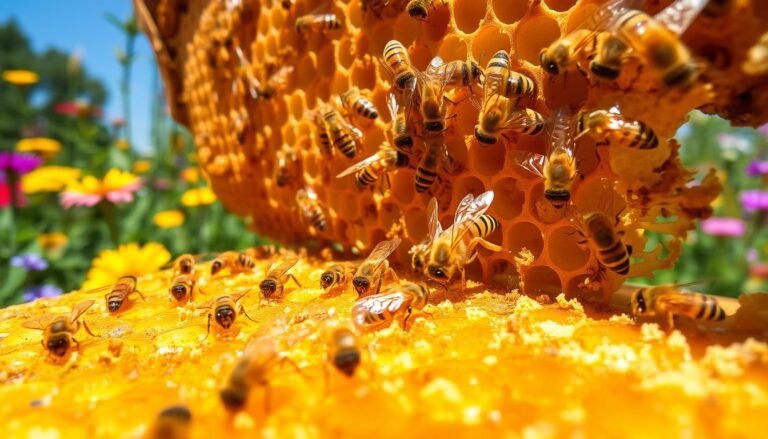
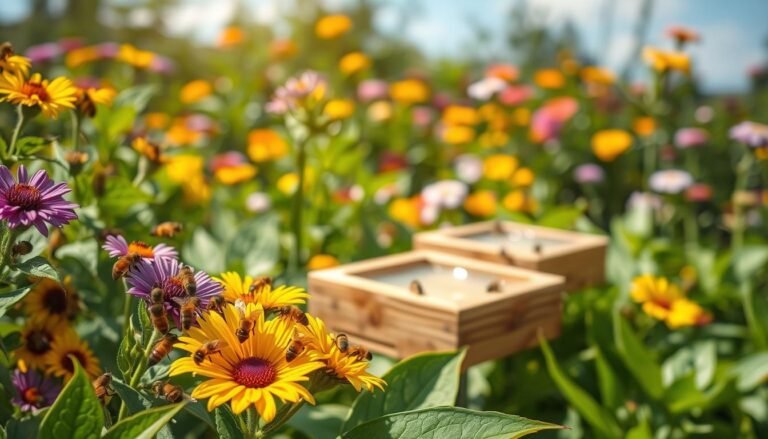
New U.S. data places a global concern onto local apiaries. Recent research links tiny plastic particles to pollinator stressors already known to harm bees.
The paper sits on a growing body of work where scientists detected PET and other polymers across hive material and honey. Lab tests show chronic exposure can cut feeding, change gut microbes, and affect learning without causing quick die-offs.
Why this matters: these particles travel through air, water, forage and beekeeper supplies, so U.S. colonies face multiple pollution pressures at once. The study frames the issue alongside light, antibiotics, and airborne fibers.
What to expect in this article: we will cover detection methods, health and behavior effects, transfer within colonies, and practical steps for beekeepers and policymakers. Findings reflect past research adapted for U.S. relevance and do not overstate direct causation.
Key Takeaways
- Scientists have documented tiny plastic particles present across hive materials and honey.
- Chronic exposure can harm bee health subtly—affecting feeding, microbiomes, and behavior.
- Particles move through air, water, forage and equipment, creating multiple exposure routes.
- Current studies keep honey considered safe, but tracking particle types and sources is needed.
- Timely research and coordinated action will help protect pollination services and honey production.
New findings spotlight pervasive plastic pollution in U.S. hives and what it means for bee health
Evidence is building that synthetic fibers and fragments reach bee food stores and nest materials across diverse regions.
Global signals meet local risk. Particles travel through air and water and settle where bees forage. That makes contamination plausible across U.S. areas with high plastic use or particulate emissions.
What multiple studies show: researchers detected tiny debris in most tested colonies abroad and in honey from Ecuador and Denmark. Scientists link mps exposure to lower gut microbial diversity and sublethal physiological changes in bees.
- Sources: fibers and fragments from packaging, textiles, and tire wear move into landscapes by air and water.
- Why honey matters: foragers concentrate environmental inputs into honey, making it a practical indicator of exposure pathways.
- Main observed effects: gut microbiome shifts, reduced feeding and weight, respiratory stress, and possible neurological interference—typically chronic, not acute mortality.
Ongoing studies aim to map exposure across U.S. environments and guide policies and apiary practices to lower the plastic burden on bees and the food systems they support.
Microplastics found in honeybee hives: where particles come from and how they’re detected
Analyses show common consumer plastics migrate through landscapes and reach apicultural products. Primary sources include degraded packaging, textile wear, tire abrasion, and bits from beekeeping gear such as plastic frames and feeders.
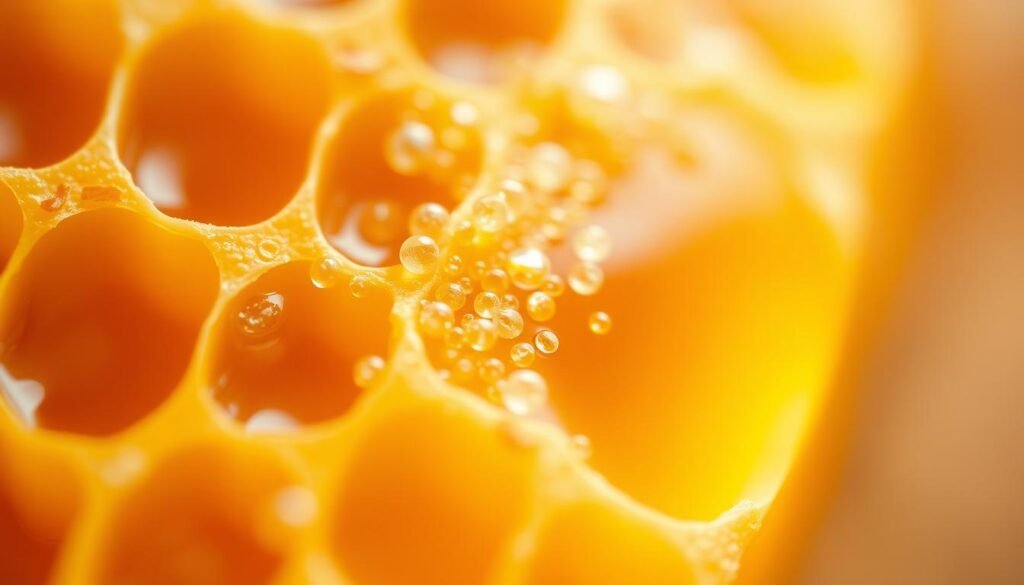
Pathways into colonies: air, water, nectar and direct contact
Airborne fibers settle on flowers and hive surfaces. Waterborne particles enter drinking sources and puddles. Foragers bring back contaminated nectar and pollen, and synthetic hive components add direct contact exposure.
What researchers are finding: fibers, fragments, and common polymers
Field studies report that fibers dominate counts, with fragments present too. Typical polymers include PET, polyethylene, polypropylene, and polyacrylamide seen on bees, pollen, and comb.
“Fibers account for the largest share of particles collected, while signature polymers like PET and polyethylene recur across samples.”
How scientists detect particles in honey and other products
Labs use Raman spectroscopy to ID polymer types and mass spectrometry to detect very small particles, including nanoplastics. Good sampling practice reduces contamination: filtered workflows, blank controls, and polymer confirmation are essential.
| Source | Pathway | Common forms | Detection |
|---|---|---|---|
| Consumer waste, textiles | Air, soil, plants | Fibers, fragments | Raman spectroscopy |
| Tire wear, urban runoff | Water, nectar | Fragments, microbeads | Mass spectrometry |
| Beekeeper materials | Direct contact | Sheets, film residues | Polymer fingerprinting |
| Agricultural films | Soil, plant uptake | Submicrometre particles | High-sensitivity mass spec |
Note: plant uptake studies in wheat and lettuce show submicrometre particles can move from roots to shoots. That raises the chance that nectar and pollen carry contamination to foraging insects. For more on health implications and researcher guidance, see how microplastics are harming bees.
Evidence of impacts: from gut microbiome changes to pesticide synergy and food chain concerns
Recent experiments reveal that small synthetic particles change how bees eat, breathe, and learn—effects that add up over weeks.
Gut and immunity. Laboratory work shows chronic exposure reduces gut microbial diversity. Those gut changes tie to weaker immunity and slower detoxification without causing acute toxicity.
Physiological outcomes. Studies report lower feeding rates and declines in body mass after repeated exposure. Respiratory effects appear after several weeks and can reduce foraging stamina.
Neurological risks. A growing body of research documents particles reaching the brain of honey bees and disrupting learning and memory. These cognitive changes harm navigation and communication.
Transfer inside colonies. Researchers detect microfibers and fragments circulating through honey, wax, and larvae. That circulation shows how plastic particles move via nectar and food processing.
Pollutant hitchhiking. Weathered particles adsorb pesticides and other pollutants. Polyethylene has been reported as an effective carrier, raising concerns about combined toxicity and broader food chain exposure.
“Chronic exposure creates a cumulative stress pattern—gut shifts, poorer body condition, respiratory strain, and cognitive loss—rather than immediate colony collapse.”
| Observed effect | Evidence | Implication for bee health |
|---|---|---|
| Gut microbiome diversity loss | Lab sequencing after chronic mps exposure | Reduced immunity and detox capacity |
| Lower feeding and body mass | Polystyrene trials over 21+ days | Less foraging and resilience |
| Respiratory impairment | Multi-week exposure studies | Decreased stamina and colony performance |
| Neurobehavioral disruption | Particle detection in brain; learning tests | Poor navigation and resource return |
| Pollutant adsorption | Field reports of polyethylene carrying pesticides | Amplified local toxicity; food chain concerns |
Expert perspective and mitigation: researchers’ warnings and beekeeper practices to reduce exposure
Scientists note that cumulative contamination across landscapes can erode colony health even without sudden die-offs. Experts list clear policy and field steps to lower risks to bees and honeybees.
Scientists’ calls to action: curbing pollution, safer landscapes, and stronger policies
Researchers urge limits on particulate and chemical pollution and incentives for cleaner transport and industry. They recommend creating flower-rich habitats, such as solar park plantings, to dilute contamination across forage.
“Reduce sources at the landscape level and strengthen monitoring across production areas.”
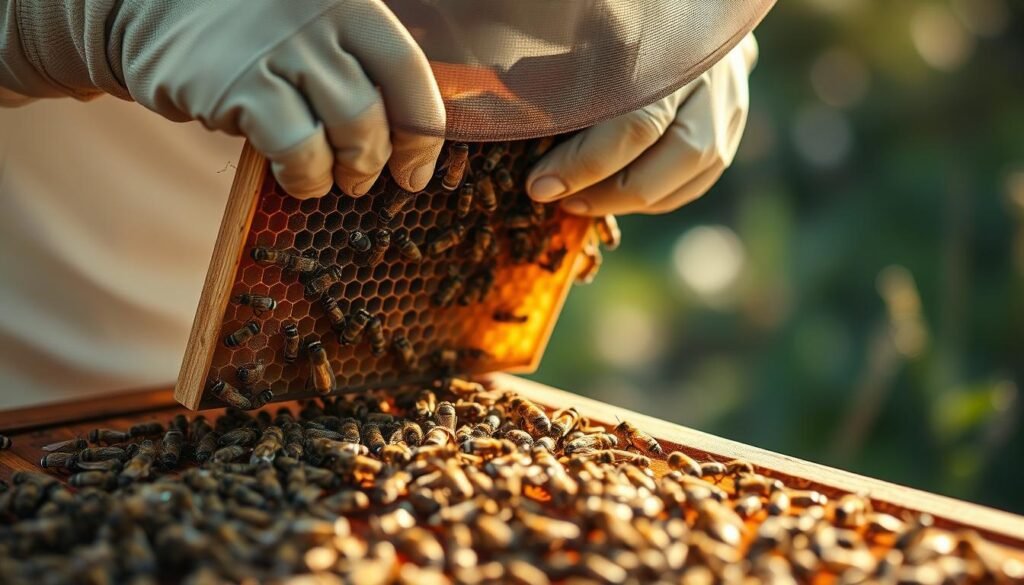
In the apiary: limiting plastic products, refreshing comb, and favoring natural materials
Practical actions help reduce direct contact with plastics. Beekeepers should phase out plastic frames, feeders, queen excluders, foam insulation, tapes, and disposable liners when feasible.
Comb management matters because wax binds lipophilic particles. Rotate or refresh comb on a schedule while recognizing that new comb still reflects ambient exposure.
| Action | What to change | Benefit to colonies |
|---|---|---|
| Material audit | Replace plastic trays and foams with wood or metal | Lower direct transfer from products to bees |
| Water management | Provide clean water sources away from runoff | Reduce reliance on contaminated puddles and runoff |
| Comb rotation | Refresh wax on a planned cycle | Limit build-up of lipophilic pollutants |
| Landscape action | Support flower-rich corridors and cleaner transport | Reduce regional pollution and improve forage quality |
Monitor colonies for subtle signs—lower feeding, weight changes, or behavior shifts—and align hive care with new studies. Responsibility spans beekeepers, regulators, and the broader environment to protect bees worldwide.
Conclusion
This study adds clear evidence that tiny plastic particles now intersect daily life for beekeepers and the bees they tend.
Across U.S. sites, research shows debris moves through water, soil and plants and turns up in comb, honey and larval food. Lab work using Raman spectroscopy and mass spectrometry links repeated exposure to gut shifts, lower feeding, respiratory strain and learning problems rather than acute toxicity.
Practical steps matter: reduce plastic inside hives, provide clean water, rotate comb, and favor natural materials. Experts urge landscape pollution controls and monitoring of polymers like polyethylene and other pollutants that adhere to fragments.
Ongoing study and coordinated action by beekeepers, scientists and policymakers can cut exposure, protect bee health and keep honey and pollination services resilient along the food chain.
FAQ
What did the new U.S. study reveal about plastic particles in bee colonies?
Researchers surveyed apiaries across multiple states and detected tiny plastic particles within hive components such as honey, wax, and bee bodies. Studies report fibers and fragments made from common polymers like polyethylene and PET, indicating widespread environmental contamination that reaches pollinators and hive products.
How do these particles enter the hive environment?
Particles reach colonies through several pathways: airborne debris that settles on flowers and comb, contaminated water sources, tainted nectar and pollen collected by foragers, and plastic materials used in equipment. Dust and runoff from nearby urban or agricultural areas also contribute to hive exposure.
Which detection methods do scientists use to identify plastic particles in honey and hive material?
Laboratories employ optical microscopy to screen samples, then confirm composition with techniques such as Raman spectroscopy and mass spectrometry. These methods allow identification of polymer types and particle sizes down to the micrometer scale.
Are these particles toxic to bees at levels found in studies?
Most field studies report no immediate, acute mortality linked solely to plastic particles. However, sublethal effects—like altered feeding, reduced body weight, and respiratory stress—have been observed in controlled experiments, suggesting chronic risks to colony health.
Can plastic particles affect bee immunity or gut microbes?
Yes. Research indicates that exposure can reduce microbial diversity in the gut and impair immune responses. These changes can make bees more vulnerable to pathogens and may interact negatively with other stressors such as pesticides.
Is there evidence that particles move through the hive and into bee products?
Scientists have reported particles in honey, beeswax, and even in larvae. This transfer implies that contamination circulates within the colony and can reach products humans harvest from hives.
Could plastic particles carry pesticides or pathogens into the colony?
Particles can adsorb chemical residues and act as vectors for microbes. That hitchhiking effect raises the likelihood of combined exposure—plastic plus pesticides or microbes—which may amplify harm beyond each pollutant alone.
What practical steps can beekeepers take to reduce exposure in their apiaries?
Reduce use of plastic equipment, replace worn synthetic components, store feed and treatments in glass or metal, and refresh combs periodically. Position hives away from heavy traffic, intensive agriculture, and obvious pollution sources to limit airborne and waterborne contamination.
What do scientists recommend at a policy level to protect pollinators?
Researchers call for stronger controls on plastic pollution, better urban and agricultural runoff management, and landscape planning that increases clean forage and water. Improved monitoring standards for hive products and coordinated research on combined pollutant effects are also priorities.
Does contaminated honey pose a health risk to humans?
Trace particles have been detected in honey, but current evidence does not establish clear human health impacts at levels reported. Ongoing monitoring and more data on long-term exposure remain important for assessing food safety and setting regulatory standards.
What gaps remain in current research on plastic particles and bees?
Key gaps include long-term field studies that link real-world exposure to colony outcomes, detailed dose–response data, mechanistic work on neurological impacts, and the combined effects of plastics with pesticides and pathogens. Standardized sampling and reporting will help compare results across studies.