Bees respond to tiny shifts in temperature, rain, and bloom timing. Heatwaves force workers to cool the nest; long rains keep foragers grounded. These changes alter nectar flow and reduce honey yield.
Storms and strong winds can move or damage hives, raise pest pressure, and stretch foraging time. Recent research shows bloom cycles now arrive early or fail, which raises stress on colonies in the U.S. and around the world.
Practical steps keep colonies stable: monitor conditions closely, add insulation where needed, improve ventilation, and feed when forage is scarce. Plant diverse native forage and relocate boxes when place or season requires it. This guide turns current findings into field-tested steps for small apiaries up to commercial operations.
Key Takeaways
- Local conditions around hives shape colony health and steady nectar intake.
- Controlling temperature and airflow helps preserve brood and worker efficiency.
- Weather extremes, shifting blooms, and pests require proactive care.
- Simple retrofits, monitoring, and landscape choices boost resilience.
- For practical guidance, see this regional guide: beekeeping in different climates.
What a Hive Microclimate Is and Why It Drives Honey Production
A colony’s inner climate sets the pace for brood growth, forager output, and seasonal yield. The in-cavity mix of temperature, humidity, airflow, and moisture is actively regulated by bees to protect young and speed development.
Core targets: the brood nest must sit in a narrow 93–95 °F range to avoid misshapen wings or behavioral defects in adults. Stable relative humidity also reduces desiccation and developmental stress.
Workers use endothermy to raise local heat and cluster where brood needs warmth. They shift density, fan to increase convective exchange, and place tiny water droplets to cool without halting heat production.
The result is efficiency: when the colony spends less energy on climate repair, more foragers gather nectar and process stores. Field research shows that steady in-cavity conditions extend the viable season and stabilize output.
- Define: in-cavity temperature, humidity, airflow, and moisture dynamics the colony controls.
- Monitor: track temperature and humidity profiles over time to spot drift from target range before losses occur.
Weather, Climate Change, and Their Direct Effects on Bee Health and Yield
Bees respond quickly when local conditions shift. Rapid temperature swings and erratic precipitation cut into foraging windows and raise colony stress.
Temperature swings, heatwaves, rain, wind, and storm disruption of foraging
Below about 10 °C (50 °F) bees cluster and stop foraging. That reserves drain quickly during long cold snaps.
Heatwaves force workers to cool the nest, which pulls them from nectar collection. Heavy rain and high winds keep foragers grounded and damage floral resources.
Bloom timing shifts, habitat loss, and rising pest pressures
Climate change can shift bloom calendars so flowers and bees are out of sync. That change raises nutritional gaps across seasons and years.
Warmer trends also boost pests like Varroa and Nosema, increasing disease pressure and the workload needed to keep colonies healthy.
Quality and quantity impacts on honey production
Drought lowers nectar sugar and reduces overall yields. Stress shortens foraging time and alters honey flavor, color, and texture.
- Plan inspections around forecasted summer heat and storms.
- Keep feed reserves for cold snaps or long rains.
- Diversify forage or move apiaries between areas to follow bloom timing.
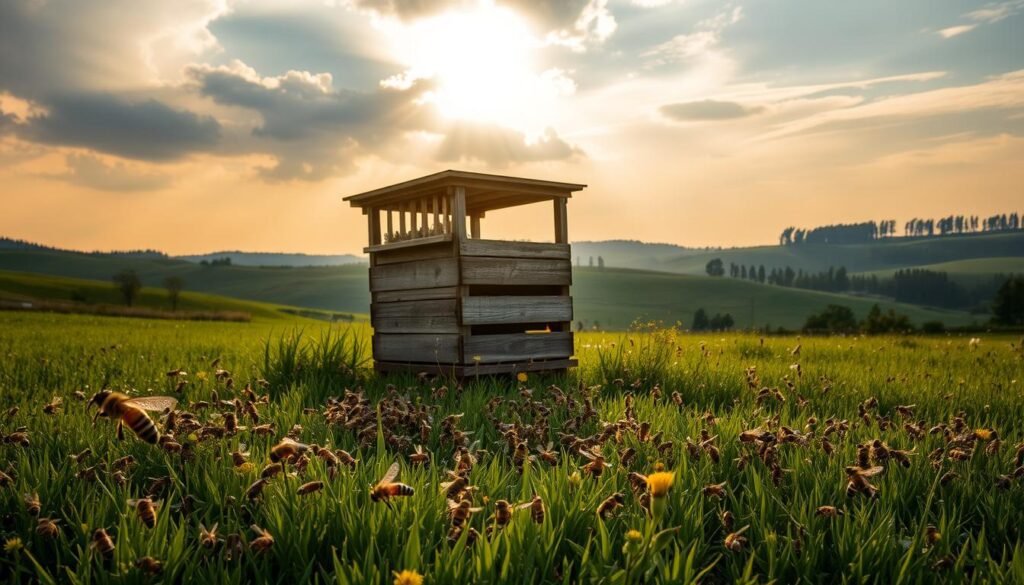
Microclimates and hive productivity
Stabilizing the air inside a colony cuts the daily work bees spend fixing temperature swings.
Insulation that reduces daily temperature and humidity swings boosts early-season honey production, speeds comb building, and lowers Varroa growth by keeping conditions steadier for brood.
A key caution: adding a top vent in an insulated setup can drive high-velocity flow that cools and dries the brood area. That forced evaporation can harm larvae and erase the benefits of insulation.
- Steadier conditions free workers to forage and process nectar, raising overall success during peak flows.
- Stable temperature links directly to brood health and longer worker lifespan, which supports sustained honey production.
- Track brood-area temperature near 93–95 °F during build-up to verify setpoints.
| Setup | Brood Temp Stability | Humidity | Practical Outcome |
|---|---|---|---|
| Non-insulated | Low | Variable | Slower build-up, higher stress |
| Insulated (no top vent) | High | Stable, higher | Earlier honey storage, faster comb build |
| Insulated (+ top vent) | Moderate | Lower due to airflow | Risk of larval desiccation, reduced gains |
For detailed ventilation advice, see this ventilation guide and the regional study on internal conditions in a practical PDF: beehive microclimate research.
Assessing Your Hive’s Microclimate in the Field
Routine measurements let you catch harmful trends while they are still reversible. Start with reliable in-hive sensors or loggers aimed at the brood core to record temperature and humidity over time.
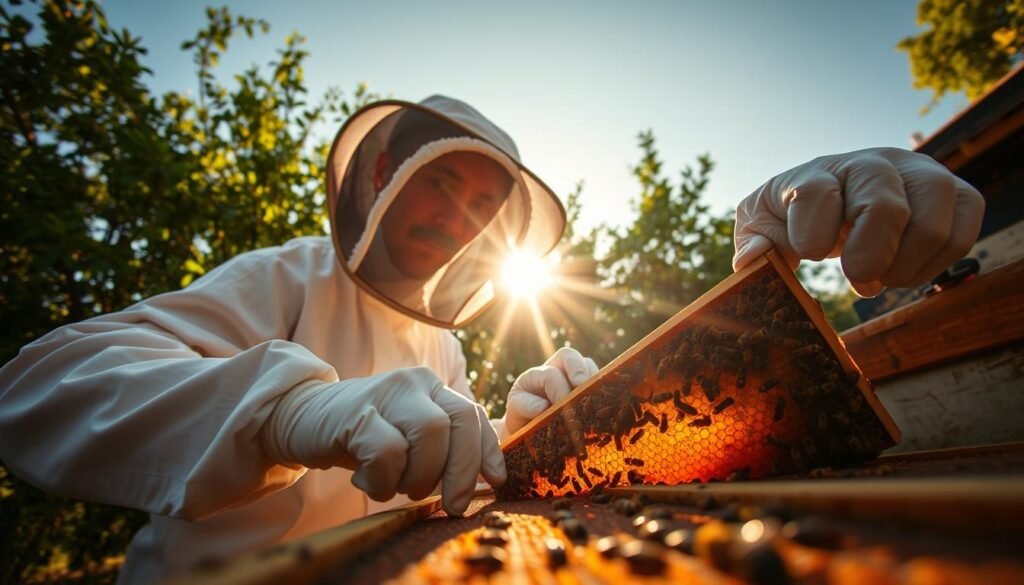
How to monitor internal temperature and humidity patterns over time
Place sensors near brood frames and log at hourly intervals. Look for frequent dips below 93 °F; extended cooling raises malformations in pupae and later behavioral deficits in bees.
Spotting red flags
Watch for tight, prolonged clustering, condensation on inner covers, mold on frames, or scattered brood patterns. These visible problems point to poor insulation, airflow imbalance, or excess moisture.
When to adjust placement, shade, wind protection, and water sources
Audit the place for sun path, wind funnels, and cold pooling. Move hives to avoid trapped cold or strong gusts.
- Immediate fixes: add afternoon shade, install windbreaks, and keep shallow water close by.
- Storm prep: strap or weight boxes before bad weather and inspect after storms.
- Record-keeping: keep a short research log of interventions and outcomes to refine decisions over times.
Building and Retrofitting for Stable Conditions: Insulation, Ventilation, and Materials
Design choices and retrofits determine how well colonies hold heat and moisture through seasonal swings. Translate lessons from natural tree cavities: taller, thicker walls and limited convective gaps cut heat loss and keep humidity higher.
Tree cavities vs thin-walled enclosures
Tree enclosures lose far less heat than standard wooden hives. Heat transfer rates run 4–7× higher in common wood boxes. Measured MCR shows wooden boxes near <0.8 kg·W−1·K versus >5 for tree-like cavities, which keeps small colonies healthier.
Vent placement and airflow
Top vents in insulated setups often produce high-velocity flow that cools and dries brood areas. Favor bottom entrances for wintering and insulated builds to mimic natural cavities.
Material choices and thermal mass
Wood (~3/4″) offers R ≈ 1.2–1.3; polyurethane of equal thickness has R ≈ 6.2. Higher R-value materials yield steadier internal temperature and humidity. Stage honey removal to avoid sudden loss of thermal mass; reheating empty combs costs the colony energy.
- Retrofit tips: add inner insulation to lids, seal gaps, reduce excess headspace.
- Pick materials: composites or polyurethane for stability; polystyrene is light but needs sun protection.
- Verify: use sensors after changes to confirm narrower daily temperature spread and steadier humidity per recent research.
Humidity Management for Brood Health and Varroa Pressure
Maintaining steady moisture near brood frames helps larvae develop without drying or fungal stress. This target complements the thermal setpoint for young bees and reduces early-season losses.
Targeting higher, stable moisture for larval success
Why it matters: Dry air raises desiccation risk and slows brood maturation. Stable humidity preserves cell integrity and lowers larval stress, supporting overall health.
Insulation, entrances, and mite biology
Low-conductance, small-entrance nests reach higher moisture easily. Research shows Varroa destructor fertility drops near an absolute humidity of ~4.3 kPa (~30 g/m³).
- Insulation tightens daily swings in temperature and humidity, speeding comb build and syrup processing.
- Avoid large or top entrances; excess ventilation can bleed moisture and cause evaporative cooling that harms larvae.
- Favor smaller, lower entrances in insulated setups to retain warm, humid air around brood.
Practical checks: log relative humidity at brood level, watch for dry brood or heavy condensation, and pair microclimate measures with IPM to lower chemical reliance and boost colony resilience.
Seasonal Microclimate Playbook Tied to Queen Productivity
Seasonal care guides queen laying and short-term growth. Use targeted changes through the year to protect brood and speed build-up when conditions allow.
Spring
Goal: stabilize internal temperature above ~55 °F to trigger rapid laying.
Reduce swings with added insulation and wind protection once daytime highs pass 55 °F. A well-fed queen can lay 1,500–3,000 eggs per day when pollen and nectar are abundant.
Ensure abundant forage and supplemental feed to compress build-up time before main flows.
Summer
Goal: prevent thermal stress that causes laying to drop when sustained temperatures exceed ~95 °F.
Provide afternoon shade, controlled ventilation, and close water sources. Use vents that cool without stripping humidity near the brood area to keep bees working through hot times.
Autumn
Goal: extend laying windows while stores wane.
Preserve warmth and humidity and offer feed to support late-season rearing of winter bees. This step helps colonies build the adult population needed for overwinter success.
Winter
Goal: prioritize insulation and moisture control without excess venting.
Close unnecessary top vents, use absorbent quilts or lower controlled airflow, and focus on stores. Queens may pause laying, so management shifts from stimulation to shelter and resource protection.
“Sequence interventions through the year so microclimate stability underpins consistent success and overwintering survival.”
| Season | Primary Target | Key Actions |
|---|---|---|
| Spring | Stable >55 °F | Insulation, wind breaks, supplemental feed, maximize forage |
| Summer | Cool brood area | Afternoon shade, targeted ventilation, water provisioning |
| Autumn | Warmth + feed | Retain humidity, supplemental feeding, build winter bees |
| Winter | Insulation + moisture control | Eliminate top vents, quilts, maintain stores |
- Track outcomes by season: compare brood patterns, time to build comb, and flow yields.
- Refine the playbook each year for local climate and forage rhythms.
Apiary Placement and Landscape Practices that Improve Local Conditions
Good site selection uses trees and land contours to make local conditions gentler for colonies. Pick a place that gains morning sun yet has afternoon shade to lower heat stress while keeping early foraging periods productive.
Reduce wind exposure and damp pooling. Use natural windbreaks or install barriers. Set stands on slight rises to shed moisture and avoid cold-air pockets in low areas.
Water, plantings, and landscape features
Provide clean water within short flight distance using shallow basins with pebbles. Keep sources fresh during hot spells.
Diversify plantings with native, drought-tolerant species and stagger bloom times across areas to reduce seasonal gaps. Integrate trees and hedgerows to break gusts and moderate daily swings.
- Coordinate with neighbors and local beekeeping groups to expand forage corridors and limit pesticide exposure.
- After major storms, reassess placement—moving boxes within the same property often improves day-to-day conditions.
| Feature | Benefit | Practical Tip | Impact on hives |
|---|---|---|---|
| Windbreaks / trees | Lower wind speed | Plant rows or use fencing | Less displacement risk |
| Elevated site | Better drainage | Avoid low basins | Reduced damp and mold |
| Water nearby | Shorter trips | Shallow basins with stones | Improved foraging efficiency |
| Forage diversity | Seasonal resilience | Native, staggered blooms | Stable nutrition for bees |
Conclusion
An insulation-first setup often yields faster comb build and earlier honey storage when paired with measured ventilation.
Stabilizing temperature and humidity inside the hive reduces worker energy spent on climate control. That shift supports quicker syrup processing, lower Varroa reproduction, and stronger early-season honey gains.
Practical tips: favor bottom entrances in insulated boxes to retain warm, moist air. Avoid open top vents that can draw out heat and cause larval drying. When removing supers, work to preserve thermal mass or plan for a short recovery period.
Use simple sensors and seasonal checks to guide material choices—polyurethane panels show steadier internal ranges than thin wood. Small, data-driven changes compound over years into more consistent honey production and healthier colonies.
FAQ
What is a hive microclimate and why does it drive honey production?
A hive microclimate is the small-scale environment bees maintain inside the colony. It includes temperature and relative humidity that support brood development and nectar processing. For peak brood rearing, colonies aim for core targets of about 93–95 °F and stable humidity. When these conditions hold, queen laying and worker activity stay efficient, which raises honey output and colony growth.
How do bees create and control thermal homeostasis?
Bees regulate internal conditions with active and passive behaviors. Endothermy from clustered workers produces heat. Fanning at the entrance and hive surfaces increases airflow to cool hot frames. Workers collect and distribute water to boost evaporative cooling when needed. These actions combine to stabilize temperature and moisture for brood survival and foraging efficiency.
How do temperature swings, heatwaves, and storms affect bee health and yield?
Rapid temperature changes and extreme heat force colonies to spend energy on cooling or rewarming, reducing foraging and brood care. Heavy rain and high winds limit flights, cutting nectar inflow. Frequent disruptions also stress queens and increase brood mortality, which lowers honey volume and weakens colonies against pests and disease.
In what ways does climate change alter bloom timing and pest pressure?
Warmer springs and irregular frosts shift flowering windows, creating mismatches between peak forage and brood demand. Extended warm periods can expand pest and parasite ranges, raising Varroa and pathogen pressure. These shifts reduce both the quality and quantity of honey if colonies cannot adjust their buildup and foraging schedules.
How can I monitor my colony’s internal temperature and humidity over time?
Use digital data loggers or hive monitors placed near brood frames to record temperature and relative humidity hourly. Track trends across days and weeks rather than single readings. Compare readings to the 93–95 °F brood band and watch for sustained deviations or sudden spikes that indicate cooling or ventilating problems.
What red flags signal microclimate stress in a colony?
Look for condensed water on inner covers, mold growth, brood spotty patches, and unusually tight clustering despite warm outdoor conditions. Reduced flight activity, higher winter losses, or brood with deformities can also indicate humidity or temperature issues needing intervention.
When should I change placement, shade, wind protection, or water sources?
Adjust placement if monitors show persistent overheating, rapid heat loss, or moisture build-up. Provide afternoon shade in hot summers, add windbreaks in exposed sites, and ensure a nearby clean water source for cooling. Move hives only when necessary and during calm weather to avoid additional colony stress.
How do tree cavities compare to thin-walled boxes for heat loss and convection?
Tree cavities offer substantial thermal mass and insulation, reducing temperature swings and stabilizing humidity. Thin-walled boxes lose heat faster and are prone to drafts, requiring more active thermoregulation from bees. Understanding these differences helps guide insulation and siting choices.
What ventilation strategies work best for insulated setups?
Avoid unrestricted top vents in heavily insulated hives during winter, since warm, moist air can condense and drip onto brood. Controlled top vents with baffling and a raised bottom entrance promote airflow without chilling the cluster. Monitor moisture levels and adjust vents seasonally to balance warmth and dryness.
How do different materials—wood, polystyrene, composite—compare in R-value and colony outcomes?
Solid wood offers moderate insulation and breathability. Polystyrene and polyurethane provide higher R-values, retaining heat well but risking trapped moisture if ventilation is poor. Composite boxes vary by construction. Choose materials that match local climate and pair them with appropriate airflow to protect brood and limit fungal growth.
How does surrounding thermal mass affect colonies at harvest time?
Nearby rocks, water bodies, or large trunks buffer temperature swings and slow cooling after harvest disturbance. Removing too much thermal mass or exposing hives during harvest can destabilize brood climate. Plan harvest timing and handling to minimize sudden thermal shocks to the cluster.
What humidity level should I target for brood health and reducing Varroa fertility?
Aim for steady, moderate-to-high humidity that supports larval development without promoting condensation. While optimal ranges vary, stability matters more than a single target. Excess dryness can desiccate larvae; excess moisture can increase fungal risk and benefit some parasites. Monitor and respond to trends rather than fixed numbers.
How do insulation and entrance size affect humidity and Varroa dynamics?
Good insulation reduces temperature swings, which helps maintain stable humidity. Too-small entrances can trap moisture, elevating fungal risk and possibly favoring Varroa reproduction. Proper entrance sizing and periodic cleaning improve airflow while preserving warmth, lowering overall pest pressure.
What seasonal actions support queen productivity across spring, summer, autumn, and winter?
Spring: keep local temps above about 55 °F near the brood to encourage laying; reduce drafts and encourage foraging. Summer: add shade, provide water, and increase ventilation to prevent laying dips. Autumn: maintain warmth and feed to prolong laying and build stores. Winter: prioritize insulation and moisture control with limited venting to prevent chilling.
Which landscape practices improve local conditions for colonies?
Plant diverse forage with staggered bloom times to smooth nectar flows. Add windbreaks and position hives for afternoon shade in hot regions. Provide reliable, clean water nearby and use conservation-minded plants that retain soil moisture and support pollinators year-round.
How should I prioritize interventions when monitoring shows multiple problems?
Address immediate threats first: stop active condensation, remove wet insulation, and ensure the cluster has warmth. Next, correct ventilation and water access, then adjust siting or add thermal protection. Treat pests and boost nutrition after stabilizing the internal environment to improve resilience.