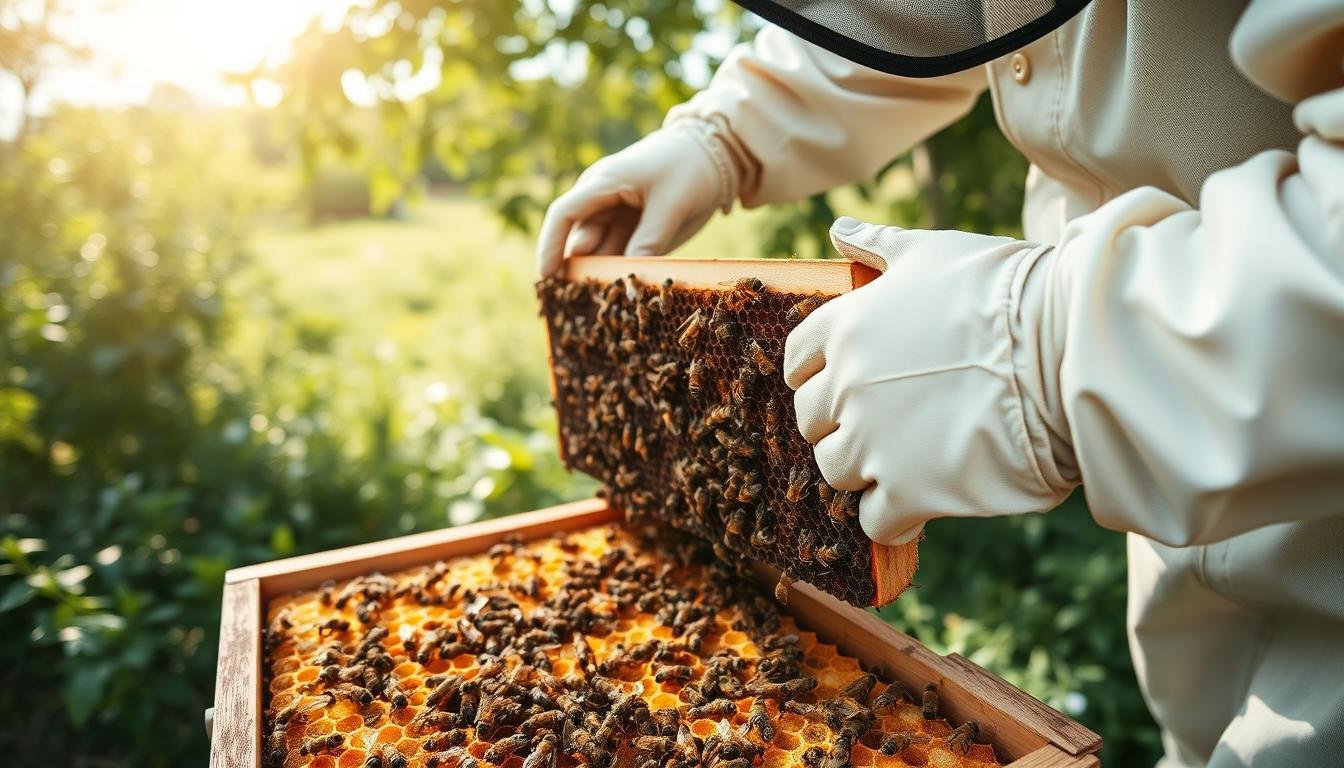
This short guide explains how to check a hive while keeping the brood chamber stable and the colony calm. You will learn practical steps that preserve heat, humidity, and pheromone balance so bees stay focused on foraging, not recovery.
Start with cool smoke delivered in three directed puffs at the entrance, then wait about a minute before opening. Stand beside the hive when lifting heavy boxes and use edges or a lid to avoid crushing bees under frames.
Create space before removing the first frame so bees do not roll with the comb. Know how to tell brood cappings from honey cappings and recognize drone “bullet” caps. Watch for sunken or perforated cappings — these are red flags for foulbrood.
When you finish, re-space frames tightly with extra room at the hive walls and reassemble boxes and excluders while keeping edges clear of bees. For a hands-on primer, see this useful walkthrough: your first brood inspection.
Key Takeaways
- Use cool, short puffs of smoke at the entrance and wait to approach.
- Stand beside the hive when lifting to avoid crushing bees.
- Create space before pulling the first frame to prevent rolling bees.
- Learn capping differences; sunken or perforated cappings need attention.
- Re-space frames and reassemble carefully to keep the colony orderly.
Why minimal‑disturbance hive inspections matter
Every time you open a colony you change the microclimate that keeps young bees healthy. Heat and humidity vent quickly, and scent cues that guide care can dilute when boxes are shifted.
Protecting heat, humidity, and pheromone balance in the brood nest
Venting the nest lowers brood temperature and reduces relative humidity. That slows development. It also disperses brood pheromones that help workers feed and clean cells. Less interruption keeps the queen laying steadily and supports uniform growth.
Stress reduction for calmer, safer colonies
Beekeepers who open the brood area only when needed see calmer colonies across the season. Gentle technique and less smoke cut alarm responses. That means fewer accidental stings and a safer work area for neighbors and visitors.
- Purposeful checks maintain disease resilience by reducing stress on housekeeping duties.
- Watching entrances and windows often gives the data you need without long inspections.
- Small reductions in intrusion compound over the season for steadier comb building.
Understanding beekeeper intent and inspection timing
Before opening a colony, ask whether your observation will change your plan. Define the purpose for every visit so you only open boxes when you have a clear action to take.
Use outside cues first. Traffic at the entrance, pollen loads, and weight often tell you enough about colonies. If you only need to confirm the queen is present, watching workers carry pollen is a safer proxy than pulling frames.
When a visual check is enough
Observe entrances, windows, and floor debris before deciding to open. If no intervention is required, defer hands-on work and protect the brood area from needless exposure.
Seasonal cadence: spring and summer vs. winter limits
For active season care, plan hands-on checks about every 10 to 14 days when you expect to act. In winter, limit openings to one or two brief checks to avoid chilling the nest.
- Stage equipment and notes in advance to shorten any hive inspection.
- Align visits with moderate weather and the warmest part of the day; avoid cold or rain.
- When you must open, work from the bottom box upward to keep parts in order and limit disturbance.
| Season | Cadence (days) | Primary action |
|---|---|---|
| Spring / Summer | 10–14 | Hands-on when action is planned; add space or treat issues |
| Winter | 30–90 (1–2 checks) | Very brief checks; protect warmth and queen laying |
| All seasons | As needed | Observe first; only open if it changes your decision |
Ask before you act: will pulling frames alter your next step? If not, rely on outside signs and postpone the disruption. For more detailed protocols and timing advice, see this guide to hive inspections.
Reading the hive from the outside: low‑intervention techniques
A brief period of focused observation at the entrance can answer many questions about stores and temperament. Watch quietly for patterns rather than reacting to one pass. This gives clearer signs and reduces unnecessary work.
Entrance cues show traffic flow, pollen return, and bearding. Note how many bees come and go, how calm they fly, and whether pollen loads are steady. Pollen coming in often signals active brood rearing and a queen-right colony.
Watching traffic, pollen, and bearding
Stand to the side so you do not block the flight path. Count or time for several minutes to establish the day’s rhythm.
Bearding or heavy clustering at the entrance can indicate heat stress or crowding. Drones at the landing board are normal during warm spells.
Robbing signs and simple defenses
Look for frantic flight, fighting at the entrance, or wasps taking honey. These are clear signs of robbing.
Reduce the entrance temporarily to help the colony defend itself without opening boxes.
Hefting and weight checks
Lift the back of the box gently to judge weight. A light feel may mean low stores and the need to feed. Hefting avoids exposing the nest and gives quick data for winter or dearth decisions.
- Track changes over days; each colony has its own baseline.
- Record weather, forage, and your notes to build trends for future inspections.
- Occasional ejected larvae can indicate good hygienic behavior in the bee population.
Slow, calm observation is powerful. These low-intervention checks reduce the need for invasive follow-ups and keep colonies stable.
| Check | What to watch | Action if abnormal |
|---|---|---|
| Traffic | Rate in/out, calm vs. erratic flight | Record pattern; open only if other signs suggest problem |
| Pollen | Consistent pellets returning | Likely queen-right; delay invasive checks |
| Bearding / crowding | Large clusters at entrance or front of box | Provide ventilation or add space; avoid sudden openings |
| Robbing | Fighting, wasps, frantic bees | Reduce entrance, place robbing screens, do not open boxes |
| Weight (heft) | Box feels heavy, medium, or light | Plan feeding or honey harvest accordingly |
For more on low‑intervention checks, see low-intervention checks, and for airflow considerations consult this ventilation guide.
Using windows and floor detritus to avoid opening the brood nest
Windows and slide-out trays offer quick, low-impact checks that save heat and scent in the nest. A short glance can tell you if action is needed, cutting the need to pull a frame.

Reading capped comb through a viewing strip
Capped honey looks flat-topped and can be white or dark depending on flow. Capped brood appears slightly domed and light brown. Full combs often show golden honey right against the window, so you can judge stores and whether supplemental sugar feed is needed.
What slide-out floors reveal
White wax crumbs mean bees uncapped honey. Light-brown crumbs signal recent brood emergence. Floors also collect mite drops and let you estimate varroa pressure non-invasively.
- Insect droppings are hard pellets; mouse droppings are soft and pointy.
- Remove the insert periodically, review debris, then return it so bees can clean and reduce pest shelter.
- Track detritus patterns over weeks to follow cycles of brood and stores and avoid unnecessary openings.
| Observation | Visible clue | Likely meaning |
|---|---|---|
| Window comb | Flat white/dark caps | Honey stores present |
| Window comb | Domed light-brown caps | Developing brood |
| Slide-out tray | White wax crumbs | Uncapping or feeding activity |
| Slide-out tray | Light-brown crumbs or shells | Brood emergence |
| Slide-out tray | Dead mites | Varroa monitoring and action may be needed |
Weather, season, and time of day: conditions that keep brood safe
Work on days with mild temperatures to protect the nest’s internal heat and humidity. Choose dry, calm weather so you do not chill developing young or force the colony to spend energy recovering.
Target the warmest part of the day for any opening. Short windows of sun help bees re-establish brood nest temperature quickly and cut the time the hive is exposed.
Spring and summer provide safer windows for planned work. In winter, limit visits to rare, very brief checks and only when essential.
- Reschedule if wind, rain, or falling temperatures might extend your work time.
- Prepare tools and notes in advance to shorten how long the hive stays open.
- Use cool, light smoke to calm bees without driving them deep into frames and prolonging the task.
- Monitor forage flows seasonally—during dearth bees may be more defensive and an opening should be shorter.
Season-aware planning prevents chilled brood, drift, and needless alarm. Aligning your timing with good weather and brief work windows is a simple step that protects productivity and colony health.
Gear that minimizes disruption
Packing the right tools and planning where each box will sit makes brief checks much smoother. The right kit reduces fumbling and shortens how long the nest is open.
Protective wear and calm work
Choose gear that gives you confidence. When a beekeeper feels secure, movements are steady and inspections finish faster. Simple, well‑fitting gloves and a veil that keeps good sight lines help you move with purpose.
Essential tools and staging
Carry a sharp hive tool to separate stuck parts and remove burr comb gently. A small frame rest or bracket lets you stage the first frame safely so bees do not roll with comb.
- Designate where each box and frame will sit before you lift anything.
- Set boxes on their edges to avoid crushing returning bees.
- Bring notes or a checklist so you finish every task in one brief inspection.
Cool smoke, not clouds
Use targeted puffs. Deliver three short puffs at the entrance to calm guards; avoid heavy clouds that send bees deep into frames. Rest a hot smoker on a metal lid and keep fuel handy so it does not go out mid‑work.
Practice smooth motions. Quick, deliberate handling of each frame protects comb integrity and saves time. The right things, prepared ahead—protective wear, hive tool, smoker, notes—translate directly into shorter, cleaner inspections.
Inspecting a hive without disturbing brood
Decide which checks will change your next step and skip anything extra. This focus makes each inspection purposeful and shorter.
Plan, prepare, and move with intention
Lay out tools and a checklist before you lift any boxes. Know which frame or window you must view so you do not pause mid‑task.
Create space at the top of the box before removing the first frame. That prevents rolled bees and protects comb faces.
Limiting duration and keeping boxes organized
Place boxes on their edges while you work so returning workers pass safely. Keep each frame staged briefly and return it promptly.
Press frames tightly together when reassembling, leaving any extra gap at the walls to discourage burr comb. This small step reduces gaps that trap bees.
Use windows and slide‑out trays to answer many questions without handling brood frames. Read the floor insert for crumbs, mite drops, and brood emergence signals to avoid unnecessary openings.
- Plan the workflow and follow it in order to cut inspection time.
- Move steadily; steady motions are faster than rushed corrections.
- Stop as soon as you confirm your objective — closing quickly helps restore nest temperature.
| Action | Why it helps | Quick tip |
|---|---|---|
| Pre-flight checklist | Keeps the visit direct | List checks in order |
| Create space first | Prevents rolling bees | Lift lid, pry gently |
| Use windows/tray | Avoids many openings | Record observations |
Step‑by‑step: opening, spacing, and handling frames gently
Start calmly. Deliver three short puffs of cool smoke at the entrance and wait about one minute. Stage covers, tools, and components so each piece has a known place before you lift anything.
Disassemble from the top. Lift lids and boxes in order, setting each box on its edge to avoid crushing bees underneath. This gives access to the bottom area while keeping returning workers safe.
Creating safe working space
Gently shift frames to open a small gap before you pull the first frame. This prevents rolled bees and protects comb faces.
Holding and returning frames
Use the J‑hook on your hive tool to lift a frame straight up. Hold frames over the box, keep them vertical, and avoid tipping fresh, heavy comb sideways.
- If you spot the queen, keep that frame in the hive body for the remainder of the visit.
- Read comb for eggs and very young larvae with minimal tilt, then return each frame in the same orientation.
- Slide frames down slowly, watch bottom corners, and press frames snugly together, leaving extra space at the walls.
- Clean burr comb only when needed to protect comb serviceability.
| Action | Why it helps | Quick tip |
|---|---|---|
| Three puffs at entrance | Calms guards | Wait one minute |
| Set boxes on edge | Protects returning bees | Work from top down |
| J‑hook lift | Prevents comb shear | Keep frame vertical |
What “healthy” looks like without pulling every frame
You can gauge overall strength by sampling a few well‑chosen frames. Quick checks reduce stress on the nest and still reveal clear signs of colony health.
Solid patterns, new workers, and nearby pollen
Compact brood patterns with few empty cells usually mean a productive queen. Spotting tiny eggs or pearly larvae confirms an active cycle.
Seeing recent worker emergence and steady traffic helps you trust the colony status without full handling. A pollen arc above brood patches shows nurse bees keep food close.
Cappings and cell cues
Worker caps are modestly domed. Drone cells stick out in a distinct bullet shape. Honey cappings sit flat and opaque, so they rarely mimic developing young.
Check subset frames and watch for warning signs
Inspect a sample of frames and compare results to past notes to spot trends. Irregular patterns, dead spots, or many perforated caps warrant deeper review.
“A steady laying pattern and balanced brood-to-food layout are the best early indicators of long‑term health.”
| What to view | Positive sign | When to act |
|---|---|---|
| Sample frame | Compact brood, few gaps | Only if gaps grow or repeat |
| Window / entrance | Pollen arcs, calm traffic | Investigate if traffic drops or frantic |
| Cappings | Flat honey caps, domed worker caps | Probe if many sunken or perforated |
For guidance on deeper checks, consult the deep-check guidelines. For swarm-season planning, see this swarm preparation resource.
Spotting problems early with minimal intrusion
Small, repeatable signs at the entrance or on the floor can reveal serious colony issues. Look for patterns over days rather than reacting to a single moment.
Sunken or perforated cappings and when to escalate
Sunken, dark caps with tiny holes point to foulbrood or other disease. If you see these on windowed comb or on a pulled frame, stop and document the location.
Escalate quickly: move only the affected area and notify your local bee inspector before wide handling. Avoid heavy smoke and limit how much you open to save heat and protect larvae.
Varroa signals: entrance behavior, floor counts, and brood breaks
Use the slide‑out tray to count mite drops over several days. That trend is more telling than one tally.
Distressed bees crawling at the landing or odd forager behavior can justify a narrow, targeted inspection. Consider natural brood breaks after swarming; these pauses help reduce varroa and mites reproduction over time.

| Indicator | What it suggests | Action |
|---|---|---|
| Sunken/perforated caps | Possible foulbrood disease | Document, limit handling, escalate to authority |
| Increased mite drops | Rising varroa pressure | Track counts; plan treatment if trend persists |
| Crawling, weak bees | Systemic stress or pests | Do a focused check of affected frames only |
Season‑smart inspections: spring swarms, summer flow, winter checks
Plan seasonal checks so each visit answers a specific management question. That keeps you from opening boxes just to look. Use outside cues and targeted views to decide if a hands‑on hive inspection is truly needed that day.
Spring
Watch for swarm signals. Look for charged queen cups, sudden crowding, or rapid buildup. Add boxes gently to give space while protecting warmth.
When you add boxes, set them so frames align and bees can clear edges. This prevents crushed workers and limits comb repairs later.
Summer
During flow, manage ventilation and avoid overheating. Bearding and heavy congestion are signs to add top ventilation or an extra shallow to process nectar.
Heft the colony to judge stores and weight before opening. Only pull frames when the information will change your action.
Winter
Keep checks rare and very brief. Time any opening for the warmest part of the day to preserve nest temperature.
Use slide‑out trays to monitor varroa and mites across the year and rely on entrance and window cues instead of frequent handling.
- Rely on windows, floors, and traffic counts for most decisions.
- Record concise notes each visit so trends guide your yearly timing.
- Let colony cues, not the calendar, dictate interventions to reduce stress and support long‑term health.
| Season | Focus | Quick action |
|---|---|---|
| Spring | Swarm prevention, space | Add boxes carefully; watch queen cups |
| Summer | Flow management, heat | Improve ventilation; heft for stores |
| Winter | Warmth, minimal disturbance | One or two brief checks on warm days |
Closing the hive correctly to preserve brood nest integrity
Finish every visit with steady, deliberate reassembly. Return each frame in its original orientation and press frames snugly so normal bee space resumes. This preserves the brood nest layout and supports quick recovery.
Scan for the queen before you close. If she’s on a frame, keep that frame in the box so the colony stays queen-right. Check bottom corners as you lower each frame to avoid crushing any bee under the end bars.
Re‑spacing frames, clearing edges, and safe queen management
Leave a little extra room at the walls; press the central frames together and keep the edges freer. Scrape only burr comb that blocks seating—leave helpful comb that guides orientation for future openings.
Reassembling boxes and excluders without trapping bees
Use a light puff of smoke at the box edges to move bees clear before you seat an excluder or drop a box. Align boxes squarely and lower them straight down so outer edges do not pinch workers at the entrance or along top bars.
- Return frames in the same order and orientation.
- Check the bottom and ends as each frame settles.
- Seat components evenly to reduce drafts and stabilize temperature.
- Take a final scan across seams to confirm no bees are trapped.
Clear tools and step back. Let the colony rewarm and reestablish scent cues. Careful closure keeps the nest ready for normal activity and helps protect developing young.
Conclusion
Finish each visit by closing methodically so the colony regains warmth and scent fast. Use three short puffs of cool smoke at the entrance, move steadily, and lower boxes without pinching returning bees.
Trust outside cues first: entrances, windows, and floor debris give clear information. Brief, season‑aware checks—rare in winter—keep eggs and the queen safe and reduce the need to open boxes.
Recognize healthy patterns and honey cappings quickly. If you see sunken or perforated caps, stop, document the location, and escalate rather than repeating broad inspections. Re‑space frames and press central frames snugly when you finish.
Keep notes across the year so each inspection has a clear goal. Small refinements—lighter smoke, tidy reassembly, focused checks—add up to calmer bees, healthier colonies, and better honey. For timed chores and seasonal planning see seasonal tasks.
FAQ
What is the goal of a minimal‑disturbance inspection?
The goal is to gather key colony information—queen presence, brood pattern, stores, and signs of disease—while preserving nest heat, humidity, and pheromone balance. Keep checks short and focused to reduce stress and maintain colony rhythm.
When is a simple visual check enough instead of opening boxes?
Use a visual check when you need to confirm foraging activity, assess entrance traffic, or verify pollen return. If colonies appear calm and you see normal incoming bees with pollen, you can often defer an internal inspection until a planned time.
How do seasonal timing and weather affect inspection decisions?
Inspect during warm, dry, low‑wind conditions in spring and summer. Avoid opening boxes in cold or wet weather and limit checks in winter to brief external observations to protect brood from chilling.
What should I look for at the entrance during a low‑intervention check?
Watch for steady traffic, pollen loads on returning foragers, bearding behavior, and unusual aggression. Heavy pollen and steady workers suggest healthy brood rearing; disoriented or lethargic bees can signal stress or disease.
How does hefting help estimate stores without opening frames?
Lift the side or back of the stacked boxes to feel the colony’s weight. A light lift may indicate low honey reserves; a heavy, solid lift usually means good stores. Use this with other signs before deciding to open boxes.
Can observation windows and slide‑out floors replace full inspections?
Observation windows and removable floors provide valuable cues—capped honey vs. brood appearance, wax cappings, and mite fall—allowing many assessments without disturbing comb or brood nest structure.
What do capped honey and capped brood look like through a window?
Capped honey is shiny and waxy with a uniform, paler color. Capped brood has a matte, slightly domed appearance and may show cell cappings with tiny larvae outlines or emerging adults nearby.
How can slide‑out floors reveal colony health indicators?
Floors collect debris like wax crumbs, brood cappings, and varroa mite drops. Regularly check and record what you find to spot trends in mite levels or signs of brood disease without lifting frames.
What gear helps minimize disruption during checks?
Use a snug veil, gloves if preferred, a hive tool, a small smoker with cool, brief puffs, and a notebook or phone for notes. Well‑fitting equipment lets you work quickly and efficiently with minimal agitation.
How should smoke be used to calm bees without overwhelming them?
Apply a few gentle puffs at the entrance and between boxes, wait a moment, then proceed. Avoid continuous heavy smoking; cool, measured smoke reduces defensiveness while keeping bees in the brood area.
What’s the best approach to opening boxes while protecting nest conditions?
Plan each move, remove only the necessary boxes, and keep gaps narrow. Work from the side, lift frames gently, and avoid extended exposure of the brood nest to cold or drafts to maintain heat and humidity.
How do you avoid rolling bees when removing the first frame?
Create a slight spacing between boxes before lifting the first frame, use a gentle lift and tilt technique, and cup bees out carefully with the top bar or gloved hand to prevent crushing and rolling bees off comb.
Which visual cues indicate a healthy nest without examining every frame?
Look for solid brood patterns, regular emergence activity, pollen arcs at the edges, and full honey stores. Consistent forager return and calm temperament also indicate a functioning colony.
What signs suggest disease or stress that require a deeper inspection?
Sunken or perforated cappings, foul odor, spotty brood patterns, sudden drop in forager return, or increased mite fall are triggers to escalate to a full inspection and possible sampling for American foulbrood, European foulbrood, or varroa.
How can I detect varroa problems without pulling many frames?
Monitor entrance behavior, conduct periodic floor mite counts, and watch for increased grooming or deformed wings. Combine these signals with timed inspections or sugar shakes when necessary for confirmation.
How do inspection needs change across spring, summer, and winter?
Spring checks focus on swarm signs and adding space while protecting brood heat. Summer inspections manage honey flow and ventilation to avoid overheating. Winter checks should be rare, brief, and aimed at ensuring stores and entrance clearance.
What are safe closing procedures to preserve nest integrity?
Re‑space frames and boxes carefully, realign inner covers and excluders, and avoid trapping bees between boxes. Replace outer covers and reduce entrance size if needed to maintain warmth and limit robbing risk.
How long should a minimal, non‑invasive check take?
Aim for five to fifteen minutes for a focused external or partial check. Longer durations increase chill risk and disturbance. Prepare tools and notes beforehand to keep the visit brief and informative.