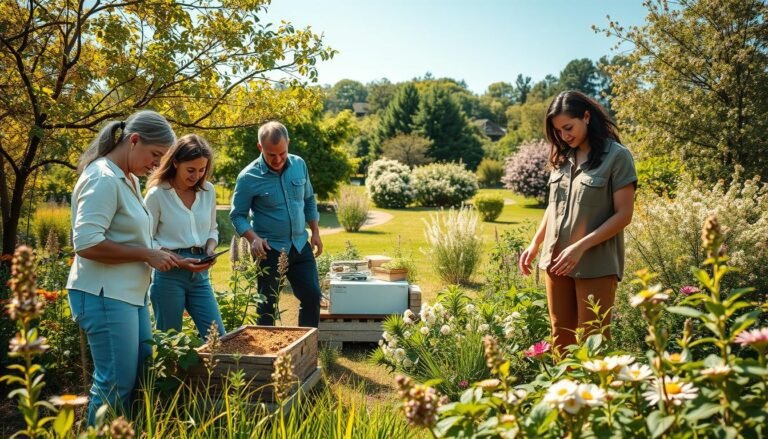
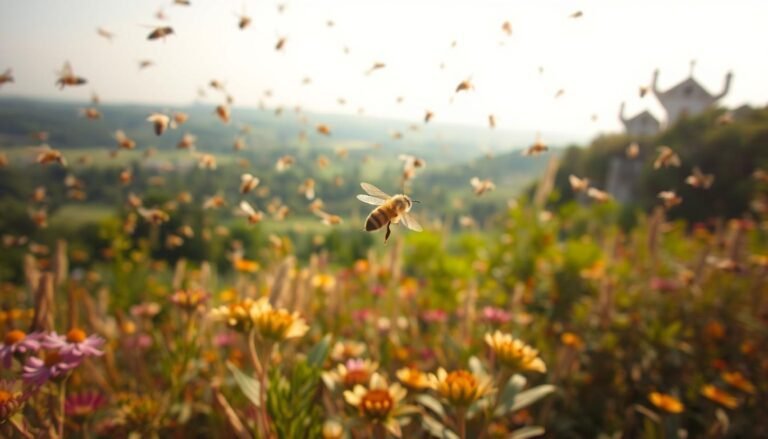
Drifting in an apiary can hollow out middle colonies and swell end hives, cutting production and raising disease risks.
Beekeeping choices — layout, markings, and entrance management — shape where a foraging bee calls home after flight. Long, identical rows and strong winds make navigation harder. Guard bees may admit outsiders when chemical cues match or when stores are low.
Simple fixes work: stagger placements, add color and landmarks, and swap boxes when imbalance shows. Protect queen safety during mating days, since a lost queen may enter the wrong hive and change a colony’s future.
For further reading on causes and field methods, see a practical guide at preventing bee drifting, and for seasonal prep consult swarming preparation.
Key Takeaways
- Layout matters: avoid long, identical rows; use staggered or clustered placements.
- Visual cues like color and patterns help returning bees find their hive.
- Monitor colony balance and swap positions when an imbalance appears.
- Guard behavior and store levels influence acceptance of outsiders.
- Protect queens during mating flights; a wrong return can alter colony outcomes.
Understanding Bee Drifting and Why It Matters for Your Apiary
Mistaken returns by foragers can reshape an apiary’s balance in a single day. Drifting occurs when a foraging honey bee enters the wrong hive by error. This is not the same as robbing, which is a deliberate raid for honey and often involves fighting at the entrance.
What drifting looks like and why it differs from robbing
Drifting is usually accidental. Workers learn their home during orientation flights, but busy yards, similar boxes, and strong crosswinds can send them the wrong way. Drones drift often, and young workers are at higher risk during early flights and first foraging days.
- Drifters may be admitted more easily if they carry nectar or pollen.
- Robbing shows aggressive behavior and spilled honey near the entrance.
- Over time a drifter adopts the new colony’s odor and blends in.
Impacts on population, disease spread, and honey production
Repeated errors weaken some colonies and enrich end-of-row hives. The net result can be lower brood rearing and lost honey production. Drifters can ferry Varroa, viruses, or Nosema between colonies, speeding infection across the apiary.
| Sign | Cause | Consequence |
|---|---|---|
| Taller end hives | Repeated incoming workers | Imbalanced workforce, higher yield |
| Weak middle colonies | Worker loss from drift | Reduced brood and foraging |
| Pathogen spread | Drifters carrying mites/viruses | Faster disease transmission |
| Guard acceptance | Nectar/pollen loads, chemical cues | Higher intruder admission rate |
Understanding these factors helps protect the queen and the colony’s future. Small layout and entrance changes reduce mistakes and guard against lost production and disease spread.
Core Factors That Drive Drift: Environment, Layout, and Colony Behavior
Environmental forces and yard design shape where a returning bee lands. Prevailing winds and sudden storms can push heavy, nectar-laden bees off course. Under pressure, bees choose the nearest visible entrance rather than their exact home.
Spring surges and big nectar or pollen flows add crowding and weight. Flight precision drops on busy days, and mistakes rise during peak flights and orientation flights.
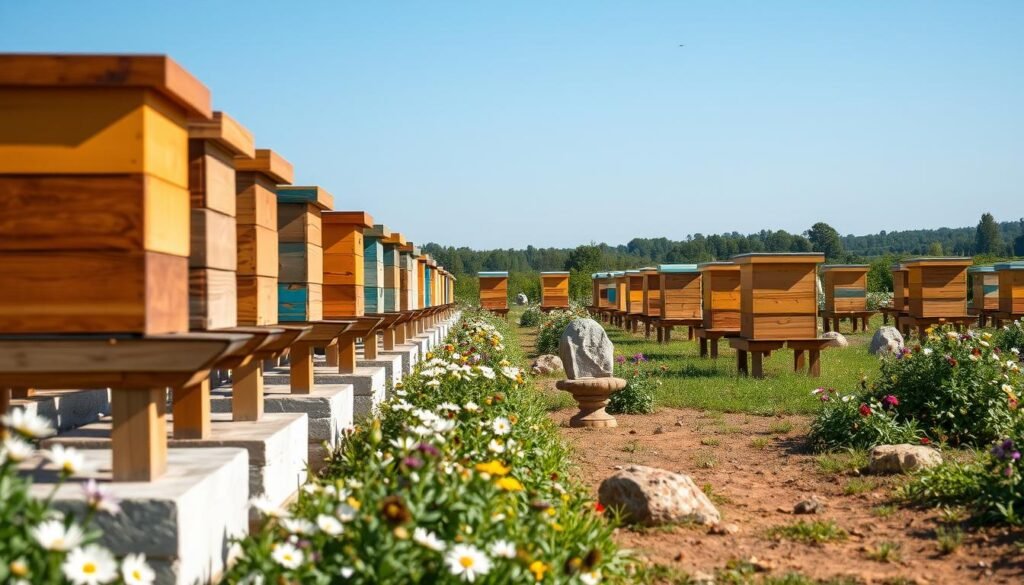
Layout and visual factors
Long, straight rows of identical boxes increase confusion. Hives placed close together make end colonies visible targets, often gaining workers while middle colonies lose them.
Behavioral drivers
Drones are frequent drifters and young workers remain at risk during orientation flights. Guard bees admit outsiders when pheromones or incoming resources match, and drifters quickly adopt the new colony scent.
- Practical fix: add contrasting paint or a simple landmark—an upright log in front of a middle hive can stop drift in a few days.
- Management note: treat spacing and flight lanes as active choices; small changes yield measurable results for colonies and queen safety.
How to prevent drifting between hives: a step-by-step layout and design guide
Small spatial changes and bold visual cues make orientation easier for foragers and queens. Position boxes in clusters with 3–6 feet between each hive to cut visual sameness. Break long lines into small groups so end colonies do not hog incoming workers.
Space and stagger
Place hives 3–6 feet apart and avoid rows where boxes sit too close together. Clusters reduce funneling and calm traffic on busy spring flights.
Point entrances different directions
Rotate hive faces so entrances aim different ways. This spreads flight lanes and lowers last-second misses at the entrance.
Use contrasting colors and landmarks
Paint simple patterns near entrances using colors bees see well; avoid red. Add shrubs, posts, rocks, or a log as landmarks so each colony has a memory anchor.
Windbreaks and mating nucs
Install screens, fences, or vegetation to buffer crosswinds. For mating nucs, favor two-way pairs, wider spacing, and distinctive markings.
“In practice, paired layouts with bold marks have produced higher queen return rates,”
which aligns with field observations.
- Reserve clear pathways for beekeepers during inspections.
- Adjust entrance size to balance traffic and ventilation.
- Watch resources and reinforce cues if stores drop.
These layout choices simplify orientation, lower drifting risk, and help protect queen return rates. For spacing details consult multiple hive spacing in the apiary.
Corrective Actions When Drifting Is Already Happening
Take swift, deliberate steps during active flight periods to rebalance your yard. Small moves at the right time can shift returning foragers and shore up weakened colonies. Apply each tactic with calm inspections and consistent records.

Swap positions during peak foraging
When end hives have ballooned and middle hives have thinned, swap strong and weak boxes in the middle of a busy foraging day.
This redirects returning bees to the new location and quickly boosts the thin colony’s population and activity.
Tune entrance size and placement
Use entrance reducers on overcrowded hive mouths to slow incoming traffic.
Open weaker hives wider so their foragers can re-enter without bottlenecks. Adjust placement so flight lanes do not funnel toward a single hive.
Rebalance resources and consider requeening
If one-way movement persists, move frames of bees, brood, and stores from strong colonies into weaker ones. This stabilizes workforce and brood care fast.
When brood patterns remain poor, requeening the affected colony often restores steady worker replacement and long-term growth.
- Monitor honey intake and foraging after changes to confirm production rises.
- Time interventions away from weather fronts and mating flights for best results.
- Observe entrances for several days and document repeat gainers or losers.
Consistent management and logs pay off. Use these corrective actions as part of a routine response plan so population imbalances become rare, not recurring events.
Monitoring, Disease Risk, and Seasonal Management in the United States
A steady monitoring routine helps spot population shifts before they harm colonies. Keep short daily notes on hive strength, honey stores, and entrance traffic. Small records reveal trends across the yard in just a few days.
Track signs of misplaced returns
Look for end-of-row hive growth and weak middle hives. Marking drones with a paint pen in spring and checking neighboring boxes over several days quantifies movement.
Limit pathogen spread with proactive steps
Drifting moves Varroa, Nosema, and viruses between hives. Track worker traffic, treat Varroa on a schedule, and time interventions when foraging is high.
- Field test: mark drones, note where they show up, and log results by location.
- Visual aids: bold colors and clear landmarks at each entrance improve homing.
- Pesticide caution: where navigation-affecting chemicals are present, increase spacing and windbreaks.
- Mating nucs: use distinctive marks and spacing to raise queen return rates.
For integrated pest timing and further beekeeping IPM guidance, see the beekeeping IPM guide.
Conclusion
Design your apiary so every hive stands out; that clarity pays in steadier populations.
Give each hive a clear landmark and different colors. This helps a bee find her home and lowers visitor errors.
Queen safety rises when mating nucs use wide spacing and bold marks. Two-way pairs with distinct patterns have shown high queen return rates in field runs.
Guard leniency and shared resources can spread mites and disease. Monitor entrances, note population shifts, and adjust windbreaks, clusters, and entrance directions promptly.
Repeat the steps that work, record results by season, and refine the way you place colonies. For deeper review of mite movement and drift studies, see the bee drift and mite immigration study.
FAQ
What exactly is bee drifting and how does it differ from robbing or normal foraging?
Bee drifting occurs when worker bees enter the wrong colony and remain or integrate there. It differs from robbing, which is aggressive theft of honey from weakened colonies, and from normal foraging, where workers return to their own hive. Drifters often result from orientation errors, visual confusion caused by identical hive cues, or crowded apiary layouts.
Why should beekeepers care about drift in their apiary?
Drift can reduce honey production, shrink weak colonies further, and increase spread of pests and pathogens like Varroa, viruses, and Nosema. It also distorts population balance across hives, making management and accurate record keeping harder during spring and peak nectar flows.
What environmental and layout factors encourage bees to misorient and switch hives?
Straight rows, tight spacing, uniform colors, and similar entrances make navigation difficult. Windy conditions, low visibility during certain seasonal nectar flows, and lack of distinctive landmarks also increase orientation errors. Drones and some foragers may repeatedly visit multiple colonies, raising drift risk.
How far should I space hives and what layout works best to reduce visits to the wrong nest?
Space hives roughly 3–6 feet apart within clusters, and avoid long, straight lines. Staggered groupings or blocks with varied orientation reduce cross-traffic. Greater spacing between certain units, like mating nucs, helps prevent serial drifters from invading weaker colonies.
Can changing entrance direction and size help keep workers home?
Yes. Pointing entrances in different directions breaks up common flight paths and reduces confusion. Tunable entrance reducers let you manage traffic flow during peak flights or bad weather. Small, controlled entrances help guards screen incoming bees more effectively.
Are hive colors and markings effective at reducing wrong-colony returns?
Distinctive colors, shapes, and high-contrast patterns give bees visual cues to locate home. Avoid using red because bees don’t see it well. Use blues, yellows, and whites plus unique markings or numbered tags so foragers and orientation flights can tell colonies apart.
What simple landmarks or barriers work best as visual guides for bees?
Low vegetation, rocks, painted signs, screens, and small windbreaks create reliable reference points. Placing objects near individual hives or clusters helps bees learn local landmarks and reduces long-range orientation errors during foraging and mating flights.
How should I manage mating nucs and queen introductions to avoid serial drifters?
Pair mating nucs with extra spacing, unique markings, and two-way entrances when possible. Avoid placing nucs in tight rows next to strong colonies. Monitor drones and marked workers for signs of serial drifting and isolate or relocate problem units until orientation stabilizes.
What corrective steps help when drift is already harming weaker colonies?
Swap positions of strong and weak hives so guards adjust; tighten entrance sizes on weak colonies; redistribute frames of brood and stores to rebalance resources; and consider requeening units with poor orientation or persistent drift problems to restore colony cohesion.
How can I spot drift early when monitoring my apiary?
Look for rapid growth at row ends, weak colonies in middle positions, unexpected numbers of foreign-marked drones or workers, and uneven honey stores among neighboring hives. Regularly inspect entrances and track colony populations during spring buildup and summer foraging peaks.
What disease risks increase when bees frequently enter other colonies?
Movement of workers raises transmission of Varroa mites, deformed wing virus, chronic bee paralysis virus, Nosema, and other pathogens. Limiting cross-colony traffic and practicing good Varroa control and sanitation reduces outbreak potential across the apiary.
Are there seasonal timing tips that lower the chance of orientation errors?
During early spring buildup and major nectar flows, increase spacing and visual differentiation because foraging intensity and drone activity rise. In hot or windy seasons, add windbreaks and orient entrances to shelter flight paths. Adjust management as population and resources shift throughout the year.
Should I mark or paint individual workers or drones to track drift patterns?
Marking a sample of foragers or drones helps identify serial drifters and understand traffic patterns. Use non-toxic paints or numbered tags and record sightings during inspections; this data informs targeted fixes like relocating problematic colonies or altering entrance orientation.
What long-term practices keep an apiary balanced and resilient against misorientation?
Maintain varied hive appearance, staggered layout, active Varroa and disease control, regular resource balancing, and vigilant seasonal monitoring. Educate staff on observation cues and rotate colony positions periodically during major foraging periods to reduce chronic drift.