Practical beekeeping is learned at the hive. Classroom talks give useful information, but confidence grows when a mentor guides a beekeeper through inspections, Varroa timing, and winter prep.
This guide offers a clear, step-by-step framework for mentors who want measurable results: higher overwintering rates, steadier local nuc supply, and retained people in the craft.
We focus on an apprenticeship-style model that blends hands-on coaching at an apiary with simple tools like checklists and records. That blend shortens learning time and cuts common first-year losses from swarming, mistimed treatments, and queen problems.
Compatibility matters: gear, availability, and teaching style should match the mentee. Good mentoring is coaching, not takeover. The goal is repeatable field skills that protect bees and honey production.
Key Takeaways
- Prioritize in-hive learning over classroom-only instruction for faster success.
- Define outcomes: competent inspections, proper Varroa/IPM timing, and winter readiness.
- Use season-by-season plans and simple checklists to align mentor and mentee.
- Match equipment and approach so learning plans stay realistic and sustainable.
- Focus on coaching; let the learner handle frames and make guided decisions.
Understanding the goal: successful new beekeepers and healthy colonies
Pattern recognition for a healthy apiary forms fastest during repeated seasonal visits and close observation.
Success in year one means regular inspections, swarm risk control, keeping Varroa below thresholds, and readying colonies for winter on time.
Expand the horizon to three years: consistent overwintering, fewer emergency calls, and growing confidence in yard decisions. Practical experience shows what a normal colony looks like across the season. That visual memory helps spot problems early, before losses occur.
Markers of progress
- First-year: routine checks, basic treatments, and timely feeding.
- Three years: stable overwintering and independent decision-making.
- Club metrics: retention, survival rates, and fewer crisis calls.
| Year | Core Goal | Key Skill |
|---|---|---|
| 1 | Conduct inspections | Reading frames |
| 2 | Manage swarms & Varroa | Timing treatments |
| 3 | Reliable overwintering | Making splits |
Imported early-spring nucs can trigger rapid growth, swarming, queen gaps, robbing, and winter death unless guided. For practical advice on scaling colonies safely, see beekeeping expansion tips.
How to mentor new beekeepers effectively
An effective apprenticeship mixes hands-on yard time with curated digital and print resources.

Blend old and new: Reserve core sessions in the mentor’s apiary where observation, frame handling, and split management happen. Between visits, assign short videos, selected books, and club classes so learning stays active without constant emergency calls.
Clear roles and outcomes
Define work: mentors coach and model; the beekeeper handles frames, narrates findings, and proposes actions with guided feedback. Set milestones by mid-season: complete inspections, spot queenright signs, and draft a management plan.
- Use questions before opening: ask what the mentee expects and why.
- Give concise checklists and reading assignments after each visit.
- Adopt a cadence—every 7–10 days in spring—so bees and people stay aligned.
Plan progression across years: Year 1 covers basics and winter prep; Year 2 adds splits and Varroa/IPM nuance; Year 3 moves the learner toward mentoring others. This approach preserves experience, builds knowledge, and scales impact.
Choosing the right mentorship model for your area
Selecting a mentorship path means weighing travel, time, and access to active colonies.
Apprenticeship at the mentor’s apiary minimizes travel and increases teaching capacity. Mentees see multiple colonies, learn with consistent gear, and gain repeated exposure that builds pattern recognition fast.
Mentor visits to home hives give context about property-specific challenges but raise time and cost. That model limits how many people one mentor can support each season.
Peer support when mentors are scarce
Bee buddy pairs and small peer groups fill gaps. Buddies trade gear, check on hives between sessions, and offer quick second opinions. A club-run training apiary protects private colonies while standardizing lessons.
“Centralized training yards let one mentor reach many learners without over-handling individual hives.”
Scaling outreach
- Seasonal presentations and day-in-the-yard events keep a larger group aligned with local tasks.
- Set office hours or group yard days to reduce one-off home visits.
- Match mentors and mentees by geography to cut travel during critical windows.
| Model | Strength | Limit |
|---|---|---|
| In-yard apprenticeship | Efficient teaching; standard equipment; repeated exposure | Requires mentees to travel to the apiary |
| Mentor travels to hives | Context-specific learning at home yards | Higher time and travel cost; fewer people reached |
| Bee buddy / club training | Peer support; centralized instruction; protects private colonies | Needs organization and clear rules for hands-on time |
For practical mentoring resources, see mentoring resources.
Getting started: agreements, communication, and boundaries
Set clear expectations up front. A short informal agreement saves time and reduces confusion. Define visit cadence, contact methods, and a review date so both people know the plan.
Keep communication simple. Use text for routine updates and calls for urgent issues. Ask the beekeeper to send clear photos and brief notes when questions arise. Decide what truly needs immediate help and what can wait for the next visit.

Practical checklist
- Draft frequency (weekly in spring), response windows, and an end or review point.
- Set safety rules: PPE, smoker handling, lifting help, and weather stop thresholds.
- Clarify roles so the mentor advises while the beekeeper works the hive.
- Agree on reciprocity: tool cleaning, frame assembly, or helping on heavy days.
- Use shared records and a calendar for swarming and late-summer Varroa windows.
| Topic | Example | Benefit |
|---|---|---|
| Cadence | Weekly in spring | Builds pattern recognition |
| Contact | Text first, calls for urgent | Limits interruptions |
| Boundaries | Advisor role only | Preserves confidence |
“Clear agreements protect time, privacy, and yards, and keep mentoring sustainable.”
Essential season-by-season plan for the first year
Start the season with side-by-side colony comparisons at the mentor’s yard. Seeing differences helps a beekeeper learn normal growth and recognize problems fast.
Spring: inspections, comparisons, and early swarm control
Schedule weekly inspections and use the FEDSS checklist each visit: Food, Eggs, Disease, Swarming prep, Space. Act early on swarm signs and consider splits to cool strong colonies.
Summer: queens, supers, and consolidation
Confirm the queen by eggs and brood pattern. Add supers ahead of congestion to protect honey flows. Unite weak units when consolidation will strengthen surviving hives.
Fall: feeding, Varroa/IPM timing, and stores
Monitor mites and treat on threshold and label directions. Feed so stores meet winter targets and set treatment dates now to avoid last-minute scrambles.
Winter: learning, records, and workshop prep
Stop opening hives in cold months. Review season records, plan equipment repairs, and schedule classes for the coming year. Keep a written plan per hive with split targets, super additions, and treatment dates.
- Mentor’s yard as living classroom builds benchmarks across colonies.
- Visible checklists at the apiary reduce missed steps during fast inspections.
- Manage swarm pressure early to protect honey production.
| Season | Goal | Key Action |
|---|---|---|
| Spring | Routine checks | Weekly inspections, FEDSS |
| Summer | Strengthen hives | Add supers, verify queen |
| Fall/Winter | Overwinter readiness | Mite treatments, feeding, records |
Transferring bees wisely: mentor-sourced nucs and timing
Bringing a mentor-sourced nuc into play mid-season can steady growth and cut swarm pressure.
Why mid-season nucs work: A nuc sourced from the mentor’s apiary reduces dependence on imported stock and avoids the early-spring surge that often triggers swarming. Keeping the nucleus at the mentor’s yard first lets the mentor confirm queen performance and steady buildup before any move.
The transfer should wait until frames are well covered and stores meet checklist targets. Move the nuc into a full hive only when space and brood stability are clear. That timing protects brood from chilling and lowers handling stress for bees and the beekeeper.
Practical steps and teaching moments
- Prefer mid-season mentor-sourced nucs to dodge the early “perfect storm” of rapid growth.
- Agree equipment compatibility (frame size, box type) up front for a seamless transfer.
- Use transfer day as a hands-on lesson: spacing, frame order, and brood protection.
- Plan a follow-up inspection 7–10 days after the move to confirm queenlaying and space use.
| Stage | Action | Benefit |
|---|---|---|
| Pre-transfer | Keep nuc at mentor apiary; verify queen | Reduced risk; proven stock |
| Transfer day | Match frames/boxes; teach spacing | Lower brood chilling; stress-free move |
| Post-transfer | Inspect after 7–10 days | Confirm laying pattern; adjust space |
Context: Integrate this step into your season plan between peak swarming and late-summer Varroa actions. That aligns growth, treatment timing, and honey goals while supporting local stock and biosecurity.
Teaching in practice: inspections, questions, and not taking over
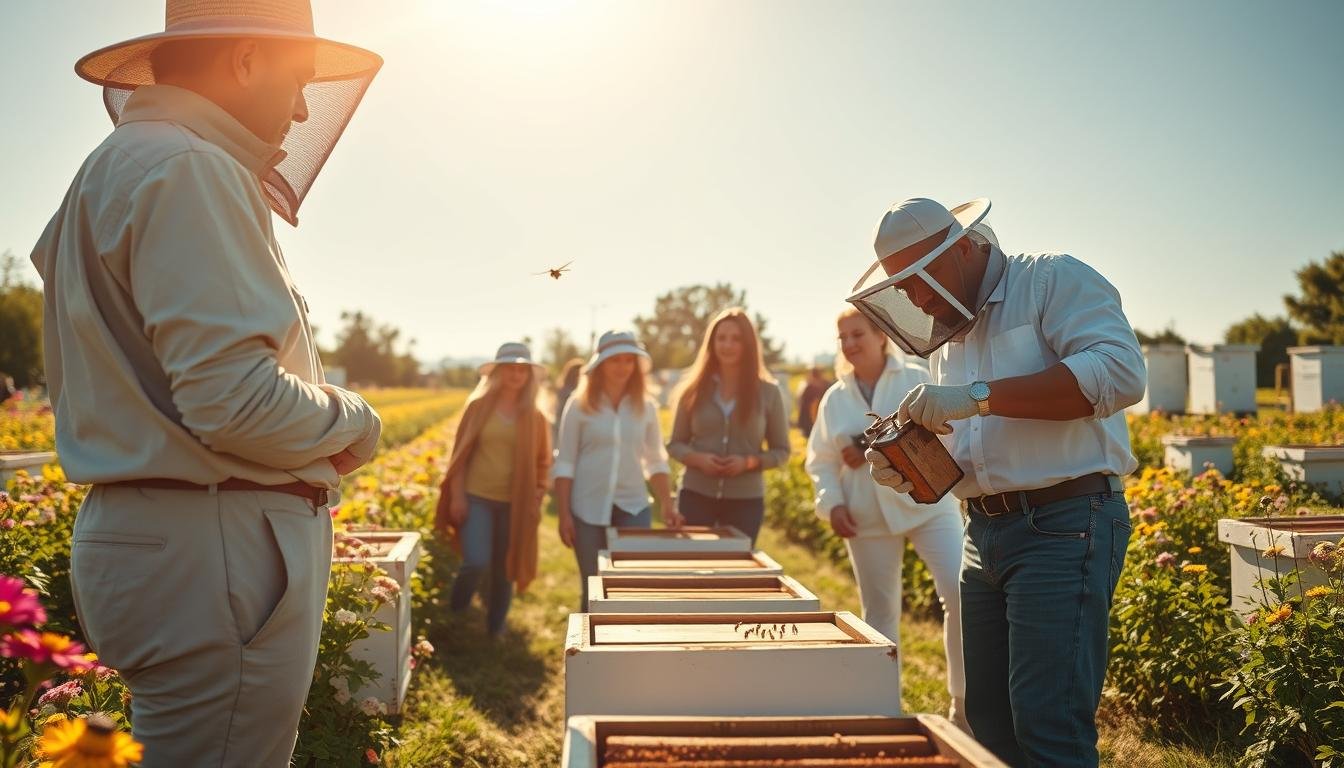
Stand beside the hive and let the learner steer the inspection while you ask sharp, focused questions.
Keep the session advisory. The mentor should observe, model calm technique, and ask the beekeeper to narrate findings. This protects confidence and turns mistakes into learning moments.
Let the mentee handle the work; the mentor advises and models
Let the beekeeper light the smoker, open the hive, and lift frames. The mentor watches for safety issues and models slow, minimal-disturbance handling when needed.
Ask the learner to predict what they expect to see before opening. Compare notes, then discuss differences. Avoid taking over unless safety or colony welfare requires it.
Using checklists (FEDSS) and hive records to build confidence
Use FEDSS—Food, Eggs, Disease, Swarming preparation, Space—on every visit. A reproducible checklist cuts missed red flags and standardizes inspections.
- Maintain shared hive records with dates, observations, Varroa counts, actions, and follow-ups.
- Give concise advice at the session end: wins, watch items, and short reading or video tasks.
- Encourage peer review by having learners discuss records with others and club peers.
| Practice | Action | Benefit |
|---|---|---|
| Role | Mentee works; mentor prompts | Builds hands-on skill and judgment |
| Checklist | FEDSS each visit | Reduces missed signs; repeatable routine |
| Records | Shared log with Varroa counts | Creates feedback and trend tracking |
For evidence-based mentorship models and sample agreements, review this resource on mentorship models. Use meetings, reading, and trusted courses so learning continues beyond yard visits.
Building a learning ecosystem: clubs, training apiaries, and resources
Monthly gatherings give practical topics that match the yard calendar and build shared skills.
Monthly meetings, seasonal topics, and certification pathways
Local club meetings line up with what bees need that month—feeding, mite checks, or treatment timing. That makes each session immediately useful for people who keep hives nearby.
Encourage consistent attendance at a club. Regular presence helps members pass classwork, prep for exams, and move toward basic certification. For structured beginner training, see beginner beekeeping classes.
Training apiaries to protect hives and standardize instruction
Set up a training apiary as a safe, central place for hands-on practice. It reduces pressure on private colonies and lets mentors teach the same techniques to many learners.
Standardized yards also support fair access to gear and limit disease risk from repeated home visits.
Books, videos, conferences, and newsletters as trusted sources
Build a curated library of practical books and vetted videos to reinforce yard lessons. Short, focused reading helps learners connect theory with what they see on frames.
Use newsletters and discussion groups for timely information—mite spikes, nectar flows, and meeting alerts. Encourage attendance at state conferences so beekeepers hear applied research and new practices.
- Attend monthly club meetings to sync local management with the season.
- Promote training apiaries as hubs for safety and consistent instruction.
- Guide mentees toward multi-session classes and certification; consider courses like those outlined at comprehensive training resources.
- Foster small study groups for exam prep and peer support.
“Central training yards and steady club sessions scale knowledge without overloading single mentors.”
Time, travel, and sustainability for mentors
Centralizing hands-on work at a mentor’s hive lets more learners see the same benchmarks quickly. This reduces drive time and gives mentors capacity to run multiple sessions in one day.
Reducing travel with mentor-yard sessions and group days
Concentrate instruction at the mentor’s apiary. Group yard days scheduled around weather windows and key colony tasks make sessions efficient.
Use shared calendars and sign-ups so slots fill predictably. That prevents last-minute cancellations and preserves mentor time for actual field work.
Fair reciprocity: help with equipment, frames, and swarm calls
Reciprocity keeps work balanced. Ask mentees to lend hands with frame building, equipment cleaning, and super pulling. These tasks cut prep time and teach useful skills.
Create a swarm response list where learners can assist safely. It builds confidence and gives mentors real help during peak weeks.
- Standardize tools and spares on-site to avoid lost time during inspections.
- Track mentor hours and rotate duties among mentors to prevent overload.
- Onboard graduating learners as mentors over the years to sustain capacity.
“Group days at a single apiary multiply teaching reach while protecting mentors from burnout.”
| Action | Benefit | Frequency |
|---|---|---|
| Concentrated yard days | Less travel; more learners served | Weekly or biweekly in season |
| Reciprocity tasks (frames, cleaning) | Prepares equipment; teaches skills | Ongoing, post-session |
| Swarm response list | Real experience; timely help | As needed during swarming season |
| Shared calendar & sign-ups | Predictable schedules; fewer gaps | Season launch and continuous updates |
For curated reading and tools that support sustainable mentoring, see resources and books.
Measuring progress: retention, overwintering, and colony health
Measure what matters: attendance, inspection quality, and overwinter success provide clear signals about program impact.
Tracking mentee engagement, inspection quality, and Varroa management
Define success. Associations may set goals such as the share of beginners still keeping bees after three years and the percent of colonies that overwinter successfully.
Track simple inputs: meeting attendance, yard-day participation, and responsiveness to scheduled check-ins. Audit inspection completeness using FEDSS, record Varroa counts, and note treatment timing.
Use compact dashboards showing year-over-year changes in attendance, Varroa thresholds met, and overwinter rates. Collect short, structured feedback from mentees and mentors so gaps surface quickly.
From mentee to mentor: growing club capacity over the years
Identify experienced beekeepers and graduating learners ready for a short mentor skills orientation. Celebrate transitions publicly to reinforce a teaching culture and expand capacity.
Share clear, data-backed answers annually with the club about what’s working and where adjustments are needed. This closes the loop and helps clubs scale practical beekeeping success.
| Metric | What to record | Target |
|---|---|---|
| Engagement | Attendance, yard-days, check-ins | Increase attendance by year 2 |
| Inspection quality | FEDSS entries, notes, photos | Routine checks recorded on every visit |
| Varroa management | Counts, treatments, dates | Treat on threshold; document |
| Overwintering | Survival per beekeeper/cohort | Improve survival rate each year |
Conclusion
A blended apprenticeship and club model speeds skill building while protecting colonies and mentors’ time.
Combine hands-on apiary sessions, club classes, and vetted books or videos so new beekeepers adopt FEDSS checklists, time Varroa/IPM correctly, and manage spring swarm risk, summer queen checks, fall feeding, and winter planning.
Use mid-season mentor-sourced nucs and matched equipment to reduce imports and avoid common colony problems. Create simple agreements, run group yard days, and recruit bee buddy pairs so help is available when mentors are busy.
Act now: set an informal contract, align on the season plan, and start keeping bees with purpose. For basic guidance and seasonal tasks, see practical beginner advice and this seasonal checklist.
FAQ
What is the main goal when guiding someone starting in beekeeping?
The primary aim is healthy colonies and a confident caregiver. That means helping the learner keep colonies alive through their first one to three years, understand seasonal tasks, and develop inspection and Varroa management skills.
What does success look like in the first one to three years?
Success includes overwinter survival, regular inspections, effective swarm prevention, and basic queen assessment. It also means the beekeeper can recognize pests and diseases, follow an integrated pest management plan, and keep clear records.
Why is hands-on experience more valuable than theory for this craft?
Bees behave differently by region, season, and apiary. Direct work at the hive builds pattern recognition and confidence faster than reading alone. Practical practice reduces rookie errors and improves judgement during inspections and interventions.
How can experienced beekeepers combine traditional apprenticeship with modern resources?
Pairing time in the yard with online courses, videos from the American Beekeeping Federation or Bee Culture, and local club talks gives balanced learning. Use field demos, short checklists, and follow-up reading so knowledge is reinforced in different formats.
What expectations should be set about time, roles, and outcomes?
Clarify weekly or monthly visit cadence, who supplies equipment, and realistic goals for the first year. Agree on mentor availability, response time for urgent calls, and milestones like surviving the first winter or completing a successful swarm control.
Which mentorship model works best in rural versus urban areas?
In rural areas, apprenticeship at a mentor’s apiary often works well. In denser or busy regions, mentor-yard sessions, paired bee-buddy arrangements, or group clinic days reduce travel and make help accessible.
How do bee-buddy pairs and peer groups help when mentors are scarce?
Pairing a novice with a slightly more experienced hobbyist spreads workload and creates mutual accountability. Peer groups meet monthly to observe hives, compare notes, and rotate leadership, which scales learning without overloading senior mentors.
How can clubs and classes help scale mentorship?
Clubs offer structured monthly meetings, seasonal clinics, and classroom sessions that reach many beginners. Clubs often run training apiaries and connect members with suppliers like Mann Lake or Brushy Mountain for equipment and nucs.
What should an informal mentoring agreement cover?
Define visit frequency, preferred contact methods, duration of mentorship, safety rules at the apiary, and who provides gear. A simple written note prevents misunderstandings and helps protect both parties.
How do mentors respect time, privacy, and safety at an apiary?
Schedule visits in advance, keep groups small, wear appropriate protective gear, and agree on video or photo limits. Show up prepared so the mentor’s time is efficient and the apiary remains secure.
What are the critical spring tasks a learner must master?
Spring focus includes systematic inspections, evaluating queen performance, swarm prevention techniques like making splits, and comparing colony strength to decide on interventions.
Which summer practices are most important for colony health?
Monitor for swarms, assess queen quality, add supers when needed, and consider combining weak colonies. Track honey flow and adjust feeding and ventilation accordingly.
What should mentors teach about fall preparation and Varroa timing?
Emphasize accurate Varroa monitoring and treatment timed for winter readiness, appropriate feeding strategies, and reducing stressors so colonies enter winter at full strength.
How can winter be used effectively for learning?
Use winter for record review, equipment repair, planning nuc purchases, and attending classes or conferences. Encourage reading and watching expert talks so the mentee arrives at spring prepared.
When should a beginner purchase a nuc from a mentor rather than an out-of-area supplier?
Mid-season, mentor-sourced nucs reduce stress and disease risk. Local nucs acclimate better and often lower transport shock. Timing depends on local nectar flows and queen readiness.
What compatibility issues arise when moving from a nuc to a full hive?
Ensure equipment sizes match (Langstroth, Top-Bar, or Warre), confirm frame dimensions, and stage the transfer during stable weather. Teach techniques for moving brood without losing the queen.
During inspections, how much should a mentor intervene versus letting the learner act?
Allow the mentee to lead inspections while the mentor observes and advises. Intervene only for safety or to prevent irreversible damage. Coaching builds competence faster than taking over.
What tools help build confidence during inspections?
Use checklists like FEDSS (Food, Eyes, Disease, Space, Swarm) and consistent hive records. These tools structure observations, reduce omissions, and make decision-making repeatable.
How do clubs and training apiaries protect hives while standardizing instruction?
Training apiaries centralize demos, use quarantine protocols for new stock, and follow shared protocols so students see consistent methods. That protects colony health and reinforces best practices.
What resources should mentors recommend for ongoing study?
Point learners to authoritative books such as Eric Mussen’s Extension publications, the Periodical “American Bee Journal”, Cornell and Penn State extension materials, and reputable online courses and local conferences.
How can mentors reduce travel and still provide quality support?
Hold mentor-yard sessions, organize group inspection days, and use video calls or photo reviews for remote troubleshooting. Shared calendars and rotating host yards minimize travel for everyone.
What are fair reciprocity options for mentors?
Accept help with heavy lifting, equipment maintenance, or hive moves. Offer discounted nucs, share frames, or trade swarm call coverage to acknowledge mentors’ time and costs.
What metrics assess mentoring success over time?
Track retention rates, overwinter survival of mentee colonies, improvement in inspection quality, and Varroa levels. Also note how many mentees progress to mentor roles within the club.
How does supporting mentees become a long-term strategy for clubs?
Developing mentees into mentors grows club capacity and resilience. Structured pathways, certification programs, and staged responsibilities ensure consistent training and preserve local bee populations.