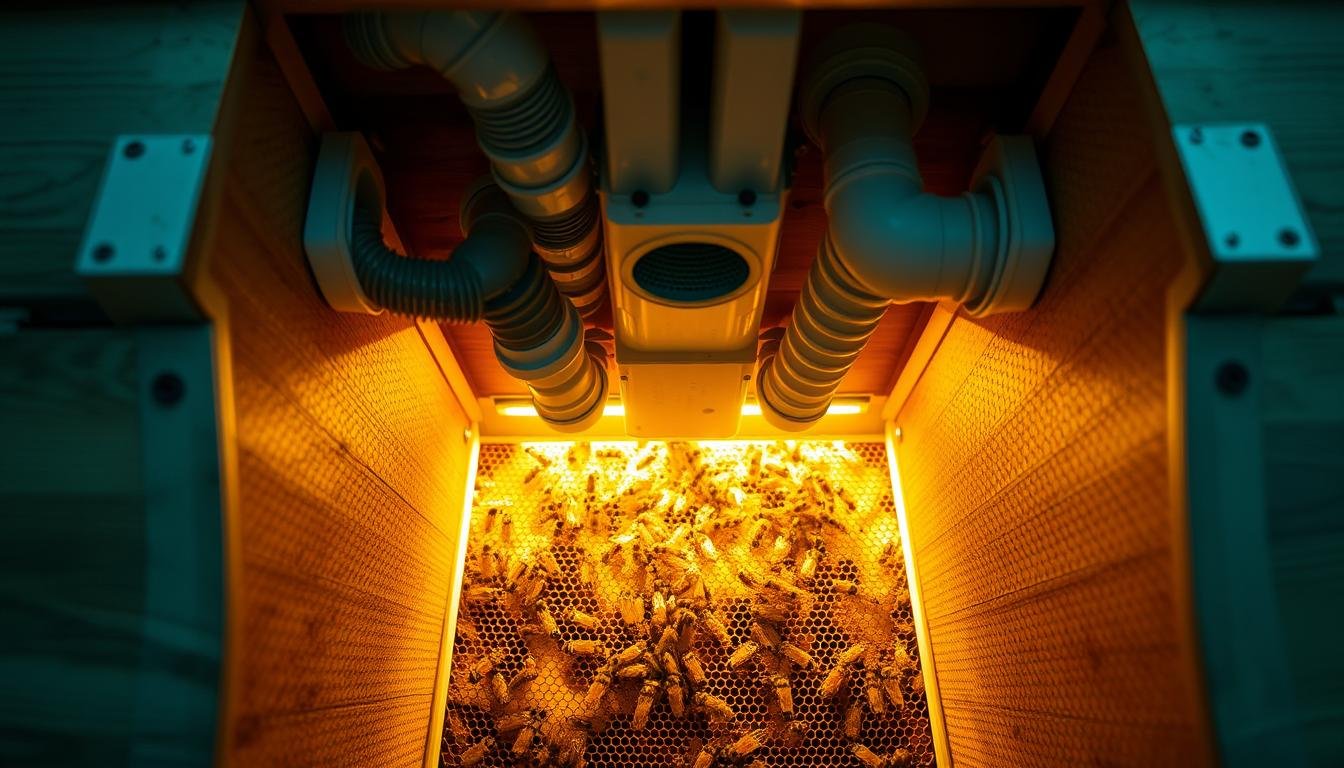
Successful beekeeping hinges on stable temperature, moisture, and air flow inside the colony. Bee brood needs a narrow band of warmth — about 89.6–92.6°F — and even small drops can weaken developing bees. Careful management of insulation and entrances helps colonies conserve heat and energy through winter and shoulder seasons.
Proper ventilation is not about maximum airflow but about managed exchange that preserves humidity where the cluster needs it and avoids cold wet spots above the cluster. Condensation can be a convenient water source, and bearding in hot weather is often normal as bees regulate internal temperature while drying nectar.
Two main setup approaches exist: bottom-only configurations and combined top-and-bottom arrangements. Each has pros and cons and should match regional conditions, equipment, and a beekeeper’s management style. Remember that bees rebalance their internal atmosphere slowly; sudden openings or drastic changes can take days for the colony to correct.
Key Takeaways
- Brood survival depends on precise heat and moisture control.
- Managed airflow, not maximum flow, keeps the colony healthy.
- Bottom-only and top+bottom are configuration choices tied to climate and equipment.
- Condensation can serve as water but requires proper roof and insulation design.
- Bees adjust slowly; limit disruptive inspections and sudden openings.
Why ventilation matters now: moisture, temperature, and colony health
Maintaining the right mix of warmth and humidity inside a colony is a daily balancing act. Brood needs about 89.6–92.6°F and high relative humidity to develop properly. Small drops in temperature or spikes in moisture can slow growth and reduce vigor.
The cluster creates a localized heat dome over brood. Warm, moist air rises and can hit a cold ceiling, forming condensation that may drip or freeze and then melt later. That wetness on comb or bees damages young brood more than chill alone.
Good practice focuses on keeping surfaces dry and roofs tight rather than simply forcing more air. The NBU warns that damp kills more colonies than cold; raised stands and proper insulation move condensation to walls where it can run away from brood.
“Allowing controlled internal moisture gives bees a safe water source during winter without risky flights.”
Too much airflow costs heat and burns stores. Overreacting to bearding or visible moisture by opening the hive or adding vents can destabilize the microclimate and raise energy use. Beekeepers should assess local conditions—humidity, wind, and precipitation—and choose targeted measures. For practical guidance on proper setup, see proper hive ventilation.
Core principles of airflow and moisture inside a hive
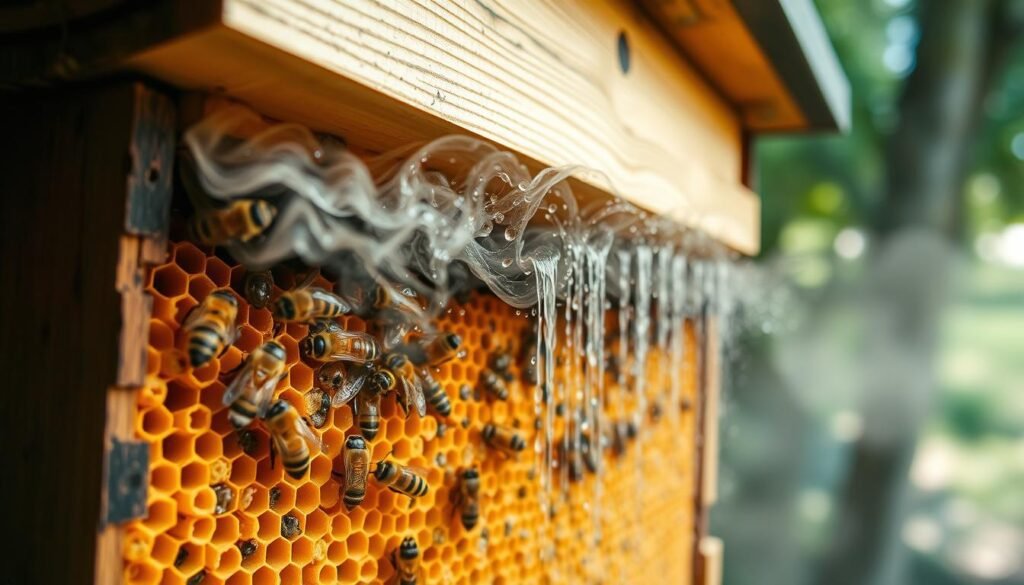
Warm air rising from the cluster carries moist air upward until it meets a cooler surface and drops out as water. This basic physics explains why condensation forms first on the inner cover or on an uninsulated ceiling.
Directing moisture to walls and frames keeps drip off brood. Insulation or an absorbent inner surface shifts condensation to the side walls where beads and light mist let bees collect water without chilling the cluster.
How warm air rises and where condensation forms
Heat from the cluster creates a localized dome of warm, humid air. When that air meets a cool ceiling it condenses. Adding top insulation moves that cold surface away from the center and reduces “cold rain.”
Turning drips into an advantage
Small beads on walls and edges of frames act as a safe water source. Bees lap up droplets without flying out. Aim for fine misting and beads, not heavy drips that fall on comb and brood.
Small entrances, big impact
Smaller openings cut convective losses and help bees retain heat and humidity. Many colonies propolize extra gaps, showing a clear preference for limited entrances to boost defense and internal stability.
Comb as the colony’s lungs
Comb layout guides air between frames. Straight spacing simplifies inspections, but cross-combing can redirect airflow and support comb as temperatures change. Think of comb and frames as the hive’s lungs that help regulate evaporative cooling and brood stability.
| Feature | Effect | Practical tip |
|---|---|---|
| Top insulation | Shifts condensation to walls, reduces dripping | Use an insulated inner cover or absorbent layer |
| Small entrance | Reduces heat loss, strengthens defense | Install an entrance reducer in cold months |
| Comb spacing/orientation | Directs airflow, affects brood microclimate | Maintain even frame spacing; monitor cross-combs |
| Tree cavity | Thick walls provide natural insulation | Mimic with side wraps or thicker boxes if needed |
Recognize good vs. bad condensation: fine misting and bead formation on walls is acceptable; persistent cold drips from the top signal inadequate insulation. Favor solutions that move moisture to the sides rather than adding upper openings.
For a deeper look at managing openings and interior exchange, see this practical guide: managing hive openings and moisture.
Hive ventilation: choosing bottom-only vs. combined top and bottom approaches
Deciding between bottom-only setups and combined top-and-bottom arrangements affects heat, moisture, and colony effort. Pick a configuration that matches your site, shelter, and management goals.
Bottom-only with an open mesh floor uses an open mesh floor, a solid crown board, and an insulated roof. This mirrors wild trees: a single low entrance and thick walls. It encourages gentle convection while keeping loss of heat and humidity low.
When the chimney effect helps — and when it hurts
The chimney setup adds crown board holes and roof side vents so moist air can exit. It can reduce internal condensation but often increases chilling and store use. Many colonies seal top holes with propolis, showing a natural preference for fewer openings.
Solid floors and tiny upper gaps
With a solid floor, a very small crown board crack (about 2 mm) can be useful in windy or damp sites. Keep it minimal. Large holes siphon warmth and can harm brood stability.
Insulation stack-up to prevent cold rain
Stack an insulated roof, a foam-lined inner cover, and optional side wraps to move condensation to the sides and stop drips onto comb. Polystyrene covers can reach R7–R10 versus R1 for plain wood, so material choice has real value.
- Match setup to site: sheltered yards do well with bottom-only; windy, damp sites may need tiny controlled openings.
- Open less, help more: every unnecessary crack disrupts brood heat and can take days for colonies to recover.
“Over-ventilating sacrifices heat, moisture, CO2, and latent heat — increasing winter consumption.”
Step-by-step seasonal setup for U.S. beekeepers
Simple, timed adjustments to covers and entrances make the biggest difference across seasons. Start with a plan that protects brood and stores while letting the colony use condensation as a safe water source in cold months.
Winter and early spring: condensing hive basics, CO2, and latent heat
Install a robust insulated roof and consider a foam-lined inner cover to stop cold rain and shift moisture to the sides. An open mesh floor in sheltered yards gives gentle bottom exchange without stripping heat.
Adopt the condensing mindset: avoid upper holes unless damp conditions force a tiny crown board gap. Higher internal CO2 with reduced top openings helps dormancy and lowers honey use.
Monitor weight and stores without long inspections. Avoid added heaters that trigger activity and extra consumption.
Late spring through summer: bearding, nectar drying, and entrance management
Expect bearding as bees manage interior temperature and nectar drying. Small, defendable entrances keep traffic moving while retaining moisture and defense.
Keep inspections short and maintain correct frame spacing so comb continues to guide airflow and protect brood during expansion and honey flows.
Regional adjustments: cold climates, damp sites, and wind exposure
In cold or windy places add wraps and windbreaks and raise stands off the ground. In persistently damp sites use roofs and covers that shed rain and protect the sides from ground moisture.
Where solid floors are used or exposure is high, a slight crown board crack can help—otherwise bottom-only setups are often sufficient.
“Plan inspections around warm, calm weather windows and keep them brief to protect the cluster’s heat.”
For practical seasonal checklists consult a spring prep guide and a full list of tasks for the year: spring hive preparation and seasonal beekeeping tasks.
Conclusion
Balance insulation and controlled openings to keep heat and moisture where the colony needs them.
Favor insulated tops and well-fitted covers so moist air moves to walls and frames instead of condensing overhead. This gives droplets that bees can safely drink and reduces wasted heat.
Avoid extra upper holes in cold months; they expel heat, CO2, and latent heat and force higher honey use. Match setup to your site: most modern boxes do best with a bottom-only approach and an open mesh floor unless wind or damp parts of the yard demand a tiny gap.
Remember that ventilation is one part of a winter plan. Healthy colonies, solid roofs, sturdy stands, and minimal disturbance help bees bridge winter and reach spring strong.
FAQ
What role does airflow play in colony health during winter?
Good air movement prevents moisture buildup that can chill the cluster. Bees generate heat but also moisture; if warm, moist air condenses on cold surfaces and drips onto bees. Proper openings and an insulated top cover reduce condensation and keep the cluster dry, helping the colony conserve energy and survive cold spells.
How does warm air movement create condensation inside a hive?
Warm air rises from the cluster and meets colder surfaces near the roof or side walls. That temperature difference causes water vapor to change to liquid. Condensation typically forms on the inner cover or top bars; managing where that moisture collects prevents it from dripping on brood and adults.
Can wall or frame moisture ever be beneficial?
Yes. Controlled moisture on upper walls can provide a limited water source that bees can use for cooling and brood care. The key is control: design the top cover and insulation so moisture can wick away or run into an absorbent layer rather than drip onto the cluster or comb.
How do small entrance openings affect humidity and brood temperature?
A reduced entrance limits cold drafts and helps bees maintain stable brood temperature and relative humidity. It also simplifies defense against pests. However, too small an opening can trap moist air and CO2; time openings to season and colony strength to keep gas exchange adequate.
In what way do comb and frames influence airflow patterns?
Comb arrangement channels air between frames and shapes the path of rising warm air. Well-spaced frames allow gentle vertical movement, while cross-combing or irregular spacing creates turbulence and uneven humidity. Keeping frames straight and space consistent helps stable brood conditions.
When is a bottom-only strategy with an open mesh floor appropriate?
Open mesh floors work well in temperate seasons and for mite monitoring. They allow debris and some ventilation from below, which can help with cooling in summer. In cold, wet weather, however, the extra draft and moisture entry may harm overwintering colonies unless combined with other insulation measures.
What are the benefits and risks of using a top-and-bottom “chimney” approach?
A chimney setup encourages a stack effect where warm air exits at the top and fresh air enters at the bottom, improving gas exchange. Benefits include reduced condensation and better summer cooling. Risks include increased chilling in early spring or winter if too much warm air escapes or if openings create cold drafts across the cluster.
How should solid floors and upper openings be configured for cold, wet regions?
Use a solid bottom to block driving rain and wind, and add a small, adjustable upper vent or a partially recessed inner cover to let moisture escape without creating a direct draft over the cluster. Add windbreaks and side insulation as needed to stabilize internal conditions.
What insulation strategies reduce cold rain penetration and heat loss?
Stack insulation: a sealed outer roof, an insulated inner cover or quilt box with absorbent material, and breathable side wraps help keep the interior dry and warm. Avoid airtight seals that trap moisture; aim for controlled escape routes for vapor while protecting from driving precipitation.
How do beekeepers minimize disruptions that affect brood heat and humidity?
Open the colony only when necessary and work quickly. Keep frames straight and avoid large, sudden openings that let warm, moist air rush out. Use entrance reducers, insulated covers, and place short inspections in milder midday temperatures to reduce stress on brood thermoregulation.
What seasonal setup should U.S. beekeepers follow for winter and early spring?
In winter, provide an insulated top with an absorbent layer for condensation and a small, controllable entrance to limit drafts. Ensure adequate food stores and reduce unused space to help bees conserve heat. In early spring, gradually increase ventilation and monitor for moisture and cluster movement.
How should colonies be managed from late spring through summer for moisture control?
Provide shade or ventilation to prevent overheating, and reduce moisture by ensuring adequate airflow above the brood nest for nectar drying. Allow bees access to water and use screened bottom boards as appropriate. Watch for bearding behavior that indicates heat stress and adjust openings accordingly.
How do regional factors change ventilation choices?
Cold, damp regions need more insulation and controlled upper escape for moisture, while hot, humid climates benefit from enhanced cross-ventilation and shade. Wind-exposed sites require windbreaks and fewer exposed openings. Tailor openings, insulation, and placement to local weather patterns and forage cycles.
What are practical signs of poor airflow or excessive moisture inside a colony?
Look for heavy frost or icicles on the inner cover, wet or moldy comb edges, a soggy cluster, or increased bee clustering low in the boxes. Also watch for depressed activity in mild spells and higher winter mortality. These signs indicate a need to adjust insulation, covers, or entrance management.