This guide defines what modern smart thermostats do and how they optimize heating in your home. We explain how a thermostat, paired with an app, can automate schedules, offer usage insights, and help manage energy without guesswork.
We outline which products are reviewed — think Nest, Ecobee, and Honeywell — and who each product suits best. Our evaluation focuses on performance, compatibility with existing heating systems, and overall value for a typical US buyer.
Expect clear comparisons, installation notes, and ecosystem support across major platforms. We set realistic expectations about savings and usability, noting what a smart device can and cannot do over time.
Our approach uses verified facts and practical recommendations so you can choose the right product for your home and keep systems useful with ongoing updates and app improvements.
Key Takeaways
- Smart thermostats streamline home heating with app-based schedules and insights.
- We review leading products and match each to common household needs.
- Look for compatibility, ease of setup, and long-term support when choosing.
- Expect modest energy benefits when devices are paired with good habits.
- Our ratings focus on real-world performance for US buyers.
What “Hive temperature control” means today for smart home heating in the US
This guide clarifies how the Hive brand fits inside the wider category of smart thermostats and what US buyers should verify before they buy. Readability and real-world checks matter more than glossy ads.
Who this guide is for: homeowners replacing a traditional thermostat, renters with landlord approval, and power users wiring multiple zones. These readers want purchase-ready advice and clear compatibility notes.
Brand vs. category: practical differences
Hive models offer specific features, but many functions are common across smart thermostats: app scheduling, remote setpoint changes, and basic automation. Advanced features—learning schedules, geofencing, and open-window detection—vary by product and may require a hub or extra sensors.
- Connectivity to check: Wi‑Fi, hub, or Zigbee matters for integration with your existing smart home ecosystem.
- Basic functions: schedules, away modes, and instant heating boosts work on most modern units.
- Compatibility checks: confirm your heating system wiring and any required C‑wire or adapter before purchase.
Frame decisions around convenience, reliability, and automation level. Match features to use cases—quick comfort changes, scheduled savings, or fully automatic learning—so you pick the right product for your home and system.
Hive temperature control: core features, benefits, and use cases
Here we walk through the key functions and common scenarios where a modern smart thermostat shines.
App-based schedules let you program daily and weekly heating patterns from your phone. The hive app also offers on-demand heating boost for quick warmth without changing routines.
App-based schedules, geolocation alerts, and heating boost
Geolocation alerts notify you if you leave with heating still active, so you can switch modes remotely and save energy.
Holiday and away modes keep systems safe while you travel, and manual controls plus a child lock prevent accidental changes on the wall device.
Energy-saving tools: OpenTherm, frost protection, and insights
OpenTherm support (for compatible combi boilers) delivers steadier operation and better efficiency.
Frost protection safeguards pipes in cold spells, and usage insights in the app highlight where energy can be trimmed.
Voice control with Alexa, Google Assistant, and Apple HomeKit
Voice work with amazon alexa, google assistant, and apple homekit for hands-free setpoint changes and quick mode switches.
Note: these devices use Zigbee and require a Hive Hub for remote internet access — plan the hub into your setup for full functionality.
For purchase details and model options, see the dedicated Hive thermostat page.
Editor’s pick: Google Nest Learning Thermostat (Gen 4) — best overall
Our pick blends smart scheduling and simple installation for most single-zone homes. The Nest Learning Thermostat adapts to daily routines and reduces manual adjustments.
Key strengths
Self-learning schedules let the unit build an efficient routine using minimal input. The AI-enhanced Smart Schedule learns preferences and refines setpoints over time.
Outdoor compensation adjusts system behavior when weather shifts so your heating doesn’t overshoot. Many homes see steadier comfort with less fiddling.
No C‑wire required simplifies installation in older homes and cuts upfront labor for many buyers.
Limitations and availability
The Nest lacks native zonal control and does not support Apple HomeKit. It is sold in the US and Canada only.
“Nest’s design and app make everyday heating simple, but multi-zone setups need alternate solutions.”
| Aspect | Benefit | Notes |
|---|---|---|
| Learning | Automates schedules | Saves time, improves comfort |
| Interoperability | Matter support | Works with many smart devices, limited HomeKit |
| Cost & payback | Possible rebates | Savings accrue over time |
Who should buy
Choose this product if you value convenience and are invested in the Google ecosystem. It fits buyers who want minimal setup and consistent, automated heating in a single-zone home.
Best budget option: Drayton Wiser — room-by-room control on a budget
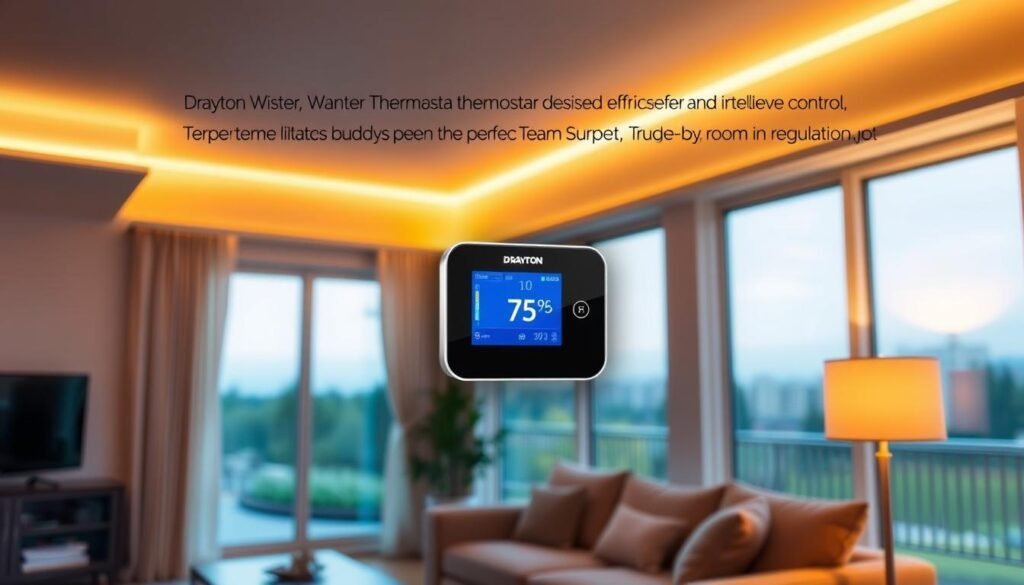
If you want true room-by-room heating without a high price tag, Drayton Wiser is a practical pick. The system uses smart radiator valves and sensors to let you set different warmth levels in each room. This avoids replacing a whole thermostat and brings zonal comfort to many homes.
Value case: bundled radiator valves and sensors
Drayton Wiser ships as a kit with radiator valves and a base sensor, so you get per-room regulation at a lower cost than many full systems. Open Window Detection helps stop waste when a draft is sensed.
Voice support for Alexa and Google Assistant lets you add simple routines and hands-free adjustments. For a deeper read, see the Drayton Wiser review.
Trade-offs: design, readouts, and regional availability
The trade-offs are straightforward: the valves are utilitarian and lack a built-in readout, so the app shows exact values. A budget price speeds payback, but official availability is largely UK-only, limiting options for US buyers.
- Pros: zonal heating, low price, useful features.
- Cons: basic design, no valve display, limited regional support.
Underfloor and zonal standout: Honeywell Evohome
For large or remodelled properties, Evohome offers precise per-room regulation across multiple heat loops.
Granular control across complex systems
Evohome pairs a central controller with smart radiator valves and underfloor support. Each room keeps its own setpoint so one area won’t overheat the rest of the home.
The controller and valves work together to balance zones. In practice, this improves comfort and real-world efficiency for big properties with mixed heating.
Cost considerations and aesthetics
Expect a higher upfront spend: every radiator needs a valve plus the central unit. That cost is the trade for accurate zonal management across challenging layouts.
Aesthetically, the devices are practical rather than premium. Many buyers accept plain looks for the clear, reliable way Evohome manages complex systems.
- Best fit: large homes or remodels with underfloor loops and radiators.
- Trade-off: higher installation cost for per-room accuracy.
| Capability | Benefit | Who it suits |
|---|---|---|
| Underfloor + radiator zoning | Tailored comfort per room | Homes with mixed heating |
| Central controller + valves | Balanced system behavior | Complex multi-zone systems |
| Upfront investment | Higher initial cost | Owners prioritizing accuracy over price |
Hive Thermostat (2024) and Thermostat Mini — streamlined control with a slick app
The 2024 models pair a clean touchscreen with an app-first workflow to simplify daily heating tasks.
What’s included: a responsive touchscreen, clear mobile setup, and a child lock to stop accidental changes on the wall.
The hive app offers full scheduling, quick heating boosts, geolocation alerts, and frost protection. OpenTherm support works with compatible combi boilers for steadier output.
Hub, zoning, and add-ons
- Remote access requires a hive hub because devices use Zigbee; add the hub to your budget.
- A MultiZone kit and optional radiator valves enable room-by-room regulation.
- Voice and automation support covers Alexa, Google, Apple HomeKit, Siri Shortcuts, and IFTTT.
Installation and total price
Expect the base thermostat price plus the hub. Optional valves and a professional installation raise total ownership costs.
Tip: check regional availability and wiring compatibility before you buy to avoid surprises at installation.
Compatibility check: will a Hive-style smart thermostat work with your system?
Start by noting the exact boiler model and current wired controls. Documenting the model number and whether you have motorised valves or an advanced modulating controller saves installer time and avoids surprises.
Supported systems: most gas/LPG and many oil boilers
These smart devices normally work with standard gas and LPG boilers used in most US homes that accept a room thermostat.
Many oil boilers are compatible too, but a thermostat will not replace intelligent modulating oil controls. For oil work, seek an OFTEC-qualified installer rather than a generic pro.
Electric and other systems: what’s not supported
Electric boilers may work only if they accept a standard room thermostat or programmer. Storage heaters, plug-in electric heaters, solid-fuel boilers, and most heat pumps are outside typical support.
Known incompatibilities and examples to watch for
Do not assume universal fit: Honeywell SmartFit units and the Vaillant VR 65 Control Centre require removal before adding external devices.
Some Worcester Bosch models (for example ICC2 ZWBR 11‑37A and Greenstar HE Plus variants) are documented as incompatible. If an installer cannot complete the job, a 14‑day refund policy is usually available.
- Quick checklist: identify system type, record exact model number, confirm existing controls, and ask about OFTEC help for oil.
- Pro tip: share wiring photos with installers to speed approval and reduce on-site delays.
Smart home ecosystems and app control
Linking a smart thermostat to your existing home ecosystem decides how seamless daily routines and voice commands feel. Pick a product that matches your platform so the app and voice features work without extra hubs or hacks.
Alexa, Google Assistant, and Apple HomeKit realities
Confirm support for amazon alexa, google assistant, and apple homekit if you plan to use voice and scenes. Some thermostats work with two of these platforms but not all three.
Practical tip: test the vendor’s app listings and reviews to see how reliably voice routines run in real homes.
Matter and platform support: what to verify before buying
Matter helps future-proof interoperability. The Nest Learning Thermostat (Gen 4) offers Matter, but availability and feature parity vary by market.
Checklist before purchase:
- Confirm platform compatibility and whether the hive app or other apps expose the functions you need.
- Verify if a hub or bridge is required for remote control—this affects setup and networking.
- Check country-specific availability and device feature lists for any regional limits.
- Ask if your heating system will expose the functions the thermostat promises.
Installation guidance: DIY vs. professional help
Choosing an installation path depends on your wiring, system type, and comfort with basic electrical tasks. A simple swap can work in many homes, but risk grows with mixed systems, motorized valves, or legacy wiring.
When to call a pro: wiring complexity and safety
Call a professional if your system has multiple zones, underfloor loops, or nonstandard wiring. These setups need correct integration to avoid damage.
If you try a DIY install, turn the HVAC off at the breaker first. Label wires, follow the manufacturer wiring diagrams, and test carefully to prevent faults.
Geofencing and hub requirements for remote control
Remote features like geofencing rely on the vendor app and cloud connectivity. For Zigbee-based devices, plan to add a hive hub to enable internet access and remote scheduling.
A technician can also confirm safety interlocks, verify heat call signals, and commission the system so the thermostat works reliably across the whole home.
| Scenario | Recommended way | Why it matters |
|---|---|---|
| Simple single-zone replace | DIY or pro | Low wiring risk; quick setup |
| Multi-zone or underfloor | Professional install | Correct zoning and sensor placement |
| Proprietary or legacy controls | Professional review | Compatibility quirks and extra wiring |
| Remote features and geofencing | Add hub and app setup | Requires cloud link and stable network |
Heating schedules, learning, and automation
Smart scheduling blends predictable routines with automated tweaks to match real life. You can set a baseline schedule in the vendor app and let smarter features handle small changes.

Self-learning vs. manual scheduling: what saves more time
Self-learning thermostats like the Nest Gen 4 cut the time you spend programming by adapting to patterns. Learning reduces daily tweaks while keeping comfort steady.
Manual scheduling stays useful for people who want clear, repeatable routines and immediate edits via the app.
Open-window detection and presence-based adjustments
Presence and geofencing switch modes as you leave or return, lowering heating when the home is empty and restoring comfort on arrival.
Open-window detection, available on systems such as Drayton Wiser, pauses heat when rapid drops are seen, then resumes once conditions normalize.
“The best approach pairs a baseline schedule with smart automations so you save time without losing manual override.”
| Feature | Benefit | Who it helps |
|---|---|---|
| Learning | Less manual setup | Busy households |
| Manual schedule | Predictable routines | Users who want explicit control |
| Open-window & presence | Reduced waste | Homes with variable occupancy |
Energy savings and real-world value
Smart thermostats deliver steady gains rather than instant windfalls. Over months and seasons, automation and presence features trim wasted runtime and improve comfort.
Expected savings benchmarks and timelines
What studies show: Energy Star estimates around 8% annual energy reduction from smart devices, which works out to roughly $50 per year for many US homes. Actual results vary by usage, rates, and baseline efficiency.
High-usage homes see faster payback. If your heating runs a lot, saved hours add up quickly. Homes already efficient will notice smaller but useful gains.
- Look for utility rebates to offset upfront costs.
- Value comes from both hard savings and extra comfort and insight into heating patterns.
| Metric | Typical Result | Who benefits most |
|---|---|---|
| Annual energy reduction | ~8% | Average US home |
| Average US savings | ~$50/year | Depends on rates and usage |
| Payback time | 1–4 years | Homes with high heating use |
Realistic view: treat a smart thermostat as a long-term investment. Over time, smaller efficiencies add up into meaningful money and comfort gains for your home.
Price, bundles, and ongoing membership offers to watch
A single wall unit is rarely the full expense; kits and services change the math. Check headline price, then add accessories and setup to get the true cost.
Thermostat vs full kit: what to budget
Base devices start low — example UK pricing shows a thermostat from £119 and a Thermostat Mini from £79. Radiator valves begin near £59 each.
Factor in a hive hub if remote access is required, plus any professional installation. Those extras can double initial outlay for multi‑zone installs.
Seasonal promos and membership perks
Membership plans sometimes cut upfront costs. For example, Hive+ members get 20% off selected tech and 20% off the first year of an annual subscription that renews at £39.90/yr. Promotions run through 1 Dec 2025 in some regions.
Tip: confirm regional availability and currency differences before relying on discounts to save money.
| Item | Example cost | Notes |
|---|---|---|
| Thermostat (base) | £119 | Entry point for a single-zone setup |
| Thermostat Mini | £79 | Lower-feature, budget option |
| Radiator valve (each) | £59 | Add per room for zoning |
| Membership (year) | £39.90 | First-year discounts may apply |
| Professional install | Varies — £/hour | Required for complex systems; varies by region |
Plan modular upgrades: buy the core thermostat now, then add valves and a kit later. That spreads cost and keeps options open as your number of zones grows.
US availability and regional caveats you must know
Product availability and support differ widely by country. That affects what you can buy, how a device integrates, and which local pros can service your home heating setup.
Why some models stay UK-only and what US buyers can get now
Wiring standards and retail rules shape whether a product ships in a market. Certain zonal systems and valve kits are common in the UK but lack US warranties or local firmware.
The Nest Learning Thermostat Gen 4 is sold and supported in the US and Canada. By contrast, Drayton Wiser and many Evohome bundles are primarily UK-focused, so importing them can leave you without official service.
- Check compatibility: confirm your systems and wiring before buying.
- Service matters: verify warranty coverage and update delivery in your country.
- Alternatives: consider US‑supported zonal options or consult an installer for compatible multi‑zone setups.
Availability can change day to day, so always verify stock, support channels, and whether a vendor provides regional firmware before you buy.
Who each product is for: quick buyer personas
We pair typical user goals with the devices that deliver the right mix of features and value.
Budget-focused buyers want core features and a low upfront cost. Look for reliable app scheduling, possible utility rebates, and simple setup as the best options.
Zonal control seekers need per-room precision. Choose systems with radiator valves or MultiZone kits to tune comfort and save energy in larger homes.
Beginners prefer a fuss-free experience. Pick a self-learning thermostat with clear documentation and an intuitive app so schedules set themselves.
Advanced and niche users
- Power users: select devices that offer robust automations, deep integrations, and detailed insights for complex home routines.
- Renters: seek reversible installs and plug‑and‑play options to avoid wiring changes and landlord issues.
- Frequent travelers: value geofencing, away modes, and reliable remote access to manage heating from anywhere.
“Match your everyday patterns to the product features you will actually use — that’s the fastest way to get value.”
Use this quick persona guide to narrow choices. Focus on the thermostat features that fit your lifestyle, then compare price and install needs to find the best way forward.
Pros and cons at a glance: Hive, Nest, Wiser, Evohome
This snapshot highlights the biggest strengths and trade-offs for each major smart thermostat option.
Hive: touchscreen and a polished app make daily tweaks easy. Voice integrations add convenience, but remote features need a hub and zonal upgrades require add-ons. Verify regional availability before buying.
Nest Learning Thermostat: excellent self-learning and outdoor compensation for steady comfort. Broad US support and solid app design, yet it lacks native Apple HomeKit and does not provide built-in zonal management.
Drayton Wiser: budget-friendly zonal options via smart radiator valves and sensors. Open-window detection helps cut waste, but expect a utilitarian look and primarily UK availability.
Honeywell Evohome: best for multi-room and underfloor setups. It delivers fine-grained zone management at higher upfront cost and with practical, no-frills design.
Across all devices, decide whether you want automated learning or manual schedules, and whether your home actually needs zonal heating or a single well-managed setpoint.
Conclusion
This guide helps you close the loop: start with compatibility checks and end with day-to-day ease so your home stays comfortable in a reliable, efficient way.
Choose a model that fits your wiring and routines. If you want learning-driven simplicity in the US, Nest often fits best. For zonal and underfloor work, pick specialized systems and confirm regional availability before you buy.
Plan total ownership — add accessories, a hub if required, and possible installation costs so the setup meets your budget and timeline. With realistic expectations about energy savings, the right unit can deliver comfort, insight, and steady efficiency over time.
FAQ
What does effective Hive temperature control mean for smart home heating in the US?
Effective Hive temperature control today means using a smart thermostat and app to schedule heating, set eco modes, and monitor usage. It combines remote app access, voice assistants like Amazon Alexa and Google Assistant, and integration with smart home platforms to keep rooms comfortable while lowering energy use.
Who should read this guide on smart thermostats and home heating systems?
This guide targets homeowners, renters, and property managers in the US who want to upgrade from manual thermostats to app-driven systems. It’s useful for people seeking energy savings, room-by-room control, or voice-enabled heating tied into platforms like Apple HomeKit and Google Home.
Is Hive a brand or just a category of smart thermostat?
Hive is a specific brand offering thermostats, hubs, and radiator valves; however, many features overlap with other smart thermostats. Compare brand-specific apps and ecosystems versus general capabilities such as scheduling, geofencing, and OpenTherm support before buying.
What core features should I expect from a Hive-style system?
Expect app-based schedules, geolocation alerts to adjust heating when you leave or arrive, heating boost for quick warm-ups, and energy insights. Add-ons like radiator valves and multiroom kits enable zonal control and finer efficiency gains.
How do energy-saving tools like OpenTherm and frost protection work?
OpenTherm allows modulating boiler communication for more efficient heating cycles. Frost protection prevents pipes freezing by keeping minimal heat on. Combined with usage insights in the app, these tools can reduce runtime and energy bills when configured properly.
Can I use voice assistants with a Hive thermostat?
Yes. Most modern smart thermostats support Amazon Alexa and Google Assistant for voice commands. Some devices also integrate with Apple HomeKit. Verify compatibility and required hubs before purchase for seamless voice control.
Why is Google Nest Learning Thermostat recommended as an editor’s pick?
The Nest Learning Thermostat excels with self-learning schedules that adapt to behavior, outdoor temperature compensation, and an easy install in many homes without a C-wire. It suits users who want a largely hands-off, efficient experience.
What are the trade-offs of the Nest thermostat?
Limitations include regional availability—some features work only in the US/Canada—and a lack of native HomeKit support or built-in zonal radiator control. Buyers tied to other ecosystems should confirm compatibility first.
Who should buy the Nest Learning Thermostat?
Choose Nest if you value automated learning, attractive hardware, and integration with Google services. It fits convenience seekers and existing Nest ecosystem users who want a single, central smart thermostat.
What makes Drayton Wiser a strong budget option?
Drayton Wiser delivers room-by-room control with bundled radiator valves and sensors at a lower price point. It’s a good value for zonal control on a budget while still offering app schedules and basic integrations.
What are the compromises with budget systems like Wiser?
Expect simpler displays, fewer advanced algorithms, and possible regional availability limits. The user experience and aesthetics may not match premium models, but the energy and comfort gains remain significant.
Why choose Honeywell Evohome for underfloor and zonal setups?
Evohome supports granular control across many zones and complex systems, making it ideal for underfloor heating and multi-room setups. It provides precise scheduling per zone and advanced valve control for complex homes.
What cost considerations come with Evohome?
The system can be pricier due to multiple valves, sensors, and installation complexity. Design and hardware aesthetics may also be a factor for buyers seeking a minimalist look.
What does the Hive Thermostat (2024) and Thermostat Mini bundle include?
Typical kits include a touchscreen thermostat, app-first control, and safety features like a child lock. Additional options often feature a hub, MultiZone kit, and add-on radiator valves to expand control across rooms.
How much should I expect to pay for installation and total ownership?
Costs vary by region and complexity. Expect professional installation fees if wiring or boiler compatibility is complex. Add the price of hubs, radiator valves, and any subscription services when calculating total ownership.
Will a Hive-style smart thermostat work with my heating system?
Most gas, LPG, and oil boilers are supported, but limitations exist. Check compatibility lists for your boiler model and note that some electric systems and proprietary controls may not be supported.
Which systems are typically not supported?
Certain electric baseboard heaters, legacy proprietary controls, and some boiler models like those requiring unique interfaces (for example, specific VR or SmartFit systems) can pose compatibility issues. Verify before buying.
How do smart thermostats integrate with smart home ecosystems?
Integration varies. Many provide Alexa and Google Assistant support, while HomeKit availability depends on the product. Matter is changing cross-platform reliability, but confirm current platform support in product specs.
Should I install a smart thermostat myself or hire a pro?
DIY is possible for simple, low-voltage installs if you’re comfortable with wiring. Hire a professional for complex boilers, OpenTherm setups, or when a C-wire is needed. Safety and warranty considerations often favor professional installation.
How do geofencing and hub requirements affect remote control?
Geofencing uses your phone location to adjust heating automatically; it usually requires the vendor’s app and account. Remote control often needs a hub or cloud link to bridge your thermostat with the internet and voice assistants.
Do self-learning thermostats save more time than manual scheduling?
Self-learning models reduce the need to program schedules by adapting to occupancy patterns, which saves time. However, manual scheduling can be more predictable and sometimes slightly more efficient if you maintain tight setpoints.
What is open-window detection and how does it work?
Open-window detection senses rapid temperature drops or sudden changes and reduces heating to avoid wasting energy. It prevents the system from fighting heat loss and improves overall efficiency.
What real-world energy savings can I expect?
Savings vary, but many users see noticeable reductions within months. Typical benchmarks range from 10–20% depending on prior habits, system efficiency, and effective zoning. Precise results depend on home size and behavior.
How do thermostat and full-kit costs compare?
A single thermostat costs less upfront, while full kits with hubs and radiator valves increase initial spending but offer greater zonal savings. Include installation and any subscription fees when comparing total cost of ownership.
Are seasonal promotions or membership perks worth it?
Promotions can reduce entry costs, and memberships sometimes add remote features or energy reports. Review long-term value and recurring fees before committing to an annual service plan.
Why are some models available only in the UK and not in the US?
Differences in heating systems, safety standards, and regional demand drive availability. US buyers should look for models certified for North America and confirm features like voltage compatibility and supported boiler types.
Which product types suit different buyer personas?
Budget-focused buyers may prefer bundled valve kits like Wiser. Zonal control seekers and complex systems benefit from Evohome. Beginners and convenience seekers often choose Nest or similar self-learning thermostats for ease of use.
What are the main pros and cons across top brands like Hive, Nest, Wiser, and Evohome?
Hive-style systems offer balanced app control and add-ons; Nest emphasizes learning and simplicity; Wiser provides value zonal control; Evohome excels at granular multiroom setups but costs more. Choose based on needs: automation, zonal granularity, budget, or ecosystem fit.