Understanding how a hive renews itself helps beekeepers manage seasonal needs and keep colonies strong. This guide outlines the full process from aerial mating to egg laying and brood care, and it explains why each step matters for hive health.
Meet the cast: a single queen can lay up to about 2,000 eggs per day at peak, while worker bees handle care and drones supply genetics. Queens store sperm for years, and haplodiploidy—females with 32 chromosomes, males with 16—drives sex outcomes in the brood.
This section previews how mating flights, sperm storage, and precise egg placement shape brood development. It also shows how genetics and environment—food, temperature, ventilation, and pesticides—combine to affect success.
For a deeper explainer on mating and egg laying, see this clear resource on how honey bee mating works: how honey bees reproduce.
Key Takeaways
- Queen output drives population growth; she may lay thousands of eggs daily.
- Workers maintain the hive and care for brood; drones add genetic diversity.
- Sex is determined by fertilized versus unfertilized eggs under haplodiploidy.
- Environmental stresses can reduce sperm quality and brood viability.
- Observing laying patterns, worker behavior, and drone presence helps diagnose hive health.
Understand the castes: queens, workers, and drones
Understanding castes clarifies why one female runs the egg-laying show while others support the colony. Each caste has a clear role in colony life and long-term production.
Worker bees: dormant ovaries and limited egg laying
Workers have atrophic reproductive systems. Queen pheromones keep their ovaries suppressed.
If workers do lay, the eggs are unfertilized and become males. That signals weak queen presence or low pheromone strength.
Drone bees: haploid males built for mating
Drones are haploid males optimized to find and mate with queens. Their internal reproductive tract inverts during mating.
They do not forage or defend hives; their body shape and energy use favor flight and mating success. Drones peak in warm months.
Queen bees: fully developed ovaries and lifetime egg production
Queens leave for mating flights at about 6–16 days old and then begin steady egg production. A single queen can lay hundreds of thousands of eggs in her life.
Queen pheromones maintain social cohesion, suppress worker ovary development, and guide brood patterns seen during inspections.
| Caste | Primary Role | Reproductive Feature | Seasonal Trend |
|---|---|---|---|
| Worker bees | Care, hive tasks | Suppressed ovaries; only unfertilized eggs | Year-round |
| Drones | Mating | Haploid males; inverted tract | Spring–summer |
| Queen | Egg production | Developed ovaries; stores sperm | Continuous if healthy |
Bee reproduction
A queen’s first flights and the steps that follow form a clear, trackable cycle in any managed hive.
Process overview: After emergence a queen takes test flights at about 6–16 days. She mates with roughly 10–20 drones per flight and may visit several congregation areas over a few trips. Across all flights she can meet 40–50 males and store sperm in the spermatheca for years.
Once mated, the queen begins continuous egg laying. At peak she may lay around 2,000 eggs per day. Fertilized eggs become female workers; unfertilized eggs produce drones under haplodiploidy.
Track brood on a schedule: check for eggs on days 1–3, look for active larvae afterward, and expect capped brood to emerge at day 16 for queens, 21 for workers, and 24 for drones.
| Stage | Timing | What to check |
|---|---|---|
| Queen mating | 6–16 days after emergence | Flight activity; mating signs |
| Sperm storage | Immediate after mating | Sustained laying capacity |
| Egg to capped | 1–3 days (egg), then larva | Consistent adjacent eggs; few empty cells |
| Capped to emergence | 16/21/24 days | Correct caste timing |
Practical tips for beekeepers: Read brood patterns for adjacent egg placement to judge queen health. Keep honey and pollen stores ample so nurse workers can feed bee larvae well. Avoid heavy hive changes during the queen’s early mating window to protect long-term colony stability.
How honey bee mating flights work (and how to spot them)
On warm afternoons, high-altitude mating flights turn quiet skies into busy corridors where queens and males meet. Watch for concentrated aerial activity downwind of an apiary on calm, sunny days.
Drone congregation areas (DCAs) sit about 50–125 feet above ground and can span 100–700 feet across. Listen for intense buzzing in one fixed zone and look for circling flight paths; drones often return to the same DCAs year after year.
Virgin queen preparation starts with short test flights to build wing strength and orientation. When conditions are warm and dry she takes 20–30 minute mating flights, visiting DCAs farther from her home hive to boost genetic mixing.
Mating mechanics and what to expect
A drone mounts the queen mid-air; his endophallus everts and detaches to deliver sperm in seconds. The mating sign remains briefly; most drones die as their bodies tear during detachment. Only a fraction of delivered sperm enters the queen’s storage.
- Avoid heavy hive work during mating windows and don’t cull spring drone numbers excessively.
- Watch afternoon skies for clustered high flight and avoid blocking returning queens.
- Allow several consecutive good weather days after emergence before judging mating success.
From mating to storage: how queens manage sperm
After mating flights end, the queen channels a small fraction of transferred sperm into a secure storage organ that supports years of fertilization.
Spermatheca function and lifespan of stored sperm
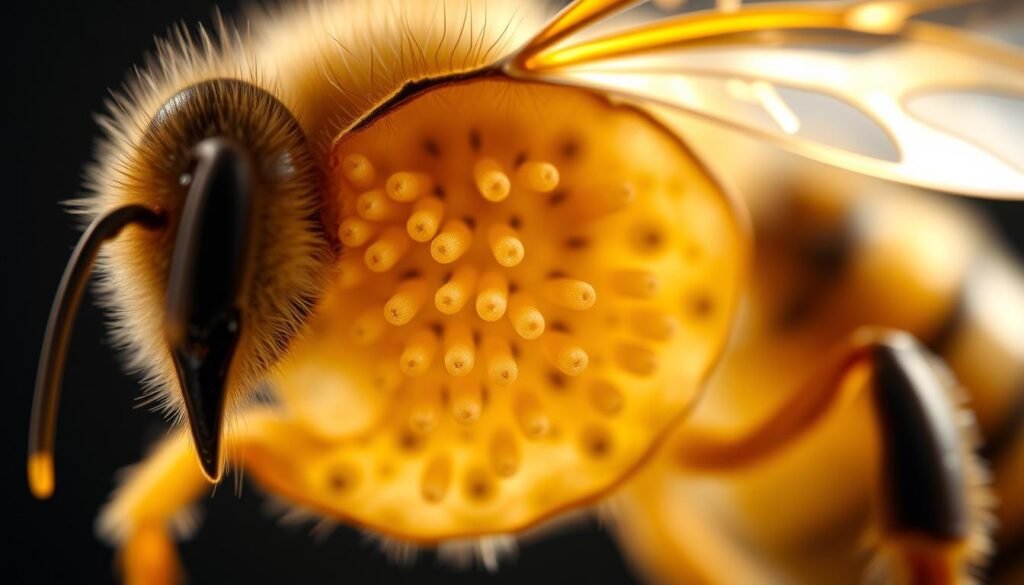
The spermatheca holds about 5–6 million sperm, with extra cells in nearby oviducts. A virgin queen’s sac looks translucent; after mating it turns milky white.
Only roughly 10% of delivered sperm reaches that storage, but multiple matings supply enough reserve to fertilize eggs for up to four years.
Hive temperature and ventilation for sperm viability
Worker bees keep the brood nest at steady temperature and airflow to protect stored sperm. Stable conditions preserve fertility and support long-term brood production.
Practical tips: avoid heavy chemical use, maintain shade and balanced ventilation, and reduce entrances seasonally to buffer heat or cold. Keep honey and pollen stores ample so workers can power climate control and feeding.
Monitoring and management: a rapid shift to steady egg laying and a milky spermatheca indicate successful storage. Compact, consistent brood signals healthy sperm reserves; scattered or “shotgun” laying may mean declining fertility and a need to consider requeening.
Egg laying and sex determination made simple
A single decision as an egg passes the laying duct sets a larva’s developmental path.
Haplodiploidy is the genetic system behind sex in honeybees. When the queen releases sperm as an egg leaves her oviduct, a fertilized egg will develop as a diploid female. Unfertilized eggs remain haploid and become males.
The counts matter: females carry 32 chromosomes, while males carry 16. That difference affects relatedness, colony genetics, and selective breeding.
How the csd gene prevents costly diploid males
The complementary sex determiner (csd) gene acts like a switch. Two different csd alleles produce female development. Identical csd alleles yield diploid drones that workers detect and remove.
Warning sign: a scattered, “shot” brood pattern often signals diploid drone culling. That can indicate inbreeding or low local drone diversity and may prompt requeening.
Practical mechanics and early feeding
As eggs pass the spermathecal duct, the queen either releases sperm or does not, matching colony needs for workers or drones. Cells and comb size help guide where she lays each egg.
Eggs hatch into larvae by day three. Nurse bees feed all larvae royal jelly at first, then ration it to steer caste outcomes.
| Topic | Mechanic | Practical sign |
|---|---|---|
| Fertilization | Queen releases sperm during laying | Mixed worker brood in worker cells |
| Haplodiploidy | 32 vs 16 chromosomes | Expected male/female ratios |
| csd gene | Allele diversity = females | Shot brood = possible diploid drones |
- Check for eggs at multiple stages to confirm the queen is active and laying correctly.
- Maintain diverse local drone sources to reduce diploid drone risk; see a primer on honey bee genetics basics.
- Healthy nutrition and stable hive conditions keep the queen’s sperm use and egg outcomes reliable; read about physiology for colony care honeybee physiology.
Cells, sizes, and roles: how comb design guides the queen
Comb architecture directs where the queen places eggs and which caste will develop. Worker-built frames contain two common cell sizes: small worker cells and larger drone cells. Each size gives a visual cue that influences laying choices.
Large vs. small cells: allocating drones and workers
Large cells typically host unfertilized eggs that become drones. Smaller cells favor fertilized eggs for workers and a steady workforce.
Colony needs and queen’s fertilization decisions
Queens are adaptable. When only one cell type is available, she will adjust and later compensate to rebalance sex ratios.
- Rotate in fresh worker-size comb to boost worker production.
- Allow some drone comb each spring to support mating success regionally.
- Place frames strategically and time expansions with nectar flow.
Workers influence outcomes by where they build and repair cells. Fresh wax invites tidy laying and stronger brood patterns.
Read comb: domed, large cappings usually mark drone brood; flatter cappings indicate worker brood. Inspect regularly to detect imbalances and swap frames or renew comb as needed.
Brood development timelines and nutrition
A clear timeline of eggs, larvae, and capped brood helps predict hive strength and timing for interventions.
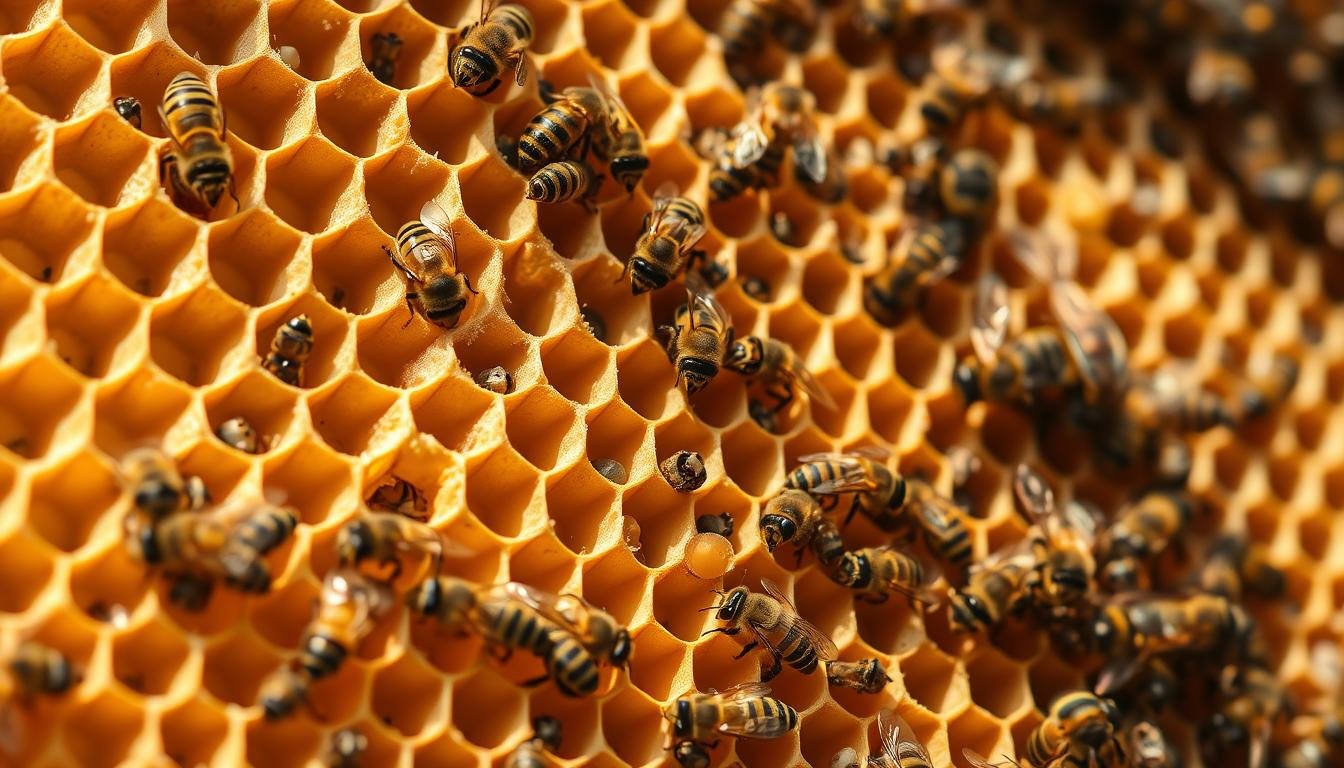
Inspection timeline: eggs are visible on days 1–3, then larvae appear by day 3. Watch for capping that leads to emergence at about 16 days for a queen, 21 days for a worker, and 24 days for a drone.
Egg to larva: three-day milestones
During inspections, note egg placement and fresh white larvae by day three. Consistent, dense comb with adjacent eggs signals a healthy queen and steady laying.
If you see scattered eggs or delayed larvae, mark expected emergence dates and recheck in short intervals to catch developing issues early.
Royal jelly feeding and caste control
All larvae receive royal jelly for the first 2–3 days. After that, nurse workers switch most brood to worker food, while future queens get jelly continuously.
Nutrition drives form: continuous royal jelly triggers ovary development and queen traits. Keep ample honey and pollen so nurse glands produce enough secretion for normal growth.
Capped brood to emergence and practical checks
Capping patterns and timing confirm development: 16/21/24 days for queen, worker, and drone respectively. Drone brood takes longest, so ensure resources cover the extended demand.
Maintain steady hive temperature and ventilation for uniform rates. Identify vertical queen cells versus horizontal worker/drone cells to spot swarming or supersedure potential.
- Track emergence dates to schedule splits or requeening around nectar flows.
- Dense, even brood patterns indicate strong food supply and nurse performance.
- Sporadic patterns or cooled combs need closer evaluation and quick nutritional support.
Genetic diversity: why queens mate with many drones
A queen’s choice to mate with many males shapes the genetic mosaic inside each hive.
Relatedness, supersisters, and colony performance
Haplodiploid genetics explain much of the behavior. Females carry 32 chromosomes; males carry 16. That math creates unusual relatedness patterns in honeybees.
Daughters sired by the same drone become “supersisters” and share about 75% of genes. Workers with different fathers share roughly 25%.
More fathers mean more subfamilies. Greater genetic diversity improves disease resistance, task specialization, and colony resilience.
Breeding implications for beekeepers
One drone delivers genetically identical sperm, but each drone differs from the next. A queen that mates with many drones stocks varied sperm for life.
- Avoid mating related queens and drones to reduce diploid males and shot brood.
- Place hives near varied drone congregation areas to improve outcrossing.
- Support regional drone rearing from strong stock to spread desirable traits.
| Focus | Why it matters | Practical sign | Action for beekeepers |
|---|---|---|---|
| Multiple fathers | Boosts worker variation | Robust task distribution | Encourage open mating near diverse DCAs |
| Chromosome system | Haplodiploidy shapes kinship | 75% supersister relatedness | Use unrelated mates when breeding |
| Inbreeding risk | Produces diploid drones | Shot or scattered brood | Requeen with unrelated stock |
| Early mating | Stocks lifetime sperm needs | Stable laying after mating season | Protect queens during first flights |
Monitor brood patterns regularly. Spot-check for shotgun layouts and requeen if inbreeding signs appear. Early-season mating success sets the tone for the whole year.
Drone life cycle: purpose, risks, and seasonal eviction
Drones develop from unfertilized eggs and follow a longer growth timetable than workers. They take about 24 days from egg to emergence and mature for the warm months when mating flights occur.
Role: A drone is a male built for mating. He does not forage or defend the hive and adds no stinging defense.
Timing and needs: Because drones take longer to reach adulthood, strong colony nutrition matters. Adequate honey and pollen help nurse bees rear healthy larvae into viable males.
Mating risks: Successful matings usually kill drones when the endophallus detaches. Unsuccessful males may survive but still face eviction when resources drop.
Seasonal eviction: In fall workers often push drones out to conserve food for overwintering bees. This is normal colony behavior, not a sign of disease.
- Inspect raised, domed cappings to spot drone brood.
- Allow moderate drone comb in spring to support regional mating needs.
- Limit excessive drone rearing to avoid draining hive resources.
Management tip: Balance is key. Healthy colonies modulate drone numbers with the seasons; align interventions with those natural rhythms to support local mating success and overall hive health.
Requeening and colony-level reproduction decisions
Deciding when to replace a queen balances hive signals, season, and future workforce needs. Watch brood patterns, worker behavior, and scent cues. Those clues tell you if the hive plans to requeen itself or needs help.
Signals of a failing queen: pheromones and laying patterns
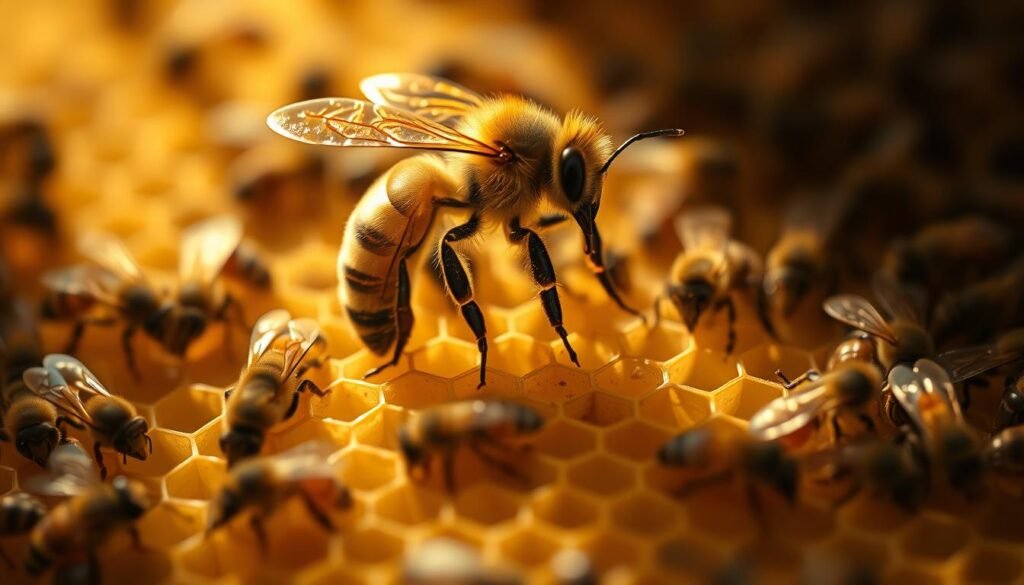
Reduced pheromone strength lets worker ovaries activate and can change hive odor. Look for scattered brood, inconsistent egg placement, and an uptick in worker-laid eggs.
Key signs: spotty comb with missing eggs, more drone cells than usual, and a slower pace as the queen lays eggs. These indicate declining performance and may prompt requeening.
Supersedure and worker “balling” behavior
Supersedure cells are typically vertical and near brood that mixes old and new eggs. Their presence with a weak layer often signals a planned swap by the colony.
“Worker balling is an extreme response: workers crowd and overheat a defective queen to end her life.”
Balling is urgent. If you see frantic clustering or smashed queen signs, inspect quickly and prepare to introduce a replacement.
Practical steps for requeening
- Introduce a new queen proactively during calm nectar flows to stabilize brood output.
- Feed light syrup and pollen supplement to keep nurse food reserves high during transitions.
- Minimize disturbances during the mating window so virgin queens can orient and return safely.
| Check | When | Expected sign |
|---|---|---|
| Laying consistency | Weekly during spring | Adjacent eggs across frames |
| New queen mating | 2–3 weeks after introduction | Steady, increasing egg numbers |
| Queen cells | At first sighting | Vertical supersedure vs. angled swarm cells |
Recordkeeping matters. Note queen age, replacement dates, and mating success to guide future choices. Let colonies lead when possible, but step in when brood gaps threaten productive life in the hive.
Environmental factors that influence successful reproduction
Small shifts in wind and temperature can determine whether a mating flight succeeds or the queen returns home unmated. Mating flights need warm, dry afternoons with low wind. Queens fly farther and longer in higher temperature when conditions are calm.
Optimal weather for mating flights
Plan mating activity around brief weather windows. Aim inspections and hive moves for warm, wind-free days in the afternoon. Rain, gusts, or cool air cut flight success and reduce mating opportunities.
Pesticides and sperm quality concerns
Workers keep the brood nest at steady temperature and ventilation to protect stored sperm in the queen’s spermatheca. Extreme heat, cold snaps, or chemical exposure can lower sperm viability and harm future egg fertilization.
- Practical steps: add afternoon shade in heat waves and adjust entrance size for ventilation.
- Provide reliable water and ample honey and food stores so colonies can regulate nest temperature.
- Avoid chemical treatments during mating flights and reduce nearby pesticide drift; support regional forage and planting.
- Schedule inspections around forecasts to avoid disrupting flights and thermal control.
Microclimate choices for apiary placement—shelter from wind, dappled shade, and nearby water—improve mating outcomes. For timing and climate strategies, see beekeeping in different climates.
Beyond honey bees: how other bee species reproduce
Not all species follow honeybee norms; some mate on the ground, others in the air, and some bypass queens entirely.
Bumble bees: ground-level, longer mating sessions
Bumble bees often mate close to the ground. Sessions can last minutes to an hour, far longer than honeybees’ rapid aerial contacts.
Queens typically meet fewer males. That means less mixing of genes but fits their seasonal, colony-based life cycle.
Carpenter and sweat bees: aerial and opportunistic strategies
Carpenter males perform a bobbing dance and mate in the air. Body position and flight dynamics are key to successful coupling.
Sweat bees are more opportunistic. They may mate without formal flights and females will mate and lay as conditions demand.
Social parasitism in African Cape honey bees
In the Cape population, some workers reproduce asexually and can invade foreign nests. This social parasitism lets workers bypass normal queen control and take over a colony’s brood production.
- Behavior differs more than core genetics; chromosomes and basic biology remain similar across related species.
- Habitat shapes method: ground mating suits sheltered sites; aerial mating fits open areas.
- Conservation note: diverse forage and nesting options help multiple species complete their mating process safely.
Observation ethics: avoid disturbing mating zones or nests for unmanaged species while learning from careful observation.
Conclusion
Successful seasons hinge on a queen that lays well, workers that feed larvae, and managers who read brood patterns early. Watch mating windows, check for steady egg counts, and note how honey bees balance brood and stores to forecast hive needs.
Key timelines remain essential: verify eggs and young larvae on schedule, track capped brood to expected emergence, and remember that stored sperm and chromosomes shape long-term colony performance. Keep an eye on drones only during mating months and act if shot or scattered patterns appear.
Protect food reserves and reduce chemical drift so worker care and temperature control support healthy development. Requeen proactively when output falls, manage comb and drone presence seasonally, and apply these checks across hives to strengthen honey production and resilience in your apiary.
FAQ
What are the main castes in a honey bee colony and what roles do they play?
A colony includes three castes: the queen, workers, and drones. The queen lays eggs and has fully developed ovaries. Workers are sterile females that maintain the hive, forage, and tend brood. Drones are haploid males produced to mate with virgin queens during mating flights.
How do worker bees’ ovaries differ from the queen’s?
Workers possess dormant ovaries and rarely lay viable fertilized eggs. They can lay unfertilized eggs that develop into drones under certain conditions, but their egg production is limited compared with the queen’s continuous, high-volume laying.
Why are drones haploid and what is their purpose?
Drones develop from unfertilized eggs and carry a single set of chromosomes. Their sole reproductive purpose is to mate with virgin queens in drone congregation areas, after which they typically die.
How do queens mate and how many drones do they mate with?
Queens take mating flights to nearby drone congregation areas. They mate in midair with multiple drones—often a dozen or more—to gather genetically diverse sperm, which boosts colony health and productivity.
What is a drone congregation area and how can I spot one?
Drone congregation areas are consistent aerial zones, usually 20–40 meters above ground, where drones gather to wait for virgin queens. They often occur over landmarks or clearings; you may see increased drone activity and circle patterns on warm, calm days.
How does the mating act terminate and what is the mating sign?
Mating involves the drone’s endophallus entering the queen; it is everted during copulation and usually detaches from the drone, causing his death. The mating sign (part of the male genitalia) may remain visible at the queen’s rear for a short time.
How does the queen store sperm and how long does it last?
The queen stores sperm in a specialized organ called the spermatheca. Under proper hive conditions—consistent temperature and ventilation—sperm can remain viable for several years, allowing the queen to fertilize eggs throughout her life.
Why do hive temperature and ventilation matter for sperm viability?
Stable warmth around 33–35°C and adequate airflow preserve sperm viability and support brood development. Extreme temperatures or poor ventilation reduce sperm life and impair egg fertilization rates.
How does sex determination work in honey bees?
Honey bees use haplodiploidy: fertilized eggs (diploid) become females—workers or queens—while unfertilized eggs (haploid) develop into males. The queen controls fertilization as she releases stored sperm while laying.
What role does the csd gene play in preventing diploid drones?
The csd (complementary sex determiner) gene determines female development when heterozygous. Homozygosity at csd produces diploid males, which colonies usually eliminate. Genetic diversity at csd helps avoid diploid drones.
How do comb cell sizes influence what the queen lays?
Comb architecture guides allocation: larger cells typically receive unfertilized eggs destined to become drones, while smaller cells house fertilized eggs for workers. The queen’s fertilization decisions align with cell size and colony needs.
How does the queen decide when to fertilize an egg?
The queen senses cell size and colony cues. She selectively releases sperm to fertilize eggs intended for worker cells and withholds sperm for drone-sized cells, balancing workforce and male production based on hive demands.
What are the key brood development timelines?
After laying, eggs hatch into larvae in about three days. Development to emergence varies: roughly 16 days for queens, 21 days for workers, and 24 days for drones, assuming proper nutrition and hive conditions.
How does royal jelly influence larval fate?
Larvae destined to become queens receive continuous, rich royal jelly during the larval stage. Worker-destined larvae get a switch to a less rich diet after a few days. Nutrition drives queen development versus worker differentiation.
Why do queens mate with many drones and why does that matter?
Multiple mating increases genetic diversity within a colony, improving disease resistance, foraging range, and overall performance. Diverse paternity reduces the chance of harmful traits concentrating in offspring.
How should beekeepers use mating knowledge in breeding programs?
Beekeepers select queens from strong, healthy stock and control mating when possible through isolated yards or instrumental insemination. Promoting genetic diversity reduces risks like csd homozygosity and enhances colony vigor.
What is the life cycle and seasonal fate of drones?
Drones mature for mating in spring and summer. After mating season or during resource scarcity, colonies evict drones to conserve food; many die outside the hive as a result.
How can I tell a queen is failing and needs replacement?
Signs include irregular egg patterns, reduced brood, low pheromone levels, and increased supersedure cells. Worker behavior like balling or developing emergency queen cells also signals queen decline.
What is supersedure and how do workers replace a queen?
Supersedure occurs when workers rear a new queen to replace a failing one. They feed selected larvae royal jelly in supersedure cells; sometimes workers ball a weak queen to remove her and accelerate replacement.
What environmental factors affect mating flight success?
Optimal conditions include warm, calm weather with light winds and daytime temperatures above about 60°F (15°C). Poor weather, pesticides, and habitat loss reduce mating success and sperm quality.
How do pesticides impact sperm quality and colony reproduction?
Certain pesticides impair drone fertility and reduce queen sperm viability, leading to poor brood patterns and reduced colony resilience. Minimizing exposure and adopting integrated pest management helps protect reproductive health.
Do other bee species reproduce the same way as honey bees?
No. Bumble bees mate at ground level in longer sessions; carpenter and sweat bees use diverse aerial or opportunistic strategies. Some species, like the African Cape honey bee, exhibit social parasitism with unique mating behaviors.
How do mating strategies differ between bumble bees and honey bees?
Bumble bees often mate near nests on the ground and usually have fewer mating partners, while honey bee queens fly to drone congregation areas and mate with multiple males to maximize genetic diversity.
What should beekeepers monitor to support healthy colony reproduction?
Keep colonies strong with adequate forage, maintain proper hive temperature and ventilation, monitor for pesticides and disease, and replace failing queens promptly to preserve brood viability and colony performance.