
This concise review helps people in the United States make sense of what royal jelly is and why it draws attention in health markets. Nurse bees secrete this substance to feed larvae and the queen, and manufacturers harvest it for supplements and skin creams.
Science has found signals that merit study. Lab work showed reduced HSV‑1 growth and a drop in viral load in one trial. Still, clear clinical evidence is missing and more rigorous trials are needed before treatment claims are made.
This review frames products and marketing, summarizes composition cues like protein and minor compounds, and previews key biological activities such as immunomodulation, antioxidant action, and wound healing.
We translate complex research into practical, evidence-aligned guidance without offering medical advice. Consult a clinician for personal treatment decisions.
Key Takeaways
- Royal jelly is a bee‑produced substance used in many U.S. supplements and creams.
- Basic research shows promising antiviral signals, but clinical proof is limited.
- Products vary in quality and composition; standardization is a concern.
- Key components include proteins, fatty acids, and minor bioactive compounds.
- This review focuses on evidence strength, mechanisms, safety, and practical considerations.
Research Review Overview: Why Explore Royal Jelly’s Antiviral Potential Now
Growing lab signals and consumer demand call for a careful research review now. Interest in natural products with viral activity has risen in U.S. health markets, and basic studies on bee-derived products are expanding.
This review will synthesize findings from bench work in cells, in vitro assays, animal models, and early human signals. We separate mechanistic properties from clinical outcomes to show where the evidence has promise and where gaps remain.
Bees produce this secretion to feed a queen, a unique biological role that spurred study of its bioactive compounds. The material contains water, proteins, lipids, carbs, vitamins, minerals, and many minor compounds.
“Observed antioxidant and immunomodulatory activities suggest plausible pathways for antiviral effects, but activity in the lab does not equal clinical benefit.”
Practical focus: we review product types under study (oral, topical, extracts), discuss standardization needs, and compare signals from honey and other bee items without conflating outcomes.
| Evidence Type | What It Shows | Key Limitations |
|---|---|---|
| Cells / In vitro | Viral growth reduction; mechanistic clues | High dose, variable extracts |
| In vivo (animal) | Immune response modulation; wound healing | Limited models, small samples |
| Early human | Preliminary viral load signals in isolated studies | Few trials; heterogenous products |
What Royal Jelly Is: Bee Biology, “Superfood” Status, and Human Use
Worker bees produce a nutrient-rich white secretion that shapes caste and lifespan in the hive.
Definition and origin: This substance is a viscous, water-rich matrix secreted by hypopharyngeal and mandibular glands in young worker bees. Larvae receive it for about two to three days, while the queen is fed it throughout her life.
Biological potency: Continuous feeding links directly to the queen’s greater fertility and longevity. A signature protein, royalactin, helps drive larval differentiation into a queen and illustrates how specific proteins and compounds can exert strong biological effects.
Human interest grew from that potency. People use this jelly as a dietary supplement and in topical products, inspired by the “superfood” narrative. Yet scientific review stresses evidence-based evaluation before health claims are accepted.
“Early literature places this secretion on a path from basic hive biology to applied research for human health.”
| Feature | Hive Role | Relevance to research |
|---|---|---|
| Secretion source | Worker bee glands | Explains composition variability |
| Feeding pattern | Larvae (2–3 days) vs. queen (lifelong) | Links to developmental effects |
| Matrix makeup | Water, proteins, lipids | Transports bioactive compounds for cells and immune studies |
Botanical and environmental factors change composition, much like honey. This variability sets up later sections on composition, mechanisms, and quality standards. For an early synthesis, see an early study review that traces biological findings to preliminary human research.
Chemical Composition Relevant to Antiviral Activity
A focused look at chemical makeup helps explain which constituents might influence viral processes. Understanding the mix of water, macronutrients, and minor molecules frames later discussion of mechanisms and research needs.
Proteins and peptides
About 50%–60% is water with roughly 18% proteins, a relatively high protein fraction compared with similar bee products. Major royal jelly proteins (MRJPs), including royalactin, act as signaling molecules linked to growth and cellular responses.
Lipids and signature fatty acids
Lipids make up 3%–6% and include 10‑hydroxy‑2‑decenoic acid (10‑HDA). 10‑HDA is a common chemical marker used for quality and standardization and has reported immunomodulatory properties.
Vitamins, minerals, and minor compounds
Trace vitamins and minerals total about 1.5%. Roughly 185 organic compounds have been identified, such as AMP N1‑oxide, adenosine, acetylcholine, polyphenols, and small hormones.
- These bioactive compounds and proteins, with lipid carriers, may together affect viral growth, host immune response, and antioxidant balance.
- Some components show antibacterial properties, which gives broader antimicrobial context but does not prove direct viral action.
- Standardized quantification of 10‑HDA and other markers is vital for reproducible research and consumer clarity, and parallels to honey composition can inform synergy studies.
Proposed Antiviral Mechanisms of Royal Jelly
Laboratory work and molecular analyses suggest multiple ways this bee secretion might affect viral processes.
Direct inhibition and replication interference
Certain compounds, such as 10‑HDA and specific proteins, have shown activity in cell-based assays that point to blocked viral entry or reduced replication. These signals come mainly from in vitro work, where dose and extract type vary widely.
“Cell studies map where compounds may bind or disrupt viral steps, but they do not confirm clinical benefit.”
Immunomodulation: innate and adaptive support
Proteins and lipids present in the matrix can modulate innate immune pathways and may shape adaptive responses in animal models. This activity could help the host clear infections in vivo, though translation to people is not established.
Antioxidant and anti-inflammatory pathways
Antioxidant activities reduce oxidative stress that viruses often trigger. Lower inflammation can limit tissue damage and downstream complications.
- Multiple compounds may act together, creating synergistic effects that single‑compound isolation cannot explain.
- Cells experiments remain crucial to map dose-response, reproducibility, and mechanism hypotheses.
- Honey literature sometimes informs these pathways, but product matrices and concentrations differ markedly.
| Mechanism | Supporting Data | Key Limitations |
|---|---|---|
| Direct viral block | Cell assays showing reduced entry/replication | High doses; variable extracts; limited human data |
| Immune modulation | Animal studies showing altered innate/adaptive markers | Species differences; small samples |
| Antioxidant/anti‑inflammatory | Biochemical assays and wound‑healing models | Unclear clinical impact on viral illness |
Safety overlay: Immunomodulatory effects can vary by individual and by concurrent therapies. Until larger trials appear, consider this matrix an area of interest rather than a standalone treatment pathway.
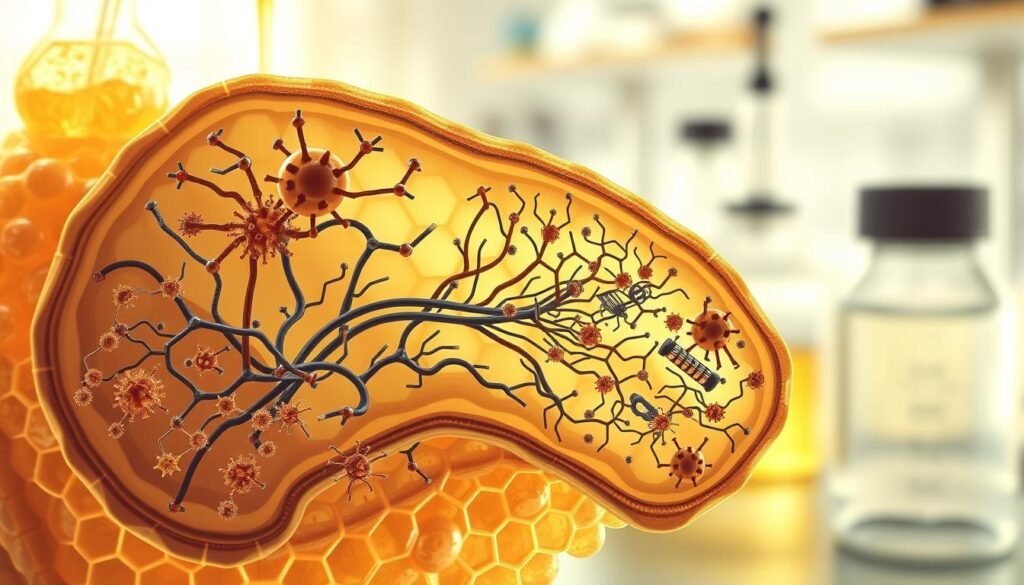
Evidence Landscape: In Vitro, In Vivo, and Human Data at Present
Data from cells, animal models, and small human reports give an incomplete picture of real-world effects.
In vitro findings
Cell-based assays have shown reduced viral growth or load with exposure to extracts in several labs. Results vary by preparation, concentration, and assay type.
One notable study reported inhibited HSV‑1 growth and decreased viral load, a key early signal that needs replication under standardized protocols.
In vivo and clinical signals
Animal studies show immunomodulatory and wound‑healing effects, but few controlled human trials target viral endpoints. This creates a clear evidence gap.
Clinical work in other areas—improved glycemic status, better lipid markers, and reduced oxidative stress in diabetes—suggests systemic effects that might support antiviral pathways, without proving direct efficacy.
“Promising preclinical effects require standardized extracts, consistent dosing, and validated viral endpoints in human trials.”
- Common study limits: small samples, variable dosing, and poor standardization (e.g., 10‑HDA levels).
- Safety reporting should accompany efficacy measures in future trials.
- Honey research shows antimicrobial action and may guide hypotheses, but it does not substitute for direct clinical study.
| Evidence Tier | Key Findings | Primary Limitations |
|---|---|---|
| In vitro (cells) | Reduced viral growth; mechanistic clues | Variable extracts, high doses, assay differences |
| In vivo (animal) | Immune modulation; healing effects | Small models; species differences |
| Human (clinical) | Metabolic and oxidative stress benefits; limited antiviral data | Few trials on viral endpoints; inconsistent controls |
Priority research needs: standardized extracts, consistent dosing, validated viral assays, and linked vitro vivo studies using biomarkers that bridge lab and clinical outcomes.
Case Spotlight: Herpes Simplex Virus Type 1 (HSV‑1) Findings
A focused laboratory report showed measurable reductions in HSV‑1 replication after exposure to a bee‑derived preparation. This result has drawn attention because it links bench signals to a clear viral endpoint.
Growth inhibition, decreased viral load, and study design notes
The central finding: in a cell-based study, exposure to royal jelly preparations led to marked inhibition of HSV‑1 growth and a measurable drop in viral load. These assays used cultured cells and standard viral readouts such as plaque counts and viral RNA quantification.
This result is an in vitro signal. It supports biological plausibility but does not establish clinical treatment efficacy in people. Translating bench effects to humans requires more steps.
Typical design elements included choice of susceptible cell lines, defined viral challenge protocols, a range of dosing for the jelly extract, and endpoints like plaque reduction or PCR viral load. Key confounders were source variability, missing 10‑HDA standardization, and extraction method differences that alter observed properties.
- Mechanistic overlap: immunomodulation and antioxidant actions may complement direct viral effects, complicating mechanism parsing.
- Next steps: replicate across labs with standardized material, test dose–response, then move to animal models and early human trials with safety and efficacy endpoints.
“This HSV‑1 case shows promise but highlights the limits typical of natural products research.”
Topical formulations for localized lesions and oral approaches could both be explored, but rigorous clinical evaluation is necessary before recommending royal jelly for HSV‑1 treatment.
Beyond Viruses: Antimicrobial Context That May Support Antiviral Benefits
Evidence for bacterial inhibition and tissue repair in bee products provides a useful backdrop for investigating their effects on viral disease.
Clinical work on honey shows clear microbial inhibition and wound healing in real-world care settings, including some antibiotic‑resistant cases. These results give a practical comparator for related bee products.
Reports note that this secretion has antibacterial properties and supports local healing. Reduced bioburden, balanced moisture, and an antioxidant milieu create a local environment that helps tissues recover and resist secondary infection.
Compounds that curb bacteria can also modulate host responses, such as lowering inflammation and supporting repair pathways. Those pathways may indirectly affect viral outcomes even when direct viral action is unproven.
Safety matters for topical use: allergic reactions to bee-derived products can range from dermatitis to severe responses in sensitive people. Trials should measure antimicrobial and wound-related outcomes together to clarify clinical relevance for viral treatment hypotheses.
“The antimicrobial backdrop strengthens rationale for continued viral research, but it does not replace direct clinical proof.”
Synergy and Comparisons with Other Bee Products
Comparing bee-derived products helps clarify which mixtures might deliver complementary benefits in lab and clinical work.
Honey, propolis, and royal jelly: overlapping bioactive compounds
Honey contains carbohydrates, enzymes, phenols, and flavonoids linked to microbial inhibition and wound healing. Propolis adds resins, waxes, essential oils, pollen, and a broad mix of phenolics and terpenoids with antibacterial and anti‑inflammatory activity.
Royal jelly also brings proteins like royalactin and 10‑HDA plus many minor compounds. Across these products, phenolics and flavonoids are key bioactive compounds that drive antioxidant and antimicrobial activities.
Antioxidant, antibacterial, and immunomodulatory activities in concert
These materials can act together in formulations. Antioxidant support from honey or propolis may reduce oxidative stress and help immune function. That effect could, in theory, enhance the immune‑modulating profile found in royal jelly also.
Synergy means the whole matrix can produce effects not seen with isolated compounds. Early lab work shows some components affect cancer cells in vitro, illustrating broad bioactivity without implying clinical benefit.
- Standardization is essential: marker levels like 10‑HDA and phenolic content must be reported to compare outcomes.
- Future trials should test single ingredients versus combinations to spot additive or synergistic effects.
- Practical issues—product variability, labeling, and market availability in the U.S.—influence study design and consumer decisions.
Formulations, Delivery Routes, and Product Types in Research
Delivery route and product type determine stability, bioavailability, and what a study can actually measure.
Oral supplements vs. topical applications
Oral supplements aim for systemic effects and require formulations that protect proteins and fragile compounds during digestion.
Topical creams target local skin or mucosal lesions and can use carriers to improve penetration while limiting systemic exposure.
Extracts, whole jelly, and standardization considerations
Products range from whole fresh material to lyophilized powder and alcohol or water extracts. Each type alters which compounds remain active.
The matrix is 50%–60% water and contains proteins and lipids that affect shelf life and delivery. That composition can reduce or enhance compound stability.
Research impact: cells-based studies often test concentrated extracts that differ from consumer products. This complicates translation to real-world treatment and product claims.
- Potency markers: quantified 10‑HDA and protein profiles are vital for consistency.
- Formulation choices: excipients and carriers should balance skin penetration and irritation risk.
- Study design: report dosing ranges, frequency, and duration tied to endpoints like symptom relief or biomarker change.
| Product Type | Key Features | Research / Clinical Implication |
|---|---|---|
| Whole jelly | High water content; native protein-lipid matrix | Less stable; variable batches; closer to hive material |
| Lyophilized powder | Lower water; improved shelf life; preserved proteins | Better for dosing; needs validated reconstitution methods |
| Alcohol/water extract | Concentrates specific compounds; variable profiles | Useful for cells studies; may not match consumer creams |
| Topical cream/ointment | Carriers enhance penetration; added excipients | Ideal for local lesions; requires irritation testing |
Recommendation: manufacturers and researchers should provide transparent labeling—10‑HDA levels, protein content, and processing methods—to help clinicians and consumers compare products and to make study replication possible.
Safety Profile: Allergies, Medication Interactions, and Contraindications
Safety signals for bee-derived supplements range from mild skin irritation to life‑threatening allergic events. People should weigh potential benefits against clear risks and consult clinicians before starting any new product.
Allergic reactions: from dermatitis to anaphylaxis
Reported reactions include contact dermatitis, hives, respiratory symptoms, and rare anaphylaxis. Stop use immediately and seek emergency care for severe breathing or swelling.
- Those with known bee or pollen allergies and people with asthma face higher risk.
- Start topical products with small amounts on a patch of skin and monitor for 24–48 hours.
Pregnancy and breastfeeding: current cautions
Safety data in pregnancy and lactation are limited. Given unknown effects on the fetus or infant, avoid concentrated preparations unless a clinician advises otherwise.
Choosing well‑studied alternatives and discussing vitamins and supplements with a healthcare provider is prudent for expectant people.
Potential drug interactions: when to consult a clinician
Concentrated products can affect immune responses and blood clotting pathways in theory. This raises potential interactions with immunomodulatory drugs and anticoagulants.
- Tell your pharmacist or physician about any supplement before adding it to a regimen.
- Document any adverse effects and report them to your clinician to guide safe treatment decisions.
- Product variability and undeclared ingredients complicate safety assessment; choose reputable sources and read labels carefully.
“Honey is widely consumed, but concentrated jelly products may produce different effects due to distinct composition and potency.”
Practical note: join study registries or report adverse events when possible to help improve public health knowledge and guide safer treatment choices.
Nutritional Context: What a Typical Serving Provides—and Doesn’t
A single 1/4-teaspoon portion tells a clear story about nutrition vs. bioactivity.
In practical terms, that small serving has about 2 calories, 0 g protein, 0 g carbohydrates, ~0.04 g fat, and ~0.13 g sugar. It contains only trace vitamins and minerals and roughly 50%–60% water.
What this means: macronutrient and micronutrient contributions are minimal. Calories are negligible, so it will not meaningfully change daily macros or serve as a protein source.
Interest in this product comes from its bioactive matrix—proteins and lipids that signal in cells and may alter oxidative stress or support wound healing in some studies. These effects are not due to basic vitamins or minerals.
Compare to honey: honey is carbohydrate-rich and supplies energy, while this substance provides few calories and different functional compounds. That distinction matters for consumers and researchers.
- Look for products that report quantified bioactive markers, not just “rich in vitamins” claims.
- Balance any potential benefits against allergy risk and safety concerns, especially for sensitive people.
“Evaluate nutrition as context: functional bioactivity—not micronutrient supply—drives research interest.”
Quality, Potency, and Standardization Challenges
Product quality varies widely between hives, processors, and storage chains, and that variability shapes study results.
Botanical source, seasonality, processing, and storage change the mix of compounds and measured potency. About 185 organic compounds appear in analyses, yet profiles differ by location and harvest.
Markers and specifications
10‑HDA is the most common marker used to set label specs and compare lots. It is useful, but it captures only one piece of a complex compounds profile.
Handling, degradation, and transparency
Proteins like royalactin and sensitive lipids break down with heat and poor storage. Validated handling and stability protocols help preserve activity for cells and vitro studies.
- Report product type, extraction method, and quantitation in every study.
- Adopt honey best practices—third-party testing and reference materials improve batch consistency.
- Publish full chemical fingerprints rather than only 10‑HDA to link markers to biological signals.
| Challenge | Impact | Practical step |
|---|---|---|
| Source/seasonality | Variable compounds and potency | Standard sampling and metadata reporting |
| Processing/storage | Protein and lipid degradation | Validated cold chain and stability tests |
| Limited specs | Poor reproducibility across studies | Science-driven specifications and reference materials |
“Consensus standards and transparent methods are needed to move findings from vitro and cells research toward reliable clinical evaluation.”
Linking Antioxidant and Wound-Healing Activities to Antiviral Outcomes
Reduced oxidative damage and faster tissue repair form a plausible link between antioxidant activity and improved infection outcomes.
This bee secretion shows reported wound healing and antioxidant effects in lab and small clinical work. Honey has strong, documented wound healing efficacy and antimicrobial activities in challenging infections, which provides a practical model for related products.
Antioxidant action can lower oxidative stress during viral insults, limiting cell damage and helping tissues recover. In cells and in vivo models, better redox balance may create an environment less favorable for viral growth, at least in hypothesis and in vitro signals.
Wound healing mechanisms—improved tissue regeneration and reduced bioburden—may indirectly help control pathogenesis. Honey wound healing literature supports how antimicrobial activities and repair processes coexist to reduce secondary infections and promote recovery. Honey wound healing literature
Validation needs are clear: trials should measure oxidative stress markers, inflammatory cytokines, and viral load together. Those combined metrics can test whether supportive effects translate into clear clinical benefits rather than only adjunctive improvements.
“Healing and antioxidant benefits are promising supports, but they do not replace direct antiviral proof.”
Antiviral uses of royal jelly: Key Takeaways for U.S. Readers Today
Laboratory reports and early clinical signals suggest measurable biological activity worth practical attention.
What current science supports vs. where research is still needed
What the evidence shows: cell experiments reported reduced HSV‑1 growth and lower viral load in vitro. The matrix also demonstrates antimicrobial, immunomodulatory, and antioxidant effects in animals and some human metabolic studies.
Gaps that remain: standardized formulations, clear dose–response data, robust in vivo work, and randomized clinical trials with validated viral endpoints are missing. Without these, clinical treatment claims are premature.
Practical, evidence-aligned considerations for interested people
Choose reputable products that disclose 10‑HDA and composition details. Understand the difference between whole material, extracts, and topical creams; each type affects stability and measured effects.
Safety first: screen for bee allergy before use, avoid concentrated preparations in pregnancy or breastfeeding unless advised by a clinician, and check for potential interactions with medications.
- Start modestly and follow label guidance; patch-test topical forms and watch for skin reactions.
- View this substance as a potential adjunct to prescribed treatment, not a replacement for approved antiviral care.
- Recognize supportive benefits, such as modulation of oxidative stress and healing effects, but do not conflate them with direct treatment outcomes.
- Prefer products with transparent testing and avoid multi-ingredient mixes lacking clear labels.
“Promising, biologically plausible, and worthy of study—yet early for definitive antiviral health claims.”
Follow emerging research and clinical trials to make evidence-aligned decisions as the science evolves. Consumers in the United States should balance potential benefits with clear safety precautions and realistic expectations.
Conclusion
Conclusion
Researchers keep returning to this hive‑derived matrix because its molecules act across multiple pathways. Royal jelly is a worker bee secretion rich in proteins like royalactin, lipids such as 10‑HDA, and diverse bioactive compounds.
Cell studies found reduced HSV‑1 growth, and broader antimicrobial, antioxidant, and wound‑healing activities appear across bee products including honey. Studies on cancer cells show wide bioactivity but do not prove clinical benefit.
Promise aside, translation to clear clinical benefit requires standardized products, robust trials, and safety vigilance—especially for allergic people, pregnant or breastfeeding individuals, and those on interacting medicines. Clinicians, researchers, and consumers should follow emerging data and support high‑quality studies that link mechanisms to outcomes.
FAQ
What are the main bioactive components that might affect viral activity?
Key constituents include major proteins and peptides (such as major royal jelly proteins), fatty acids like 10‑HDA, and a range of vitamins, minerals, and phenolic compounds. These substances show antioxidant, anti-inflammatory, and antimicrobial effects in laboratory tests, which can indirectly or directly influence viral replication and cell response.
What evidence supports effects in cell studies and animal models?
In vitro work shows reduced viral replication or cytopathic effects in some cell-based assays. A few animal studies report supportive immune responses or lower viral load trends, but results vary by virus strain, preparation, and dose. Robust, reproducible in vivo data remain limited.
Are there clinical trials showing benefit for people with viral infections?
Human clinical evidence is scarce. Small pilot trials and observational reports exist, but large, well-controlled randomized studies demonstrating clear antiviral benefit are lacking. Current human data suggest potential supportive effects rather than proven therapeutic outcomes.
How might this bee‑derived substance act against viruses?
Proposed mechanisms include direct interference with viral entry or replication, modulation of innate and adaptive immune responses, and reduction of oxidative stress and inflammation that can worsen viral pathology. Exact mechanisms differ by compound and experimental model.
Can topical preparations help with viral skin conditions like cold sores?
Topical applications have shown promise in some lab and small clinical settings for lesions such as herpes simplex outbreaks, with reports of reduced lesion size or faster healing. Evidence is preliminary, so topical use should complement, not replace, standard antiviral therapy unless guided by a clinician.
How do products compare with other bee remedies like honey or propolis?
All three share overlapping bioactive molecules and antioxidant effects. Propolis and certain medicinal honeys (e.g., Manuka) have stronger clinical data for antimicrobial use. Combining products can yield complementary activity, but standardization and quality vary widely.
What forms are available and which route is best for viral support?
Available forms include fresh substance, lyophilized powder, capsules, and topical creams or gels. Oral supplements aim to provide systemic support; topical forms target localized lesions. Choice depends on the intended use, product quality, and clinical context.
Are there safety concerns or common side effects?
The main risks are allergic reactions, ranging from mild dermatitis to rare anaphylaxis, especially in people allergic to bee products. Other concerns include contamination, variability in potency, and interactions with medications. Pregnant or breastfeeding people and those with severe allergies should consult a clinician before use.
How consistent are commercial products in potency and composition?
Composition varies by bee species, geography, harvest timing, processing, and storage. Markers such as 10‑HDA help gauge potency, but standardized specifications are not universal. Choosing reputable brands that provide batch testing improves consistency.
What dose should a person take for supportive immune or antiviral purposes?
No universally accepted dosing exists. Studies use a wide range of amounts and preparations, so follow product labeling and consult a healthcare provider. Avoid exceeding manufacturer recommendations and disclose use to clinicians to prevent interactions.
Could this substance interact with medications or affect chronic conditions?
Potential interactions are under-researched. Because it can influence immune pathways and has biologically active compounds, people on immunosuppressants or certain chronic therapies should seek medical advice before starting supplements.
What research gaps need addressing to confirm antiviral benefits?
Needed are larger, well-designed randomized clinical trials, standardized product formulations, clarified mechanisms in human systems, and safety studies across diverse populations. Improved reporting on dosing, preparation, and endpoints will strengthen conclusions.
Where can U.S. consumers find reliable products and information?
Look for manufacturers that publish third‑party testing, certificate of analysis data, and clear information on markers like 10‑HDA. Trusted sources for research summaries include peer‑reviewed journals and institutions such as the National Institutes of Health or academic medical centers.