Published December 3, 2025 · Last Updated August 26, 2026
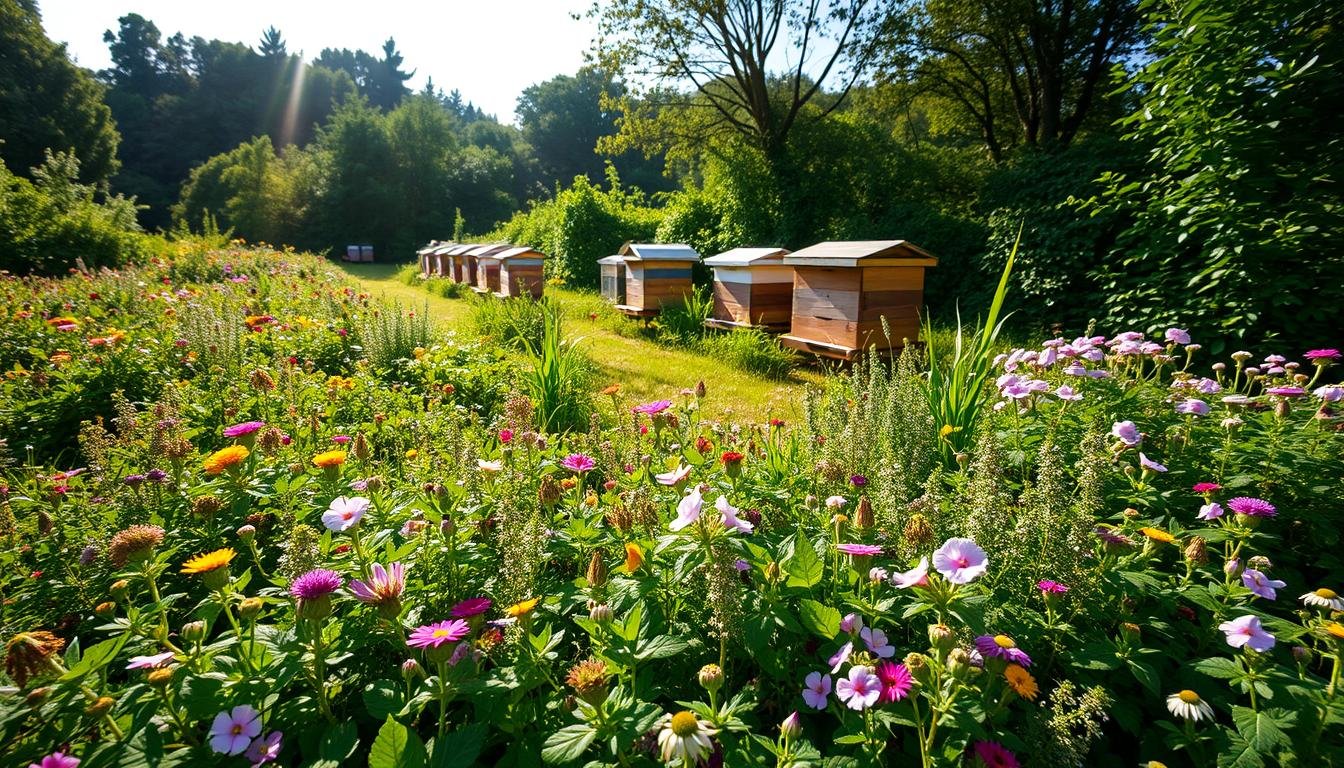
Healthy, low-growing layers can make a big difference around hives. Thoughtful selection stabilizes soil, suppresses weeds, and gives pollinators steady food across the growing year.
Choose species that bloom at different times to close early spring gaps and extend forage into late season. Shade lovers like wood anemone and foamflower pair well with sunny bloomers such as thrift and stonecrop. Winter-hardy options add resilience and keep nectar and pollen available when bees need it most.
The right mix also acts as a living mulch. That reduces irrigation and maintenance while improving habitat value in your garden. Low layers handle light traffic near hive stands, and varied flower forms help different pollinators access nectar and pollen efficiently.
Key Takeaways
- Use diverse species with staggered bloom times to provide continuous nectar and pollen.
- Select sun, shade, and winter-hardy options to suit site conditions.
- Low-growing mixes act as living mulch, cutting water and weeding needs.
- Flower shape and density affect which pollinators and bees can forage.
- Plan plant placement to avoid compaction near hive stands and maintain access.
How to Choose Groundcovers That Support Bees, Pollinators, and Healthy Apiaries
Prioritize combinations that stagger bloom times to sustain forage for active hives. Start by listing species with proven nectar pollen yields and known bloom windows. That simple calendar helps avoid seasonal gaps in food source.
Match plants to the site. Use shade-tolerant woodland bloomers under trees and sun lovers in open rows. Consider soil moisture and select species that thrive without extra irrigation.
Key criteria and site fit
Choose low, traffic-tolerant mixes around hive stands so bees can forage while keepers work. Avoid tall stems in flight paths and keep hive entrances clear.
- Bloom calendar: combine very-early, midseason, and late flowering species to extend forage through the season.
- Maintenance: favor vigorous but controllable groundcovers that reduce weeds and act as living mulch.
- Diversity: mix flower forms and heights to serve short- and long-tongued bees and other pollinators.
“Staggered flowering is the most reliable way to secure steady food for colonies.”
Test mixes in a small plot, note which species establish fastest, and scale up. For planting ideas, see a guide to creating a pollinator garden and a practical list of honeybee-friendly species.
The best ground cover plants for apiaries by light and season
Layer species by light and bloom time so colonies find steady food across spring, summer, and fall.
Shade winners and late shade sources
Wood anemone and liverleaf bloom in March–April, giving early pollen when bees ramp up. Foamflower fills April–May with airy white flowers that flowers attract bees and butterflies.
Ivy blooms in late August–September and is a critical late-season nectar and pollen source in shaded corners.
Summer shade and sun options
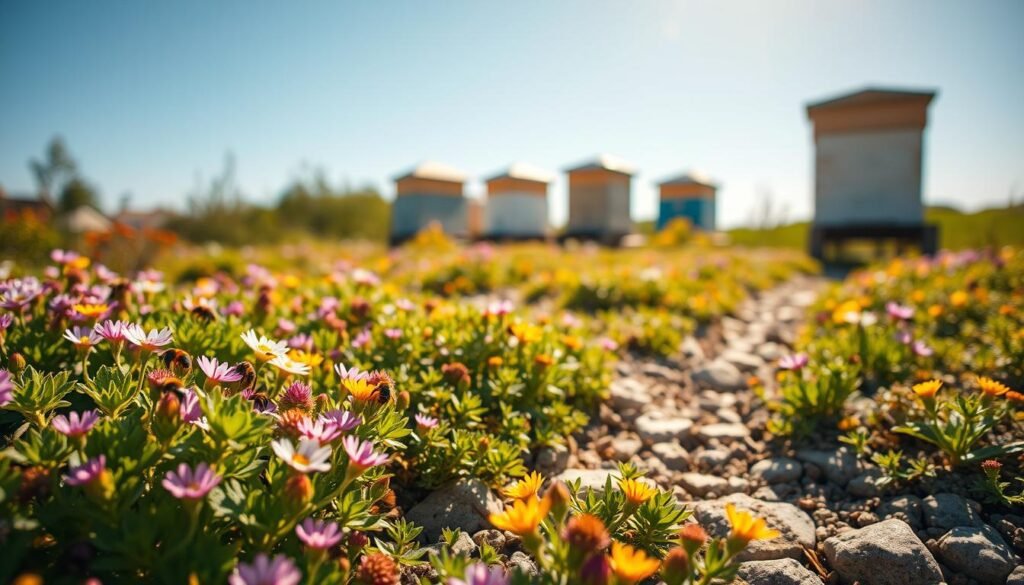
Astilbe and tiarella extend interest in darker beds through summer. In sunny spots, thrift, moss phlox, and catmint offer dense displays and high nectar value in May–June.
Succulents, long-season and anchors
Common stonecrop (Sedum acre) provides drought-tolerant nectar in early summer. Bloody cranesbill holds nectar and pollen from June–October.
| Light | Species | Bloom | Role |
|---|---|---|---|
| Shade | Wood anemone, Hepatica | Mar–Apr | Early pollen, spring food |
| Shade (late) | Ivy | Aug–Sep | Late nectar/pollen lifeline |
| Sun | Thrift, Moss phlox, Catmint | May–Jun | High nectar, attracts pollinators |
| All-season | Sedum, Geranium sanguineum, Potentilla | Jun–Oct | Extended forage and resilience |
Winter-hardy anchors such as lesser periwinkle, dwarf cornel, and bugle stabilize beds and offer early-season blooms. Keep selfheal and low cinquefoil to fill late-summer gaps and carry food into fall.
For more species choices and planting ideas see attracting pollinators.
Native groundcovers that boost biodiversity in U.S. apiaries
A deliberate mix of local species can fill seasonal forage gaps and shelter caterpillars and bees. Native selections add structural winter foliage, spring blooms, and fall nectar so colonies find food and habitat across the year.
Heath aster ‘Snow Flurry’
Symphyotrichum ericoides ‘Snow Flurry’ forms a flat carpet and tolerates light foot traffic. In early fall it is cloaked in white flowers that draw short- and long-tongued bees. Flower centers shift from yellow to rose as pollen is used, signaling resource status to foragers.
Sedges (Carex spp.)
Sedges provide evergreen structure and fine-textured green foliage through winter. Many species support larvae of 36+ butterfly, moth, and skipper species while stabilizing soil. Pennsylvania sedge (Carex pensylvanica) spreads quickly to fill gaps.
Violets (Viola spp.)
Violets spread rapidly and act as essential host plants for about 30 fritillary species. Ants disperse seeds with elaiosomes, helping these natives expand and link habitat patches for butterflies and caterpillars.
Plantain-leaf pussytoes & groundsels
Plantain-leaf pussytoes make drought-tolerant silver mats that survive light traffic and host American lady butterfly larvae.
Groundsels (Packera aurea/obovata) form glossy evergreen mats and produce early gold daisies that feed small bees in spring. Shearing seedheads limits spread when needed.
Robin’s plantain, selfheal, and wild geranium
Robin’s plantain (Erigeron pulchellus) offers long spring daisies and a tidy evergreen rug that suits shaded pits and sunny spots.
Selfheal (Prunella vulgaris ssp. lanceolata) can be integrated into lawns and mown; it supports bumble bees and clouded sulfur caterpillars.
Wild geranium supplies spring nectar guides that attract diverse pollinators across sun and shade.
Fringed loosestrife, mountain mints, and regional add-ons
Fringed loosestrife produces floral oils used by specialist Macropis bees and prefers damp sites.
Massed mountain mints create vigorous summer nectar magnets that boost midseason forage density.
Regionally, buckwheat (Eriogonum) and Ceanothus add fast nectar and dense foliage where climate allows, providing extra food and larval host value.
“Native, low-growing species knit together food and host resources, supporting both pollinators and caterpillars across seasons.”
| Species | Season | Value |
|---|---|---|
| Heath aster ‘Snow Flurry’ | Fall | White flowers; signals pollen status; attracts bees |
| Carex spp. | All-season | Evergreen leaves; host to many caterpillars; soil stabilizer |
| Viola spp. | Spring | Rapid spread; essential fritillary host; ant-dispersed seeds |
| Plantain-leaf pussytoes | Spring–Summer | Drought-tolerant mats; American lady host |
| Mountain mints (Pycnanthemum) | Summer | Vigorous nectar sources; attracts many pollinators |
Quick planning tip: match these native varieties to site moisture and light, and use regionally tested mixes. For restoration guidance, consult a regional prescription guide and a practical native-bee reference to help you select species that will provide food and habitat long term.
Regional restoration prescriptions and a detailed native bee-friendly guide can help refine selections.
Conclusion
Staggered flowering across a low planting palette keeps food flowing for pollinators from spring through fall.
Choose mixes that pair sun and shade perennials so nectar and pollen appear across the year. Use native sedges, violets, and mountain mints to add host value and winter leaves that stabilize soil.
Keep hive entrances clear by reserving taller varieties at the perimeter and planting durable groundcovers near stands. Trial small drifts of plugs, then scale what thrives in your microclimate.
Practical next steps: follow a short checklist in a pollinator groundcover guide here, and align planting with seasonal care using this seasonal beekeeping resource seasonal beekeeping tasks.
With simple planning, these low layers become a resilient backbone that eases upkeep and supports bees, other pollinators, and beneficial insects.
FAQ
What criteria should I use when selecting low-growing plants that support bees and other pollinators?
Choose species that offer both nectar and pollen, have staggered bloom times to extend forage, and match your site conditions—sun or shade, soil moisture, and expected foot traffic. Favor native species when possible, ensure continuous blooms from spring through fall, and pick plants that tolerate local winters to provide reliable food and shelter.
How do sun versus shade conditions affect which plants will provide the most forage?
Sunny sites suit drought-tolerant bloomers like Armeria, moss phlox, and Sedum acre, which offer high nectar in summer. Shaded beds need species adapted to lower light, such as foamflower, wood anemone, and tiarella, which give early- and late-season pollen and nectar. Match plants to light levels to maximize flower production and bee visits.
Can small, mat-forming species really make a difference for honey bees and native bees?
Yes. Low mats like creeping thyme, cinquefoil, and native violets create accessible landing platforms and dense floral resources that attract small solitary bees and bumble bees. They also reduce bare soil, supporting nesting habitat for ground-nesting species and providing continuous forage when chosen for varied bloom timing.
Which seasonal choices extend forage across spring, summer, and fall?
Combine early bloomers (wood anemone, wild geranium, violets) with long-season performers (Geranium sanguineum, Potentilla) and late-season suppliers (selfheal, ivy, heath aster). Adding mountain mints and buckwheat can boost midsummer nectar, while asters and ivy carry pollinator resources into autumn.
Are there low-maintenance succulents that offer nectar for bees in hot, dry sites?
Yes. Drought-tolerant Sedum acre and related stonecrops bloom in summer and supply concentrated nectar during hot spells. They need well-drained soil and minimal watering once established, making them good choices for hot apiary margins and rock gardens.
Which native mats also support butterfly caterpillars and other beneficial insects?
Native violets are host plants for fritillary larvae; sedges (Carex spp.) provide structure and caterpillar habitat; and plantain-leaf pussytoes supports American lady butterflies. Choosing these increases biodiversity and fosters complex food webs around hives.
How should I manage maintenance to keep floral resources available without harming bees?
Mow or trim in phases to leave blooming patches and nesting refuges. Avoid insecticides; if control is necessary, use targeted, least-toxic options at dusk when bees are inactive. Replace annual beds with mixed perennials and reseeders like selfheal and buckwheat to ensure repeat bloom with minimal input.
Are ivy and similar late-season bloomers safe and useful near hives?
English ivy and other late-summer flowers provide valuable nectar and pollen when few other species bloom. Use them judiciously—control spread if invasive in your region and balance with native late-season species such as Heath aster to support local biodiversity.
Which plants provide winter structure or early spring nectar for emerging pollinators?
Evergreen sedges and periwinkle offer winter cover, while early bloomers like lesser periwinkle, wood anemone, and liverleaf deliver crucial nectar and pollen in spring. These help overwintering bees and early-emerging solitary species find food when few plants flower.
Can I use lawns as forage areas, and which species are lawn-compatible?
Yes. Incorporate tolerant species such as selfheal (Prunella vulgaris), white clover in small patches, and low cinquefoil. These integrate with turf and create microhabitats that support bumble bees and small native bees without converting the entire lawn.