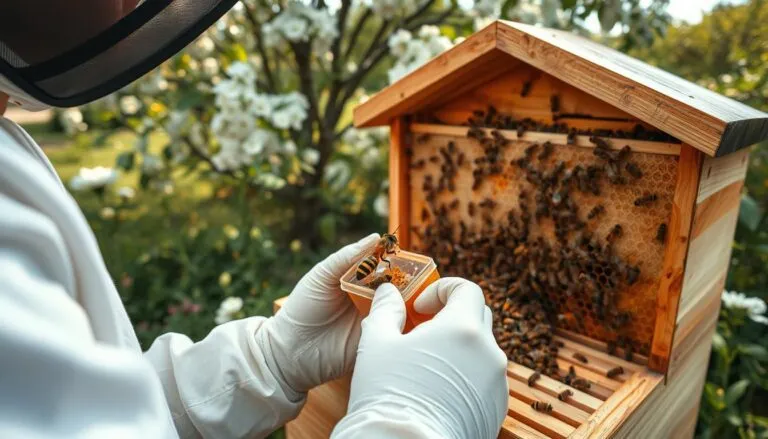

Ready to get started as a beekeeper this year? Demand has surged, with New York showing a 35% rise in hives and a 21% jump in beekeepers over four years. That growth affects lead time, pricing, and availability for anyone who wants to buy bees and start hives soon.
This guide explains how packages differ from nucs, when each fits your budget and skill level, and why drawn frames matter for fast establishment. Expect weekly Italian package shipments from some suppliers in early spring, while local nuc pickups often fall later and may require waitlists.
Look for insured shipments, health certificates, clear customer support, and pre-sale mite checks. Practical tips include feeding 64% heavy syrup to help new colonies draw comb, checking queen status on arrival, and planning hive hardware needs before any bees arrive.
Key Takeaways
- Surging demand means longer lead times and shifting costs; plan early.
- Packages ship widely in early spring; nucs often need local pickup and waitlists.
- Drawn comb speeds success—factor your existing frames when choosing stock.
- Inspect queen health, brood pattern, and usable frames on arrival.
- Feed heavy syrup and manage mites before sale to boost survival.
Understanding the difference between packaged bees and nucs
Deciding between a shipped package and a local nuc starts with knowing what each unit contains. That clarity helps you plan equipment, feeders, and your first-week tasks.
What’s in a package
A package normally includes a caged queen and a measured mass of bees in a ventilated box ready for transit. Mountain Sweet Honey Company ships 3‑lb package units with Italian honey bees that are inspected and insured.
Packages arrive ready to install on the day they reach your apiary. Expect to feed and help draw comb if you install onto foundation.
What’s in a nuc
A nuc is a partial colony on frames—usually 3 to 5 frames with a mated queen, brood, food stores, and working bees. Little Creek Bee Ranch historically offers 5‑frame nucs for local pickup, often mid‑May.
Because frames carry brood and stores, a nuc shortens build-up time compared with a package.
Pros and cons for beginners and experienced keepers
For a beginner, a nuc can provide faster momentum and easier queen checks. For seasoned beekeeping practitioners, a package can scale colonies when many drawn frames exist.
- Quick start: nucs with drawn frame advantage.
- Scalability: packages ship widely and suit those with spare drawn comb.
“Both options perform best on fully drawn comb; plan to feed heavy syrup if installing on foundation.” — Bill Ruzicka
Buying Packaged Bees and Nucs in the USA: Buyer Intent and How to Choose
Match your purchase to a clear goal: harvest honey, secure pollination, or expand stock for future splits. Choose a unit that fits the timeline and outcome you expect.
Match your goals
If honey is your goal, a colony on drawn frames usually yields sooner. For pollination, a nuc often reaches foraging strength faster. For building many colonies, a package can scale when you have spare drawn comb and a steady feed plan.
Assess your setup
Confirm you have compatible Langstroth hive bodies, frames, and a reliable feeder before arrival. Mountain Sweet Honey Company advises planning ship dates with customer service to match your equipment timeline.
- Vet suppliers: check health certificates, insured shipping, and clear timelines.
- Plan feeding: Bill Ruzicka recommends 64% heavy syrup if you lack drawn comb.
- Ask about queens: age, laying pattern, and replacement policies matter for nuc orders.
“Both options perform best on fully drawn comb; plan to feed heavy syrup if installing on foundation.” — Bill Ruzicka
For a concise comparison chart and more guidance, see this package vs. nuc guide.
Timing, seasonality, and availability in the United States
Spring delivery windows shape how many colonies arrive and when you must have hives ready. Mountain Sweet Honey Company runs weekly package bees shipments from mid-March through May with Georgia Department of Agriculture health certificates and insured transit. That steady ship rhythm helps plan arrival days and the day-of installation.
Typical spring windows
Packages move early; many local providers form nucs around mid‑April for mid‑May pickup. Local pickups allow inspection of frames and queens before you take possession.
Waitlists and deposits
High demand means waitlists are common. Little Creek Bee Ranch uses refundable $75 deposits and holds positions to improve your lot on the list. Read refund rules and plan a backup supplier.
Future-proofing your season
Think long term and width: stagger orders, confirm health certificates, and build buffers for queen acceptance and mite treatments. Bill Ruzicka warns that installing on foundation late in the season will likely require heavy syrup and timely oxalic or formic controls to reduce mites.
- Plan days for transit and installation so hives aren’t left waiting.
- Confirm numbers and ship dates with suppliers before a sale is final.
- Use deposits to secure positions, but keep backup options.
For timing discussions and regional tips on when to order package shipments, see this when to order package shipments.
How to vet reputable bee suppliers and programs
Vet any supplier by confirming state inspection records, shipment insurance, and clear replacement policies before you sign a sale.
Health assurances matter most. Ask for a state health certificate attached to the crate when dealing with package bees. Confirm shipments are insured and request written loss and replacement procedures so your investment is protected if transit issues occur.
Customer support and planning
Call a provider to gauge real support. Reputable operations offer ship-date planning, pre-installation checklists, and a helpful hand for first-week tasks. Little Creek Bee Ranch keeps a phone line and uses refundable deposits for nuc reservations; that direct access shows they prioritize service over a simple sale.
Local pickup versus shipped stock
Evaluate pickup policies carefully. Some sellers limit nucs to in-state beekeepers and will not ship across borders. Ask how weather or delays are handled when colonies are nearly ready to avoid surprises at pickup.
Health practices and queen policies
Ask which mite treatments were applied and when. Bill Ruzicka recommends low-dose continuous formic on donor colonies a month before sale and oxalic in April before pollination prep. Verify queen sources, whether overwintered or newly mated, and any replacement guarantees.
| Provider | Health Certificate | Shipping Insurance | Pickup Rules | What to Ask |
|---|---|---|---|---|
| Mountain Sweet Honey Company | Georgia Dept. inspection on packages | Insured, documented loss policy | Nationwide package shipping | Ship dates, pre-install checklist, mite history |
| Little Creek Bee Ranch | Local inspections for nucs | Local pickup; no out-of-state shipping | In-state pickup only; refundable deposit | Weather delay policy, queen acceptance, phone support |
| What to verify | State docs attached to crate | Replacement and refund terms | Restrictions and scheduling rules | Colony numbers, mite protocol, queen source |
- Insist on verifiable health assurances for honey bees and on clear documentation.
- Confirm insured transit and replacement rules before payment.
- Call to assess customer service; hands-on guidance predicts long-term support.
For seasonal checklists that match supplier timelines, see this seasonal beekeeping tasks.
Quality checklist on arrival or pickup
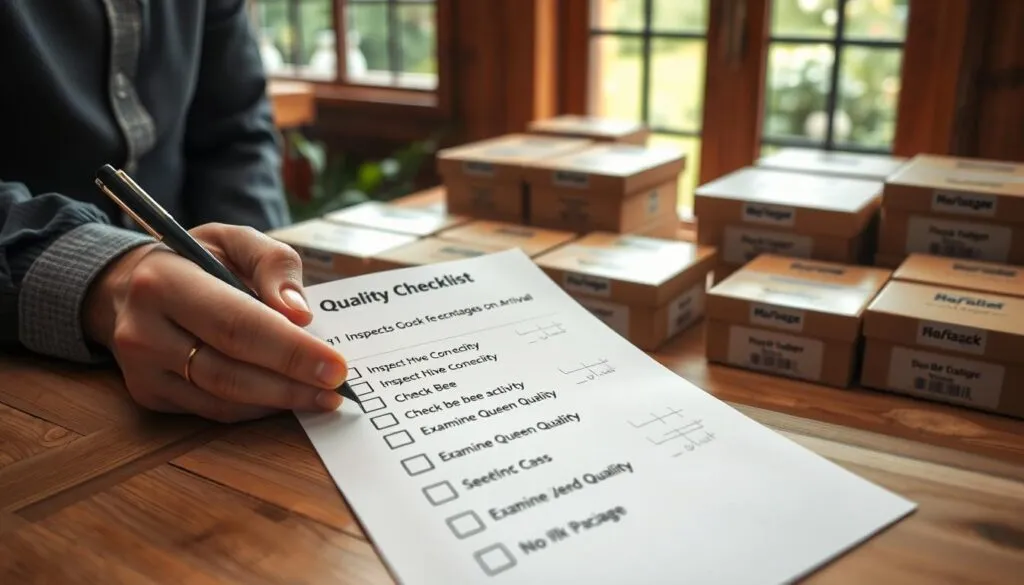
On arrival, perform a quick, methodical check of colony health, frames, and transport condition before you accept the lot. This saves time and avoids surprises over the next few days.
Italian honey bees for beginners: temperament and spring buildup
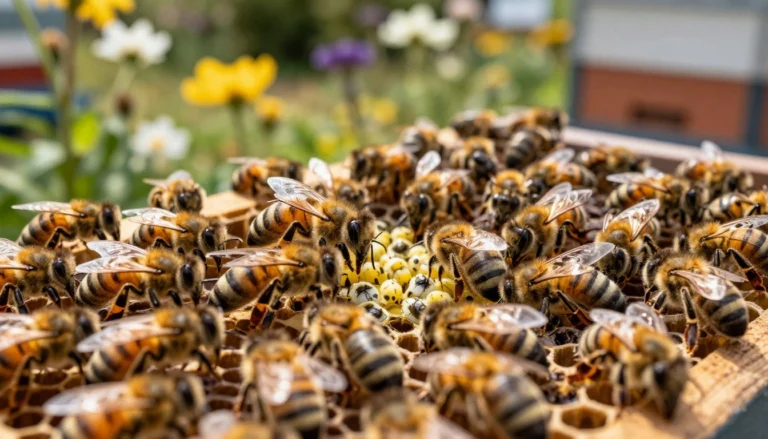
Italian honey bees are noted for calm behavior and a robust early spring push. Verify breed at handoff to match expectations for temperament and growth.
Queen status, brood pattern, and frame count in nucs
Open the box and confirm a laying queen or proper introduction steps for a caged queen. Look for solid brood areas; contiguous brood shows a productive queen.
Count frames: April nucs may have 3 frames, late May often 4 or 5. Ensure frames fit your deep hive bodies.
Drawn comb vs. foundation: why it matters for early growth
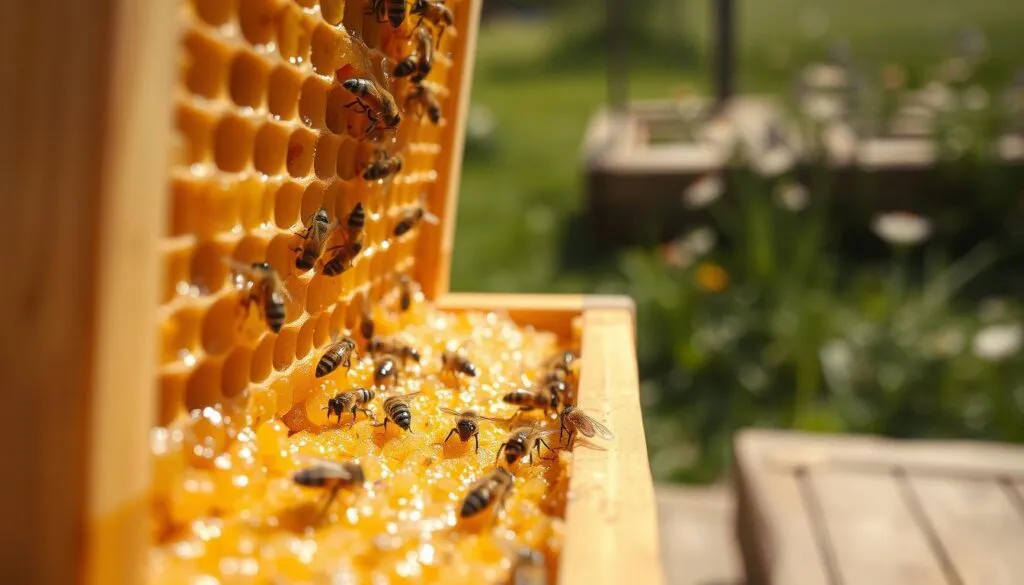
Drawn comb speeds build-up. If you must install on foundation, plan to feed 64% heavy syrup so wax drawing can proceed; remember wax production is resource heavy.
Mite management expectations: low-dose formic or oxalic timing
Ask suppliers about recent treatments. Donor colonies should receive low-dose continuous formic about a month before sale, and oxalic applications are common in April for spring prep.
| Check | What to look for | Why it matters | Typical timing | Action |
|---|---|---|---|---|
| Temperament | Calm Italian stock | Easier handling for newcomers | At pickup/day 0 | Accept or query supplier |
| Queen & brood | Laying queen; solid brood pattern | Predicts colony vigor and winter resilience | Day 0–7 | Confirm presence; schedule checks |
| Frames & transport | Frame count, drawn comb, crate condition | Sets feeding and equipment needs for growth | At handoff | Count frames; plan syrup if needed |
Costs, deposits, and logistics to budget for
Plan for more than the headline price. A five-frame nuc often lists in the low hundreds; Little Creek Bee Ranch shows a $200 price with a $75 refundable deposit. Bill Ruzicka notes four-frame nucs historically near $225, while full colonies with drawn frames can be about $400.
Typical price points and downstream impact
Expect tradeoffs. Full colonies reach foraging strength sooner and can add early honey, but colonies started on foundation will spend time and resources drawing comb. That can reduce first-season honey by tens of pounds unless you feed aggressively.
Deposits, waitlists, and rollover tactics
Refundable deposits secure a number on a waitlist during high demand. Some sellers let you roll a deposit forward to keep your position when weather or supply shifts a pickup day.
Shipping versus local pickup logistics
Packages ship in ventilated, travel-sealed crates with insurance and health certificates; confirm ship-date planning with customer support. Local pickup requires a secure transport box and fast transfer into hives to limit stress on colonies.
Tip: Budget for the lot—stock price, extra frames or a second box for winter prep, feeders, and the time you’ll need on the delivery day.
| Item | Typical cost | Logistics note |
|---|---|---|
| Five-frame nuc | $200–$250 | Local pickup; refundable deposit common |
| Package (3‑lb) | $100–$150 | Shipped in insured crate; needs foundation or drawn frames |
| Full colony (drawn frames) | $350–$450 | Higher upfront; faster honey production |
For a detailed cost comparison, see this package vs. nuc cost guide. For gear and supply checklists, consult this bee supply resources.
Feeding, equipment, and first-week setup for success
Proper syrup, a matched feeder, and tidy frames cut stress and speed hive buildup. Start with a clear plan for feeding and equipment so a new hive can focus on growth.
Heavy syrup ratios for build-up and drawing comb
Mix 64% heavy syrup for drawing comb: about 35 lbs sugar to 10.5 gallons finished syrup (or 16 kg sugar to 20 L). Steady feeding helps colonies on foundation draw wax faster.
Remember that producing 1 lb of wax costs roughly 7–8 lbs of honey energy. Consistent syrup keeps queens laying and workers building.
Feeders, hive bodies, and adding the second box at the right time
Choose a feeder that fits your Langstroth hive body and your way of working. Inner or two-frame feeders simplify refills and reduce disturbance in the first critical days.
Transfer package frames or install a five-frame unit into a deep hive body with frames aligned and snug. Keep smoke minimal with calm stock so you do not unsettle the brood nest.
Watch growth for about a week. In strong flows and with good feeding, add a second box within seven days to prevent crowding before summer peaks.
- Mix syrup correctly and feed steadily.
- Match feeder to hive for easy refills.
- Keep frames tight and limit handling during the first days.
- Plan for extra boxes to support rapid build-up and later winter stores.
| Item | Action | Timing |
|---|---|---|
| Heavy syrup (64%) | Feed steadily | First days–weeks |
| Feeder type | Inner or two-frame recommended | Day 0–7 |
| Second box | Add if crowding occurs | About 7 days |
Tip: Align equipment with season goals so comb-building early pays off for summer honey and winter resilience.
Conclusion
Wrap up your plan by tying costs, equipment readiness, and mite strategy to a clear timeline.
Decide which unit fits your season goals: faster buildup with a framed colony or lower upfront cost with a shipped package. Verify queen health, brood pattern, and frame counts on arrival so small issues get fixed fast.
Feed 64% heavy syrup when starting on foundation and add a second box if growth demands extra space. Choose suppliers that provide health documents, insured transit, and clear replacement policies.
Budget for bees, boxes, frames, and feeders, then follow steady husbandry: monitor mites, feed well, and give space at the right time. For training and hands-on courses that help new keepers, see beekeeping courses and training.
FAQ
What is the main difference between a package and a nuc?
A package contains a caged queen and several pounds of loose worker bees shipped for installation. A nuc (nucleus colony) arrives with a mated queen already laying on frames of brood, pollen, and honey. Nucs give a faster start because they include drawn comb and an established brood cycle, while packages require the colony to build comb and establish brood from scratch.
Which option is better for a beginner aiming for honey production?
For new beekeepers focused on honey, a nuc often delivers quicker spring buildup and earlier honey flow results because of brood and drawn comb. Packages can work but need more feeding, patience, and good timing to match nectar flows. Consider your local nectar calendar and access to drawn comb when choosing.
When is the best time to order and receive bees?
Most suppliers ship or deliver in spring. Weekly shipping windows typically run from mid-March through May, while local nuc pickups often peak in mid-May. High-demand years fill early, so place orders and deposits months ahead to secure your spot.
How do I assess a supplier’s health assurances?
Look for state inspection records, health certificates, and clear policies on mite levels and disease testing. Reputable suppliers provide shipment paperwork, insured delivery options, and responsiveness to pre- and post-sale questions. Calls and email support are good signs of trustworthy service.
What should I check on arrival or pickup of a nuc?
Confirm the queen is present and laying, inspect brood pattern quality, count frames of brood and stores, and check for healthy-looking bees without obvious disease signs. Verify frames are mostly drawn comb for immediate expansion and ask about recent mite treatments or test results.
What should I expect when receiving package bees?
Expect a small, ventilated box with a caged queen and syrup can. Handle quickly, install the queen properly, and provide a steady sugar syrup feed to help bees draw comb and build population. Packages are more vulnerable early; monitor for queen acceptance and steady brood production.
How do I budget for colonies, deposits, and shipping?
Typical costs vary by region and size: five-frame nucs, package units, and full colonies differ in price. Expect supplier deposits to secure orders; many are refundable under certain conditions. Factor in shipping crates, transport fees, and protective gear if you need delivery rather than local pickup.
What equipment should be ready before installation?
Have a prepared Langstroth hive with bottom board, one or two brood boxes, frames (drawn comb or foundation), an entrance feeder or top feeder, smoker, and protective gear. If using packages, strong syrup (2:1 sugar:water) for early feeding helps rapid buildup and comb drawing.
How soon should I add the second brood box?
Add the second brood box when the first box is nearing 8–9 full frames of brood and bees or when nectar flows begin. This gives space for the queen to lay and prevents swarming. Monitor colony population and drawn comb before expanding vertically.
How do I handle mite management with new stock?
Ask suppliers about recent treatments. Plan post-installation monitoring and treatment: low-dose formic or oxalic protocols suit spring timing, depending on brood levels and local recommendations. Test before and after treatment to track efficacy and adjust plans for summer and winter.
Are certain bee strains better for beginners?
Italian honey bees are a common recommendation for beginners because of their gentle temperament and strong spring buildup. Carniolan strains can be good for rapid spring populations and variable nectar flows. Choose genetics that match your climate and management style.
Should I choose local pickup or shipped bees?
Local pickup reduces travel stress and lets you inspect stock directly, while shipped bees expand your supplier options. Check pickup policies, out-of-state restrictions, and whether the supplier offers coaching. Insured shipping and clear transit times are essential if you opt for delivery.
What paperwork or legal limits should I know?
Some states require health certificates or restrict out-of-state bee movement to limit disease spread. Check state apiary regulations and any quarantine rules. Responsible suppliers provide necessary documentation and advise on local compliance.
How long does it take a nuc to produce surplus honey compared to a package?
Nucs typically reach surplus honey production faster—often within the first full season—because of head start from brood and stores. Packages can reach production in the same season if installed early, fed aggressively, and if nectar conditions are favorable, but they usually lag behind nucs.
What are common problems during the first week after installation?
Common issues include queen rejection or escape, slow feeding response, robbing, and stress from handling or transport. Keep syrup available, limit hive inspections in the first days, and monitor for signs of acceptance and steady brood. Intervene quickly if robbing or queen loss occurs.
How do I transition nuc frames into my hive layout?
Place nuc frames into your prepared Langstroth box in the same orientation, keeping brood frames contiguous and stores nearby. Fill gaps with drawn comb or frames of foundation only as the colony needs space. Minimize disturbance to brood frames during transfer.