Inside a honey hive, a bustling society keeps the colony alive. Female workers make up the bulk of the population, often tens of thousands at peak bloom. From the first hours in a cell to final flights outside, these insects rotate through clear duties that match the hive’s needs.
Daily shifts include cleaning, nursing larvae, tending the queen bee, building comb with wax, ventilating, guarding entrances, and gathering food. Tasks change fast if the season brings heat, pests, or shortages.
The pattern links life stage to task, so a single individual can become a nurse one week and a forager the next. That flexibility keeps the colony efficient and resilient across shifts in weather and bloom cycles.
Key Takeaways
- Worker bees form the backbone of the hive and handle most daily duties.
- Roles shift with age, season, and colony demand.
- Tasks include cleaning cells, nursing, guarding, building wax comb, and foraging for food.
- The queen, drones, and workers function as a coordinated social unit.
- Flexibility lets the colony respond quickly to stress or resource changes.
Inside the hive: How worker bees power the colony
Inside the comb, a compact social system keeps the hive running from dawn to dusk. Female workers dominate numbers, while drones serve mating duties and the queen remains the sole fertile female.
The group adapts fast. Some individuals act as nurses, others ventilate, guard, build comb, or forage. This flexibility keeps the colony balanced as needs shift with weather and blooms.
Workers, drones, and the queen: A finely tuned social structure
“A resilient hive depends on coordinated tasks and timely resource shifts.”
The queen bee may lay thousands of eggs when conditions allow. Meanwhile, worker bees coordinate feeding, wax production, and security so that brood and stores stay healthy.
Life span by season and why “fat bees” matter in winter
During the active season an individual often lives only a few weeks because tasks are intense. In contrast, winter generations — the so-called “fat bees” — store more protein and can live 4–8 months.
These longer-lived bees conserve energy and maintain heat, protecting the queen and the colony until spring food returns. Understanding this seasonal contrast explains how the same insect can perform varied roles through its short life.
Worker bee roles
New adult workers follow a predictable path, shifting duties as their bodies and the hive and colony require.
From house bees to field bees: Age-based task progression
In the first days, house bees clean cells and prepare the brood area. By day three some move to undertaker work and early nursing.
Between day 4 and day 12, many serve as nurse attendants and help feed larvae. From days 7–12 a few also attend the queen, supporting egg care and scent distribution.
Around the second week glands develop and workers begin wax production, fanning, and nectar handling. Guards usually appear near days 18–21 to screen arrivals.
From roughly day 22 through week six, most shift to field duties, foraging for pollen, nectar, water, and propolis. The schedule stays flexible; immediate demands can reorder these tasks to protect the hive.
“Age, physiology, and colony need shape a worker’s life and ensure every critical job is covered.”
- Why it matters: Mapping this progression helps beekeepers predict workforce trends and plan support.
Housekeeping duties: Cleaning empty cells and building a healthy home
The hive’s early workforce immediately targets cleanliness, making cells ready for eggs and food.
Newly emerged house bees start by cleaning the cell they hatched from.
This within hive phase usually lasts days 1–3. Tasks include polishing empty cells and removing debris.
Sanitation matters: the queen will only lay in immaculate cell spaces. Removing residues helps prevent disease and supports brood health.
These novice workers inspect each cell and prepare storage areas for nectar and pollen.
- Cleaning and polishing empty cells so the queen will lay there.
- Removing debris and spotting contamination early to protect colony health.
- Assisting with basic building and upkeep so traffic and storage stay efficient.
Careful housekeeping sets up later tasks like nectar handling and brood feeding. The thoroughness of this phase keeps the hive orderly and resilient.
Undertaker bees: Keeping the hive disease-free
Undertakers quietly patrol the brood nest, removing any signs of decay before disease can spread.
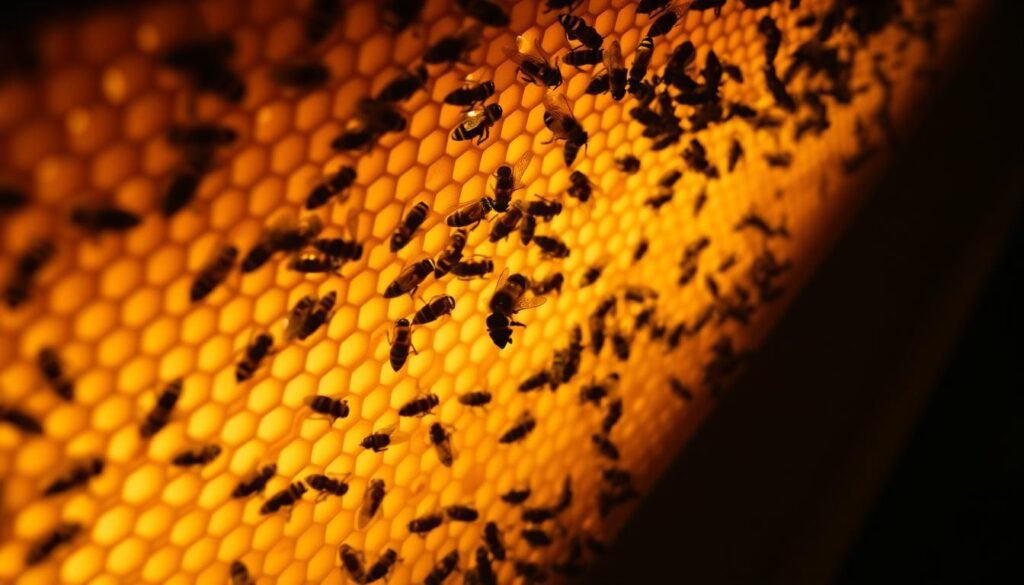
Between days 3–16, these young workers locate and remove corpses and compromised brood. They carry remains a distance away to limit reintroduction of spores or parasites.
By acting fast, they reduce pathogen pressure and protect overall health in the hive. Their work complements housekeeping and keeps the brood nest functional for the queen and larvae.
“Rapid removal of decay lowers disease risk and preserves stores during stressful weather or heavy nectar flows.”
- Locate and remove dead adults and diseased brood from the nest.
- Transport remains away to minimize contamination of the colony.
- Monitor unusual odors or appearance that signal brood problems.
- Provide an essential sanitation layer that supports other duties in the hive.
| Duty | Timing | Impact |
|---|---|---|
| Locate corpses and compromised brood | Days 3–16 | Reduces pathogen load |
| Carry remains away from the nest | Immediate | Limits spore reintroduction |
| Monitor odors and brood appearance | Continuous | Early detection of issues |
| Complement housekeeping tasks | Ongoing | Maintains stable environment for queen and larvae |
Nurse bees: Feeding brood and supporting early life within the hive
In the hive’s nursery, specialized attendants deliver precise diets that shape future generations. These caregivers work close to the brood nest and time feedings to each stage of growth.
Royal jelly, honey, and pollen: What brood cells are fed
Mandibular and hypopharyngeal glands mature early so nurses produce royal jelly for newly hatched larvae. Larvae receive royal jelly for about three days.
After that, nurses shift the diet to a mix of honey and pollen. This change matches nutrition to developmental needs and supports steady growth toward pupation.
Frequency and volume: Up to 1,300 cell checks per day
Nurses inspect and refill cells constantly—sometimes checking as many as 1,300 cells per day. They also monitor moisture and temperature near the brood.
Close coordination with fanning workers stabilizes the nursery environment. Nurses also feed young drones and newly emerged workers during their early days.
“Intensive nursing is a leading indicator of a healthy brood nest and a productive season ahead.”
- Timing: Nursing typically spans days 4–12 of a caregiver’s life.
- Function: Feed royal jelly first, then honey and pollen as larvae age.
- Impact: Proper feeding underpins population growth and future workforce strength.
| Function | Timing | Benefit |
|---|---|---|
| Produce royal jelly | Early nursing (first ~3 days of larval life) | Supports rapid early growth |
| Transition diet to honey + pollen | After day 3 of larval development | Provides carbohydrates and protein for pupation |
| Cell inspections | Continuous (up to 1,300 checks/day) | Ensures even feeding and early problem detection |
| Nursery climate support | Ongoing within hive | Maintains moisture and temperature for brood health |
Attending the queen bee: Care, feeding, and colony-level signaling
A dedicated retinue ensures the queen spends energy on eggs rather than self-care. From about days 7–12, attendants form a tight circle around her. They feed, groom, hydrate, and clean so she can lay efficiently.
Attendants manage waste and supply food so the queen avoids interruptions. That frees her to lay up to 2,000 eggs a day when conditions allow.
Grooming, hydration, and continuous support for egg-laying
Attendants time feedings and remove debris to match the queen’s rhythm. They coordinate with nurse teams so larval care keeps pace with new eggs.
Precise timing prevents gaps in brood space and food availability, which keeps the hive stable.
Queen mandibular pheromone: Spreading the queen’s scent
By touching the queen, attendants pick up and distribute queen mandibular pheromone (QMP). This scent signals a viable queen across the hive.
“Pheromone distribution synchronizes worker behavior and stabilizes colony resource allocation.”
- Form the queen’s retinue to provide nonstop feeding and grooming.
- Handle hydration and waste so energy goes to laying, not self-maintenance.
- Spread the queen’s pheromone scent to broadcast status across the colony.
- Monitor laying performance and, if needed, support replacement decisions.
Effective attendance links care routines and chemical communication. These duties keep the colony coordinated and protect population growth.
Wax makers and comb builders: Producing beeswax and capping cells
Around days 12–18, abdominal wax glands activate and mid-aged insects extrude small translucent flakes. These flakes get chewed, softened, and molded into precise comb structures that form the hive’s backbone.
Activating wax glands and forming honeycomb
Gland activation depends on heavy honey intake because wax secretion is metabolically costly. Chewing and sculpting turn tiny flakes into hexagonal comb used for brood and storage.
Comb building sets spacing, supports traffic lanes, and helps regulate nursery temperature. House bees often join forces with builders during peak flow to speed construction.
Capping ripened honey and brood cells
Capping locks in optimal moisture for honey and seals developing pupae in safe, sterile cells. Accurate moisture checks are essential before sealing so stored food stays stable and brood can finish development.
“Proper comb architecture and timely capping link storage needs with brood schedules, keeping the hive scalable during growth.”
- Why it matters: Strong comb supports the queen’s laying pattern and improves ventilation.
- Continuous building keeps space available as the colony expands.
Nectar handlers, pollen packers, and honey makers
A network of handlers in the back hive turns fresh nectar and pollen into long-term food reserves. This transformation protects fragile sugars and proteins so the colony can feed brood and adults through lean periods.
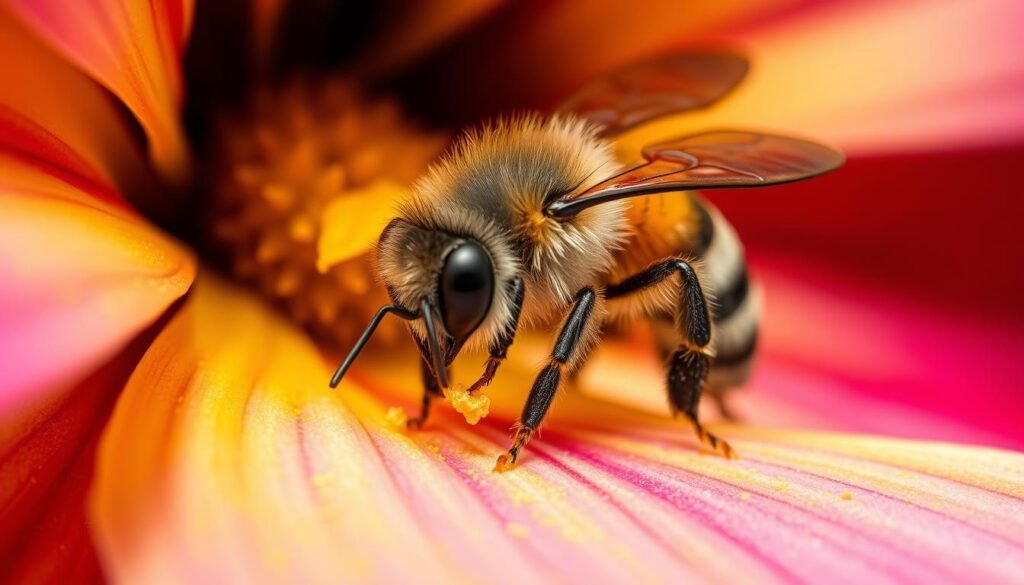
Transferring nectar from foragers and storing resources
Nectar handlers accept incoming loads from returning foragers and deposit the wet liquid into open cells. They begin moisture reduction at once by regurgitation and teamwork.
Fanning teams create airflow to evaporate excess water until the fluid reaches ripeness and becomes stable honey. Once thresholds are met, capping seals the stores with wax.
Pollen packers tamp pollen into adjacent cells and often mix a bit of honey to preserve protein. This blend prevents spoilage and becomes vital food for larvae.
“Efficient staging keeps resources flowing from entrance to storage, preventing bottlenecks and loss.”
- Accept loads, transfer nectar into cells, and start drying.
- Pack pollen tightly and blend with honey for preservation.
- Coordinate airflow so moisture drops and capping can proceed.
- Keep empty cells available to avoid storage slowdowns in the back hive.
| Task | Action | Benefit |
|---|---|---|
| Nectar transfer | Receive and deposit into cells | Prevents spoilage; feeds colony |
| Moisture control | Fan and evaporate water | Converts nectar into honey |
| Pollen packing | Tamp and mix with honey | Preserves protein stores |
| Capping | Seal ripe stores with wax | Protects long-term food value |
Airflow control and hive climate: Fanning and water carriers
On hot afternoons a coordinated beat of wings and tiny water drops keeps the nest cool and brood safe.
Fanning teams form near entrances and inside the comb around days 12–18. They beat wings in steady patterns to move air, lower humidity, and support nectar ripening.
Thermoregulation to protect brood and ripen honey
Proper airflow prevents overheating and chilling. It speeds nectar dehydration so honey reaches stable moisture and avoids fermentation.
Fanners also clear odors and refresh interior air. This helps nurses care for brood and nectar handlers finish food without thermal stress.
Bringing water to cool the hive
Water carriers deposit droplets on comb faces and near fanners. Evaporation from those surfaces boosts cooling during heat spells.
This work shifts hour by hour to match weather and the brood nest’s metabolic needs. Even in winter, subtle airflow helps manage moisture at cluster edges.
“Timely climate management preserves food quality and keeps development on schedule.”
- Teams line entrances and interiors to move air and stabilize temperature and humidity.
- Water delivery enhances evaporative cooling and supports fanning effectiveness.
- Coordination with nectar handlers and nurses prevents thermal stress during busy flows.
| Function | Timing | Benefit |
|---|---|---|
| Fanning at entrance and inside | Days 12–18 (and as needed) | Stabilizes temperature and humidity |
| Water delivery to comb surfaces | Immediate during heat; variable | Boosts evaporative cooling |
| Coordination with handlers and nurses | Continuous | Prevents thermal stress and ensures proper ripening |
| Winter moisture balance support | Cold months | Helps cluster edges stay dry and food stable |
Guard bees at the entrance: Scent checks and security
Entrance sentries act as the colony’s first line of defense. Starting about days 18–21, these workers inspect arrivals by scent and movement.
Identifying colony members by scent and allowing entry
Guards test each incoming insect with quick antennal checks. If the scent matches the nest signature, they admit the visitor.
This screening keeps parasites and pathogens out of cells and protects the queen’s home. Guards balance speed and firmness so traffic flows during busy returns.
Responding to threats from robbers and predators
When outsiders try to enter with stolen nectar, guards refuse and push them away. They also fend off wasps, birds, and mammals that target stores.
“Alarm pheromones rally defenders fast, turning the entrance into a coordinated defense point.”
- Patrol the entrance and verify scent for each arrival.
- Stop robbing attempts and escalate alarm signals when needed.
- Coordinate with interior teams so brood and stores remain undisturbed.
| Threat | Guard action | Outcome |
|---|---|---|
| Robber attempts | Refusal and ejection | Protects stores |
| Predator approach | Alarm and attack | Deters intruder |
| Unknown visitor | Scent test and delay | Prevents contamination |
Orientation flights, foraging range, and scouting new homes
Before long-range collection begins, young foragers make short flights that teach them local landmarks and the hive entrance. These practice loops build a map that supports safe returns and fast turnaround during peak bloom.
Learning landmarks before foraging
Orientation flights start with gentle arcs facing the sun. Flyers widen circuits each day to record trees, fences, and buildings as visual cues.
Accurate mapping cuts losses and speeds trips back to the back hive where perishable nectar and pollen are processed.
Foraging radius for nectar, pollen, propolis, and water
Typical foraging covers about 2–3 miles (4–5 km) from the bee hive, though some accounts note activity up to 5 km. Scouts travel farther during swarming to locate a new home.
Scouts use waggle dances to compare sites and reach consensus before relocation.
“Orientation accuracy reduces losses and increases field efficiency during peak flows.”
- Navigation adapts to weather and bloom cycles.
- Field activity coordinates closely with handlers inside the hive.
| Activity | Range | Purpose |
|---|---|---|
| Orientation flights | 0–0.5 miles | Map landmarks near hive |
| Routine foraging | 2–3 miles (4–5 km) | Collect nectar, pollen, propolis, water |
| Scout searching (swarm) | Up to 5+ km | Find and evaluate new home sites |
For deeper background on initial flights see orientation flights. Precise wayfinding supports colony resilience when food is patchy or distant.
Winter workers: How bees live for months and keep the queen warm
Winter transforms hive activity into a steady, low‑burn system focused on survival and warmth.
In cold months a special cohort extends life span: many bees live 4–8 months to carry the colony through scarcity.
These winter insects form a tight cluster around the queen, vibrating wing muscles to generate heat. The outer envelope drops near 46°F, while the center stays close to 80°F—a precise gradient that preserves life and any late brood.
Positions rotate constantly so individuals do not chill at the edge for long. With flights rare and wax work minimal, the hive depends on stored food to fuel steady heat production.
Clustering also stabilizes humidity and prevents condensation that could harm the nest. The queen’s place remains central; the cluster tightens or loosens with weather changes and day length.
“Survival through months of cold depends on prior stores, disciplined energy use, and coordinated warmth production.”
For practical winter preparation and timing, see seasonal beekeeping tasks for planning food stores and hive management.
Conclusion
,
From nursery checks to long-distance foraging, coordinated effort turns small tasks into colony-scale results.
House bees start inside, then shift to nursing, wax work, guarding, and field service over a few weeks. Nurses can inspect brood up to 1,300 times a day and help keep the queen laying steady eggs.
Back-hive teams convert nectar and pollen into stable food while guards protect entrances so internal tasks continue without interruption. Field workers range 2–3 miles and scouts scout farther during swarms.
In cold months a different cohort clusters at 46–80°F to protect the queen and conserve energy for months.
Learn more about the role of the worker bee.
FAQ
What are the main duties of worker bees throughout their lives?
Worker bees perform many tasks that keep a colony thriving. Young adults start as housekeepers, cleaning empty cells and tending brood. As they age they shift to nursing, producing royal jelly, feeding larvae with honey and pollen, and checking cells—sometimes up to 1,300 inspections a day. Older individuals become foragers, collecting nectar, pollen, propolis, and water, while others build comb from wax, cap honey and brood, guard the entrance, or manage airflow by fanning.
How does the hive’s social structure divide responsibilities between workers, drones, and the queen?
The colony operates as a tightly coordinated community. The queen focuses on laying eggs and producing queen mandibular pheromone, which signals colony cohesion. Drones exist mainly for mating. Within the female workforce, tasks follow an age-based progression: house duties, nursing, comb building, food processing, guarding, and finally foraging and scouting. This progression ensures every essential job—like capping cells, pollen storage, and brood care—is covered.
Why are some bees “fat” going into winter, and how does lifespan change by season?
Bees that bulk up in late summer store fat and consume more honey to increase their survival odds during winter. Seasonal lifespan varies: summer foragers live weeks due to high activity, while winter workers can survive for months, clustering to keep the queen warm and maintaining the brood at the right temperature until spring.
What do house bees do to maintain hive health and hygiene?
House bees clean empty cells, remove debris and diseased brood, and prepare cells for new eggs. They also manage stored pollen and nectar, shape comb, and help cap ripened honey. These duties prevent pathogens from spreading and keep the home ready for the queen’s next eggs.
How do undertaker bees reduce disease risk in the colony?
Undertaker bees locate and remove dead or diseased individuals and contaminated material from the hive. Prompt removal prevents pathogens and parasites from proliferating, a simple but vital sanitation behavior that protects the entire community.
What role do nurse bees play in feeding brood cells?
Nurse bees feed larvae a mixture of royal jelly, diluted honey, and pollen-derived proteins. They regulate frequency and portion sizes to match larval stage—new larvae receive richer royal jelly, while older brood get more varied food. This precise feeding supports healthy development of workers, drones, and potential queens.
How often do nurse bees check cells, and why is that important?
Nurses routinely inspect hundreds to over a thousand cells daily, monitoring larval health and food levels. Frequent checks allow quick responses to hunger, disease, or developmental issues, ensuring brood survival and efficient resource allocation.
How do workers attend to the queen and spread her scent through the colony?
A cadre of attendants grooms, feeds, and hydrates the queen and positions themselves around her for continuous care. They distribute queen mandibular pheromone by contact, rubbing the queen against comb and nestmates; this scent maintains social order and suppresses rival egg-laying within the colony.
How are wax makers activated and how is comb constructed?
Wax glands in certain bees produce thin flakes when bees consume abundant honey and maintain warm broodnest temperatures. Those flakes are chewed, shaped, and molded into hexagonal cells. Skilled workers then cap ripened honey and developing brood to protect and preserve resources.
What steps convert incoming nectar into stored honey?
Foragers deliver nectar to nectar handlers inside the hive. These bees reduce water content by repeated regurgitation and passing nectar between workers, then deposit it into cells. Fanners circulate warm air to evaporate moisture further; when sugar concentration reaches the right level, bees seal cells with wax cappings for long-term storage.
How do bees control hive climate and why is water important?
Thermoregulation relies on fanning and water collection. Fanning by many workers moves air to cool and dry honey or to maintain brood temperature. Water carriers bring droplets that workers spread; evaporative cooling lowers nest temperature during hot weather, while clustering and metabolic heat maintain warmth in cold months.
What duties do guard bees perform at the hive entrance?
Guards screen incoming individuals by scent, accepting nestmates and repelling outsiders. They inspect visitors for familiar colony odor, confront robbers or predators, and coordinate alarm responses. Effective guarding reduces theft, disease introduction, and hive damage.
How do young foragers learn landmarks and locate resources effectively?
Before full foraging, bees conduct short orientation flights, memorizing landmarks and floral cues. Scouts explore farther afield to find new nectar, pollen, propolis, and water sources. Successful scouts communicate locations through waggle dances, guiding foragers within the colony’s typical foraging radius.
What changes occur in hive organization when preparing for winter?
In late season, colonies prioritize food consolidation and thermal resilience. Many workers focus on storing nectar, packing pollen, and sealing comb. Winter workers cluster tightly around the queen to generate heat. Activity slows, fewer new cells are built, and the social structure shifts to survival mode until spring.