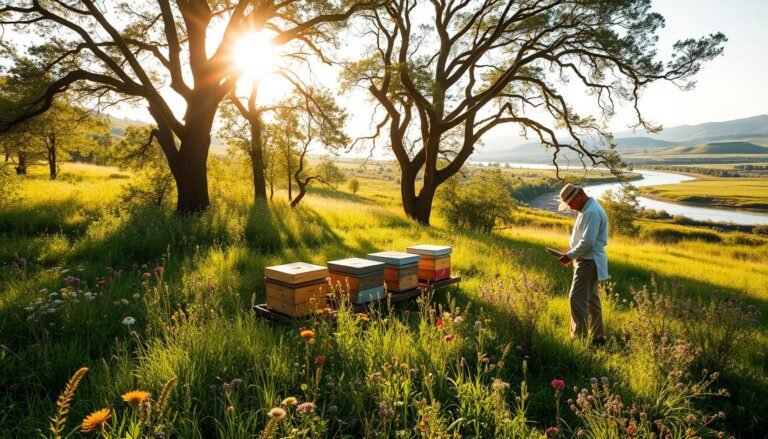
This brief guide helps new beekeepers move a hive from winter to active season using weather and colony cues instead of dates.
Start the year by reviewing records and checking equipment readiness. Monitor temperatures, colony buildup, and forage. Let those signs drive your timing for wraps, feeding, and inspections.
Look for increased activity on mild days as a sign the colony is ready for light checks. Begin mite monitoring early and plan treatments so honey stays uncontaminated.
Follow a simple sequence: survival checks, clearing entrances, verifying food stores, then fuller inspections once temps stay warm. Adapting to local weather will keep brood healthy and reduce emergency fixes later.
Key Takeaways
- Base actions on temps, colony growth, and forage—not calendar dates.
- Begin with records, equipment checks, and early mite monitoring.
- Watch for mild-day activity as a cue for inspections and feeding changes.
- Sequence tasks: survival checks, entrances, stores, then deep inspections.
- Plan treatments to protect honey during nectar flow.
- Adapt timing to local weather for repeatable, measurable results.
- Use a seasonal guide like seasonal beekeeping tasks for a structured workflow.
Quick-Start Spring Checklist: What to do as winter turns to early spring
A short, focused routine on mild days sets you up for a smooth season. Begin with brief outside checks before opening boxes. Watch the hive entrance on warm, near-40°F days to confirm bees are flying and foragers return.
Survival check and hive entrance observations on mild days
Look for active traffic and clear any debris so ventilation and cleansing flights work. If the entrance is blocked, remove material carefully to avoid chilling the cluster.
Tilt-test for food stores and emergency feeding triggers
Gently tilt the hive from the back to feel weight. A healthy double Langstroth should be about 70 lb in early spring; light hives need a 1:1 sugar to water syrup immediately.
Paperwork, orders, and equipment staged before the first nectar flow
Use this time to file registrations, set vendor contacts, and order frames, supers, feeders, and medications with long withdrawal times. Stage tools and protective gear so when the next warm day arrives, you can move straight to inspections.
Note observations and dates to build a repeatable schedule for the year and to know when to add space or shift focus toward honey and mite management.
For a fuller monthly plan, see seasonal checklists.
Late Winter Setup: Records, goals, and supplies before bees break cluster
Late-winter planning sets the pace for the whole season and saves frantic work when temperatures climb.
When temps sit below 40°F, focus on planning rather than opening boxes. Revisit last year’s notes to set specific IPM thresholds, requeening preferences, and realistic honey production targets for the year.
Identify which colonies did well and which need early attention. Create a colony-by-colony action list so you can move quickly once inspections are safe.
Order frames, foundation, and supers now and stage them for fast deployment. Secure package bees and queens early to avoid timing bottlenecks later in the season.
Service your equipment: clean smokers, sharpen hive tools, repair woodenware, and prepare feeders. Plan to rotate out one to three old dark combs at the first full inspection to improve brood pattern and biosecurity.
“Line up legal, label-compliant options for mite interventions ahead of time so you never face a last-minute scramble.”
- Use records to set brood pattern criteria for the first inspection.
- Stage supplies to save time when warm weather opens a short window.
- Keep administrative tasks current so action is immediate when bees fly.
For a broader seasonal workflow, consult a detailed calendar of tasks and overwintering strategies: beekeepers’ year-round calendar and overwintering guidance.
Early Spring Yard Check: Weather, entrances, and assessing colonies
Pick a mild, wind-free day to evaluate hive traffic, clear debris, and check ventilation without disturbing the cluster. Small actions now protect brood and prevent moisture problems as temperatures change.

Monitor entrances, clear dead bees, and verify ventilation
Stand back and watch entrance traffic for a few minutes. Clear dead bees and debris to restore airflow and allow cleansing flights. Adjust entrance reducers if condensation or poor airflow appears.
Estimate hive weight; when to feed 1:1 sugar syrup
Lift from the back to judge stores. If the hive feels light, start 1:1 sugar syrup and reassess every day or two until forage appears.
- Place a reliable water source near the apiary so bees avoid pools or pet bowls.
- Remove winter wraps after daytime highs stay above 50°F to reduce overheating risk.
- Scrape top bars and lids of burr comb and debris for easier inspections.
- Handle deadouts carefully: brush frames, inspect brood remnants, and store comb to prevent robbing and wax moths.
- Log observations for each hive to guide feeding, ventilation, and the timing of a full inspection.
| Check | Action | When |
|---|---|---|
| Entrance traffic | Observe, clear dead bees | Calm, sunny day |
| Hive heft | Lift from back, start 1:1 syrup if light | Early season until forage |
| Ventilation & water | Adjust entrance, provide nearby water | Before high activity |
Keep changes conservative on variable weather to protect the cluster while improving conditions for steady colony growth.
Full Inspection When Temps Reach about 59°F: Reading the brood and queen
A full inspection at about 59°F gives you the best view of brood health without chilling the nest.
Work quickly and deliberately. Open the hive only when daytime temps reach roughly 59°F. Limit exposure so the brood stays warm while you assess frames and adult activity.
Confirm queen status and brood condition
Find the queen or fresh eggs less than three days old to verify a queen-right colony. Read the brood pattern across several frames to judge queen quality and nest stability.
Classify colony strength and decide next steps
Count frames well-covered by adult bees: weak (1–2), medium (3–5), strong (5+). Use this to prioritize feeding, requeening, or combining.
Hygiene, comb rotation, and stores
Inspect cell cappings for foulbrood signs before combining any units. Rotate out 1–3 old dark combs and clean bottom boards to reduce pests and pathogens.
- Confirm honey and feed are adequate; brood expansion raises consumption quickly.
- Record frame-by-frame notes to track trends and plan requeening if brood is spotty.
- Combine only after disease checks and with proper union methods to protect healthy colonies.
| Strength | Frames Covered | Recommended Action |
|---|---|---|
| Weak | 1–2 frames | Inspect for disease; consider combining after checks |
| Medium | 3–5 frames | Provide feed and watch queen; rotate comb as needed |
| Strong | 5+ frames | Add space, monitor for swarm prep, protect honey flow |
Spring Varroa and Disease Management: Timing treatments around nectar and supers
Treatments timed around colony cues and weather preserve honey quality and hive health.
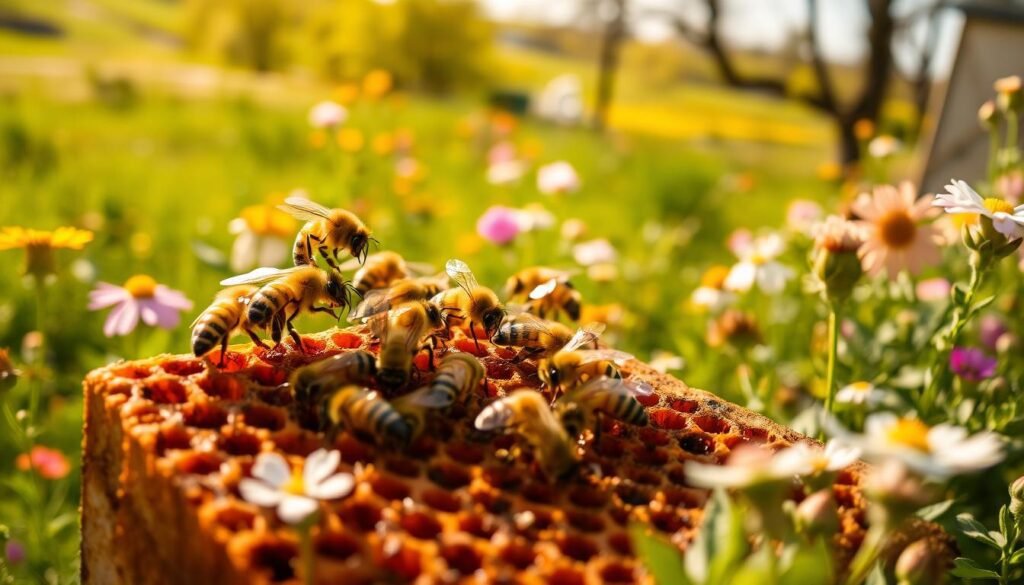
Start with monitoring. Use an alcohol wash for an accurate mite percentage. Ontario guidance sets a 2% spring threshold (about 6 mites per 300 bees). Sticky boards can help; roughly 9 mites per day is a useful spring reference.
Practical treatment and timing notes
Only apply label-legal products and follow temperature limits on the label. Many treatments lose efficacy outside their recommended weather ranges.
“Plan treatments so withdrawal periods finish before adding supers to protect honey.”
Nosema and IPM: If Nosema control is needed, finish those steps before supers are placed and follow local rules. After any intervention, perform a follow-up inspection and repeat a mite check to confirm success.
| Action | Why | Timing |
|---|---|---|
| Alcohol wash | Accurate mite % for decision | Early season, before treatments |
| Sticky board | Estimate daily mite fall | Use for trend data |
| Apply label-legal treatment | Works within temp range; legal | Complete withdrawal before supers |
| Follow-up inspection | Verify efficacy | 1–3 weeks after treatment |
Keep clear notes on product, date, daytime highs, and results. Coordinate treatments across the apiary so one untreated hive does not undermine overall production. For expansion and scheduling tips, see beekeeping expansion tips.
Feeding Strategy in Early Spring: Syrup, protein, and when to stop
Feeding in early season aims to prevent starvation and support brood expansion while natural forage is still limited.
Use 1:1 sugar-to-water syrup to stimulate the colony and prevent starvation when stores test light. Offer syrup until you consistently see returning foragers and nectar coming in. Pair feeding with any registered Nosema or spring supplements only where legal and label-appropriate.
1:1 syrup basics, feeders, and treatment pairing
Choose feeders that fit your hive type and reduce heat loss. Top feeders and inside jar feeders work well for hive warmth. Secure feeders to avoid spills and robbing.
Pollen patties: boost brood but watch the weather
Pollen patties can speed brood rearing but raise colony demands for heat and stores. In a cold snap, extra brood increases the risk of chilling. Check the forecast and add patties only when daytime highs are stable.
| Need | Recommended Action | When to Stop |
|---|---|---|
| Low stores | 1:1 syrup, monitor weight weekly | When consistent nectar and foragers return |
| Protein boost | Pollen patties, small frequent doses | If extended cold risks brood chill |
| Feeder security | Use sealed, hive-compatible feeders; prevent spillage | When foraging is reliable and robbing risk is low |
- Keep clean water nearby to help bees process syrup and regulate humidity.
- Track consumption and taper feeding as natural forage appears.
- Document dates, rates, and colony response to refine the approach next season.
“Feed to match colony size and weather; overfeeding can cause congestion and early swarm signals.”
Space, Supers, and Comb: Preventing crowding as colonies expand
Plan space early so colonies expand into fresh comb rather than crowding the brood nest. In double-deep setups, reversing brood boxes moves the cluster into cleaner frames and encourages upward movement. This simple step often delays the need for immediate additional supers.
Manage the cluster and timing
Reverse boxes before frames become fully congested. When frames fill quickly, add supers sooner to reduce swarm pressure. Remove entrance reducers as populations rise to improve airflow and traffic flow.
When to add supers and a queen excluder
Time supers installation to follow completed treatment withdrawal periods and the onset of steady forage. Install a queen excluder only if it fits your management style; be consistent and watch how it affects honey placement.
Provide foundation and equalize colonies
Give strong colonies fresh foundation frames during a reliable nectar flow so bees can draw comb and increase honey production. Equalize by moving capped brood to weaker hives only after disease checks.
“Add space ahead of need and record the time of each addition to link growth to nectar flow and production.”
- Add space early by reversing brood boxes to guide brood expansion into fresh frames.
- Install supers after withdrawal periods finish and when forage is steady to protect honey quality.
- Use foundation frames for strong colonies to speed comb drawing and future capacity.
- Equalize cautiously with capped brood transfers once disease-free status is confirmed.
- Reassess space each visit and remove entrance reducers to prevent bottlenecks.
For a seasonal plan on adding equipment and managing growth, see this may growth and supers guide.
Swarm Prevention and Splits: Keeping strong colonies productive
Handle peak build-up by scanning for queen cells and easing hive congestion every week. Small, steady actions cut swarming risk and protect honey production.
Weekly checks and entrance adjustments
Inspect every 7–10 days for queen cell construction. Open hives only long enough to confirm cells or remove them when appropriate.
Remove entrance reducers as populations grow to improve airflow and reduce crowding that triggers swarming behavior.
Making splits and timing mating
Build nucs from strong colonies using balanced frames of brood, food, and working bees. Confirm drone availability before splitting; drones become mating-capable 6–16 days after emergence.
Swarm capture and apiary balance
Stage a swarm kit—brood box, frames, base, roof, and suit—so you can respond fast when a call comes in. Reposition or redistribute foragers to ease pressure on booming hives.
“Splitting strong units stabilizes the yard and keeps colonies productive rather than depleted by swarms.”
- Keep splits disease-aware: use only clean donor frames and mark dates for queen emergence and mating windows.
- Note each colony’s response to prevention so you refine timing year over year.
| Action | Why | Timing |
|---|---|---|
| Queen cell inspection | Catch reproductive intent early | Every 7–10 days in mid-late season |
| Remove entrance reducer | Improve ventilation and reduce congestion | When traffic increases |
| Make nuc/split | Reduce pressure and expand apiary | When strong colonies have balanced frames and drones are present |
| Swarm kit ready | Respond quickly to captures or calls | All season during build-up |
Water, Ventilation, and Apiary Maintenance: Small steps that protect the hive
Reliable water and unobstructed airflow are simple adjustments that yield big benefits for colony health.
Provide a clean, consistent water source with landing surfaces so bees collect safely and regulate brood humidity.
Keep the entrance clear and sized to the colony so airflow balances security and ventilation as the weather warms. Remove debris and repair broken bottom boards to prevent drafts and pests.
Refinish woodenware with no-VOC, non-toxic products as needed. You can re-oil or repaint exposed surfaces while bees remain in the hive if you use safe finishes.
Inspect protective equipment and other equipment each visit. Replace worn zippers, torn veils, or gloves to keep close work controlled and reduce sting risk.
- Make sure water has floats or pebbles so bees don’t drown and can land easily.
- Level stands, secure lids, and confirm wind protection to avoid unexpected hive moves.
- Reduce gaps and broken hardware that leak heat or invite pests into the nest.
- Keep the site tidy—mow and clear brush—to limit pests and improve access.
- Stage tools and spare parts so small fixes happen during a normal visit without delay.
“Small, consistent maintenance keeps hives resilient through the season and helps you spot issues before they grow.”
| Task | Why it matters | When to do it |
|---|---|---|
| Provide safe water | Supports brood humidity control and reduces foraging stress | All active months |
| Clear and size entrance | Balances ventilation and colony defense | Adjust as population grows or weather changes |
| Maintain woodenware | Extends life of hive components; prevents rot | Early season and as wear appears |
| Check protective gear | Prevents equipment failure during inspections | Before close work each visit |
| Tidy site and stage tools | Reduces pest habitat and saves time on routine fixes | Monthly or before expected weather shifts |
Spring Beekeeping Checklist
This concise plan arranges tasks from late winter through mid-late spring so each visit is purposeful and efficient.
Chronological tasks: late winter → mid-late spring
Late winter: tilt-test hives to judge stores. If a hive feels light, start 1:1 syrup and clear entrances.
Early spring: remove wraps after daytime highs stay above 50°F, scrape debris, and rotate out 1–3 old combs.
Schedule a full inspection when daytime temps near 59°F to confirm eggs and read brood pattern.
Monthly mite monitoring and post-treatment checks
Monitor mites monthly with an alcohol wash or sticky board. Use a 2% spring threshold (~6 mites/300 bees) or ~9 mites/day on fallible boards as guidance.
Apply label-legal treatments within their temperature windows. Verify results with a follow-up check 1–3 weeks after treatment.
Pre-nectar flow readiness and honey production
Reverse brood boxes or add space before crowding. Install supers only after withdrawal periods finish so honey stays clean.
Provide frames for drawing comb and stop feeding once natural nectar and nectar flow are reliable.
Top seasonal reminders for U.S. beekeepers
- Classify colony strength at inspection; combine weak colonies only after disease checks.
- Check weekly for queen cells and remove entrance reducers as traffic rises.
- Keep water and airflow steady to manage brood humidity and hive temperature.
- Track dates and results across the year to refine timing and outcomes. For regional timing tips see beekeeping in different climates.
“Act on colony cues and weather, not the calendar; that consistency protects stores, brood, and honey later in the season.”
Conclusion
End with a clear rule: let hive behavior and local weather set your workflow, not the calendar.
Core practices stabilize outcomes. Monitor mites, protect brood during inspections, and add space before congestion. Keep water and ventilation steady so bees stay healthy.
Keep concise records. Good notes turn observations into an actionable plan for the year. They help beekeepers refine timing and protect honey quality across every unit.
Inspect only when warm enough, act on colony cues, and complete treatment withdrawal before adding supers. Do this over time through the season and you will face fewer emergencies and gain steadier results.
FAQ
What should I check first when inspecting hives as winter ends?
Start with a survival check on a mild day. Look at hive entrances for activity, clear any dead bees blocking the slot, and note ventilation. A quick tilt-test of the bottom box helps estimate stores — light hives may need emergency feeding. Record what you see for comparison later in the season.
How do I tell if a queen is present and laying normally?
During a full inspection when temperatures are near 59°F, look for eggs, young larvae, and a consistent brood pattern. Spot-check frames across the brood nest; scattered or spotty brood can indicate a failing queen or brood disease. If you see fresh eggs, the queen was present within 3 days.
When should I feed 1:1 sugar syrup and how much?
Feed 1:1 syrup in early warm spells if the tilt-test or weight indicates low stores and nectar is scarce. Use entrance feeders or internal feeders to reduce robbing. Feed enough to sustain brood rearing but stop once a strong nectar flow starts to avoid diluting incoming honey.
What’s the best timing for Varroa treatments without contaminating honey supers?
Monitor mite levels with sticky boards, alcohol washes, or powdered sugar tests. Treat only when thresholds are exceeded and avoid applying treatments within the label-specified withdrawal period before adding supers. Follow product temperature ranges and integrate non-chemical IPM where possible.
How do I decide whether to combine weak colonies or let them build?
Classify colonies by brood pattern, population, and stores. Combine weak hives if they lack a laying queen or have poor brood and there’s no immediate nectar flow. Use the newspaper method or unite with a queenright colony to boost strength while reducing winter loss risk.
When should I add supers and use a queen excluder?
Add honey supers when the brood nest is occupying the lower boxes and frames above it are being drawn and filled with nectar. Install a queen excluder if you want brood-free honey frames, but be aware it can slow movement of workers. Monitor colony strength and remove excluders if they impede honey flow or cause congestion.
How often should I monitor mites during spring?
Check mite levels monthly from early spring through midseason, and more frequently if treatments were recent or if colonies are stressed. Continue post-treatment verification to confirm efficacy and adjust your integrated pest management plan accordingly.
What equipment and supplies should I stage before the first major nectar flow?
Prepare extra frames, clean supers, entrance reducers, feeders, and appropriate treatments. Order replacement foundation, nuc boxes, and protective gear ahead of time. Having a swarm-capture kit and basic repair tools ready saves time when colonies expand rapidly.
How can I reduce swarm risk during the buildup period?
Inspect weekly for queen cells, provide ample space by reversing brood boxes or adding supers, and remove full entrance reducers. Perform splits or make nucs from strong colonies to relieve congestion and preserve honey production while preventing swarms.
Should I rotate out dark comb in spring, and why?
Yes. Replace very old, dark comb gradually to reduce disease reservoirs and improve brood hygiene. Rotate comb by moving newer frames into brood boxes and recycling old comb into foundation or rendering wax, keeping sanitation balanced with production needs.
What are early signs of disease beyond Varroa I should watch for?
Watch for spotty brood patterns, foul odors, dead adult bees on landing boards, or dysentery near entrances. Nosema can show as reduced foraging and cramped frames of pollen. Sample and test suspicious hives and follow label directions for treatments as part of an IPM approach.
How do I manage pollen and protein feeding without risking chilled brood?
Offer pollen patties when brood rearing is active, but avoid forcing rapid brood expansion during cold snaps. Place patties above brood or between boxes so workers can access them safely. Balance protein feeding with weather forecasts to prevent brood loss from chilling.
What water and ventilation steps protect colonies during the season?
Ensure a reliable nearby water source and maintain airflow at the entrance and top vents to prevent moisture buildup. Clear snow or debris from entrances in early spring, and provide screened bottom boards or upper ventilation to reduce condensation that harms brood.
How do I use reverse brood boxes to manage cluster movement?
Reverse brood boxes early in the season to encourage the cluster to move upward into cleaner frames and reduce congestion. Watch brood distribution and swap boxes back once the cluster has expanded, ensuring the queen remains centrally located to prevent brood chilling.
What should be on a chronological spring task list from late winter through mid-spring?
Tasks include reviewing records and goals, staging supplies, early survival checks, tilt-tests for stores, emergency feeding, full inspections at 59°F, mite monitoring and treatments as needed, adding supers, and prepping for swarm control. Keep detailed notes each visit to track progress.
When is the best time to make splits and nucs for the season?
Make splits when colonies are strong, brood is abundant, and weather supports mating flights. Perform splits before peak nectar flow to allow new queens to mate and establish brood. Time drone availability and mating weather into your schedule to maximize success.
How should I handle frames suspected of disease or heavy wax moth damage?
Remove heavily damaged or contaminated frames and burn or freeze them if instructed by local regulations. Clean and sanitize hive equipment; replace with new or sterilized foundation. Keep accurate records of removed frames and monitor nearby colonies for signs of spread.