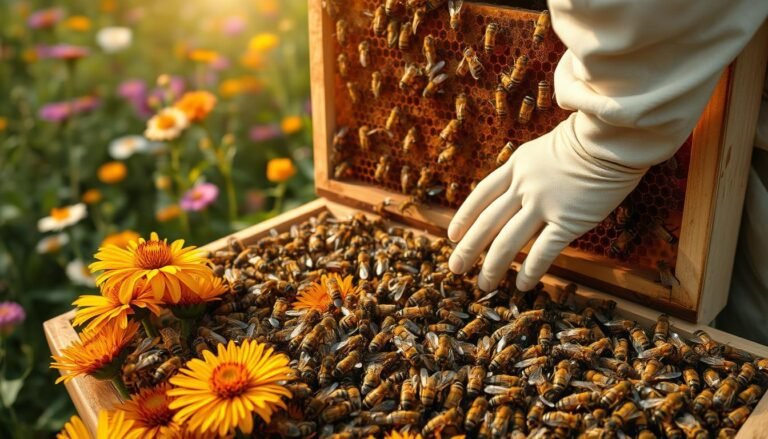
This guide helps beekeepers bring calm, clear attention to every apiary visit. A honeybee hive offers steady sensory cues: a low hum, faint wax and propolis aromas, and steady entrance traffic that draws focus.
Approach slowly, wear light colors, and avoid scented lotions to keep bees relaxed and observations reliable. Using the colony as an anchor is a practical way to settle the mind and reduce stress through focused sensory engagement.
These methods are practical and evidence-informed: they rely on sensory attention, clear steps, and repeatable routines rather than abstract claims. The same calm attention that helps the colony also helps beekeepers notice early signs and make better decisions over time.
This short guide previews why this matters, the supporting evidence, how to prepare, specific actions to use with bees, and how to turn observations into safer, clearer apiary management. For further practical examples and safe setup tips see a short practice at bee meditation and standard safety advice at beekeeping safety precautions.
Key Takeaways
- Calm, focused attention makes inspections safer and clearer.
- Use sensory anchors — sound, scent, and entrance traffic — to return to the present world.
- Practical routines reduce errors and protect both bees and beekeepers.
- Techniques scale from one backyard colony to larger apiaries.
- Simple preparation—light clothing, slow approach—improves outcomes.
Why mindful beekeeping matters for inspections and apiary management
When beekeepers slow their pace and listen, small signals from the colony become obvious. Calm, deliberate behavior near the hive lowers defensive responses because bees react to quick movement, vibration, and strong scents.
Sensory-focused observation—noting the hum, entrance traffic, and aroma—supports steady handling. That steadiness reduces stress for both people and bees and helps operators handle frames with care.
Sustained attention often reveals early warning signs. Changes in traffic or a pitch shift in the colony’s sound can precede more serious issues and give beekeepers extra time to act.
- Better inspections: steadier attention means more accurate reads and fewer rushed mistakes.
- Safer handling: calm movement and measured breath lower the chance of defensive activity.
- Team benefits: intentional calm helps others nearby stay composed and reduces errors.
Mindful practice complements technical skill and journaled notes; for record-keeping tips that help convert observations into long-term care, see beekeeping records and management.
“A patient approach respects the colony as a living system and improves the quality of care.”
Evidence-backed benefits: reduced stress for beekeepers and healthier hives
The senses of sound, smell, and movement in a colony offer simple anchors that calm the body and steady observation.

What the hive’s hum, scent, and traffic reveal about the present moment
The hum masks distractions and supports focused work. A steady drone helps people tune out noise and notice pitch shifts that signal change.
The aroma of honey, wax, and propolis grounds attention and makes it easier to stay present. This sensory blend acts like a single point of focus.
The entrance traffic shows foragers, guards, and waggle dances that reveal foraging success and colony mood.
Mindsight in the bee yard: focused attention and emotional regulation
Dr. Dan Siegel’s concept of mindsight—naming feelings and keeping focused attention—helps beekeepers notice reactions without acting on them.
Saying “I feel anxious” instead of “I am anxious” creates a small gap. That gap lets handlers breathe, slow movement, and make steadier choices around bees.
Therapeutic outcomes from beekeeping programs for veterans and youth
Structured programs report real benefits. A Manchester VA-affiliated project noted reduced anxiety and depression and better overall health.
The Huneebee Project pairs protective gear, smokers, and five-senses practice so youth build confidence, skills, and a supportive community.
- Reported benefits: fewer defensive incidents and more consistent observations that guide timely care.
- Participants often describe renewed purpose and stronger relations with others and the natural world.
For broader evidence on mental and social benefits of apiary work, see mental health benefits of beekeeping and a practical guide to beekeeping benefits of beekeeping.
Prepare with intention: setting up your hive inspection for calm and safety
Set up with care so your inspection starts calm and stays safe for both bees and people.
Pre-inspection checklist: suit, smoker, tools, time, and weather
Quick checklist: well-fitted suit and veil, gloves that match your skill, a lit smoker charged with white pine needles, hive tool, extra frames, and a notepad or app for records.
Safety first for bees and people: scent control, movements, and distance
Avoid perfumes and scented lotions. Wash hands to remove strong odors. Stand to the side of the entrance and keep movements slow and deliberate.
Grounding routine: take 60 seconds at the entrance—listen to the hum, take three slow breaths, and scan traffic to gauge activity before lifting the lid.
“Prepared gear and calm actions reduce surprises and help both the colony and the handler.”
| Item | Why it matters | Action | When |
|---|---|---|---|
| Suit & veil | Protects people and lowers fear | Wear snug, light-colored clothing | Before approach |
| Smoker | Masks alarm pheromones | Use minimal puffs at cover and entrance | Just prior to opening hive |
| Staged tools | Avoids fumbling that jolts bees | Set tools on stable stand in order | At worksite setup |
| Weather check | Hives behave better in calm conditions | Inspect on warm, still days | Plan before visit |
Small things—gentle lid lifts and clear entrance space—keep bees safer and make the whole beekeeping way smoother.
Mindfulness techniques during hive inspections
Before opening a box, pause at the entrance and take two to three diaphragmatic breaths. Stand to the side, inhale low into the belly, and exhale slowly to steady hands and focus.

Centering breath and a five-senses scan
Run a quick five-senses scan: note sound, scent, sight, touch, and temperature. This anchors attention to what is present and reduces reactive movement.
Slow, deliberate handling of frames and brood
Loosen propolis gently and lift frames vertically to avoid rolling bees. Pause to check brood patterns and eggs for queen-right cues. Return frames in order with consistent spacing to protect brood and the queen.
Listening to the colony
Listen for pitch changes in the hum; higher tones can signal agitation. Use smoke sparingly to mask alarm pheromones and calm traffic at the entrance. Watch for steady inflow with pollen as a sign of foraging strength.
“Name and tame” when fear spikes
If fear or a sudden surge appears, silently label the reaction—“I feel startled”—take one slow breath, and resume measured motion. Record any swarm cues like charged queen cells or backfilling, then plan low-stress steps such as adding space or a split.
- Quick routine: breathe, scan, move slowly, listen, and keep frames organized.
- Field practice: short pauses and steady hands reduce mistakes and protect brood and queen safety.
“Brief sensory checks and calm handling turn observations into reliable decisions.”
For an extended guide on mindsight and emotional awareness in apiary work, see mindsight-enhancing beekeeping.
Translating mindful observations into better apiary decisions
A short, structured log can reveal patterns that guide timely, low-stress care. Record what you see and how you felt after each visit. Note brood area, queen indicators, entrance traffic, and stores. Also mark whether the visit felt calm or rushed and how much time you spent.
From notes to action: journals, patterns over time, and low-stress interventions
Make entries immediate and consistent. Over weeks and months, review notes to spot patterns that predict outcomes. Look for brood dips tied to cold snaps or handling errors when you were rushed.
- Log essentials: brood status, queen signs, entrance traffic, honey stores, and temperament.
- Monthly review: find patterns and adjust timing or setup to avoid repeat stress.
- Low-stress fixes: add space before congestion, balance brood, and skip unnecessary manipulations.
- Team consistency: standardize steps so beekeepers and community members replicate results.
- Resource planning: use honey and stores notes to decide when to feed, super, or harvest.
Integrate brief pauses into your routine to keep clarity when deciding to split, requeen, or let a colony recover. For seasonal scheduling and tasks, see seasonal tasks.
Conclusion
A single breath and a quick scan at the hive entrance turn routine checks into reliable care and steady attention.
Using short, repeatable routines helps beekeepers make clearer decisions, protect the colony, and handle frames with calm hands and a focused mind.
Carve out a brief moment at the start and end of each visit to reflect. Over time these small pauses improve technique and save time on follow-up work.
Practically, you get fewer missteps with frames, more reliable reads on brood and queen status, and better timing for space and honey management so hives stay strong.
People gain too: more confidence, lower anxiety, and a deeper bond with bees — results seen in veterans’ programs and community projects.
Keep notes, share what works, and return to the hum — notice small things and let each inspection teach you. This simple habit makes a lasting difference for beekeepers, colonies, and the wider community.
FAQ
What is mindful beekeeping and why does it matter for inspections?
Mindful beekeeping means bringing calm, focused attention to each inspection. It helps reduce stress for the beekeeper and disturbance to the colony. By slowing your movements, watching bee traffic, and noting scent or pitch changes, you make safer, more informed choices about brood care, queen status, and feeding. This approach improves colony health and yields better long-term decisions for the apiary.
How can I tell the hive’s condition from its sound, smell, and entrance activity?
Listen for steady, even humming as a sign of a balanced colony. Sharp, high-pitched buzzing or sudden silence can signal agitation or a failing queen. Sweet, waxy or fermented odors point to normal hive activity or stored honey; sour or rotten smells may indicate disease or brood issues. Watch incoming and outgoing traffic—high foragers’ return with pollen in peak season is healthy, while erratic flights or few bees at the entrance can show stress, pests, or weather impacts.
What should I do before opening a colony to prepare for a calm inspection?
Use a pre-inspection checklist: wear an appropriate suit, have a smoker and essential tools ready, pick a calm time of day with mild temperatures, and allow enough time to work without rushing. Check wind and weather; avoid opening hives in cold, wet, or windy conditions. Quietly approach the apiary to reduce alarm and position yourself so you control light and movement around the hive entrance.
How do I control scent and movement to keep both bees and people safe?
Keep strong perfumes and scented lotions off. Move slowly and deliberately; abrupt gestures trigger defensive responses. Light, consistent use of a smoker can calm bees by masking alarm pheromones. Maintain safe distance from the hive for bystanders and pets, and communicate with anyone nearby before starting an inspection. If you need to work quickly, enlist an assistant to pass tools so you avoid sudden reaches.
What simple breathing and sensory steps help me stay centered at the hive entrance?
Pause at the hive box and take a few slow, deep breaths to steady your heart rate. Do a five-senses scan: note what you see (traffic, color), hear (hum level), smell (nectar, wax), feel (temperature, wind), and observe any visual cues on frames. This brief check reduces anxious reactions, sharpens observation, and improves decision-making while you open the box.
How should I handle frames slowly and deliberately to minimize colony disturbance?
Use smooth, steady motions when lifting and replacing frames. Support the frame fully to prevent crushing bees. Inspect brood patterns and queen-right cues calmly; avoid excessive frame exposure to sunlight or cold. Replace frames in the same order and gently close the hive when finished. These steps reduce sting risk and help maintain brood temperature and humidity.
What are the signs of a queen-right colony versus a failing queen during an inspection?
A queen-right colony shows consistent, well-patterned brood across frames, steady egg-to-larva progression, and organized worker behaviour. A failing queen may produce spotty brood, many drone cells, or long gaps between brood stages. Reduced pheromone presence can manifest as increased restlessness or clustering. If you suspect queen failure, make notes and plan a low-stress intervention like introducing a mated queen or requeening at an appropriate time.
How do I interpret changes in pitch or tempo of the hive’s hum?
Lower, steady humming often reflects normal foraging and comb activity. A rising pitch, rapid buzzing, or sharp surges typically indicate agitation, alarm pheromones, or an imminent defensive reaction. Sudden drops in sound can mean brood problems, cold stress, or a recent disturbance. Track these signals alongside visual cues to decide whether to pause the inspection or close the hive.
What is the “name and tame” approach for managing emotional reactions in the bee yard?
The “name and tame” method asks you to acknowledge an emotional response—name it quietly (for example, “anxiety”)—then use breathing and purposeful slowing to reduce its intensity. Naming interrupts escalation, and deliberate calming actions restore focus. This keeps your movements predictable for the bees and prevents hasty choices that could harm you or the colony.
How should I record observations to turn inspections into better apiary decisions?
Keep a concise journal for each colony: date, weather, queen status, brood pattern, pest signs, feed or treatment actions, and any behavioral notes. Use photos sparingly for reference. Over weeks and seasons, patterns emerge that inform interventions—when to requeen, when to treat varroa, or when to combine weak colonies. Simple, consistent notes make your interventions evidence-based rather than reactive.
Can working mindfully with bees provide therapeutic benefits for groups like veterans or youth?
Yes. Programs through organizations such as Beekeepers of America and local extension services use structured apiary work to teach focus, responsibility, and emotional regulation. Hands-on tasks, slow handling, and observation foster calm, improve mood, and build social connection. These outcomes support rehabilitation, skills training, and community engagement while benefiting hive care.
How do I respond if bees begin to surge or a swarm threat appears mid-inspection?
Stay composed and remove the smoker. Stop sudden motions and gently close the frames and hive if safe to do so. If bees escalate, back away calmly to a safe distance and reassess after they settle. For swarm preparations, look for queen cells and high congestion; split or requeen according to your management plan when conditions allow. Prioritize safety for people and colony stability.
What low-stress interventions help colonies without causing more harm than good?
Prioritize minimal, targeted actions: provide syrup or pollen substitute during dearths, use screened bottom boards and drone brood removal for varroa control, and combine weak colonies rather than constant manipulation. Time interventions for calm weather and stable brood cycles. These measured steps preserve colony resilience and reduce repeated disruption.
How often should I inspect my colonies to balance care with minimizing disturbance?
Inspect more frequently during spring buildup—every 7–10 days—to monitor queen laying and space needs. In summer, shift to 2–4 week checks for honey flow and pest management. Reduce winter inspections to emergencies only. Always choose calm, warm, daylight hours to lessen stress on bees and make your observations clearer.