Beekeeping should be safe and enjoyable. When a colony shows true aggression, routine work becomes risky for the beekeeper and for people near your home.
This guide offers a clear, humane way to assess temperament and apply management-first steps before taking hard measures. You will learn to tell genetic aggression from defensive behavior so the right action follows the right diagnosis.
The approach is practical: spot signs like following or pinging, check for triggers, refine handling and timing, and consider queen changes or uniting when genetics are the issue. Expect results only after a worker turnover of several weeks, and keep simple records at each inspection.
Safety matters. Protect flight paths, choose work times that reduce stings, and act with neighbors in mind. This course frames decision logic so beekeepers can adapt methods to their apiary and find a safer, calmer way forward.
Key Takeaways
- Distinguish genetic aggression from context-driven defense before acting.
- Use gentle handling and timing fixes first for defensive colonies.
- Requeening or uniting may be needed for true genetic problems; expect a 6–9 week horizon.
- Record temperament trends across inspections and compare colonies.
- Prioritize safety for people near your home and for the beekeeper.
Understand Bee Behavior: Aggressive vs. Defensive Colonies
Not every loud hive means a bad temperament—context and cues reveal the real story.
Proactive aggression shows as bees buzzing at a veil from yards away, boiling out when the cover is cracked, or following a beekeeper across the apiary. These honey bees may try to sting through gloves and burrow into suit folds. That pattern suggests a genetic tendency rather than a single bad inspection.
Defensive reactions come after clear stimuli: banging frames, long open hive times, drops, or heavy smoke. A colony that calms with gentle handling or shorter inspections is likely defensive rather than truly hostile.
Key field cues beekeepers see
- Following after you leave the yard and persistent pinging on the veil point toward a deeper temperament problem.
- Frame crowding and many workers at home—common on cool or late-day inspections—make reactions louder.
- Crushed bees, jolting boxes, or heavy smoke spike alarm pheromone and can turn a calm group reactive.
- Record following and pursuit carefully; these have genetic components and affect public safety. For more detailed notes, see notes on stroppiness.
Quick observation tips: stand upwind of the entrance, keep movements deliberate, and watch how fast the hive settles once the lid is replaced. One bad inspection isn’t a diagnosis—track behavior over several days before making major changes.
Diagnose Before You Act: Causes of Colony Aggression and Defensiveness
Many hive problems trace back to environment or queen status rather than heredity.
Environmental triggers matter. During a nectar dearth the number of guarding bees rises and a hive often reacts sharply. Bad weather, falling barometric pressure, or opening a hive on a chilly day leaves more workers inside and raises sting risk.
Queen status and brood patterns are next. A missing queen or patchy brood changes pheromones. Queenless groups feel edgy until a new queen lays and the pheromone profile stabilizes. Check for consistent eggs, brood rhythm, and fewer wandering workers before requeening.
Apiary stressors can keep honey bees defensive for days or weeks. Signs of robbing, yellow jackets, skunk activity, or overcrowded frames point at external causes. Simple fixes — narrower entrances, raised stands, or extra space — often calm workers without genetic interventions.

- Note season and forage: flows calm colonies; dearths sharpen guarding.
- Avoid inspections in poor weather; fewer workers inside means lower stress.
- Record days of symptoms and check for predators before blaming genetics.
| Cause | Signs | Quick action |
|---|---|---|
| Nectar dearth | High guarding, chasing, sticky entrance | Narrow entrance; reduce exposed honey |
| Queenless or poor queen | Spotty brood, no eggs, frantic searching workers | Confirm brood pattern; delay requeening until diagnosis complete |
| Predators/robbing | Torn comb, dead bees, yellow jackets | Raise stands, trap predators, close gap entrances |
How to Manage Aggressive Colonies Naturally
Small preparations and steady hands change a loud hive into a manageable one. Begin with a tidy workspace so the hive is open for the shortest practical time. Lay out tools, spare frames, and a temporary stand for the first frame you remove.
Pre-inspection setup: smoke, tools, frames, and workspace
Use smoke as a precise tool, not a blanket fix. Give a small puff at the entrance, wait a few minutes for bees to feed, and avoid over-smoking. Too much smoke can hide the queen and make the inspection longer.
Calm handling techniques that reduce alarm pheromone and crush risk
Remove one outer frame first and park it gently. This creates room and lowers the chance of crushing workers between lugs.
- Move frames with deliberate, even motions; do not bang or twist top bars.
- Nudge clusters with the corner of a frame rather than forcing through them.
- Keep boxes covered when not in use and avoid exposing wet honey surfaces.
Natural de-escalators: timing, space, and minimal disturbance
Choose mid-day in fair weather so more foragers are out and fewer bees are at home. Add supers or brood space before frames become wall-to-wall with bees to reduce crowding.
Stand to the side of flight paths, move smoothly around people and entrances, and close the hive promptly when your job is done. End the session by brushing stragglers gently at the home entrance rather than shaking them off.
For broader pre-inspection planning and swarming prep, see this guide at swarming preparation tips.
Genetics, Queens, and Temperament: Non-chemical Paths to Calmer Bees
When temperament stays poor despite calmer handling, the queen is often the logical place to intervene.
Aggression has a clear genetic component. Because queens mate with many drones, some subfamilies may drive defensive reactions. Replacing the queen removes the primary source of those genes and gives the hive a fresh pheromone profile.
When a replacement queen helps and expected timelines
Use requeening after you rule out weather, space, and predator triggers. Buy a selected new queen rather than allowing an emergency daughter. That reduces the chance of retaining the same drone-derived traits.
Expect an initial softening within a few weeks, with full turnover commonly in 6–9 weeks as old workers are replaced by daughters of the new queen.
Uniting with a gentle stock for a fast reset
When no replacement is available, consider dequeening and uniting with a known gentle nucleus. This imposes a stable workforce and resets pheromones quickly, which is useful during dearth or high predator pressure.
- Plan removal carefully: reduce population pressure, use light smoke, and employ a controlled cage release or single-step unite to limit repeated intrusions.
- Track results: note reductions in following and pinging and compare behavior with nearby hives.
| Action | When to use | Expected timeline |
|---|---|---|
| Purchase and install a new queen | Persistent temperament after ruling out environment | Initial change in weeks; full effect 6–9 weeks |
| Allow colony to raise own queen | Emergency only; limited control over genetics | Uncertain; risk of repetitive traits next season |
| Dequeening and uniting with nucleus | No immediate queen source or heavy pressure from predators | Fast pheromone reset; behavior improves within weeks |
Treat genetics as one part of a holistic plan. Combine requeening or uniting with space management, forage planning, and calm handling for lasting improvements in hive behavior and fewer public-safety problems.
Seasonal Strategy: Working With Weather, Flows, and Colony Size
Plan inspections around seasonal peaks so work matches colony strength and temperament.
Early spring offers calmer bees when populations are low; late summer often brings high guard numbers and sharper responses.
Inspect in fair weather and middle of the day so most foragers are away. Avoid cool, rainy, or late windows that keep bees at home and raise alarm levels.
Watch the nectar flow. During a flow, hives usually tolerate short inspections. After a flow ends expect shorter tempers and fewer patient workers.
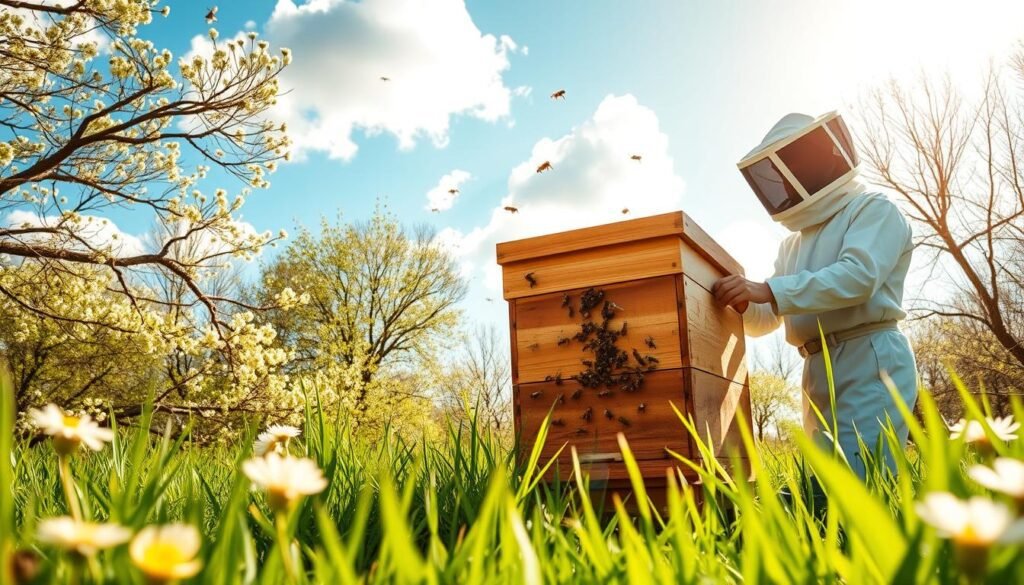
Spring build-up vs. late-summer dearth: planning inspections
Use spring as practice for smooth frame handling. Short, frequent checks while colonies are small build skill and reduce crush risk later.
In late summer dearth, make visits focused and brief. If you have limited day time, split tasks across visits rather than keeping a hive open for long.
Managing large populations, supers, and crowded brood frames
Add space before the brood nest is jammed. Add supers or rearrange frames to relieve crowding and cut down rolling bees and alarm pheromone.
- Rotate or move frames to keep workable bee space and reduce crush points.
- Provide a bit of extra brood space in hot, humid weather to limit bearding at entrances.
- Treat a big colony as a condition to manage: set clear goals for each visit and minimize disruption.
| Season | Typical condition | Recommended action |
|---|---|---|
| Spring | Low population, calmer bees | Practice smooth handling; give small expansions early |
| Summer (flow) | High forager numbers, tolerant inspections | Add supers proactively; short checks during mid-day |
| Late summer (dearth) | Crowded brood, increased guarding | Short, focused work; split tasks across days |
For uniting during spring and for seasonal checklists, consult the spring unite guide at uniting honeybee colonies in spring and see broader seasonal tasks at seasonal beekeeping tasks.
Apiary Location, Public Safety, and Predator Pressure
Smart placement and simple screens steer bees away from people and quiet neighborhood concerns. Pick a place that keeps hive entrances out of common walkways and sightlines. A well-sited apiary lowers risk and reduces complaints at a nearby home.
Hive placement, flight-path screens, and neighbor considerations
Raise flight lines above head height with screens or hedges. Install 6–8 foot screens that force bees upward. That keeps bees clear of patios, gates, and play areas.
Talk with neighbors about bee traffic and water sources. Set expectations for stray bees and give simple steps residents can follow when a bee lands at their home.
Mitigating robbing, skunks, yellow jackets, and bears
Reduce robbing during dearth by keeping equipment closed and limiting exposed honey. Shrink entrances so guards can hold the line.
- Elevate stands to deter skunks that scratch at entrances at night.
- In bear country, use a properly grounded electric fence; it is the standard protection.
- Control yellow jackets by removing attractants and strengthening weak hives; strong bees resist robbing better.
Read the signs: torn comb, dead bee piles, or frantic guards point at an external problem, not always genetics. Keep a relocation plan for any hive that becomes a neighborhood case, then reassess and consider requeening if needed.
Record site notes and weather with each inspection so beekeepers can spot patterns tied to place and temperament. For broader resources, consult this beekeeping resources guide.
Decision Points: Records, Thresholds, and Responsible Actions
A simple scoring system turns vague concerns into clear, actionable data. Rate temper, following distance, and time to settle at each inspection. Compare a colony against neighbors on the same day.
Make decisions on trends, not single events. Tolerate an occasional bad inspection, but act when poor behavior repeats across several weeks under good weather and calm handling. This reduces false positives and focuses effort where genetics likely play a role.
Practical thresholds and corrective steps
- If a hive scores high for following and chasing in two or more successive weeks, plan requeening with a new queen or unite with a gentle nucleus.
- Split very populous, defensive units when you have queens ready; this lowers guard density and eases handling time.
- For relocation, move at night to a remote site, then re-evaluate and requeen after the colony stabilizes.
Public safety must guide urgent acts. If bees follow and sting passersby away from the yard or near a school, beekeepers must act immediately. Relocation or requeening is preferable to destructive measures.
| Decision point | When to act | Expected change |
|---|---|---|
| Score rising for weeks | Repeated poor scores vs neighbors | Plan new queen or unite; visible softening in ~3 weeks |
| Very large, defensive hive | High population, repeated chasing | Split into nuclei; reduced guard numbers in days |
| Immediate public-safety case | Stings away from apiary or at public spaces | Night move or urgent requeening; restrict access until stable |
| Last-resort extreme danger | No relocation/requeen options and ongoing public harm | Euthanasia historically used by some beekeepers; rare, high-risk, requires strict safety steps |
Plan each visit so frames are handled once and goals are clear. Keep invasive visits low during corrective periods and record outcomes at each day check. Good records save time and guide the right course of action.
Conclusion
Patient, methodical work and targeted genetic resets give beekeepers the best chance at steady temperament. Read the signals first, keep inspections calm, and use records as the basis for change.
Good notes turn guesswork into clear action. Track following, settling time, and season factors across a few days before changing a queen or moving a hive.
Site hives thoughtfully, shield flight paths, and reduce predator pressure so honey bees and people stay safe. When steps here are followed, most honey hives soften within weeks after a queen change as young workers replace older ones.
If temperament problems persist despite careful beekeeping, seek mentorship and consider another queen from gentler stock before extreme measures. For more on expanding your apiary and planning the next job, see beekeeping expansion tips.
FAQ
What signs tell a beekeeper a hive is aggressive rather than defensive?
Aggression shows when workers pursue people long distances, repeatedly sting without obvious provocation, or attack in larger numbers around the hive entrance. Defensive colonies give short, local warnings—quick flights and limited stings—often tied to a specific disturbance. Watch flight behavior, noise level, and whether workers focus on one person or the entire apiary during inspections.
Which environmental triggers most often spark heightened bee reactivity?
Sudden weather changes, nectar dearths, prolonged rain, and tight forage windows raise stress. Robbing pressure from nearby hives or yellow jackets, loud machinery, and frequent traffic also provoke stronger responses. Timing inspections during calm, warm afternoons with available nectar lowers the risk of elevated defensiveness.
How does queen status affect colony temperament and what brood patterns matter?
A failing or absent queen alters pheromone balance, causing agitation and guard increases. Spotty brood, many drone cells, or sudden brood gaps suggest queen problems. Strong, consistent brood patterns indicate stable pheromone signals and usually calmer behavior. Evaluating brood and queen presence helps decide next steps.
What pre-inspection steps minimize alarm pheromone and crushing of workers?
Use a smoker lightly and gently, choose quiet tools and a tidy workspace, reduce hive exposure time, and remove only the frames you need. Wear standard protective gear and work methodically to avoid crushing bees between boxes or frames. Calm movements and clear procedures prevent panic and limit alarm pheromone release.
Which handling techniques reduce stings and lower agitation during inspections?
Move slowly, keep hands low, avoid shading the entrance, and use slow prying motions. Replace frames one at a time and set them on a neutral surface rather than bumping. Limit inspection length, restore normal hive orientation quickly, and use sugar spray instead of smoke when gentle calming is preferred.
When is requeening likely to calm a hive, and how long until temperament improves?
If temperament links to queen failure, poor brood, or genetic aggression, requeening with stock known for gentleness is effective. Expect visible behavior shifts within 3–6 weeks as new workers emerge and pheromone profiles normalize; full improvement can take a full brood cycle. Record dates and monitor temper scores during this period.
Can combining an aggressive colony with a gentle nucleus work as a non-chemical fix?
Yes—uniting or introducing frames from a gentle nuc can dilute aggressive genetics and reset colony behavior. Use the newspaper method or timed introductions, ensure queenright status, and avoid overloading the gentle colony. Watch for robbing or fighting during integration and give several weeks for stabilization.
How should spring inspections differ from late-summer checks to reduce conflict?
In spring, inspect more frequently but gently to manage brood and space as colonies expand. In late summer, limit disturbance during dearths when robbing risk and defensiveness rise. Adjust inspection length and timing to match flow conditions: prefer warm, sunny afternoons during nectar flows and brief checks during scarcity.
What apiary placement choices reduce human–bee conflicts and predator pressure?
Place hives away from high-traffic areas, orient entrances toward natural barriers, and use flight-path screens to direct bees upward. Elevate boxes where skunks are present, use traps and exclusion for yellow jackets, and store honey securely to avoid bears. Inform neighbors and post signs when public access is nearby.
How do beekeepers record and use temper scores and following behavior to make decisions?
Keep brief daily or weekly logs of temper scores, following distance, and sting incidents. Look for multi-week trends rather than single events. If scores worsen across visits, consider splitting, requeening, or uniting with a calmer colony. Records help justify actions and track improvement post-intervention.
When is splitting, moving, or more drastic action warranted for a problem hive?
Split when populations are excessive, brood frames are crowded, or temper scores consistently exceed your safety threshold. Move a hive if persistent site-based stress exists, such as chronic robbing or neighbor complaints. Reserve non-natural last resorts—like chemical controls—for rare, documented cases and follow local regulations.
What immediate steps should a keeper take if workers start following or stinging people at a distance?
Close the hive and leave the area calmly, instructing others to move away. Retrieve any exposed honey or attractants, watch for robbing triggers, and inspect later with full protective gear. Note the event in records and plan a focused inspection to check queen status, brood health, and signs of external stressors over the next few days.