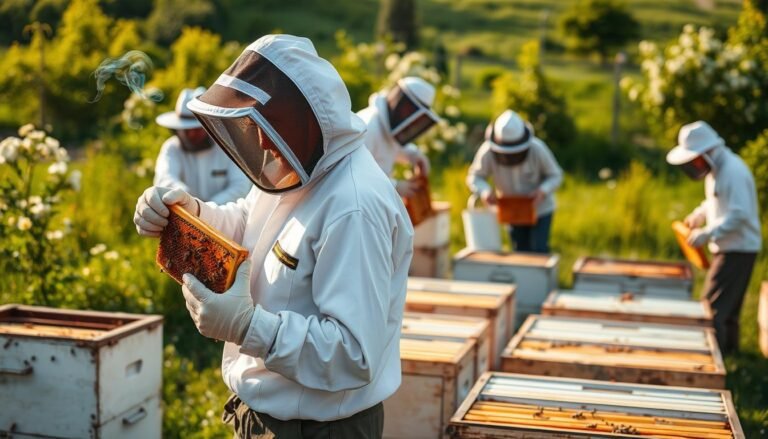
What keeps a honey bee colony secure while letting thousands of foragers return each day? The answer lies at the entrance, where guard bees screen incoming traffic with quick scent checks.
These eusocial insects assign clear roles: guards stand watch and use antennation to sample cuticular hydrocarbons (CHCs). CHCs began as waterproofing molecules but became a colony scent used with pheromones to form a shared odor profile.
The screening process is flexible. Acceptance thresholds change with nectar flow — guards relax during bounty and tighten when food is scarce. That balance lowers loss while keeping traffic moving.
Recognition is not perfect: overlapping scent profiles among conspecifics can cause errors, though some threats like wasps are rejected outright. Studies of entrance behavior summarize these patterns and offer practical insight for beekeepers; see research on entrance discrimination for more detail: entrance guard recognition.
Key Takeaways
- Guard bees use antennation and CHC-based scent profiles to screen arrivals.
- Colony scent mixes pheromones and shared odors to create a “hive scent.”
- Acceptance thresholds shift with foraging conditions, changing guard strictness.
- Overlap in odor cues can cause occasional recognition errors among conspecifics.
- Wasps and clearly distinct threats are rejected categorically by guards.
Why Hive Security Matters Now: What’s At Stake for a Honey Bee Colony
Seasonal shifts in nectar supply change the pressure at every colony entrance. During dearth, attempts at robbing rise and a single scouting worker can spark a rapid escalation.
From nectar dearth to robbing: seasonal pressures at the entrance
Robbing often starts when foragers advertise rich, exposed stores and recruit nestmates. That recruitment can overwhelm guards if local conditions favor the attackers.
As fights increase, rejection rates for non‑nestmates climb and guards become more aggressive to hold the line.
Stores, brood, and colony survival: what attackers threaten
Successful raids drain honey and stores that a colony needs for winter. Loss of reserves stresses the queen and reduces care for developing brood.
Wasps and other predators will also remove brood and adults, multiplying the danger and sometimes killing weak colonies outright.
- Stressed colonies with high Varroa or viral loads draw more pressure and can spread mites during robbing.
- Guards respond to low forage by increasing numbers and aggression to protect stores and workers.
- Practical tip for beekeepers: monitor entrance activity through the season and support defenses before problems escalate.
How bees detect hive intruders
At the landing, sentries evaluate each arrival with a rapid scent probe. This quick check happens before any bee crosses the threshold.
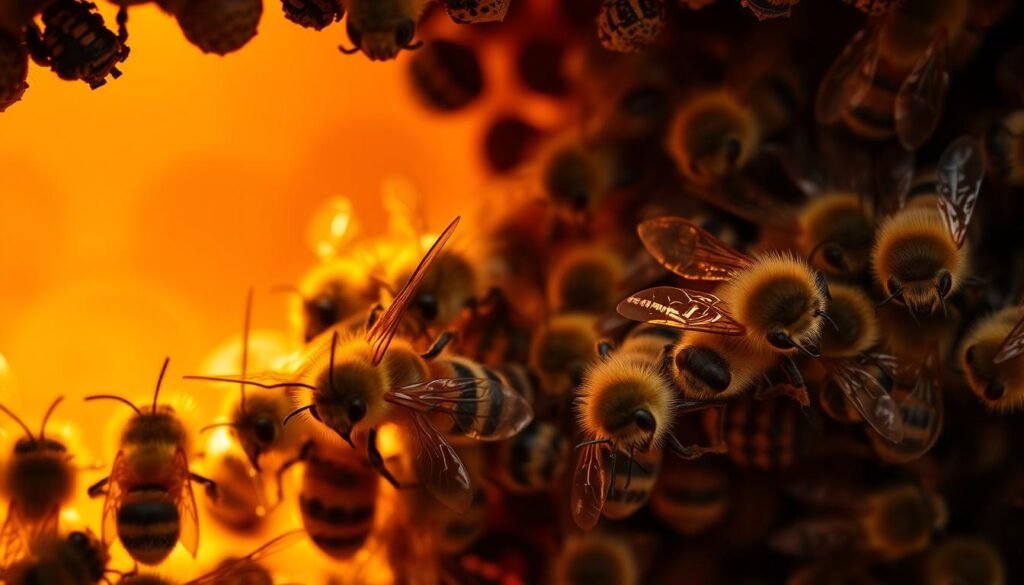
Antennation at the hive entrance: the frontline “smell check”
Antennation is a brief touch with the antennae that samples cuticular cues. Guards use this touch to read the visitor’s scent profile with high sensitivity.
Evidence shows the decision is olfactory: tests in dim red light produce the same rejection rates as daylight. That confirms smell, not sight, drives screening.
Acceptance thresholds: how guards decide friend vs. foe
Guards compare an incoming odor to the colony template. If the match crosses a guard’s acceptance threshold, the bee passes.
Thresholds shift with resource level. During dearth, guards tighten and reject many non‑nestmates. In heavy flows, they relax to speed returning foragers.
When it’s a free‑for‑all: strong nectar flows and permissive guarding
Permissive screening reduces delays but raises recognition errors when odor cues overlap among colonies. Such errors are probabilistic and expected.
Notably, distinctly different intruders like wasps trigger immediate, categorical rejection and aggressive defense.
- Quick antennation samples scent blends and pheromones.
- Decisions compare to a colony odor template at a variable threshold.
- Stringency rises with fights and falling nectar; more guards appear at the landing.
The Guard Bee’s Role: Who They Are, What They Do, and When They Act
Guard duty is usually taken by older workers that shift from in‑nest tasks to standing watch at the hive landing. These individuals adopt a defensive assignment for a limited time before or alongside foraging.
Older worker bees on duty: transitioning from workers to guard bees
Role changes are visible: a worker moves from brood care or cleaning to a vigilant posture at the entrance. Guards use antennal probing, quick challenges, and, if needed, grappling or stinging to stop suspicious incomers.
Guard numbers and behavior change with nectar availability
Guard deployment scales with conditions. When nectar falls and dearth begins, guards increase in number and aggression. Acceptance of nestmates stays high but is not perfect; occasional challenges happen under stress.
Young bees on orientation flights often have immature cuticular cues and usually pass even if they drift. In strong flows, the same guards relax checks to speed forager throughput, showing flexible allocation of effort.
- Quick assessments balance colony safety with the need for fast traffic flow.
- More grappling and persistent guards at the entrance often signal dearth and increased robbing pressure.
Pheromones, CHCs, and the “Hive Scent”: The Chemistry of Recognition
Long‑chain hydrocarbons on the cuticle double as waterproofing and as identity tags at the entrance.
Cuticular hydrocarbons as nestmate recognition cues
CHCs are produced by oenocytes and coat the surface of each worker. These molecules keep water in and act as chemical ID cards.
Guards sample those ratios during antennation and compare them to an internal template. Distinctive CHC mixes become a colony fingerprint used at the landing.
Queen pheromones, wax, and the colony’s shared odor
Queen secretions and wax contact help homogenize the colony scent. They contribute important cues but do not fully explain recognition patterns.
Gestalt odor transfer supports shared odor, yet genetics and environment also shape profiles. For a deeper look at pheromones, see this summary on bee chemical communication: bee pheromones.
Drifting and orientation flights: why some non‑nestmates get in
High levels of drifting between colonies show that CHC profiles vary beyond heredity. Young bees on orientation flights often have immature CHCs and slip past guards.
Recognition chemistry is dynamic. Internal factors and seasonality change signals, so guards tighten or relax checks. This explains why nectar‑laden incomers or young drifters may be accepted.
| Source | Main Role | Effect on Recognition | Practical Note |
|---|---|---|---|
| CHCs (oenocytes) | Individual ID, waterproofing | Primary cue; ratio-based fingerprint | Varies with age and diet |
| Queen pheromones | Colony cohesion | Reinforces template | Helpful but not sole determinant |
| Wax & contact | Odor sharing | Homogenizes scent | Supports Gestalt; incomplete alone |
| Drifting/orientation | Accidental mixing | Raises acceptance errors | Common near dense apiaries |
Microbiome to Molecules: How Gut Bacteria Shape Forager CHC Profiles
Microbial passengers and diet shape the final cuticular signature that marks a full‑time forager. As workers change tasks, their CHC levels and ratios shift. Only mature foragers show the most distinct, stable colony‑specific profile.
Leaving the nest completes CHC maturation. Environmental exposure and varied food sources supply substrates for gut microbes to metabolize. Those chemical outputs alter surface hydrocarbons that guards read at the entrance.

Research ties colony‑specific microbiomes to scent. Antibiotics that disrupt gut bacteria change CHC blends and raise rejection by guards. Conversely, inoculation with Gilliamella apicola strains shifts acceptance: guards favor foragers carrying the same strain, even when genetics differ.
“The microbiome links diet, physiology, and recognition — a clear path from microbes to colony scent.”
- Newly emerged bees get microbes from older nestmates via feeding.
- Diet and microbial metabolism drive the “you are what you eat” effect on honey scent markers.
- At the systems level, task maturation, microbiome, and environment together set recognition range among colonies.
Intruders at the Door: Robber Bees vs. Wasps and What Guards Do
Tensions at the entrance rise when similar chemical profiles blur the line between friend and foe. Among honey bee colonies, overlapping cuticular cues cause guards to make trade‑off errors. A guard may admit a non‑nestmate or briefly reject a nestmate when scent distributions overlap.
Overlapping cues among honey bees create recognition errors
Acceptance and rejection are linked. When guards tighten standards, fewer non‑nestmates slip by but more nestmates face challenges. Relaxed checks reduce nestmate stress but raise the risk of robbers exploiting permissive moments.
Robbers may arrive carrying nectar and mimic normal entry behavior. That tactic exploits the overlap in colony odor and a guard’s occasional leniency during heavy flows.
Wasps are rejected categorically: distinct cues, rapid defense
Wasps present clear, different chemical and visual signals. Guards reject them immediately and forcefully, even in low light. This categorical response limits predation by wasps and other predators.
“Categorical rejection of wasps contrasts with the graded decisions guards make among conspecifics.”
- Seasonal pattern: conspecific fights and robbing climb from summer into autumn; wasp pressure peaks late season.
- Guards tune acceptance thresholds over time to minimize combined costs of mistakes.
- Practical sign: rapid grappling of yellow‑black intruders on the landing board signals wasp attacks and higher defensive posture.
Takeaway: categorical wasp defense protects against predators, while nuanced screening among bees balances speed and accuracy—leaving colonies vulnerable to conspecific robbing without careful monitoring.
How-To: Practical Steps Beekeepers Can Take to Support Hive Defense
Simple changes at the landing can cut robbing risk and make guard work more effective.
Manage entrances and conditions to reduce robbing during dearth
Reduce openings during low nectar by fitting entrance reducers or screens. Fewer gaps means guards control access with less effort.
Avoid open feeding and spilled syrup. Exposed honey draws robbers and wasps across a wide range and raises pressure on all hives.
Read the entrance: spotting guarding intensity, fights, and robbers
Watch the landing board. More guards, frequent grappling, and rolling fights signal rising robbing or wasp attacks.
Identify robbers by their darting flight, side‑slips, and visitors carrying uncapped honey or arriving without pollen during dearth.
Apiary layout, timing, and feeding practices that help your guards
Space colonies and vary orientations to cut drifting. Staggered rows and different landmarks reduce mistaken returns.
Time inspections for early morning and finish quickly. Keep equipment sealed and frames covered to avoid frenzy behavior.
- Use robbing screens and direct traffic through a single, guarded opening when pressure is high.
- Feed inside with sealed feeders during dearth; never drip syrup on the entrance.
- Support worker health with nutrition and mite control—weak colonies invite robbing and can spread mites to neighbors.
- Place wasp traps away from the apiary and clean honey residues from equipment to reduce scouting.
Further reading: practical safety and entrance management are discussed in depth at apiary safety guidance and in operational notes for timing and screens at entrance management tips.
Conclusion
The entrance acts as a chemical checkpoint where a guard compares incoming scent to a living colony template. This simple comparison supports complex decisions that scale with conditions.
Acceptance thresholds shift with nectar and risk, making the system fast during flows and stricter in lean times. That flexibility lowers overall loss but accepts some trade‑offs among conspecifics.
Microbes to molecules matter: foragers and workers develop distinct CHC blends shaped by diet and gut bacteria, and those blends guide gatekeeping at the doorway.
Wasps carry distinct cues and trigger categorical rejection, while robbers exploit overlapping signals. Practical entrance management, spacing, and strong health support empower guards and protect the colony.
Understanding these roles clarifies why orientation drifters slip by and why mature foragers face tighter checks. Aligning apiary practice with this way of defense keeps colonies resilient.
FAQ
What cues do guard bees use at the entrance to screen visitors?
Guard workers rely on antenna contact and odor cues right at the hive entrance. They perform quick antennation to sample cuticular hydrocarbons (CHCs) and other colony-specific scents, comparing those signals to the nest’s odor template before permitting entry.
Why does colony security change with nectar flows and dearth?
Guard behavior shifts with resource levels. During strong nectar flows colonies relax checks to let more workers enter, while in dearth or when stores are vulnerable guards tighten acceptance thresholds to prevent robbing and theft.
How many guards does a colony keep on duty and does that number vary?
Guard numbers fluctuate with season, colony strength, and threat level. Strong colonies and times of high risk see more guards posted; numbers drop when foraging demands rise or threats are low.
What role do queen pheromones and wax odors play in recognition?
Queen pheromones and hive materials help create the colony’s shared scent profile. Workers form an odor template from these cues, which guards use to detect deviations in visitor chemistry.
How do cuticular hydrocarbons (CHCs) function in nestmate recognition?
CHCs are long‑chain lipids on the insect cuticle that vary among colonies. Guards detect CHC patterns during antennation; mismatched ratios trigger rejection or aggression toward non‑nestmates.
Can gut microbes affect a forager’s entry chances?
Yes. Microbial communities influence CHC composition through diet and metabolism. Changes in gut bacteria alter scent profiles, which can make returning foragers look unfamiliar to guards.
Why do some workers drift into neighboring colonies without being attacked?
Orientation errors, similar CHC profiles, or low guarding intensity can allow drifting. Young foragers on orientation flights sometimes land on nearby hives and, if their scent overlaps the nest template, they may be accepted.
How do guards distinguish robber bees from wasps or other predators?
Wasps often carry distinct visual and chemical cues and usually provoke immediate, categorical rejection. Robber honey bees are chemically closer to nestmates, so guards rely on subtle CHC differences and behavior to detect them, which can lead to recognition errors.
What signs indicate a colony is under robbing pressure at the entrance?
Look for increased guarding activity, frequent fights, many dead insects near the landing board, frantic worker behavior, and persistent traffic of non‑colony foragers. These are classic indicators of robbing attempts.
What practical steps can be taken to reduce robbing and support guards?
Narrow entrances, reduce hive odors during feeding, avoid open syrup on hot days, space hives to limit drift, and time feeding for low foraging hours. These measures lower attraction and let guards control access more effectively.
Do guard bees change as workers age, and what triggers that role shift?
Older workers commonly transition into guard duties after foraging or nest tasks. This shift aligns with physiological changes and social needs; colonies increase guard recruitment when threats or resource value rise.
How quickly can a guard decide friend versus foe at the entrance?
Decisions occur in seconds. Antennation provides immediate chemical information; if a visitor’s scent aligns with the template, entry follows quickly. Significant mismatches provoke rapid defensive responses.
Are there colony-level strategies to reduce recognition errors among similar colonies?
Colonies diversify their odor profiles through unique diet and comb chemistry, and they may bolster guard vigilance during high‑risk periods. Apiary management, like spacing hives and labeling, also reduces cross‑acceptance.
Can beekeepers train or influence guard behavior directly?
Direct training isn’t practical, but beekeepers can influence guard effectiveness by managing hive strength, preventing overcrowding, controlling feeding practices, and minimizing stressors that dilute colony scent cues.