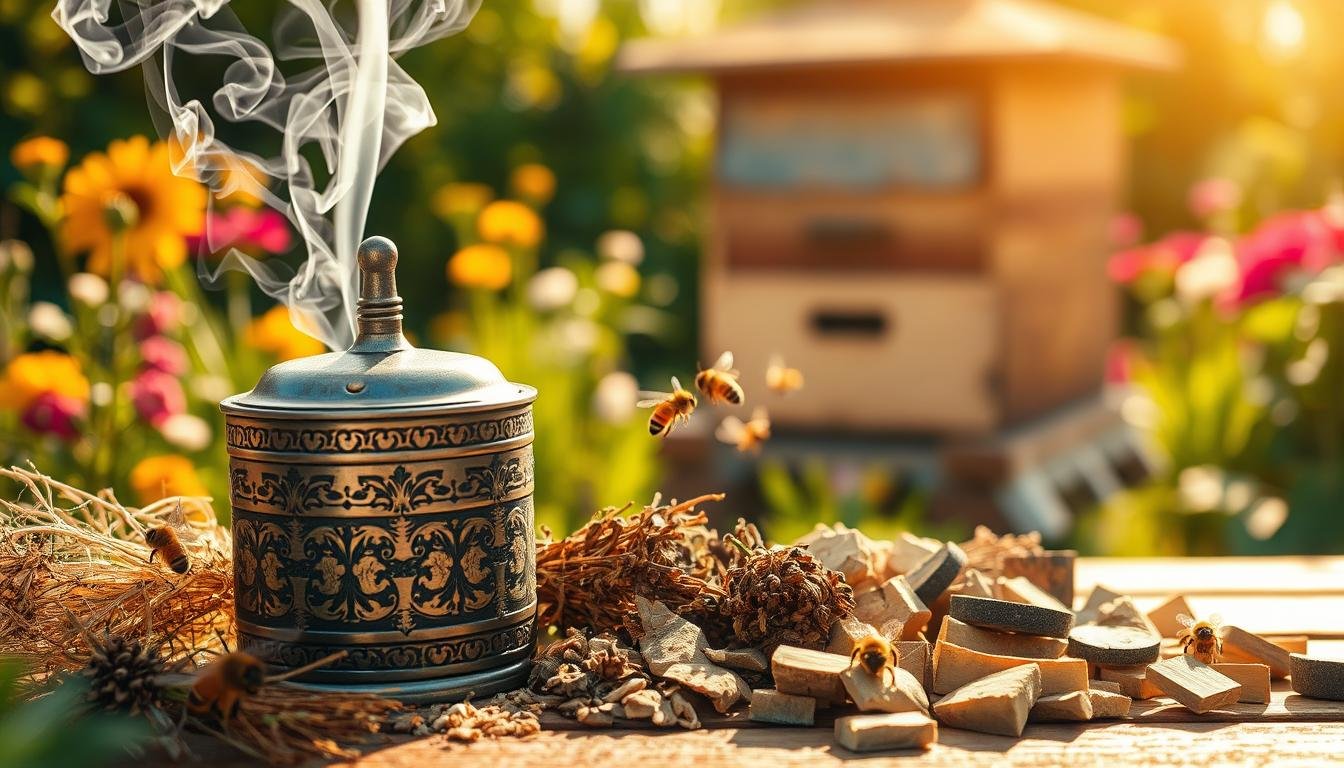
This buyer’s guide helps you choose, prepare, and use the right fuel so your colony stays cooperative during inspections.
A smoking tool masks alarm pheromones and prompts workers to gorge on honey, which makes them slower and less defensive. Good material lights easily, burns slowly, and makes cool, dense smoke that won’t taint wax or honey.
Natural options range from pine needles and cotton fiber to burlap, pellets, and untreated cardboard. Avoid treated fabrics, inks, plastics, and any accelerants. Preparing and drying a season’s supply early in the year ensures reliable performance, even in wet weather.
This guide covers the science behind smoke, selection criteria, lighting technique, troubleshooting, and safe disposal so you can inspect frames with minimal stress on the hive.
Key Takeaways
- Goal: choose and prep fuel that yields cool, steady smoke for safer inspections.
- Use dried natural materials like pine needles, burlap, pellets, and clean cardboard.
- Avoid synthetics, treated fabrics, inks, and accelerants that can harm the colony.
- Store a season’s worth of fuel early in the year for consistent results.
- Learn lighting and packing techniques to keep smoke dense but cool.
- See specific fuel options and prep tips at a practical guide on smoker fuel choices.
- For broader beekeeping resources, consult this comprehensive guide.
Why beekeepers use a smoker and how smoke calms a hive
A few measured puffs of cool smoke can change hive behavior long enough for a careful inspection.
What a bee smoker does during hive inspections
When a colony is exposed, alarm pheromones spread quickly and trigger defense. A bee smoker sends a steady, cool stream that interrupts that scent messaging. Workers shift attention and many begin consuming honey, which slows movement and lowers aggression.
How cool, thick smoke masks alarm pheromones
Cool, dense smoke is key. Hot or thin smoke can stress or damage comb near the top bars. Using dry, natural materials yields long-lasting, mild smoke that keeps the colony focused without overheating the interior.
| Smoke Quality | Typical Fuel | Effective Inspection Time |
|---|---|---|
| Cool & dense | Pine needles, burlap | 10–20 minutes |
| Steady, fragrant | Dried herbs | 15–25 minutes |
| Consistent, low ash | Bee pellets | 20–30 minutes |
Practical use: give a few gentle puffs at the entrance and under the lid before lifting frames. Add light puffs as needed to maintain calm without over-smoking. For deeper context on technique and timing, read why beekeepers use smoke.
Best smoker fuels for calm bees
Choose fuels that light easily, smolder steadily, and produce cool, pleasant smoke.
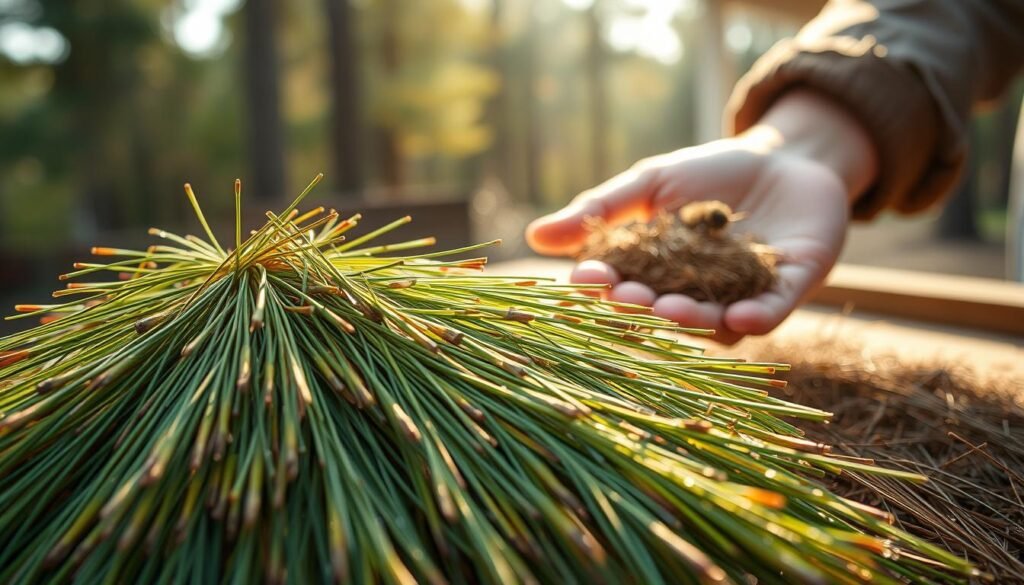
Pine needles and wood shavings: Dry pine needles and soft wood shavings ignite quickly and provide long, steady smoldering. They make cool, dense smoke that lasts through an inspection.
Packing options that work well
- Burlap and cotton fibers: Use untreated burlap or natural cotton to get consistent airflow and low‑odor smoke.
- Pellets designed for beekeeping: Formulated pellets burn evenly and leave minimal ash, handy when natural gathering is impractical.
- Dried herbs and lavender: Thoroughly dried lavender, rosemary, or sage add a sweet scent; some beekeepers note added calming and antibacterial qualities.
- Cardboard egg cartons and twine plugs: Plain, unprinted cartons plus hemp or twine plugs are inexpensive home alternatives—avoid inks and dyes.
“Start with quick kindling like brown paper or small twigs under longer-burning fuel to build a stable bed of smoke.”
| Fuel | Ignites | Burn Traits |
|---|---|---|
| Pine needles / wood shavings | Easy | Long smolder, cool smoke |
| Burlap / cotton | Moderate | Consistent, low odor |
| Beekeeping pellets | Very easy | Even burn, low ash |
| Dried herbs (lavender) | Easy | Fragrant, pleasant smoke |
Store all materials dry and test a small load before working a hive. For broader guidance on hive care and benefits, see this comprehensive guide.
How to choose bee smoker fuel that burns cool and clean
Choosing the right packable fuel hinges on dryness, airflow, and a steady, cool burn.
Key selection criteria
Prioritize fully dried material. Dry items ignite easily, smolder steadily, and give clean smoke. If a load feels damp or spongy, air it out before use to avoid acrid output.
Density and airflow matter
Balance packing size so the fuel bed breathes while staying dense. Pieces that fit together keep a long smolder without choking the bellows. Use small broken wood or loose burlap and layer thoughtfully.
Oily, resinous options that keep smoke billowing
Pine needles and citrus peels have natural oils that sustain billows without burning too fast. Mix these with neutral wood or pellets to avoid hot spots and heavy ash.
What to avoid
Never use synthetics, painted or treated fabrics, or accelerants. These can release harmful compounds into brood and honey.
- Store seasonal supplies in folded brown paper bags in a dry spot to be ready throughout the year.
- Test small loads and prefer low-residue materials that leave minimal ash.
For a practical list of acceptable packing options, see this guide to bee smoker fuel.
Lighting, packing, and using your bee smoker the right way
Good technique saves time and keeps inspections safe.
Begin with a small pile of dry kindling and light a modest flame. Use gentle bellows strokes to grow the ember, then add handfuls of your primary fuel slowly so the bed breathes. This prevents hot bursts and creates cool, steady smoke.
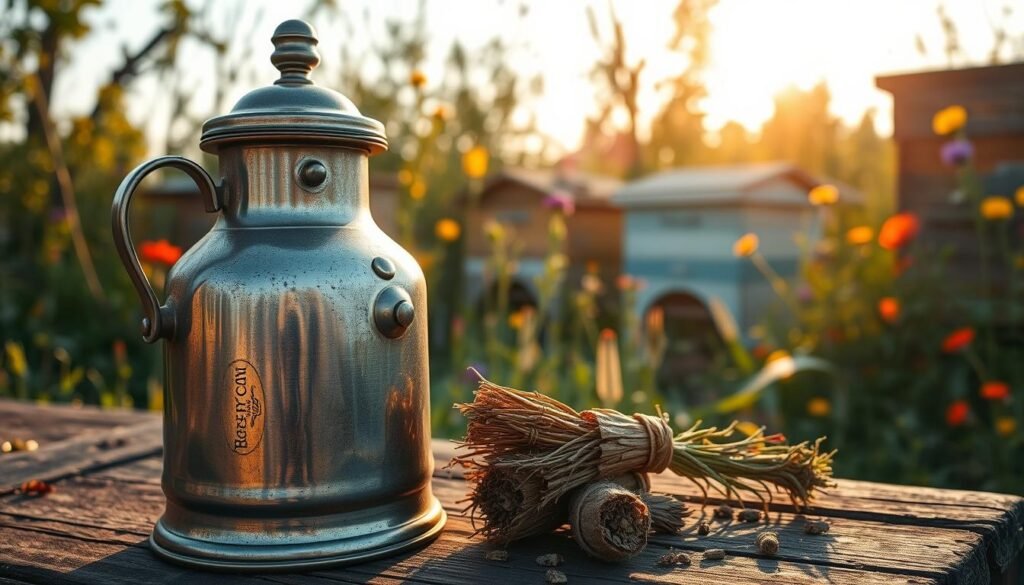
Starting the fire and building a fuel bed
Start small: ignite quick tinder at the bottom, puff until the flame steadies, then layer larger pieces. Repeat in stages so the load packs loosely and smolders.
Packing technique and bellows rhythm
Compress the load lightly with a hive tool so air still moves. Set a slow, even bellows rhythm—steady puffs keep embers alive without overheating the chamber. Top off fuel at intervals to maintain output across long inspections.
Troubleshooting common issues
- If the smoker won’t stay lit, check for moist fuel or overly tight packing and relight with dry tinder.
- Weak bellows may need repair; leaking air cuts smoke volume.
- If smoke feels hot, pause and add fuel so the bed cools before approaching the hive.
Safety and ash disposal
Light and set the unit away from dry grass and wooden surfaces. Never leave a lit smoker unattended. When finished, seal airflow or transfer embers to a metal container and store ash at home only after it is fully cold.
Seasonal tasks like prepping a dry fuel supply save time later and reduce last-minute risks.
Conclusion
Conclusion
Consistency beats volume when managing a hive.
Pair dry, natural fuel—pine leaves and wood shavings, untreated cotton or burlap, pellets, and plain cardboard—with steady lighting and packing. That combo produces cool, dense smoke that lets the beekeeper inspect frames with less disruption.
Avoid treated fabrics, printed or synthetic materials, and accelerants. Gather and store a season’s supply early in the year so you have reliable output in any weather.
Quick checklist: choose clean wood or fibers, light in layers, pack for airflow, test that smoke is cool, and watch the unit during the visit. Handle ashes only when fully cool and keep smokers away from dry vegetation.
For a practical seasonal fuel list and extra tips, see this seasonal fuel list. With the right fuel, a reliable bee smoker, and practiced handling, beekeepers can manage colonies smoothly across the year.
FAQ
What does a bee smoker do during hive inspections?
A bee smoker produces cool, dense smoke that masks alarm pheromones and reduces defensive behavior. The smoke encourages bees to ingest honey and become less likely to sting, giving beekeepers time to inspect frames and perform maintenance with fewer disruptions.
How does cool, thick smoke mask alarm pheromones?
Thick smoke interferes with the bees’ chemical communication by dispersing the sting pheromone and other signals. When alarm pheromones are diluted, foragers and guard bees stay calmer and less coordinated, which lowers the chance of aggressive responses during hive work.
Which natural materials light quickly and provide long-lasting smoke?
Pine needles and dry wood shavings ignite easily and produce a steady, persistent smoke when loosely packed. They offer good airflow and burn time, making them useful for extended inspections or repairs.
Are burlap and cotton fibers safe to use in a smoker?
Yes, untreated burlap and natural cotton are popular choices because they burn slowly and generate cool smoke. Make sure the materials are free of pesticides, dyes, or chemical treatments to avoid toxic fumes.
What are smoker pellets and why use them?
Smoker pellets made for beekeeping are compressed natural fibers that deliver consistent burn rates and low ash. They offer a convenient, store-bought option for predictable smoke and easier packing.
Can dried herbs like lavender be used as fuel?
Dried herbs and lavender add a pleasant scent and light smoke that can have a calming effect. Use them blended with a bulkier fuel to maintain a steady burn and avoid overly aromatic or oily herbs that may irritate bees.
Are cardboard egg cartons and twine plugs suitable for home use?
Plain cardboard and natural twine can serve as economical starter or filler material. Only use unprinted, untinted cardboard and natural fibers to prevent releasing ink or chemicals into the hive environment.
What selection criteria ensure fuel burns cool and clean?
Choose dry, moderately dense materials that allow airflow. Proper moisture content, uniform density, and good packing technique help produce cool, white smoke instead of hot, smoldering embers.
Which natural materials keep smoke billowing longer?
Materials with light oils or resins—such as certain pine offcuts or resinous wood shavings—tend to sustain a longer, steady smoke. Use sparingly and blend with dryer fiber to avoid excessive heat or harsh smoke.
What materials should I avoid in a smoker?
Do not burn synthetics, pressure-treated wood, painted or dyed fabric, chemically treated burlap, or any accelerants. These release toxic fumes that can harm bees and contaminate hive products.
How do I start a fire and build a good fuel bed?
Begin with quick-kindling like thin wood shavings or rolled cardboard to get a hot ember bed. Gradually add your chosen fuel in loose layers to maintain airflow and a smoldering heat that produces cool smoke.
What is the correct packing technique and bellows rhythm?
Pack fuel loosely to allow oxygen flow and avoid tight compression. Use short, steady bellows bursts rather than constant pumping to keep smoke cool and dense without overheating the contents.
How do I troubleshoot moist fuel, tight packing, or weak bellows?
For moist fuel, dry it before use or mix with a dry material. If packing is too tight, loosen it to restore airflow. Repair or replace weak bellows; insufficient draft prevents smoldering and reduces smoke quality.
What safety practices should I follow around the hive and when disposing ash?
Keep the smoker on a heat-resistant surface and never leave it unattended. Extinguish embers completely by closing the lid, dousing with water, or burying in soil before disposal. Store fuels away from children and combustibles.