This guide explains the science behind crystallization, and gives safe, practical methods for returning crystallized honey to a smooth, pourable state without harming flavor or nutrients.
The product is a supersaturated sugar solution with roughly 18% water and an acidic pH near 3.4–6.1. Experts Bruce Shriver and Amy Newsome note that over time most jars form crystals; that outcome often signals a less processed, purer product rather than poor quality.
Practical steps use simple home tools: a bowl, warm tap water, an airtight jar. The USDA calls crystallized honey safe; problems arise when moisture from air causes fermentation and off flavors.
What follows will cover the science, key contributing factors, and step‑by‑step remedies that preserve taste and benefits. You will learn prevention tips plus expert techniques like creamed honey for controlled texture.
Key Takeaways
- Crystallization is a natural outcome of a supersaturated sugar solution.
- Visible crystals often mean higher purity, not reduced quality.
- Simple home methods can restore smooth texture while keeping flavor.
- Keep jars airtight; moisture invites fermentation and flavor change.
- Expert practices, such as creamed products, offer controlled texture.
What this guide covers and why honey turns solid
This guide outlines the crystallization process, safety points, storage tips, and the safest way to return jar honey to a liquid state for everyday kitchen use in the United States.
C. When dissolved sugars outnumber available water molecules, tiny crystals form and runny syrup becomes dense or semi‑solid. Temperature, pollen, and the presence of fine particles can speed this change.
Good news: crystallized product is safe eat and can be spread, stirred into warm tea, or gently warmed back to runny form using simple tools: a bowl, warm tap water, and an airtight jar.
Practical expectations: keep jars sealed and stored at room temperature around 70–80°F in a dark cupboard to slow the process. Proper storage reduces humidity exposure and delays crystal growth.
Different floral sources behave differently, but the core ideas for prevention and reversal remain the same. For a quick demo on safe liquefying methods, see this guide on liquifying crystallized honey.
“This is an informational, how‑to guide designed for sensible kitchen routines and everyday use.”
Understanding the honey crystallization process
C When glucose and fructose crowd a tiny volume of water, the mixture can no longer stay fully dissolved.
The core chemistry
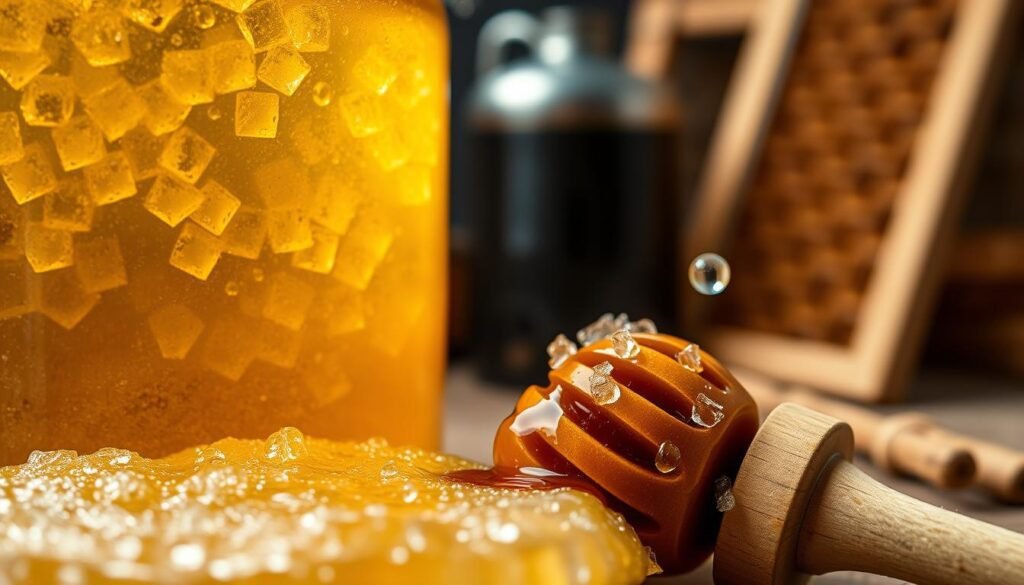
Bees produce a supersaturated sugar solution with low water content. Over time, glucose separates first and forms crystals while fructose remains liquid longer. This balance of sugars and water drives the crystallization process.
Nucleation sources that speed change
Pollen, tiny particles, and beeswax act as seeds where crystals begin. That explains why raw honey tends to crystallize faster than filtered, processed samples.
Temperature and botanical differences
Storage temperatures affect crystal size: mid‑range room temps can yield coarser grains, while colder conditions often create finer crystals. Varieties high in fructose, such as acacia, commonly crystallize slower, so different honeys show distinct textures and timing.
“Crystallization is a natural sign of a stable sugar balance, not spoilage.”
| Factor | Effect on crystals | Practical note |
|---|---|---|
| Glucose level | Speeds crystal formation | Higher glucose = faster grain growth |
| Pollen/particles | Provide nucleation sites | Raw product crystallizes faster |
| Temperature | Affects size and rate | ~68°F often yields coarser crystals |
| Moisture | Raises fermentation risk | Keep jars airtight |
For safe liquefying methods, a gentle warm water bath works well. See an expert primer on crystal behavior at why honey crystallizes and a detailed grading perspective at honey grading standards.
Is crystallized honey safe and is it a sign of quality?
When a jar develops crystals, many beekeepers view that change as proof of authenticity rather than spoilage.
Crystallized honey is safe eat and often marks a less processed batch. Raw honey that keeps pollen and enzymes will often crystalize faster. Visible grains and a thicker texture do not mean the product is bad.
What particles and moisture mean
Small particles like pollen give crystals a place to start. If a jar is left unsealed, rising water activity can invite yeast. That can lead to fermentation, which changes aroma and gives an off flavor.
- Quality sign: crystals often show minimal filtration and preserved compounds.
- Storage tip: use a tight lid and avoid added moisture to preserve taste.
- Warning: sour or alcoholic smell signals fermentation; discard or repurpose carefully.
Most households enjoy crystallized honey as-is or return it to liquid form with gentle warming. For long‑term tips on storage, see storage best practices.
“Crystallization is a natural sign of purity, not spoilage.”
How to keep honey from crystallizing at home
Store jars in a steady, moderate climate to slow grain growth and keep texture usable. Proper handling preserves aroma and keeps jars pourable for daily use.
Best storage temperatures and ranges
Frequent use: keep at about 70–80°F in a kitchen cupboard. This balance slows crystal formation while keeping spreadability easy.
Long‑term: cooler storage below 50°F can slow growth, but allow honey stored in cold rooms to warm before serving for best flow.
Containers and placement
Use a clean, airtight jar or food‑grade container. Store in a dark cupboard away from direct sunlight and ovens. Consistent temperatures reduce stress on texture and extend usable life.
What to avoid
- Avoid refrigeration for everyday jars; some varieties crystallize faster when chilled.
- Keep lids clean and threads wiped to prevent ambient water from raising moisture and risking fermentation.
- Buy sizes you will use in reasonable time so honeys do not sit undisturbed for months.
Quick tip: steady temperatures and a tight seal are the simplest, most effective ways to keep honey smooth and stable for years.
Why Honey Crystallizes and How to Fix It
A safe, controlled warm water bath restores smooth texture without harming flavor.
Step-by-step method:
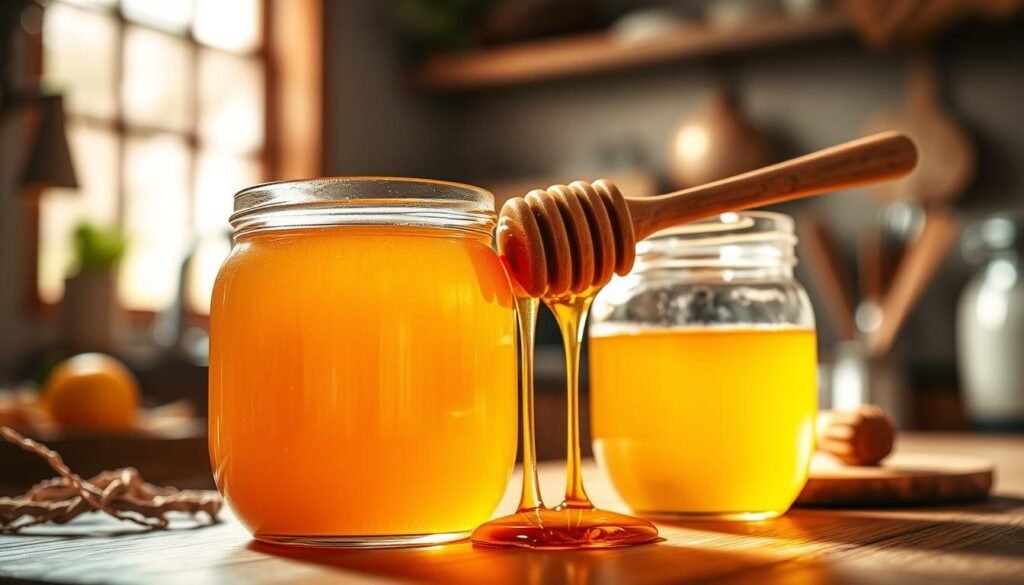
- Place the sealed jar in a bowl. Fill with warm water up to the jar’s midpoint.
- Stir the contents every 5–10 minutes until crystals dissolve.
- Repeat the bath as needed; larger crystals take more time.
Temperature caution
Keep the water under about 95°F to protect enzymes and flavor. Avoid direct pan heat or a microwave; both create hotspots and can degrade quality.
Alternative quick method
Remove a pot from the stove once boiling. Set the open jar in that off‑heat water and stir carefully. Keep the cap open and prevent any water entry.
Maintenance and reuse
- You can fix crystallized honey multiple times if you use gentle, low temperature methods.
- Best way to keep liquid longer: store in an airtight container at room temperature and use regularly.
- Be patient; time required varies with crystal size and jar volume.
“Gentle warmth restores flow without harming taste.”
Pro tips, common mistakes, and expert-backed ways to keep honey smooth
Regular handling and small jars are the simplest defenses against stubborn grain formation. Use what you buy often and store everyday jars where they get gentle use. This reduces long idle time that favors large crystals.
Avoid quick fixes that harm quality. Do not microwave jars or apply direct, high heat. Excessive heat alters flavor and can reduce beneficial enzymes.
Use it up, don’t microwave, and never add corn syrup
The best way to keep jars usable is steady rotation. Open small containers, use dry utensils, and close lids quickly.
- Do not add corn syrup; that dilutes flavor and undercuts natural profile.
- Do not microwave; repeated high heat creates off-flavors.
- Keep lids sealed and avoid exposing jars to household moisture.
Creamed option for a reliably smooth texture
Creamed honey uses controlled seed crystals for a spreadable, uniform feel. Many beekeepers recommend this as a professional way to manage crystals while preserving taste.
“Embrace controlled crystallization rather than masking it; creamed products offer a consistent, gourmet spread.”
- Serving idea: spread thicker jars on warm toast or stir into hot tea; gentle heat softens crystals pleasantly.
- Rotate smaller jars for daily use to minimize long storage cycles.
- Simple, consistent habits often provide the best way to maintain texture without sacrificing authenticity.
Conclusion
Crystallization stems from a simple imbalance between dissolved sugars and the small amount of water in a jar.
This process signals natural sugar behavior, not spoiled product. Gentle warming in a warm water bath will return the jar to liquid form while protecting flavor and enzymes.
Keep storage steady: an airtight lid, a dark cupboard, and household temperatures near 70°F slow change. Different honeys behave differently because glucose and fructose ratios vary by floral source.
Monitor your jar and avoid high heat that dulls taste. For further reading, see a practical crystallized honey primer and a guide on types of honey.
With simple steps, you can manage crystallization and enjoy smooth, flavorful product whenever you want it warm or at room temperature.
FAQ
What does this guide cover and why does honey turn solid?
This guide explains the crystallization process, storage tips, and safe methods to return a jar to liquid. Crystallization happens because natural syrup is a supersaturated sugar solution; glucose tends to form crystals while fructose stays liquid. Low moisture and sugar ratios, plus tiny particles, trigger the process, causing a spreadable or grainy texture rather than spoilage.
What causes crystal formation at a scientific level?
Crystals form when dissolved glucose separates from the syrup and organizes into solid particles. A high glucose-to-fructose ratio, low water content, and a supersaturated state make crystallization thermodynamically favorable. Microscopic pollen, wax, or air bubbles act as nuclei for those crystals.
Which factors speed up crystallization?
Several factors accelerate the process: the presence of fine particles such as pollen, cooler temperatures around 50–60°F, low moisture, and agitation. Unfiltered, raw varieties crystallize faster because they retain more natural particles that seed crystals.
Why do some floral varieties crystalize faster than others?
Botanical origin controls sugar balance and particle load. Clover, rapeseed (canola), and lavender often crystallize quickly because they have higher glucose and more pollen. Acacia and tupelo stay liquid longer due to higher fructose content.
Is crystallized syrup safe to eat and does it mean poor quality?
Yes. Crystallized product is safe and often indicates minimal processing. Crystallization signals natural composition, not spoilage. Quality issues arise only if fermentation begins, which shows as bubbles, off-odors, or a sour taste.
When can crystallization lead to fermentation or off-flavors?
Fermentation occurs if moisture rises above safe levels or if yeast is present. Signs include bubbling, foam, a sharp sour smell, or unexpectedly low sweetness. Store jars sealed and dry to prevent this risk.
What are the best storage temperatures to slow crystallization?
For long-term storage, keep jars at about 60–70°F in a dark place. Frequent-use jars can stay at normal room temperature. Avoid sustained cool conditions around 50–60°F, which promote crystal growth.
Which containers and placements work best?
Use airtight glass or food-grade plastic jars stored in a dark cupboard away from direct sunlight and heat sources. Clear glass is fine if kept out of light; the seal prevents moisture ingress that could cause fermentation.
What should I avoid to prevent faster crystallization?
Avoid refrigeration, exposing jars to humidity, and repeated heating cycles. Do not over-filter artisan jars if you want minimal processing, but do keep them sealed and dry. Also avoid stirring in water or liquids that add moisture.
How do I gently return a crystallized jar to liquid?
Use a warm water bath: place the sealed jar in a bowl of warm water (about 95°F) and let it sit, changing the water as it cools. Gently invert the jar occasionally until crystals dissolve. This preserves flavor and beneficial enzymes.
What temperature limits should I follow when melting crystals?
Do not exceed roughly 95°F (35°C). Higher heat destroys delicate enzymes and alters flavor. Avoid boiling or microwave methods that produce hotspots and degrade quality.
Is near-boiling water ever acceptable for melting crystals?
If you must, remove the lid and pour near-boiling water into a bowl, then set the jar in the steam off-heat for a short time while monitoring closely. This carries a greater risk of quality loss; a gentle warm bath is preferable.
How many times can I decrystallize a jar without harm?
You can safely warm a jar several times, but repeated heating slowly reduces aroma and beneficial compounds. Limit decrystallization by storing jars at steady, moderate temperatures and using smaller containers for daily use.
What common mistakes accelerate grainy texture or ruin quality?
Frequent microwaving, overheating, adding corn syrup, or introducing water all lower quality. Avoid stirring in sweeteners like corn syrup to maintain purity. Each mistake increases the chance of flavor loss or fermentation.
What is creamed honey and why use it?
Creamed honey is a controlled-crystallized product made by seeding liquid product with fine crystals and cooling it to produce a smooth, spreadable texture. It prevents coarse crystals and offers a stable, consistent mouthfeel for toast and baking.