Last Updated August 26, 2026
Creating a welcoming habitat starts with simple goals: offer continuous food, safe nesting sites, and clean water so bees and other helpers can thrive in your yard.
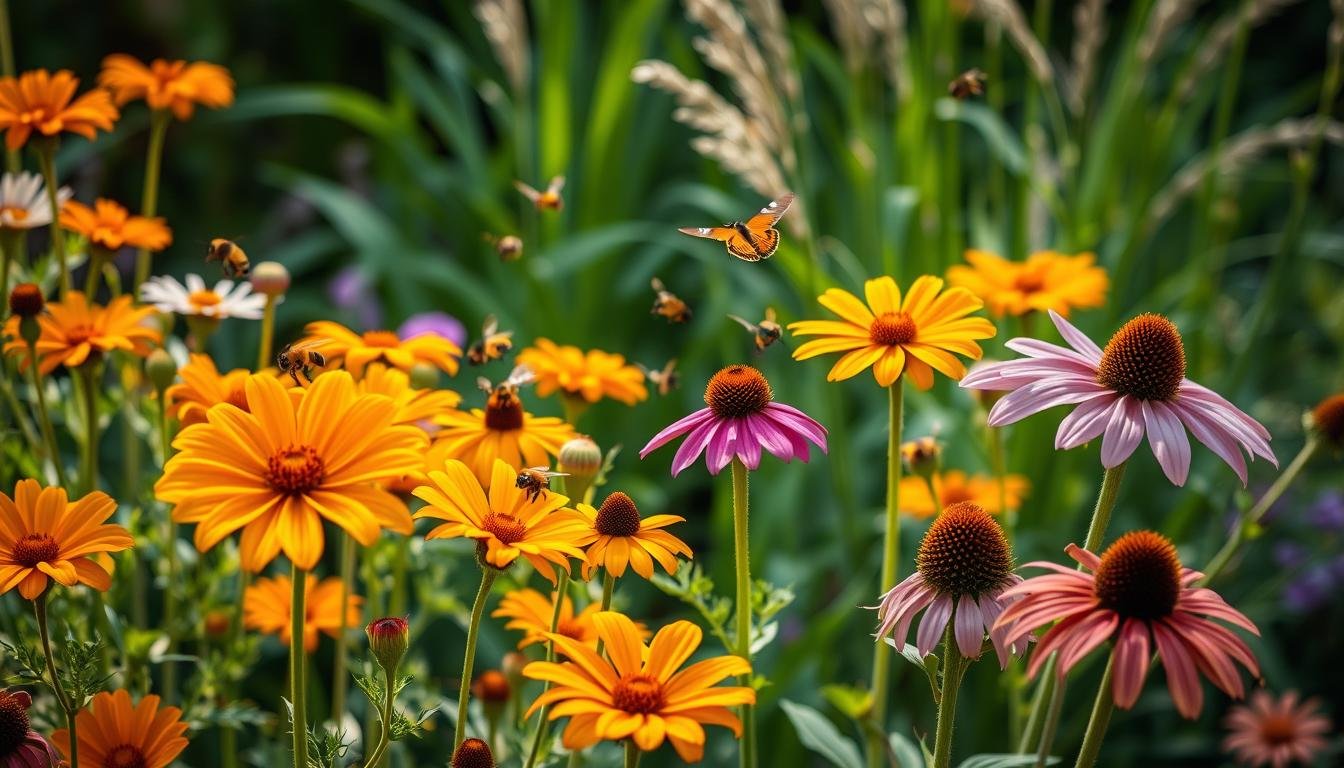
Choose a mix of plants—perennials, annuals, shrubs, herbs, and grasses—that bloom at different times. Varied colors and flower shapes draw a wider range of pollinators and support seasonal needs.
Include keystone species like milkweed to support monarchs and provide both nectar and host resources. Avoid invasive choices and favor native alternatives such as Liatris spicata and Vernonia noveboracensis.
Design for your local sun, soil, and moisture. Leave stems and leaves through winter to shelter nesting bees; hollow stems help leafcutter and mason bees raise a family.
Key Takeaways
- Plan for continuous food by mixing bloom times and flower forms.
- Combine perennials, annuals, shrubs, and grasses for structure and cover.
- Prioritize native species and avoid invasive butterfly bush.
- Provide water and leave some stems over winter for nesting bees.
- Small spaces and containers can still be a meaningful place for pollinators.
Start here: What a pollinator garden needs today
Start by giving insects four basics: steady food, shelter, water, and nesting spots.
Plan for blooms from early spring through fall so bees and other pollinators never face a gap. Include nectar-rich plants and separate host plants that feed caterpillars and support full life cycles.
- Food: nectar and pollen from varied flowers across the season.
- Water: shallow dishes or birdbaths with stones; change water every other day.
- Nesting: leave patches of undisturbed soil and some woody stems for cavity nesters.
- Safety: do not use pesticides; accept minor leaf damage and try natural controls.
| Essential | Timing | Simple action |
|---|---|---|
| Food (nectar & pollen) | Early spring–fall | Plant a mix of bloom times |
| Water | Year-round | Shallow dish, add stones, refresh regularly |
| Nesting habitat | All seasons | Keep some bare soil and woody debris |
| Host plants | Match insect life cycles | Include milkweed or regional natives |
Do not use pesticides. Natural pest control and tolerance help keep bees and other helpers safe.
Even a small yard or a few containers can create useful habitat. Match plant choices to your soil and light to make the garden resilient and low-maintenance.
Design the space: Sun, soil, moisture, and structure for success
Begin by mapping sun and shade across your yard to place each plant where it will thrive. Note south- and west-facing areas for full-sun flowers and keep taller elements to the north or west so they do not shade heat-loving species.
Assess your yard: Sun exposure, soil type, and moisture patterns
Test or observe soil to learn if it is sandy, loamy, or clay and mark wet and dry pockets. Align plant choices with those conditions to reduce amendments and keep steady nectar and pollen through the season.
Plan for layered diversity: Colors, flower shapes, and plant heights
Build layers: low groundcovers, mid-height perennials, and tall grasses or shrubs. Mix flower families—Asteraceae with Umbelliferae—to extend overlapping bloom and support more life stages of bees and other pollinators.
Think regionally: Adapt to your eco-region and microclimate
Calibrate the palette to your area. In Maryland, mountain, Piedmont, and coastal soils need different plants. Use containers where soil limits you; they let you tune drainage and moisture for specific plants.
Tip: Document performance each year and move plants as the landscape matures to keep diversity and bloom reliable.
Pollinator gardens: Choosing plants that feed and host
Build a planting plan that keeps flowers and host sites available from early spring through late fall. A steady runway of bloom prevents gaps in food and supports breeding cycles for bees and butterflies.

Season-long bloom: Early spring to late fall nectar and pollen
Choose species that flower in sequence so nectar and pollen are always available. Include early bulbs, spring perennials, summer bloomers, and late asters or goldenrod for fall lifelines.
Natives first: Why native plant choices simplify care
Native plant choices need less water and fertilizer and often feed specialist insects. For host value, add milkweed for monarchs and carrot-family plants for swallowtails.
Perennials, annuals, shrubs, and grasses: A balanced palette
Perennials provide reliability; annuals add quick color; shrubs and herbs give structure. Grasses supply cover and nesting material for cavity- and ground-nesting bees.
Avoid invasives: Better alternatives
Skip invasive butterfly bush and favor ecologically rich alternatives like Liatris spicata, Vernonia noveboracensis, and Asclepias tuberosa to strengthen habitat and bloom diversity.
Small-space options: Containers and compact designs
Use containers with compact cultivars to cluster flowers and create concentrated forage on patios or balconies. Group pots by sun exposure and water needs for best results.
“Track which species deliver the strongest nectar and host benefits, then expand those plantings each season.”
For a practical plant list and regional choices, see a guide to native bee-friendly plants to refine selections for your yard.
Create habitat beyond flowers
Effective habitat design reaches beyond blooms to give insects water, shelter, and places to rear young.
https://www.youtube.com/watch?v=rPYMln0u2yY
Add a reliable water source
Install shallow dishes, birdbaths, or a small pond and place stones for perches. Change the water every other day to prevent mosquitoes and keep this source safe for bees and other pollinators.
Provide varied nesting sites
Reserve patches of undisturbed soil, keep dead branches or unused firewood, and leave hollow stems in place. Many solitary bees use these features to nest.
Include host plants for caterpillars
Add milkweed for monarchs and carrot-family herbs for swallowtails so butterflies complete their life cycles. Keep some perennial growth and fallen leaves through winter for shelter.
Tip: Bundle cut stems or stack brush in a discreet area to expand nesting options without cluttering the main planting area.
For a focused list of supportive species, see a guide to best plants for honeybees to refine plant choices for your pollinator garden.
Planting and layout tips that attract bees, butterflies, and beneficials
Arrange plant groups so insects find concentrated food without long flights. Cluster the same species in drifts to help bees and butterflies feed efficiently. Repeating patterns guide pollinators along foraging routes and keep them in your planting.
Sun-aware placement matters: keep tall plants to the north or west so they do not shade full-sun bloomers. Reserve sunny pockets for basking butterflies and warming bees before they take flight.

Mix flowers with grasses for structure
Combine flowering plants with native grasses to create cover and nesting opportunities. Grasses offer protection from predators and shelter during bad weather.
In containers, cluster three to five pots with complementary bloom times to form concentrated forage patches on patios or decks.
“Plant in drifts and stagger bloom windows to keep nectar available through the summer.”
- Match each plant to site soil and light to maintain consistent bloom quality.
- Include pathways to avoid compacting soil near roots and to ease seasonal care.
- Review layouts each season and move plants to strengthen groupings and extend bloom.
| Layout tip | Why it works | Quick action |
|---|---|---|
| Drifts of same species | Efficient foraging, higher nectar return | Plant in groups of 5–15 |
| Tall plants north/west | Prevents shading of sun-loving flowers | Position taller species accordingly |
| Flowers + grasses | Provides cover and nesting habitat | Alternate clumps across beds |
| Container clusters | Creates dense forage in small yards | Group pots by bloom time and sun needs |
Maintenance the natural way: Fewer inputs, more life
Shift routine chores to favor wildlife and you’ll see more life with fewer chemicals and less effort.
Small choices matter: treat this garden as habitat rather than an ornamental bed. Let perennials stand into fall and leave some leaves in place to shelter overwintering insects.
Skip synthetic pesticides
Do not use pesticides. Accept minor cosmetic damage and rely on predators and manual controls. Monitor caterpillars and beneficial larvae before taking action.
Overwintering and soil care
Keep dead stalks and a layer of leaves through winter so stem- and ground-nesting bees can survive. Avoid frequent tilling and leave small unmulched patches of soil for ground nesters.
- Delay spring cleanup so bees using hollow stems can emerge.
- If you must tidy, move cut stems to a quiet corner for nesting use.
- Water deeply but less often to strengthen roots and steady pollen and nectar flow.
- Compost thoughtfully and retain some organic matter on-site to feed soil life.
Seasonal calendar: fall — leave-in-place; winter — minimal disturbance; spring — delayed cleanup; summer — light touch-ups.
These habits help plants thrive, support bees and other pollinators, and teach gardeners that a slightly wilder landscape is intentional and beneficial.
Plant ideas for U.S. gardens by season and goal
Start your seasonal plant list with species that bloom when bees first emerge. Choose regionally appropriate options and cluster them so insects find dense, reliable forage.
Early spring nectar and pollen sources
Early spring blooms give emerging bees a vital food source. Use native crocus, willow, and early-flowering groundcovers that offer pollen and nectar when little else is open.
Summer diversity: Nectar, pollen, and host plants
Build summer diversity by mixing nectar producers with host plants for caterpillars. Include carrot-family herbs (dill, fennel) with Asteraceae to create overlapping nectar pollen windows.
Add multiple milkweed species in sunny, well-drained spots to support monarch caterpillars and add summer nectar.
Late-season lifelines: Goldenrod and asters into fall
Target late-season lifelines such as goldenrod and native asters so pollinators find abundant food as the garden winds down. These plants extend forage into fall and help migrating insects.
“Use Liatris spicata or Vernonia noveboracensis instead of invasive options to keep habitat healthy.”
- Cluster species by sun and soil to simplify care.
- Provide shallow water with stones and refresh on hot days.
- Even a few containers in a small yard can supply valuable nectar and host plants.
Conclusion
The best outcome is a small, steady oasis that supports life stages from egg to adult with minimal fuss. A successful pollinator garden supplies food, shelter, water, and safe nesting sites while avoiding pesticides.
Favor native plants and resilient perennials matched to your soil and climate. Leave some stems and leaf litter through winter so bees and butterflies can shelter and complete life cycles.
Start small and scale. Track what works and replace invasives with ecologically rich alternatives. For more on why these habitats matter, see why these habitats matter.
Share your successes with neighbors—your stewardship today builds healthier nature and a stronger local family of pollinators tomorrow.
FAQ
What is a pollinator garden and why should I create one?
A pollinator garden is a planted space that provides food, shelter, and breeding sites for bees, butterflies, hummingbirds, and other beneficial insects. It supports native wildlife, improves fruit and vegetable yields, and enhances yard biodiversity. Using native plants and avoiding pesticides creates a healthy habitat that sustains life across seasons.
Where do I start when planning a pollinator-friendly area?
Begin by assessing sun exposure, soil type, and moisture in your yard. Choose a sunny spot for most nectar-rich flowers, map wetter and drier areas, and pick plants suited to those conditions. Plan for layered diversity—groundcovers, perennials, shrubs, and grasses—to provide food and shelter year-round.
Which plants should I choose for season-long blooms?
Combine early spring bulbs and native wildflowers, summer perennials and shrubs, and late-season asters and goldenrod for fall nectar. Include host plants for caterpillars, such as milkweed for monarchs, plus a mix of flower shapes to attract bees, butterflies, and hummingbirds.
Why prioritize native plants and which noninvasive choices work well?
Native plants co-evolved with local insects, so they often require less care and support specialist species. Select regional natives like blazing star (Liatris), ironweed (Vernonia), and butterfly weed (Asclepias tuberosa). Avoid invasive species and aggressive cultivars that offer nectar but little ecological benefit.
Can I create habitat in a small yard, patio, or balcony?
Yes. Use containers and compact designs with native perennials, nectar-rich annuals, and a small host-plant pot. Provide a shallow water dish and a patch of bare soil or woody stems for nesting. Even a few well-placed plants attract bees and butterflies.
How do I provide water and nesting sites for beneficial insects?
Offer shallow dishes with pebbles, birdbaths with gentle slopes, or a small pond. For nesting, leave some undisturbed soil for ground-nesting bees, keep pruned stems or a bundle of hollow tubes for cavity-nesters, and avoid removing all dead plant material in fall.
What planting layout works best to help pollinators forage efficiently?
Plant in drifts or large clusters of the same species so insects find abundant blooms without wasting energy. Group plants by sun needs, keep full-sun bloomers unshaded, and mix grasses with flowers to add cover and nesting material.
How can I maintain the area naturally without harming insects?
Avoid synthetic pesticides and opt for manual removal, beneficial insects, or spot treatments when necessary. Leave leaf litter and dead stalks over winter to provide shelter. Reduce tilling and leave some areas unmulched to support ground-nesting bees.
When should I clean up beds and how much overwintering habitat should I leave?
Delay major cleanups until spring after temperatures warm and many insects complete dormancy. Leave a portion of stems and leaves in place through winter to shelter larvae, pupae, and nesting adults; tidy only a fraction each year to balance aesthetics and habitat.
Which plants are best for early spring, summer, and fall food sources?
Early spring: native fruit-tree blossoms, willows, and early bulbs for bees. Summer: coneflower (Echinacea), monarda, and salvias for nectar and pollen. Fall: goldenrod and asters provide critical late-season nectar for migrating butterflies and late-flying bees.
How do I avoid common mistakes like planting invasives or overusing pesticides?
Research plant species before buying, favor native plant lists from local extension services or native plant societies, and never use broad-spectrum insecticides on flowering plants. Spot-treat pests with least-toxic options and tolerate minor leaf damage as part of a healthy ecosystem.
How much diversity and area do I need to make a meaningful impact?
Even small patches with a variety of bloom times and flower shapes help. Aim for at least several grouped plantings across sunny and partly shady spots, include host plants and water, and increase diversity each season to support more species over time.