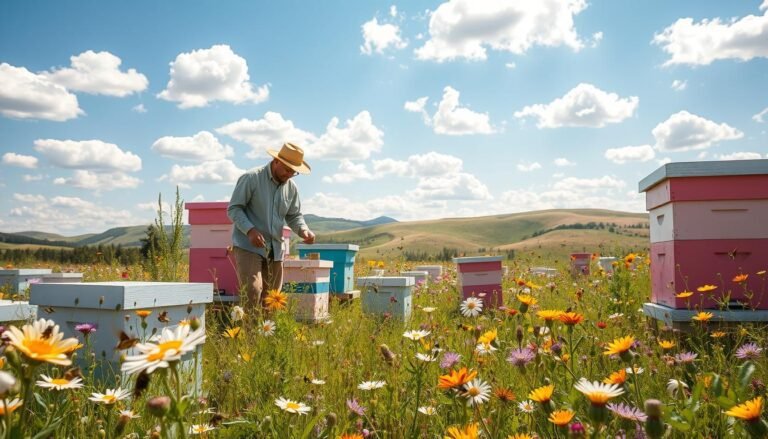
How do pesticides change natural honey taste and aroma? This review frames that central question for U.S. readers. Honey bees act as practical bio-indicators: residues show up across nectar, pollen, bee bread, and finished honey. These traces follow sprays, dust, seed coatings, water, and in-hive treatments.
Why this matters now: Consumers want authentic flavor and traceability. Rising concern about pesticide exposure and residues in bee products raises food and health questions. EU rules set honey MRLs for many neonicotinoids and acaricides, but beeswax lacks clear limits, complicating residue control.
Sublethal doses can alter olfaction, learning, and foraging, which changes floral mixes and enzymatic processing that shape volatile profiles in honey. Key classes—neonicotinoids, organophosphates, pyrethroids, fipronil, and some fungicides—may act alone or together. Analytical tools like HPLC/GC, melissopalynology, and chemometrics link chemicals to sensory markers and help guide U.S. beekeepers, packers, and informed consumers.
Key Takeaways
- Bees reveal environmental residues that reach honey and hive stores.
- Residue pathways include field sprays, coatings, dust, water, and in-hive use.
- Sublethal exposure can change foraging and honey volatile profiles.
- EU sets honey MRLs; beeswax regulation remains a gap for monitoring.
- HPLC/GC and pollen analysis help link chemistry with sensory traits.
- Research needs include microbiota roles and mixture toxicology at realistic levels.
Why a Research Review of pesticide-honey flavor links matters now in the United States
U.S. agriculture depends on honey bees for pollination, and that link ties honey quality to crop yields, market value for single-source honey, and consumer trust.
Sublethal pesticide exposure is increasingly relevant. Long half-lives and systemic use raise the chance that residues appear in nectar and pollen, which bees collect and bring back to the hive.
Regulatory focus has centered on mortality, yet flavor outcomes stem from chronic, low-dose effects on bee behavior and hive biochemistry. These changes can alter floral mixes and processing that shape honey aroma and taste.
“Transparent, traceable honey builds consumer confidence while guiding practical risk reduction for growers and beekeepers.”
| Concern | Why it matters | U.S. relevance |
|---|---|---|
| Residue pathways | Sprays, seed coatings, dust enter nectar/pollen | Widespread crop systems increase exposure |
| Sublethal effects | Altered foraging and hive processing | Can change varietal honey quality |
| Regulation & traceability | MRLs and monitoring vary by matrix | Need for U.S.-focused benchmarks and testing |
- Practical synthesis: this review links toxicology, exposure patterns, and sensory mechanisms for beekeepers, packers, and regulators.
- Evidence-based strategies can reduce risk while supporting pest control and pollination services.
From field to flavor: pathways connecting pesticide exposure to honey taste
Systemic seed coatings travel through plant tissue and commonly appear in nectar and pollen collected by foragers. These direct transfers mean trace chemicals can enter honey when bees concentrate floral liquids and pack pollen into bee bread.
Indirect routes also matter. Sublethal pesticide exposure alters foraging choices, reduces flower constancy, and changes time budgets. That shifts the mix of nectar sources and the profile of resulting honey.
Pesticides can disrupt gut microbiota and mitochondrial function in bees. Changes in microbes and ATP production affect enzymes such as invertase and glucose oxidase. Those shifts modify intermediate compounds that feed aroma chemistry in honey.
In-hive processing—ripening, mixing, and temperature control—depends on normal bee activity. Stress from insecticides or fungicide co-exposures can reduce hive thermoregulation and change storage dynamics.
- Wax stores can leach legacy residues into stored honey over time.
- Mixture effects often magnify biochemical disturbance and contamination risks.
Summary: Direct residues and indirect biological changes work together to shape honey outcomes, so integrated monitoring across nectar, pollen, bee bread, wax, and hive health is essential.
Exposure routes for honey bees and hives
Bees encounter chemicals through multiple pathways that reach both foragers and stored hive materials. These routes determine short-term harm and long-term contamination patterns in the colony.
Sprays, seed coatings, dust drift, and contaminated water
Aerial sprays and drift put foragers at risk through direct contact and by contaminating nearby flowers. This reduces floral fidelity and changes incoming nectar loads.
Seed coatings are systemic. Active ingredients move into nectar and pollen, creating dietary exposure when bees collect floral resources.
Pneumatic planters can create concentrated planting dust. Those events have caused acute bee mortality and sudden spikes in residue levels.
Guttation drops and standing water also matter. Bees drink from puddles, ditches, and irrigation channels where runoff and drift deposit chemicals.
In-hive sources: acaricides and beekeeper-applied fungicides
Varroacides such as amitraz, coumaphos, and fluvalinate are commonly used in hives. These compounds concentrate in lipid-rich wax after repeated application.
Occasional fungicide use by beekeepers or drift from nearby fields can add to this in-hive chemical load, increasing chronic exposure for new cohorts of bees.
Bioaccumulation across bees, bee bread, wax, and honey
Surveys show the highest detection frequencies in wax, with frequent residues in bee bread and pollen, and lower but common presence in nectar and honey.
Chronic exposure through stored bee bread and contaminated wax can affect successive generations and alter honey processing.
| Route | Mechanism | Consequence |
|---|---|---|
| Aerial sprays & drift | Contact and floral contamination | Forager exposure; altered foraging |
| Seed coatings | Systemic uptake into nectar/pollen | Dietary intake; persistent residues |
| Planting dust | Airborne neonic particles | Acute mortality; residue spikes |
| Contaminated water | Runoff, puddles, guttation | Chronic low-level ingestion |
| In-hive treatments | Varroacide accumulation in wax | Long-term colony exposure |
Management can cut risk. Careful timing, selective product choice, and application practices reduce pesticide exposure across landscape and hive paths. For practical monitoring and methods, see residue monitoring methods.
Evidence of pesticide residues in nectar, pollen, bee bread, and honey
Analytical studies routinely detect low-level residues in hive matrices, with clear patterns by sample type. Surveys report MDLs reached or exceeded in 96.6% of bee bread, 93.6% of pollen, 81.5% of nectar, and 49.3% of honey for at least one chemical. These data show the greatest burden in stored foods that feed brood and new workers.
Reported detection frequencies and common actives
High-frequency detections include carbendazim, and regional work has found chlorpyrifos in ~30% of BCP samples. Acute mortality events in spring and early summer link to chlorpyrifos, dimethoate, and imidacloprid. In-hive miticides such as amitraz and coumaphos often show up in bee bread.

Seasonality, landscape, and reservoirs
- Beeswax acts as the dominant reservoir; a Belgian study detected 99 pesticide types mostly in wax.
- Residue peaks align with bloom and heavy application windows, raising seasonal contamination risk.
- Apiaries near orchards or seed-treated row crops show distinct residue profiles and higher levels.
Takeaway: Routine multi-matrix testing (wax, bee bread, pollen, nectar, and honey) is essential to contextualize honey findings and protect market confidence when ADI/MRL exceedances are reported.
Regulatory context and residue benchmarks relevant to flavor risk
Regulatory limits set by markets frame what residue levels are acceptable and shape testing for traded honey. These benchmarks guide producers and labs when assessing contamination and risk to food safety and consumer trust.
| Active class | Compound | EU MRL (mg/kg) |
|---|---|---|
| Neonicotinoids | acetamiprid | 0.05 |
| Neonicotinoids | clothianidin, imidacloprid, thiamethoxam | 0.05 |
| Neonicotinoid | thiacloprid | 0.2 |
| Acaricides | amitraz | 0.2 |
| Acaricides | coumaphos | 0.1 |
| Acaricides | fluvalinate | 0.05 |
| Fungicides | azoxystrobin | 0.05 |
| Fungicides | boscalid | 0.15 |
Key gap: the EU and other regulators list honey MRLs, but beeswax lacks clear values despite acting as a major reservoir that can recontaminate stored product.
Safety and sensory are not the same. Toxicological MRLs reflect health-based limits. Yet field concentrations below those limits can coincide with levels that alter aroma chemistry or sensory perception.
“Transparent, traceable honey builds consumer confidence while guiding practical risk reduction for growers and beekeepers.”
- Practical steps: integrate sensory thresholds into residue analysis for a fuller assessment.
- U.S. stakeholders often follow international benchmarks for export, raising the need for precise monitoring.
- Proactive testing of wax and bee bread helps prevent carryover into finished honey and reduces contamination risk.
Mechanisms: how pesticides can alter honey’s natural aroma and taste
Multiple pathways connect chemical stress to sensory outcomes in honey. Behavioral disruption, microbial shifts, cellular energy loss, and chemical interactions together change how nectar is collected and processed. These routes explain why residues alone do not tell the full story.
Altered foraging patterns and floral composition
Navigation and communication impairments—including reduced waggle dance accuracy—can redirect foraging to different plants. When foragers visit new floral sources, the nectar mix changes and that alters the volatile precursors that determine final aroma.
Gut microbiota shifts affecting nectar metabolism
Core gut bacteria such as Snodgrassella, Gilliamella, and Lactobacillus transform phenolic acids and sugars during digestion and storage. Pesticides shift these communities and their metabolic outputs, which can change the chemical profile carried back to the hive and incorporated into honey.
Mitochondrial and metabolic changes influencing enzymatic processing
Insecticides like imidacloprid and fipronil can impair mitochondrial respiration. Lower ATP reduces enzyme activity during nectar ripening, altering acid balance and volatile formation. The result may be muted floral notes or unexpected bitter and synthetic sensations.
Synergistic effects of mixtures on hive biochemistry
Fungicides such as myclobutanil can inhibit P450 enzymes and raise insecticide burdens. Combined exposures often produce synergism, changing gene expression and detox pathways in bees. These shifts modify how botanical compounds are metabolized and stored, increasing the risk of contamination and sensory change.
| Mechanism | Key agents | Primary hive effect | Likely sensory outcome |
|---|---|---|---|
| Foraging change | Neonicotinoids | Different floral mix | Altered floral aroma profile |
| Microbiota shift | Pesticides, fungicides | Changed metabolism of phenolics | Bitter or reduced complexity |
| Energy deficit | Imidacloprid, fipronil | Lower enzymatic processing | Muted volatiles; off-notes |
| Mixture synergism | Fungicide + insecticide | P450 inhibition; gene changes | Unpredictable aroma shifts |
“Mechanism-driven monitoring links residue analysis with sensory chemistry to detect real-world changes.”
Practical note: Targeted residue and volatile analysis together gives the clearest signal when investigating sensory changes in honey. Monitoring should include hive matrices and behavioral observations for a full picture.
Neonicotinoids and honey flavor: what current research implies
Recent studies show neonicotinoids alter bee behavior at doses far below lethal thresholds. These compounds bind honey bee nicotinic acetylcholine receptors and can produce effects at oral doses near 3–4 ng per bee for imidacloprid and thiamethoxam.
Residue occurrence in bee bread and honey
Field surveys find neonicotinoid residues frequently in bee bread and occasionally in honey. Even modest concentrations in stored food correlate with behavioral change without triggering MRL exceedances.
Sublethal impacts on cognition, navigation, and nectar choice
Neonicotinoid binding impairs memory and homing. Chronic exposure reduces flight speed and duration and alters foraging consistency.
- Foraging shifts: altered homing changes the floral mix and seasonal crop signatures that define honey.
- Colony effects: reports link residues to queen health declines and altered workforce dynamics.
- Microbiota: disrupted gut bacteria, especially with Nosema, can change nectar metabolism pathways tied to aroma development.
“Flavor risk may appear even when official residue limits are not exceeded.”
Organophosphates, pyrethroids, and fipronil: broader insecticide classes with flavor relevance
Several broad insecticide classes have been linked to detectable residues in hive materials and to behavioral changes that alter nectar collection.
Reported residues in honey and pollen
Regional surveys detect organophosphates such as chlorpyrifos, diazinon, malathion, and ethion in honey and pollen. Pyrethroids like cypermethrin and deltamethrin also appear in stored honey samples. Fipronil has been measured in pollen at roughly 1–4 ppb, where it can concentrate and affect brood food pathways.

Neurotoxic actions and downstream effects on foraging
Organophosphates inhibit acetylcholinesterase (AChE), pyrethroids target voltage-gated Na+ channels, and fipronil blocks GABA-gated Cl− channels. These class-specific modes of action produce similar colony-level outcomes: reduced homing success, altered waggle dance fidelity, and changed sucrose responsiveness.
Foraging shifts follow neural disruption. Bees may visit different floral sources, spend less time collecting nectar, or show lower sugar sensitivity. Those changes can skew the floral mix that defines honey aroma and composition.
“Residues often co-occur with fungicides and miticides, creating synergism that complicates sensory outcomes.”
Practical recommendation: target monitoring for organophosphates, pyrethroids, and fipronil during nearby application windows. Include pollen and bee bread in tests so honey bees and beekeepers can anticipate contamination and manage hive activity to protect honey quality.
Fungicides and cross-kingdom interactions with bee detox pathways
Fungicides can change how bees process plant compounds by blocking detox enzymes that normally modify nectar chemistry. Myclobutanil, for example, impairs cytochrome P450-mediated breakdown of quercetin and related phenolics. That interference can shift which volatiles form during nectar ripening and storage, altering the aroma profile of honey.
Co-exposures matter. Azoxystrobin plus insecticides has been linked to gut microbiota dysbiosis and higher susceptibility to chemical stress. Fungicides often appear with insecticides in hive matrices, raising the effective toxicity and changing how plant phenolics are metabolized in bee guts and bee bread.
P450 interference and consequences for nectar-derived compounds
When P450 enzymes are inhibited, bees and their gut microbes cannot convert phenolic precursors normally. That can reduce floral complexity and produce unexpected off-notes in honey. Detectable residues in pollen and stored food at low concentrations may therefore cause sensory changes without acute toxicity.
Synergism with insecticides and implications for taste
- Fungicide–insecticide synergy raises sublethal stress and alters hive biochemistry.
- Gut dysbiosis disrupts sugar and phenolic transformations important for aroma.
- Tightening fungicide timing around bloom and targeted analysis of hive matrices can reduce contamination risk.
“Cross-kingdom chemistry can amplify risk; integrated pest and disease management helps protect bee health and honey quality.”
Toxicology overview: LD50 variation and sublethal exposures tied to flavor outcomes
Acute toxicity tests offer one snapshot, but real-world exposures often fall far below those lethal thresholds. That gap matters because low doses change how honey bees behave and how honey develops in the hive.
Oral versus contact LD50 and their limitations
Oral LD50 for imidacloprid sits near 3–4 ng per bee in many studies, while contact LD50 values tend to be higher. Reported LD50s can vary up to 500-fold across methods, life stages, and castes.
This variability limits reliance on single values for risk prediction. Hazard Quotients (HQ) use application rate divided by LD50, but HQs miss chronic and behavioral endpoints that shape honey quality.
Sublethal dose effects on colony activity and honey production
Sublethal exposures reduce flight performance, impair learning and memory, and shift foraging. These changes lower nectar collection and alter ripening conditions in the hive.
Mitochondrial and metabolic disruptions have been recorded for imidacloprid, fipronil, and myclobutanil. Reduced enzymatic processing can change acid balance and volatile formation in honey.
Takeaway: chronic low doses, even well below LD50, correlate with reduced honey yields, brood declines, and altered colony activity — all factors that can change sensory outcomes. Monitoring should pair residue values with behavioral and production metrics for a full assessment.
Analytical methods to detect residues and flavor-active volatiles in honey
Modern testing couples chemical detection with botanical verification to tell apart natural aroma variation from contamination-driven changes. Labs use multi-residue screens and floral checks to build a defensible profile for trade and quality control.
HPLC and GC-MS/MS workflows for multi-residue detection
Targeted chromatography with tandem MS quantifies neonicotinoid, organophosphate, pyrethroid, fipronil, and fungicide residues and metabolites across honey, pollen, wax, and bee bodies.
Method suites detect sub-ppb to low-ppb concentrations and can screen >200 compounds in a single run. Routine QA/QC uses matrix-matched calibrations, isotopic standards, and interlaboratory checks to ensure trade-ready results.
Sensory-linked volatiles and chemometric analysis
GC-olfactometry and GC-MS map terpenes, phenolics, and Maillard-related markers tied to sensory outcomes. Melissopalynology validates floral origin and helps separate botanical shifts from contamination signatures.
Best practice: pair residue datasets with volatile profiles and chemometrics to attribute taints. This combined workflow improves interpretation for producers, regulators, and consumers concerned with food safety and sensory quality.
| Tool | Use | Typical detection limit |
|---|---|---|
| HPLC-MS/MS | Polar insecticides, metabolites | sub-ppb |
| GC-MS(/MS) | Volatiles, pyrethroids, fungicides | low-ppb |
| Melissopalynology | Floral origin confirmation | qualitative/quantitative pollen counts |
Hive matrices and storage: wax as a reservoir shaping contamination profiles
Lipophilic compounds preferentially partition into wax, making old frames a persistent contamination source. Wax chemistry and its lipid-rich structure trap many in-hive actives and agricultural residues. That creates a long-term sink inside the hive.
Common miticides such as coumaphos, fluvalinate, and amitraz accumulate to high ppm levels in comb. These compounds persist for years and raise residue concentrations that can re-enter stored honey by contact.
Transfer occurs by direct contact and slow diffusion, especially when warm temperatures soften comb. Movement from wax into honey increases with prolonged storage and high hive humidity.
- Management: rotate combs on a regular schedule and remove old foundations to cut legacy carryover.
- Source clean foundation or wax and render frames to reduce legacy residues.
- Monitor wax alongside honey to detect reservoirs before jars are affected; see residue studies linked to monitoring programs and methods.
| Compound | Typical wax concentration (ppm) | Persistence (years) | Transfer risk |
|---|---|---|---|
| Coumaphos | 0.5–10 | 3–8 | High (lipophilic) |
| Fluvalinate | 1–20 | 5–10 | High (stable in wax) |
| Amitraz (metabolites) | 0.2–5 | 2–6 | Moderate–High |
“Routine wax testing gives early warning and helps protect honey quality and hive health.”
Risk factors and control variables: time, dose, landscape, and hive management
Seasonal timing and local crop patterns set the highest-risk windows for contamination and for shifts in honey composition. Peak bee mortality and residue buildup commonly occur April–June, when planting, bloom, and early-season sprays overlap.
Plant species, bloom timing, and application schedules
High-attraction crops with systemic uptake—such as orchard fruit and some treated row crops—raise the chance that foraging bees collect contaminated nectar and pollen. Aligning sprays to avoid bloom and choosing evening applications reduces direct contact.
Varroa control choices and residue carryover
Acaricides like amitraz and coumaphos show persistence in bee bread and wax. Rotate actives and favor treatments with lower wax persistence to limit long-term residue carryover into stored food and jars.
- Identify temporal risk windows (bloom, planting, post-bloom sprays) and log applications.
- Match pest control schedules to bee activity and use time-of-day adjustments.
- Consider landscape: place apiaries away from orchards and seed-treated fields when possible.
- Track hive weights and foraging behavior to link management with residue trends.
“Documenting application dates, bloom windows, and hive metrics gives beekeepers the data to reduce contamination risk and protect product quality.”
For seasonal planning and hands-on tasks, see seasonal beekeeping tasks to align apiary work with landscape and crop calendars.
Impact of pesticides on honey flavor: synthesis of current findings
Low-level field exposures change bee behavior and hive chemistry in ways that can be measured in finished jars. Direct pesticide residues in nectar, pollen, bee bread, and wax combine with altered foraging and metabolic shifts to change honey composition.
Key synthesis: sublethal concentrations often fall below regulatory limits yet still modify how honey bees select flowers and how nectar is processed. That behavioral change alters volatile precursors and enzymatic activity, producing measurable sensory differences.
Beeswax acts as a long-term reservoir. Legacy residues in combs leach slowly into stored product and raise contamination risk across seasons.
Mixtures—especially fungicide plus insecticide combinations—amplify biological stress. Synergistic effects more strongly alter gut microbes and detox pathways than single compounds, increasing the chance that jars show altered aroma.
| Pathway | Mechanism | Consequence |
|---|---|---|
| Direct residues | Nectar/pollen contamination | Chemical markers in honey |
| Behavioral change | Impaired navigation, altered foraging | Shifted botanical profile |
| Wax legacy | Lipophilic storage and slow release | Chronic recontamination |
“Combined residue and volatile profiling provides the clearest route to separate contamination from botanical variation.”
Recommendation: pair multi-matrix residue testing with GC-based volatile analysis and pollen checks to attribute sensory shifts accurately and manage risk for producers and consumers.
Implications for U.S. beekeepers, packers, and consumers
U.S. producers and buyers need clear, practical steps to protect production and preserve jar-level quality. Good practices cut contamination risk and support consistent labeling that today’s shoppers expect.
Mitigating exposure while preserving flavor and production
Mitigating exposure while preserving production
Coordinate spray timing with nearby growers to avoid bee foraging peaks and planting dust events. Secure clean water sources and move colonies away from high-risk fields during heavy application windows.
Choose in-hive products with lower wax persistence and rotate combs on a set schedule to reduce legacy residues that can leach into stored honey. Those steps help sustain colony activity and honey yields.
- Test routinely: multi-matrix residue and volatile analysis (HPLC/GC) gives early warning and documents levels for buyers.
- Keep records: log application dates, hive locations, and lab results to link management with production trends.
Traceability, authenticity, and labeling considerations
Traceability, authenticity, and labeling considerations
Use melissopalynology and chemical markers to confirm botanical origin and back premium claims. Batch-level residue and volatile profiles strengthen traceability and help defend product labels in domestic and export markets.
“Mitigating sublethal exposures preserves production, flavor consistency, and brand value.”
| Action | Benefit | Who should act |
|---|---|---|
| Coordinate spray timing | Lower foraging exposure | Beekeepers & growers |
| Rotate combs; choose low-persistence miticides | Reduce wax reservoirs | Beekeepers |
| Routine HPLC/GC testing and record-keeping | Verify safety and flavor claims | Packers & labs |
For context on chemical stresses that harm colonies and the product chain, see the link between exposure and colony decline. Clear traceability and open communication with buyers maintain consumer trust and protect market access.
Research gaps and future directions in pesticide-flavor research
Targeted research can close key knowledge gaps that matter for producers, packers, and consumers. Current work suggests microbiota and mixture effects play big roles, yet field-validated links to sensory outcomes remain sparse.
Microbiota‑mediated detoxification and probiotic mitigation
Honey bee gut communities modulate detox pathways and metabolic processing. Early colonizers influence P450 expression and downstream activity that shapes how nectar compounds are transformed during storage.
Field evidence tying microbiota shifts to sensory changes in honey is limited. Controlled apiary studies should track microbiome shifts, enzyme expression, and volatile profiles together.
Mixture toxicology and environmentally relevant concentrations
Standard acute LD50 tests miss chronic, low-dose interactions common in real landscapes. Research must test common co‑exposures—fungicide plus insecticide—and realistic concentrations and durations tied to sensory thresholds.
“Linking omics with chemometrics will map mechanisms to sensory outcomes and guide practical mitigation.”
| Research need | Suggested approach | Expected outcome |
|---|---|---|
| Microbiota effects | Controlled field trials with metagenomics and enzyme assays | Map microbiome shifts to detox activity and volatile changes |
| Probiotic mitigation | Probiotic consortia trials in apiaries measuring residues and sensory panels | Assess whether supplements stabilize processing and aroma |
| Mixture toxicology | Standardized protocols testing common co‑exposures at field doses | Provide regulatory‑relevant interaction data |
| Realistic exposure models | Chronic low‑dose experiments linked to GC‑MS volatile profiling | Define sensory thresholds and contamination risk levels |
| Integrated omics | Metabolomics + chemometrics + melissopalynology | Mechanistic maps from chemical stress to sensory change |
- Call to action: fund multi‑disciplinary, multi‑year studies that combine residue testing, microbial profiling, and blinded sensory panels.
- Practical lab step: adopt standardized mixture protocols and report environmentally relevant concentrations and doses.
Bottom line: Bridging microbiota research, mixture toxicology, and sensory chemistry will give U.S. stakeholders actionable data to reduce contamination risk and protect jar-level quality.
Conclusion
Conclusion
Even tiny residues in comb and stored food can change how bees collect and process nectar, with measurable sensory outcomes.
Widespread residues across hive matrices, sublethal biological effects, and wax reservoirs work together to shape jar quality. Monitoring must link chemical tests with volatile profiling and pollen checks to tell contamination from botanical variation.
Actionable steps: time applications to avoid bloom, favor in-hive treatments with low persistence, rotate comb, and adopt routine HPLC/GC monitoring to protect product and pollinator health.
MRL compliance does not guarantee sensory integrity; sensory thresholds and honey chemistry matter. U.S. stakeholders should use integrated management and fund targeted research on microbiota, mixtures, and field-relevant exposure to guide future best practices.
FAQ
What links have researchers found between pesticide use and changes in honey taste?
Studies report that chemical residues — from nectar, pollen, or in‑hive treatments — can alter honey’s volatile profile and sugar metabolism. These changes stem from direct transfer of residues into honey and indirect effects such as altered foraging, gut microbiota shifts, and modified enzymatic processing by bees. Evidence varies by compound, concentration, and landscape.
Which pesticide classes show up most often in honey and related hive matrices?
Neonicotinoids, organophosphates, pyrethroids, fipronil, and many fungicides are frequently detected in pollen, bee bread, wax, and honey. Detection frequency depends on local crop treatments, season, and sampling methods. Wax often acts as a long‑term reservoir that can recontaminate other hive materials.
How do residues get into honey — direct transfer or through bee biology?
Both routes occur. Nectar and pollen may carry residues that pass directly into stored honey. Indirectly, sublethal exposures change bee behavior and physiology: altered flower choice, reduced foraging efficiency, shifts in gut microbes, and impaired detox enzymes can all change how nectar is processed and ultimately how honey tastes.
Do residue levels found in honey reach sensory thresholds that consumers can detect?
For many compounds, measured concentrations are below established toxicological limits but may still affect volatile compounds at very low levels. Field‑relevant concentrations versus sensory thresholds vary widely; in some cases mixtures or synergistic effects cause detectable aroma or flavor changes even when single‑compound levels are low.
Can beekeeper treatments like amitraz or oxalic acid affect honey flavor?
Some in‑hive acaricides and fungicides can migrate into wax and, over time, into other hive matrices. While many approved treatments have minimal direct flavor impact when used correctly, improper application or persistent residues in wax can influence honey chemistry and aroma profiles.
What role do fungicides play in altering hive detox pathways and honey chemistry?
Many fungicides inhibit cytochrome P450 enzymes that bees use to metabolize xenobiotics. P450 interference can raise effective toxicity of insecticides and change how nectar compounds are processed, potentially shifting the balance of flavor‑active metabolites in honey.
Are neonicotinoids specifically associated with flavor changes?
Neonicotinoids are commonly detected in bee bread and honey and cause sublethal effects on navigation and foraging choices. These behavioral shifts can change floral foraging patterns and the resulting nectar mix, indirectly affecting honey aroma and taste. Direct sensory effects depend on residue levels and compound mixtures.
How does seasonality and landscape affect residue presence in honey?
Crop bloom timing, nearby pesticide applications, and landscape diversity determine exposure windows. Spring and crop‑spray periods often show higher detection rates. Diverse floral resources and reduced nearby applications lower contamination risk and can help preserve typical honey flavor profiles.
What analytical methods detect pesticides and flavor‑active volatiles in honey?
Laboratories use HPLC and GC coupled with mass spectrometry for pesticide residues, and GC‑MS or GC‑olfactometry for aroma compounds. Chemometric approaches link chemical fingerprints to sensory outcomes to identify markers associated with altered taste.
How should beekeepers mitigate contamination risk while maintaining production and flavor?
Best practices include coordinating with growers on spray timing, placing apiaries away from intensive application zones, rotating varroa treatments, regularly replacing old comb, and monitoring residue levels. Maintaining diverse forage and good hive nutrition supports bee health and normal honey processing.
Are there regulatory standards for honey residues and do they cover wax?
The EU and other jurisdictions set maximum residue limits (MRLs) for some pesticides in honey, but regulations for beeswax are often less comprehensive. This gap matters because wax can store residues long term and influence contamination of new honey batches.
What research gaps remain about chemicals and honey taste?
Key gaps include mixture toxicology at environmentally relevant concentrations, microbiota‑mediated detoxification pathways, links between specific volatile changes and sensory perception, and long‑term effects of wax reservoirs. More field‑scale studies that combine residue analysis with sensory panels are needed.
Can consumers avoid contaminated honey through labeling or traceability?
Traceability programs, third‑party testing, and transparency from packers help, but labeling that guarantees absence of any residues is rare. Buying from small producers with known management practices or certified organic honey can reduce exposure risk, though no approach is foolproof.