This Ultimate Guide helps beekeepers in the United States spot and manage the top threats to the honey bee fast. It shows clear visual cues and short symptom checklists grounded in extension-backed facts.
Start by learning healthy signs: larvae are pearly white, C-shaped, and glistening. Capped worker brood should be medium brown, convex, and unpunctured, creating a solid pattern with few open cells.
We cover parasites like Varroa destructor and tracheal mites, plus small hive beetle, wax moth, bacterial AFB and EFB, fungal chalkbrood, viral threats such as DWV, and Nosema infections. Timely action using integrated pest management, legal compliance for reportable infections, and veterinary input cuts colony loss.
Practical outcomes include fewer winter losses, stronger spring buildup, and healthier brood when beekeepers match lifecycle touchpoints to control steps. Many problems overlap, so prevention plans should be broad, not siloed. See Section 15 for a field-ready quick chart.
Key Takeaways
- Learn baseline brood and capped-cell cues to detect early problems.
- Recognize major threats: mites, beetles, moths, bacteria, fungi, viruses, and Nosema.
- Use IPM, follow legal rules for reportable infections, and get veterinary help when needed.
- Quick diagnostics include the ropy test for AFB and microscopy for tracheal mites and Nosema.
- Many issues co-occur; integrated plans reduce losses and improve spring buildup.
Why Early Identification Matters for Honey Bee Colonies
Spotting small changes early helps keep colonies strong and lowers the chance of collapse. Regular checks let you match what you see to likely causes and act quickly.
Reading healthy brood patterns and capped cell cues
Healthy benchmarks include medium-brown, convex, unpunctured capped worker brood and pearly white, C-shaped larvae. A solid brood pattern with few empty cells signals normal development.
Spotting subtle signs before colonies collapse
Inspect frames for alignment of brood pattern, the ratio of eggs/larvae/pupae, and intact cappings. Sunken caps, scattered brood, or perforations often precede visible problems.
- Patchy brood may point to queen issues or brood infection.
- Uncapped dying pupae often link to varroa and related viruses.
- Trembling or hairless adult bees can indicate paralysis virus pressure.
Note seasonality: late summer mite rises or early spring stress change what “subtle” looks like. Keep a standard inspection routine with notes and photos to detect trends. When signs persist, use safe sampling and lab testing. For practical guidance rooted in research, see hive health research.
| Checkpoint | Normal | Early warning |
|---|---|---|
| Brood pattern | Solid, compact | Scattered or spotty |
| Cell cappings | Convex, unperforated | Sunken or perforated |
| Adult behavior | Active, coordinated | Trembling, hairless |
Healthy Brood Benchmarks: What “Normal” Looks Like
Knowing the baseline helps you spot real problems fast. Healthy worker, queen, and drone larvae are pearly white, glistening, and curled in a C-shape on the bottom of each cell.
Queen, worker, drone development and brood cappings
Worker brood typically shows medium-brown, convex, unpunctured cappings and a tight, contiguous brood pattern. A solid frame with few open cells signals steady development.
Drone cells are larger with flatter, darker caps. Recognize this to avoid mistaking normal drone areas for disease.
During peak season, expect eggs near the center, open larvae around them, and capped brood outward. Some open cells may hold nectar or pollen; that is not a sign of infection.
“A vigorous queen’s even laying pattern creates a strong, compact brood frame; breaks often point to queen or health issues.”
Document normal frames with photos. Good records plus proper nutrition and space management support strong colonies and better winter and spring outcomes.
Varroa destructor: The Most Serious Parasitic Mite Threat
Varroa destructor reproduces inside capped brood and feeds on fat bodies of larvae, pupae, and adult bees. The mite’s hidden breeding cycle lets numbers build while a hive appears healthy. Late-season brood abundance often fuels explosive growth that threatens winter survival.
Signs to watch: reddish mites on adults or brood, spotty brood patterns, uncapped or damaged pupae, and shrinking adult populations. Bees with shriveled or misshapen wings indicate viral amplification linked to varroa, especially deformed wing virus.
Monitoring and IPM options
Use sugar shake, alcohol wash, or sticky boards on a regular cadence. Trigger treatments when counts exceed seasonal thresholds.
| Method | When to use | Notes |
|---|---|---|
| Sugar shake / alcohol wash | Biweekly to monthly | Quick baseline; reliable for adults |
| Sticky board | Seasonal checks | Shows population trends under brood |
| Drone brood removal | Spring–summer | Reduces reproduction but needs effort |
| Chemical controls | When thresholds reached | Rotate hard and soft products; follow labels |
Chemical choices include amitraz, fluvalinate, oxalic acid, formic and thymol treatments. Follow label timing to avoid contaminating honey and prevent resistance. Pair varroa control with good nutrition, queen quality, and reduced stress to lower winter losses.
For practical research and protocol context, see hive health research.
Tracheal Mites in Adult Bees: Diagnosis and Control
Tracheal mites (Acarapis woodi) live inside the thoracic airways of adult insects, so infestations are not obvious at a glance. These internal parasites reduce respiration and can stress a colony when numbers rise.
Confirming infestation: sample 30–50 foragers from the cluster, chill them briefly, then dissect the thorax and examine tracheae under 40–100x magnification. Look for mites lodged along the tracheal walls. Representative sampling from the cluster increases diagnostic confidence.
Grease patties and placement: mix 1 part vegetable shortening to 3–4 parts powdered sugar. Place thin patties on top bars over the cluster. Replace monthly during cool to temperate seasons. Patties interfere with mite transfer by altering bee surface cues and blocking recognition of young hosts.
- M enthol can be vaporized or mixed into patties in warm, controlled conditions; avoid use when temperatures exceed manufacturer guidance.
- Breeding resistant lines, such as Buckfast, adds long-term resilience to management plans.
- Keep clear records of treatments, dates, and observed responses in adult populations.
Diagnostics and caution: trembling or paralysis-like signs may stem from viruses or pesticide exposure, not only tracheal infestation. Integrate tracheal control with broader mite and virus monitoring to avoid mistaken attribution.
For practical background reading and further techniques, see this beekeeping resources.
Small Hive Beetle: Identification, Damage, and Control
Small hive beetle adults are small black-brown insects. Larvae are cream-colored grubs without prolegs. Together they can spoil comb quickly.
Damage signature: larvae burrow through wax and honey, introducing yeasts that ferment stores. This creates a slimed, oozing comb with a sour odor that ruins honey and cell structure.
Lifecycle and prevention
Beetles pupate in soil away from the hive. That means site sanitation and removing dead colonies cut population cycles.
Prioritize strong colonies, reduced empty space, and prompt removal of weak equipment to limit buildup.
Traps and targeted treatments
- In-hive oil traps and corrugated-cardboard bait (fipronil gels kept away from bees) intercept adults.
- Diatomaceous earth around stands raises larval mortality during ground migration.
- Choose interventions by season, colony strength, and pressure—there is no fixed numeric threshold.
| Trap | Placement | Notes |
|---|---|---|
| Oil top-bar | In-hive | Good for adults; low bee risk |
| Cardboard bait | Mailbox or screened box | Isolates pesticide from bees |
| Perimeter DE | Ground around stand | Targets larvae leaving hive |
Tip: Integrate beetle work with varroa control and nutrition, and be extra vigilant in the Southeast during hot, humid months.
Wax Moths in Weak or Stored Combs
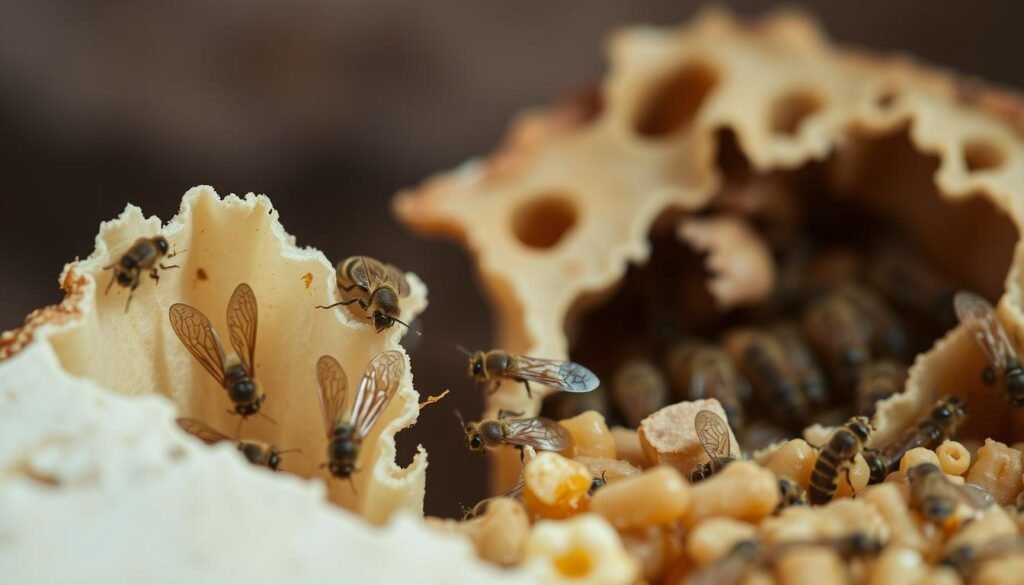
Older brood comb rich in shed skins and cocoons becomes a magnet for hungry wax moth larvae. These larvae feed on protein-rich residues in old cells, producing webbing, tunneling galleries, and eventual comb collapse.
Greater wax moth biology and comb damage
Greater wax moth (Galleria mellonella) develops rapidly above 90°F. Larvae consume brood comb residues and leave frass, silk, and ruined cell walls.
Weak hives, dead-outs, warm storage, and long-unused frames raise risk. Strong colonies normally prevent infestations by clearing invaders.
Prevention via strong colonies, freezing, and safe storage
Keep colonies vigorous, limit excess space, and remove dead equipment promptly. Inspect stored comb monthly during warm months for webbing or frass.
- Freezing frames (at or below 0°F) for 48–72 hours kills eggs and larvae when fully penetrated.
- Store drawn comb in well-lit, ventilated areas or stack with airflow to discourage moths.
- Bt var. aizawai sprays offer biological control for active infestations in storage.
Chemical fumigation with paradichlorobenzene is an option for heavy pressure, but comb must be aired thoroughly for days before reuse. Avoid naphthalene due to residue risks and toxicity.
| Risk Factor | Recommended Action | Notes |
|---|---|---|
| Weak or dead colony | Remove or strengthen quickly | Strong colonies suppress moths naturally |
| Warm storage | Freeze or ventilate frames | Freeze 48–72 hrs at 0°F; ensure full penetration |
| Stored comb inspection | Monthly checks in warm seasons | Look for frass, tunnels, silk |
| Heavy infestation | Bt aizawai or paradichlorobenzene | Air fumigated comb for several days before use |
Other Hive Pests and Predators Around U.S. Apiaries
Not all visitors to a hive harm bees. Some arthropods shelter in empty space and rarely need action. Other vertebrates can cause real loss and require firm deterrence.
Ants, spiders, earwigs, and cockroaches
Spiders, earwigs, and cockroaches often shelter in frames or under covers. They rarely damage comb or brood and usually need no control.
Ants are a frequent nuisance around covers or baited traps. Simple steps—move spilled honey, use oil- or sticky-traps under stands, and seal feed—cut ant pressure without chemicals.
Mice, skunks, and bears: signs and deterrents
Mice enter in fall and winter to nest in warm cavities. They chew comb and soil spare frames; urine can contaminate wax. Fit entrance reducers, mouse guards, and store spare combs clean and elevated.
Skunks feed at night, scratching at entrances and eating adult foragers. Look for disturbed ground and night-time activity. Elevated stands, motion lights, and perimeter fencing reduce visits.
Bears cause the most severe damage. They will break boxes for brood and honey and will return if not stopped. Use electric fencing, pick secure sites, and consult wildlife agencies early to avoid repeated losses.
| Visitor | Typical impact | Practical deterrent |
|---|---|---|
| Ants, spiders, earwigs | Minor nuisance; sheltering | Clean spills, traps, seal equipment |
| Mouse | Comb damage, contamination | Entrance reducers, mouse guards, clean storage |
| Skunk | Forager loss, colony stress | Elevate stands, fencing, night deterrents |
| Bear | Hive destruction, repeated raids | Electric fencing, site choice, wildlife help |
Site hygiene matters: clear spilled honey and wax, limit clutter, and secure equipment to reduce attraction. When in bear country, work with state extension or wildlife offices and prioritize human and pet safety when installing deterrents.
For a research-backed reference on honey bee management and threats, see the honey bee reference guide.
American Foulbrood: Spore-Forming, Highly Destructive
American foulbrood is a lethal brood infection caused by the spore-forming bacterium Paenibacillus larvae.
Its spores are extremely resilient and may persist in honey and equipment for many decades.
Field checks focus on the ropy test, scale presence, capping changes, and odor.
Ropy test and classic signs
Perform the ropy test by probing a suspicious sealed cell; infected larval remains pull into a sticky, thread-like strand.
Scales lie flat, hard, and often adhere to the lower cell wall.
Look for sunken or punctured cappings and a putrid smell. Death usually occurs after larvae are sealed, which helps distinguish this disease from others.
Legal response and controlling long-term spread
Because antibiotics suppress symptoms but do not kill spores, state rules often require isolation, notification of an apiary inspector, and destruction or sterilization of infected material.
Burning contaminated equipment halts spore reservoirs that would otherwise seed other colonies via robbing or shared honey.
- Isolate and report suspected cases immediately.
- Do not rely on antibiotics as a sole cure—spores remain viable.
- Discard or flame-sterilize comb and follow inspector guidance on woodenware disposal.
Train teams to spot ropy threads and scales quickly. Keep clear records of outbreaks and corrective actions to protect nearby apiaries and meet legal requirements. For research-based context on management and protocols, see hive disease guidance.
European Foulbrood: Stress-Linked and Manageable
European foulbrood most often hits stressed colonies in spring, targeting very young larvae before cells are sealed.
Signs include twisted, yellowing to brown larvae with a granular or watery texture and a sour smell. Death often occurs while larvae are unsealed, unlike spore-forming AFB.
Symptoms versus AFB
Contrast helps: AFB shows ropy threads, hard scales, strong putrid odor, and durable spores. EFB lacks spores, smells sour, and affects younger larvae often under a few days old.
Shook-swarm and veterinary options
Shook-swarm breaks contact with contaminated comb by moving bees onto clean frames. It reduces bacterial load without chemicals.
- Improve nutrition, reduce crowding, and requeen to lower stress.
- Sanitize or replace old wax; remove contaminated comb where practical.
- Oxytetracycline may be used under a veterinary feed directive, not as routine prophylaxis.
| Action | When to use | Why |
|---|---|---|
| Confirm diagnosis | At first signs | Avoid unnecessary AFB measures |
| Reduce stressors | Immediately | Many colonies recover with care |
| Shook-swarm | When comb contamination suspected | Breaks transmission without drugs |
| Vet consultation | If severe or persistent | Permits targeted antibiotic use under VFD |
Follow-up inspections are critical to confirm recovery and to ensure other problems do not mask EFB.
Fungal Brood Disease: Chalkbrood in Spring and Beyond
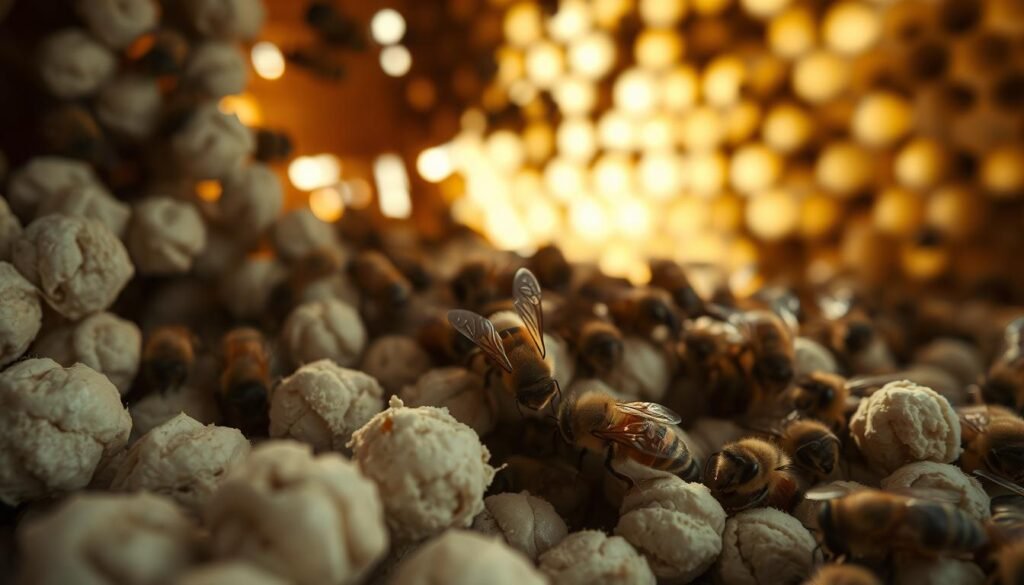
In cool, damp weather, a fungal infection can turn larvae into white-to-black mummies visible on frames and at the entrance.
What to look for: white, brittle “mummies” on comb or piled at the hive entrance that later darken to gray or black. These telltale remains signal a spore-forming fungus that infects young larvae after they ingest contaminated food.
The infection takes hold around cell sealing, when mycelia overrun larval tissue. Outbreaks often follow wet springs, poor ventilation, or nutritional stress. Concurrent problems like varroa or Nosema may worsen signs.
Practical management steps
- Increase ventilation and improve hive drainage to cut humidity.
- Boost nutrition with balanced pollen substitutes during lean periods.
- Select queens with hygienic behavior to speed removal of infected brood.
- Turn over or discard comb where mummies recur—spores persist long in wax and honey.
Sanitation matters: handle frames carefully to avoid moving spores between colonies. There is no single cure; good husbandry typically reduces impact as the colony strengthens in late spring.
| Sign | Likely cause | Immediate action |
|---|---|---|
| White to black mummies | Ascosphaera apis spores | Improve airflow; remove loose mummies |
| Recurring infection | Long-lived spores in wax/honey | Replace affected comb; sanitize tools |
| Outbreak in damp site | High humidity; poor drainage | Raise hives; add screened bottom or ventilation |
Viral Threats in Bee Colonies
Viral infections can shift a thriving colony into a struggling one within a season.
Deformed wing virus: signs and mite link
Deformed wing virus often shows as crumpled or shortened wings on newly emerged adults. These workers fail to forage and weaken the hive fast.
Varroa mites transmit and amplify this wing virus. A single heavy mite infestation can raise DWV loads. Managing varroa mites is the most effective way to lower viral harm.
Adult paralysis syndromes
Chronic and acute paralysis viruses produce trembling, hair loss, and piled-up adults on outer frames. Affected adult bees are often inactive and reluctant to fly.
Nutrition shortfalls, pollen toxins, or fermented stores can mimic or worsen paralysis signs. Differentiate causes by checking for mites, recent chemical exposure, and forage quality.
- No approved antivirals: focus on integrated pest management for mites and stronger genetics.
- Supportive actions: requeen for better resistance, diversify nutrition, and remove extra chemical stressors.
- Avoid moving symptomatic frames between colonies and log signs and treatments to track seasonality.
Stay vigilant during peak varroa seasons. Frequent monitoring, prompt mite control, and sound husbandry reduce viral impact and protect honey production and colony strength.
Nosema Infections in Adult Bees
Nosema invades the gut epithelial cells of adult workers after they ingest hardy spores in contaminated food, water, or feces. Spores germinate in the midgut, multiply, and reduce nutrient absorption and lifespan.
Fecal-oral spread, dysentery, and seasonal patterns
Transmission is fecal-oral: spores passed in feces contaminate comb, feeders, or stored honey. Extended confinement in cool weather increases cleansing-flight restriction and can trigger dysentery with N. apis.
N. ceranae often shows fewer obvious signs but can lower colony performance year-round. Watch for reduced foraging, uneven brood, and increased winter losses.
Management: ventilation, feeding, and treatment
Improve hive airflow, reduce moisture, and encourage cleansing flights when weather permits. Use sanitary feeding equipment and rotate or clean frames to lower environmental spore loads.
Fumagillin is an option under veterinary guidance; time dosing carefully, follow label or VFD instructions, and pair treatment with husbandry changes rather than relying on drugs alone.
- Use periodic microscopic spore counts to guide treatments after long confinement.
- Choose winter feeds consciously: refined sugar syrup has lower ash and may reduce dysentery risk but lacks some micronutrients found in honey.
- Address concurrent stressors — varroa, pesticides, poor nutrition — which amplify Nosema impacts.
Monitor into spring to confirm recovery and to catch lingering subclinical infections before colonies lose strength.
Emerging and External Risks to Honey Bees
C. Global trade and travel raise the chance that an exotic parasitic mite will show up near North American hives.
Tropilaelaps species reproduce quickly inside brood and are absent here now, but an introduction would be serious. Stay current with USDA and APHIS alerts and report unusual brood damage right away.
Multiple stresses combine: agrochemicals, low forage diversity, in-hive residues, and pathogens reduce resilience. Queen genetics and limited breeder diversity also shape recovery after outbreaks.
- Reduce pesticide risk by timing sprays away from peak foraging and using lower-risk products.
- Enhance habitat with diverse pollen and nectar sources to boost nutrition and immunity.
- Sterilize or avoid reusing equipment from unexplained collapses to curb spread of spores and mites.
| Risk | Action | Why it helps |
|---|---|---|
| Exotic parasitic mite | Report, isolate, follow APHIS guidance | Early containment limits spread |
| Pesticide exposure | Change timing, choose low-toxicity products | Reduces adult loss and sublethal effects |
| Poor nutrition | Plant diverse floral resources | Improves brood development and immunity |
28. common U.S. bee pests and diseases: Identification and Quick Reference
Use simple field cues—cap condition, larval texture, odor, and age at death—to narrow likely causes fast.
Parasites and pests: mites, beetles, moths, and vertebrates
- Varroa mites — mites visible on adults or inside capped brood; spotty brood and malformed workers.
- Tracheal mite — weak, discolored foragers; confirm by dissecting tracheae under magnification.
- Small hive beetle (SHB) — slimed, fermented comb with larvae and sour smell; pupae in nearby soil.
- Greater wax moth — webbed, tunneled, frass-filled comb in weak or stored frames.
- Vertebrates — mice nest/urinate in comb; skunks scratch entrances at night; bears break boxes for brood and honey.
Brood and adult diseases: bacterial, fungal, and viral
- American foulbrood (AFB) — ropy test positive, adherent scales; do not move frames; notify inspectors immediately.
- European foulbrood (EFB) — twisted, discolored young larvae with a sour odor; often linked to stress.
- Chalkbrood — white-to-black mummies on comb or at the entrance; improve ventilation and select hygienic queens.
- Sacbrood — sac-like dead larvae; often self-limiting with good husbandry.
- Viral signs — deformed wings point to DWV (often varroa-linked); trembling and hairless adults suggest paralysis viruses.
- Nosema — dysentery and reduced foraging; confirm via microscopy and improve ventilation and feeding.
“Match multiple cues — cappings, larval color, odor, and age at death — to raise diagnostic confidence before acting.”
Quick field mental map: mites = internal parasites and brood damage; beetles = slimed honey and soil pupation; moths = webbing in weak combs; vertebrates = chew, scratch, or nest signs.
| Threat | Key field cue | Immediate action |
|---|---|---|
| Varroa mites | Visible mites, spotty brood, malformed bees | Sample (sugar/alcohol), treat per IPM, recheck |
| Small hive beetle | Fermented, slimed comb; beetle larvae | Trap in-hive, remove slimed frames, sanitize site |
| American foulbrood | Ropy thread; hard scales | Do not move frames; isolate, report to inspector |
| Chalkbrood | White/black mummies | Raise ventilation; consider replacing affected comb |
Practical tips: carry laminated frame-side checklists, photograph suspicious infected larvae, and train crews on legal steps for AFB. Use multiple signs before concluding a diagnosis and refer to full sections for management details.
Conclusion
Strong, routine checks and timely, lawful action keep colonies resilient through seasonal stress.
Early identification paired with decisive steps protects honey bee colonies from cumulative loss. Monitor regularly, favor IPM—mechanical and cultural controls first—and use chemical options only when thresholds require them.
Varroa management is the keystone to lower viral loads and secure winter bees. Plan nutrition with diverse pollen sources, requeen for hygienic traits, and keep comb and equipment sanitized to limit reservoirs.
Document findings, get lab confirmation when unsure, and stay linked with veterinarians, state inspectors, and local clubs. Build a seasonal action cadence: spring benchmarks, summer IPM rotation, late-summer varroa knockdown, and fall overwintering readiness.
Consistent, informed management turns complex threats into manageable risks for healthy bee colonies and productive hives. For expansion and practical planning, see beekeeping expansion tips.
FAQ
How do I recognize a healthy brood pattern?
A healthy colony shows mostly solid, well-capped brood with few empty cells. Worker, drone, and queen development follow regular staging, and capped cell appearance is uniform. Inspect frames in good light and compare multiple frames to spot irregularities.
What early signs indicate a colony is failing?
Look for scattered brood, sunken or perforated cappings, spotty brood patches, and an unusually high proportion of dead or missing adults. Reduced foraging, late-season brood loss, or sudden behavior changes also warn of collapse risk.
How does Varroa destructor damage colonies?
Varroa mites reproduce in capped brood, weaken developing bees, and vector viruses like deformed wing virus. Heavy infestations reduce lifespan, impair winter survival, and increase colony losses if left unmanaged.
What monitoring methods work for varroa?
Use sticky boards, sugar shakes, or alcohol washes to estimate mite load. Regular monitoring during peak brood periods gives actionable infestation percentages to guide integrated pest management choices.
When should I treat for varroa and which options exist?
Treat when mite levels exceed established thresholds (often 3%–10%, depending on method and season). Options include mechanical controls, screened bottom boards, drone comb trapping, formic or oxalic acid, and approved synthetic miticides following label directions.
What are tracheal mites and how are they diagnosed?
Tracheal mites infest bee breathing tubes and show as weakening or reduced winter survival. Definitive diagnosis requires microscopic examination of thoracic tracheae; grease patties and resistant stock can help control them.
How do I spot small hive beetle damage?
Adult beetles and larvae eat pollen and brood, causing slimed comb and fermenting honey. Look for wandering larvae on frames, slimed comb surfaces, and beetle adults in hive crevices or ground pupation near hives.
What controls work for small hive beetle?
Prevention includes strong colonies and sanitation. Traps in hives, ground traps, and targeted insecticides labeled for use in hives can reduce populations. Follow integrated strategies and legal product guidelines.
How do wax moths harm stored combs?
Greater wax moth larvae tunnel through wax, leaving webbing and frass that destroy comb structure. Damage is common in weak colonies or poorly stored equipment and makes comb unusable for brood.
How can I prevent wax moth infestations during storage?
Keep colonies strong, freeze spare frames, use tight storage with airtight containers, and rotate equipment. Clean, well-ventilated storage and fumigation where legal also reduce risk.
What wildlife causes non-infectious hive damage?
Ants, earwigs, and cockroaches invade comb and stores, while mice, skunks, and bears can kill or displace colonies. Use physical barriers, hive stands, electric fencing for bears, and habitat management to deter predators.
How do I distinguish American foulbrood from other brood problems?
American foulbrood produces a foul odor, ropy larval remains, and hard brown scale on the cell floor. The ropy test and scale persistence are diagnostic. AFB spores survive long-term; legal reporting and equipment destruction are often required.
What are best practices if I find American foulbrood?
Follow state regulations, which may mandate burning or sterilizing infected equipment. Consult local extension or regulatory agencies for legal response and safe disposal methods to prevent spore spread.
How does European foulbrood differ and how is it managed?
European foulbrood affects stressed colonies and shows uneven brood death and pale, twisted larvae. It is less spore-forming than AFB and often responds to shook-swarm techniques, improved nutrition, and veterinarian-directed antibiotics when appropriate.
What is chalkbrood and how do I reduce it?
Chalkbrood is a fungal disease that turns infected larvae into hard, chalky mummies. Risk rises with cold, wet conditions and poor ventilation. Improve hive airflow, replace old comb, and breed tolerant stock to lower incidence.
Which viruses commonly affect colonies and how do they present?
Deformed wing virus causes wing deformities in newly emerged bees and often links to varroa. Chronic and acute paralysis viruses can cause trembling, hairless bees, or rapid adult losses. Control vectors and reduce stress to limit viral impacts.
What is Nosema and how does it affect adults?
Nosema is a microsporidian that transmits via the fecal-oral route. Infected adults show dysentery, reduced foraging, and weaker wintering. Management focuses on hive hygiene, good ventilation, and approved treatments like fumagillin when recommended.
Are there emerging pests U.S. beekeepers should watch for?
Beekeepers should monitor for Tropilaelaps risk, new mite strains, and invasive predators. Chemical exposures, poor nutrition, and limited genetic diversity also raise vulnerability. Stay alert to regulatory updates and extension notices.
Where can I find a quick reference for parasites, pests, and diseases?
State beekeeping associations, university extension services, and USDA resources offer identification guides and management charts covering mites, beetles, moths, bacterial, fungal, and viral conditions. Keep laminated checklists in the apiary for fast comparison.