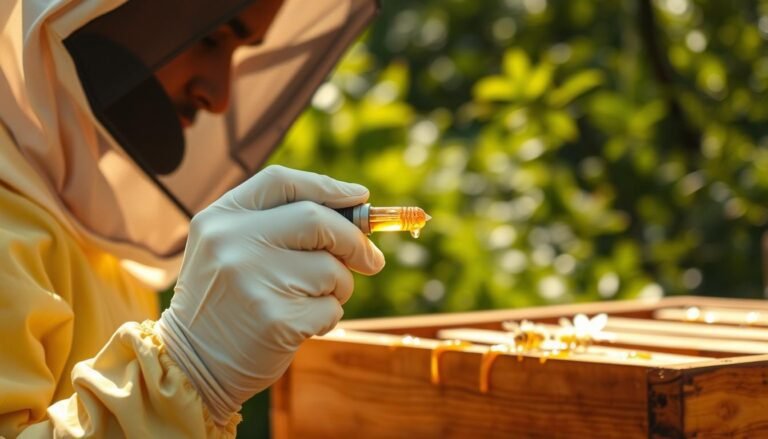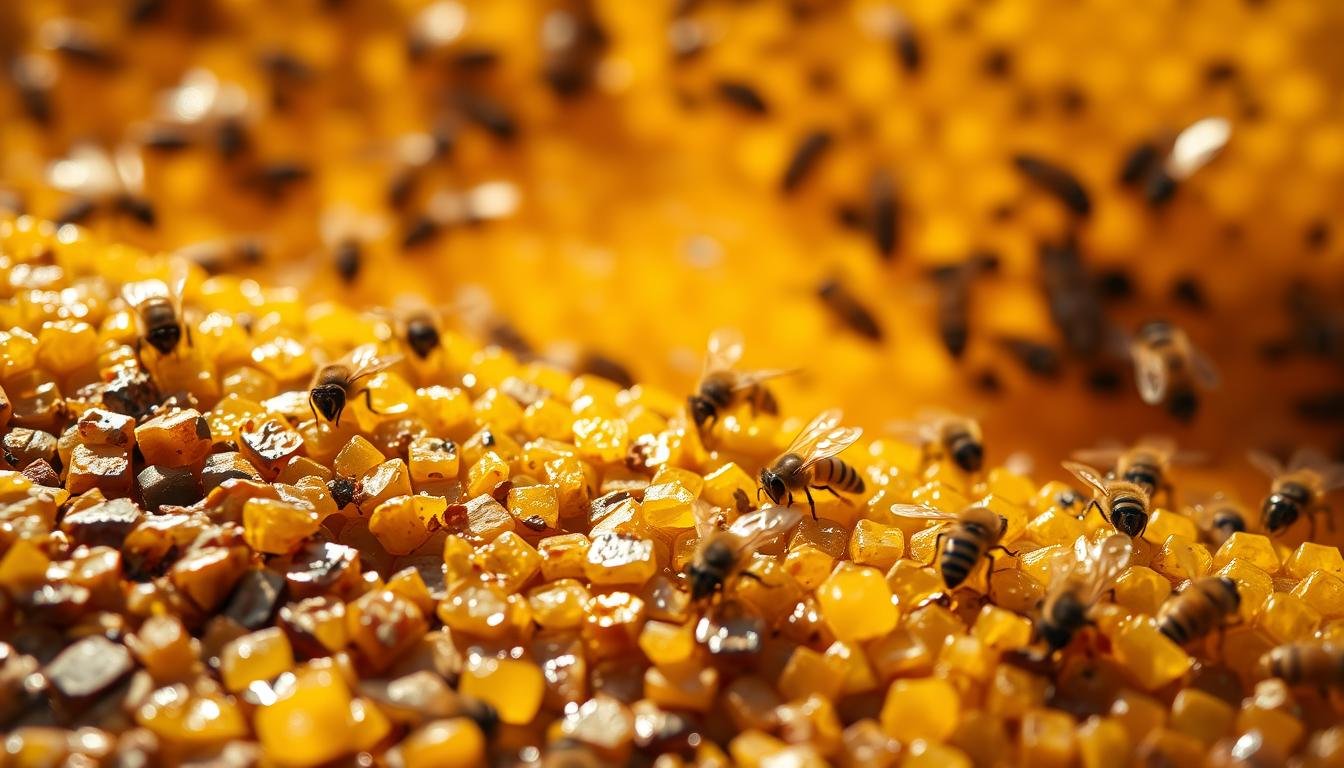
Propolis is a sticky, resinous substance that honey-collecting bees gather from tree buds to seal gaps and smooth interior surfaces of a hive. The Greek roots — pro (in front of) and polis (city) — hint at its role guarding the entrance to the bee “city.”
When you spot heavy deposits, it often signals the colony is sealing drafts, narrowing entrances, or reinforcing surfaces. Seasonal patterns matter: workers intensify collection in cool autumn to plug cracks before winter.
Functionally, this material contributes to the colony’s social immune system, creating an antimicrobial barrier that lowers microbial load inside the hive. Composition varies by plant source and region, producing aromatic notes like vanillin and a mix of resins, waxes, oils, pollen, and flavonoids.
Moderate accumulation can indicate healthy, responsive bees. Sudden heavy deposition may point to structural leaks or heightened disease pressure. For practical next steps, inspect for gaps and learn safe collection methods such as traps or freezing.
Key Takeaways
- Propolis is a complex resin-wax mix bees use to protect the hive and entrance.
- Seasonal increases are normal as colonies prepare for cooler months.
- It acts as a social defense, helping reduce pathogens inside the colony.
- Composition and aroma vary by local tree sources; harvest carefully.
- Moderate buildup often reflects healthy behavior; sudden excess needs inspection.
- For human-use info and safety, see guidance from Cleveland Clinic on propolis and collection tips at Beekeepers Realm.
Propolis 101: The bee “glue” that seals hives and defends the colony
Inside a hive, sticky plant resins are transformed into a versatile seal that keeps interiors tidy and secure. Honey bees collect resin from deciduous trees such as poplar, aspen, cottonwood, birch, and alder. Foragers carry these loads in their pollen baskets and hand them off to nestmates for processing.
This resinous substance mixes with wax, fatty acids, and aromatics to form a dark, sticky mass often called the bee “glue” or “gum.” Typical composition is roughly 45–55% resins, 25–35% waxes and fats, about 10% essential oils, 5% pollen, and the rest flavonoids and minor compounds.
Functionally, the material smooths rough surfaces, seals seams, and narrows entrances to control airflow and light. It also acts as a colony-level defense with notable antimicrobial action; colonies collect more when under disease pressure. For more on social immunity and related research, see this summary on colony-level social immunity.
- Distinct from wax and honey: tacky and resinous rather than soft or sugary.
- Work coordination: foragers, receivers, and packers convert plant resins into the finished sealant.
- Practical ID: vanilla-like aromatics, sticky texture, and placement near seams and entrances.
What propolis buildup means in a hive
Inspect junctions and frame rests; thin, resinous coatings often mark the hive’s high-traffic repairs.
These films are darker and stickier than wax and show up where workers fix drafts or light leaks.

Side-by-side ID guide: wax is pale and pliable, honey is glossy and fluid, and the gum-like resin is darker, tacky when warm and brittle when cool.
A vanilla-like aroma often helps confirm the resinous material.
Hallmark signs include sealed cracks along box joints, a narrowed entrance lip, and interior wood that looks smoothed or varnished.
Bees target rough surfaces and rabbet joints to prevent abrasion in busy lanes.
“Stuck lids and tight frames are usually a sign of vigorous sealing — not faulty equipment.”
- Use cool-day inspections: brittle deposits chip free for easy checks.
- Note the size and amount in context: season, climate, and recent repairs matter.
- Document heavy spots so repairs (warped covers, new seams) can reduce future deposits.
Why bees make propolis: Causes and triggers of buildup
Bees respond to small gaps, rough wood, and stray light by lining hive surfaces with sticky resin. This behavior helps keep internal conditions steady and reduces stress on brood and foragers.
Rough surfaces, cracks, drafts, and unwanted light
Rough surfaces and splintered grain invite workers to smooth lanes so comb and bees avoid abrasion. Gaps below roughly 5/16 inch fall outside the bee space and are usually sealed instead of filled with comb.
Light leaks and narrow cracks disturb the cluster and trigger sealing. Sealing reduces drafts and trims convective heat loss, aiding stable brood rearing.
Disease pressure and social immunity
Honey bees increase resin foraging when colony health is compromised. Research shows colonies raise resin use during infection periods to lower pathogen loads and support group-level defenses.
That collective response strengthens the hive’s antimicrobial shield and is an adaptive behavior, not mere nuisance activity.
Airflow control and entrance management
Workers often narrow the entrance with resin to manage airflow and slow invaders. A sticky entrance also acts like a sanitary mat: returning bees contact the surface and may transfer resins that reduce surface microbes.
- Common resin sources: poplar, aspen, cottonwood, birch, and alder.
- Color and aroma change with local trees and resins collected.
- Increased deposits often signal an active, responsive colony rather than equipment failure.
| Trigger | Colony response | Benefit | Typical resin source |
|---|---|---|---|
| Rough wood grain | Apply lining and smoothing | Protects bees and comb | Poplar / birch |
| Gaps | Seal rather than build comb | Maintain bee space and traffic flow | Alder / cottonwood |
| Disease signal | Boost resin foraging | Enhanced social immunity | Local tree mix |
| Drafts / light leaks | Narrow entrances; patch seams | Better thermoregulation | Region-dependent resins |
For deeper reading on colony-level immunity and resin use, see this summary on social immune responses in honey bees.
Health implications: For honey bees and for humans
Resin-lined interiors act like a communal shield, reducing the microbial load on hive surfaces and easing colony pressure.
Bee colony benefits
Internal coatings form an antimicrobial barrier that helps disinfect surfaces and lower infections inside the nest.
This sanitized “city” reduces environmental stress and supports the hive’s immune system at a social level, improving resilience during disease pressure.
Human uses and potential benefits
People use raw pieces, powdered capsules, alcohol tinctures (food‑grade ethanol ≥65%), water extracts and oil extracts.
Forms differ by purpose: water extracts suit sensitive areas like eyes; oil extracts work for oral or skin applications.
Safety considerations
Composition varies by plant source and region, so effects change with origin and season.
Avoid denatured or rubbing alcohol for internal use. Refrigerate aqueous extracts and choose solvents to match intended use.
Flavonoids and resins
Flavonoids, phenolics and aromatic resins contribute antimicrobial activity. These compounds help explain observed benefits in hive sanitation and certain human applications.

How to respond in practice: Managing and encouraging propolis buildup
Targeted cues—roughened wood, shallow parallel saw cuts, and removable traps—help direct worker sealing to safe zones. These simple steps guide bees use the resin where it does the most good without disrupting brood areas.
Encourage healthy deposition
Lightly roughen interior walls or add parallel shallow grooves to invite filling. Plastic propolis traps work well: slip them above frames and prop the outer cover slightly to admit light and air, which speeds filling of trap slits.
Collect and clean
- Remove traps and seal in bags, then freeze.
- Flex or tap frozen traps to release brittle pieces.
- Scrape hive parts, then clean scrapings by floating debris in water—wax and wood float while sticky resin sinks.
- Alternatively, heat gently with water at about 200°F so wax rises and resin remains, cool, then chip out solids.
Protect colony health
Harvest sparingly from honey supers when possible. Many beekeepers avoid heavy removal inside the hive to keep the in-hive antimicrobial lining intact.
Handle fresh deposits gently during inspections to avoid tearing and to preserve the colony’s environmental controls.
| Action | Method | Benefit |
|---|---|---|
| Encourage deposit | Roughen wood; add grooves | Direct sealing to non-brood surfaces |
| Trap filling | Plastic slits + propped lid | Faster collection without heavy internal removal |
| Cleaning | Freeze & flex; water float or low-heat separation | Cleaner product; less debris |
| Harvest choice | Prefer honey supers | Protect brood chamber and hive social immunity |
How to use propolis products safely and effectively
Preparing extracts calls for safe solvents and clear intent. For a basic tincture, choose food-grade ethanol ≥65% and soak small pieces for 1–2 weeks with daily agitation, then filter.
Tinctures, aqueous, and oil extracts
Tinctures are best for concentrated topical or oral rinses. To increase strength for experienced users, reduce solvent gently or leave fine particles suspended.
Water (aqueous) extracts yield fewer solids but are useful for sensitive sites, including the eye area. Keep these refrigerated; discard within weeks.
Oil extracts form by heating gently in a water bath with food-grade oil or butter for ~10 minutes, then straining. Use oils for mouth and delicate skin.
“Choose your solvent to match the intended body application and always avoid denatured or rubbing alcohol.”
Everyday uses include oral rinses, topical application, raw chewing, or mixing powdered extract into crystallized honey for better dispersion.
| Form | Method | Best for | Storage |
|---|---|---|---|
| Tincture | 65%+ ethanol; 1–2 weeks; filter | Concentrated topical; oral rinse | Dark airtight bottle |
| Water extract | Cold/short soak; filter | Sensitive areas (eyes) | Refrigerate; short shelf-life |
| Oil extract | Water-bath heat ~10 min; strain | Mouth; sensitive skin | Dark jar, cool place |
| Raw/powder | Chew raw or mix with crystallized honey | Oral use; capsules | Dry, airtight |
What’s in propolis: Composition, sources, and variability
The mix inside propolis reflects local flora and the choices of foraging honey bees.
Typical contents are well studied. Analyses report more than 240 identified compounds. A common breakdown is 45–55% resins, 25–35% waxes and fatty acids, about 10% essential oils and aromatics (including vanillin), roughly 5% pollen, and ~5% other compounds such as flavonoids.
These ingredients explain its feel: sticky when warm, brittle when cool, and aromatic—often vanilla-like. The contents shape both physical behavior and antimicrobial action.
Regional trees shape color and scent. In many temperate zones honey bees favor Populus species (cottonwood, aspen/poplar, balsam poplar). Birch, alder, and local mixes also contribute. As a result, composition propolis varies by geography and season.
| Component | Typical % | Role |
|---|---|---|
| Resins | 45–55% | Structure, antimicrobial compounds |
| Waxes / fatty acids | 25–35% | Texture; temperature response |
| Essential oils / aromatics | ~10% | Scent (vanillin), volatile protection |
| Pollen & flavonoids | ~5% each combined | Trace nutrients; bioactive compounds |
Conclusion
A dark, varnish-like film on frames is usually a sign that workers are stabilizing the hive environment. This resin helps the colony seal cracks, narrow the entrance, and smooth rough surfaces to lower pathogen entry and improve thermoregulation.
Composition varies with local trees and resins, so product color, scent, and strength change by locale. Balance support for the colony with modest harvests: inspect for drafts and light leaks, fix structural issues, use traps, and clean by freezing or water separation. For human use, choose the product form and solvent that fit the body area, store properly, and respect individual sensitivities.
The result: durable benefits for bees and humans alike when attention to hive condition and informed, careful use guide decisions.
FAQ
What does buildup of propolis in a hive indicate?
Buildup often signals bees responding to rough surfaces, gaps, drafts, or unwanted light. They seal and smooth areas to protect the colony, control airflow, and reduce disease exposure. Increased accumulation can reflect high local resin availability, greater colony activity, or a defensive response to pests or pathogens.
How can I tell resin deposits from wax, pollen, or honey residues?
Resin deposits feel tacky or hardened and usually appear darker and more brittle than wax. Wax is softer and pale; honey is sticky and sugary; pollen shows granular texture. Propolis often forms smooth films or rigid plates over rough edges and inside narrow crevices.
What common signs show bees are sealing cracks or narrowing the hive entrance?
Look for smoothed rough surfaces, narrow or partially blocked entrances, and thin layers along frame tops or box joints. Small plugs at screw holes or around feeder ports are typical. These changes help the colony manage temperature, humidity, and access control.
When does increased resin accumulation become problematic?
Excessive buildup can complicate hive inspections, make equipment separation difficult, and hinder queen or frame manipulation. If you see abnormal accumulation paired with unusual bee behavior or disease signs, evaluate colony health before harvesting or modifying hive parts.
Why do honey bees produce this sticky substance?
Worker bees collect tree resins and mix them with wax and enzymes to create a multifunctional sealant. It serves as a physical barrier, an antimicrobial coating, and a way to reduce colony stress by blocking drafts and light.
What triggers bees to increase their collection of resins?
Triggers include rough interior surfaces, structural gaps, drafts, pest presence, disease pressure, and seasonal resin availability. Colonies under pathogen stress often ramp up resin use as part of social immunity.
How does sealing affect hive airflow and defense?
Bees adjust openings to stabilize internal conditions and limit invader access. Narrowed entrances reduce robbing risk and help maintain temperature and humidity levels critical for brood rearing and food storage.
What benefits does this substance provide to colony health?
It creates an antimicrobial barrier, lowers colony pathogen loads, and helps sanitize frequently touched surfaces. These effects reduce infection transmission and can lower overall colony stress, improving resilience.
How might humans use hive-derived resin products?
Extracts appear in oral-care items, ointments for minor wounds, supplements, and topical blends. Users seek antimicrobial and healing properties, though product quality and ingredient content vary widely.
Are there safety concerns when using resin extracts for people?
Yes. Composition varies with botanical sources and region, so allergic reactions can occur. Alcohol-based tinctures and solvent residues matter; consult product labels and health professionals before therapeutic use, especially for children or those with allergies.
What role do flavonoids and botanical resins play in antimicrobial action?
Flavonoids and plant resins provide antioxidant and antimicrobial compounds that inhibit bacterial and fungal growth. Their specific activity depends on source trees and local flora, so efficacy varies by batch and region.
How can beekeepers encourage healthy accumulation without harming the colony?
Introduce roughened surfaces or shallow parallel saw cuts on inner covers and frames to give bees anchoring points. Use propolis traps sparingly and place them where minimal disturbance occurs. Avoid overharvesting during stress periods.
What are practical methods to collect and clean resin from hives?
Common methods include plastic propolis traps, freezing frames to make scraping easier, and using heat or water separation to remove wax and debris. Work quickly and in cooler weather to reduce stickiness and colony disruption.
Where should harvesters avoid removing resin to protect bees?
Avoid heavy removal near brood nests, queen pathways, and critical joints that maintain hive insulation. Disturbing large sealed areas can increase stress and expose brood to drafts or pests.
Which extraction types are common for consumer products and how do they differ?
Alcohol tinctures extract a wide range of compounds and preserve potency; aqueous extracts suit people avoiding alcohol but capture fewer nonpolar components; oil extracts concentrate lipophilic constituents for topical use. Choose based on intended use and sensitivity.
How should consumers assess quality and store resin products?
Look for clear ingredient lists, source information, and third-party testing where possible. Store in cool, dark places to preserve active compounds. Expect color and scent variations reflecting botanical origins.
What typical components make up hive resin mixes?
Mixtures generally contain plant resins, beeswax, essential oils, small amounts of pollen, and bioactive flavonoids. Proportions depend on collection sources and bee processing, so chemical profiles shift by region.
Which tree sources influence color and properties of collected resins?
Poplar, cottonwood, birch, and various conifers commonly supply resins in temperate regions. Poplar-derived mixes often appear darker and rich in certain flavonoids, while conifer sources yield different aromatic profiles and resin compositions.