Start with a clear plan. Demand for natural sweeteners is rising, and organic sales have climbed roughly 20% in five years. Define how your product stands out and who you will serve.
Build trust early. Use transparent sourcing, compliant labels, and reliable shipping to turn first-time buyers into repeat customers. Real reviews and photos help your brand feel authentic.
Focus your strategy on pricing, inventory, and visuals that match buyer expectations. Test offerings at local markets and gather feedback before scaling to larger channels. This stepwise path keeps costs down and sharpens messaging.
In this guide you will find a practical flow—from market research and product setup to growth tactics like keyword-informed content, social proof, and optimized listings. Follow the roadmap to balance quick wins with long-term brand resilience.
Key Takeaways
- Differentiate your product with a clear unique selling point and brand story.
- Validate demand through research and testing at local markets.
- Prioritize trust signals: labels, reviews, and consistent shipping.
- Use strong visuals and concise content to improve your online presence.
- Balance short-term sales with a sustainable brand strategy.
Understand Today’s Online Honey Market in the United States
Demand now centers on transparency, provenance, and varieties that tell a regional story. Consumer interest in natural sweeteners and wellness products has driven organic sales up roughly 20% in five years. That shift reshapes how small honey producers and larger businesses position jars for different audiences.
Trends: natural sweeteners and wellness-focused demand
Searches peak from July to September, reflecting seasonal use and gift buying. Direct-to-consumer food sales top $3B annually, so many producers test DTC channels first.
Health-conscious buyers and foodies look for simple labels and traceable sourcing. Use compliant messaging to educate without making restricted claims.
Opportunities: varietals, seasonality, and community sales
Varietals—wildflower, clover, and regional jars—help you stand out and command higher price points. Light research can map price bands by varietal and jar size to hit target margins.
- Benchmark competitors: check platforms like Etsy (50,000+ listings) to gauge competition and listing quality.
- Leverage community: farmer events and local stories turn into content that boosts discovery on social media and recipe sites.
- Responsibility sells: beekeeping practices and local sourcing appeal to sustainability-minded buyers.
Define Your Target Audience and Buyer Personas
Segment first, then build products. Identify primary groups—health-conscious shoppers, culinary enthusiasts, and families—and map what each values: purity, flavor variety, or pantry staples.
Use quick research methods. Run short surveys, note responses at farmers markets, and monitor social media to learn preferences for varietals, jar sizes, and price points.
Turn findings into clear personas. Include kitchen habits, purchase frequency, and willingness to try limited runs. These profiles guide product choices, labeling, and content that answers real use cases like tea, baking, or cheese boards.
- Test offers: try different jar sizes and bundles aligned with persona feedback.
- Keep feedback loops: post-purchase emails and social polls refine assortments over time.
- Choose channels: Instagram often reaches foodies; Facebook groups work well for families.
“Persona clarity reduces friction and raises conversion—focus on what customers actually ask for.”
Document results in a short persona guide your team can reuse. For practical planning, see the go-to-market strategy for natural sweeteners to align product and business decisions with audience insights.
Get Compliant First: Laws, Labels, and Licenses
Before you sell a single jar, confirm the permits and label rules that apply in your state.
Start with local contacts. Reach out to your State Department of Agriculture or cooperative extension for clear information on permits, inspections, and allowable sales channels. Requirements vary, so local guidance prevents costly surprises.
Know your state and local rules
Cottage food laws often allow direct sales at farmers markets and roadside stands with simplified licensing. Commercial production requires certified kitchens, inspections, and fuller licensing before expanded production or wholesale.
Labeling essentials and safe claims
Labels must include the product name (“Honey”), net weight in oz and g, producer name and address, and ingredients for infused jars. Avoid unapproved health claims in media or packaging. Use terms like “raw” or “organic” only when you meet regulatory definitions.
| Item | Requirement | Who to contact |
|---|---|---|
| Permits & inspections | State/local Dept. of Agriculture or extension | State Dept. of Agriculture |
| Cottage vs commercial | Direct sales allowed vs. certified facilities for scale | Local cooperative extension |
| Labeling | Product name, net weight (oz/g), contact, ingredients | State labeling guides / FDA for interstate |
- Standardize packaging: food-safe jars, sanitation logs, and tamper-evident seals to protect quality and transit.
- Document practices with batch codes and cleaning logs for traceability and audits.
- Subscribe to state resources for updates and train your team on compliant phrasing.
“Regulatory clarity protects your product, reputation, and the long-term viability of your business.”
Register Your Honey Business and Protect It
Registering your business early protects earnings and opens doors to markets and retailers. Formal registration clarifies taxes, liability, and vendor eligibility. It also speeds onboarding with new outlets and builds trust with customers.
Choose structure, taxes, and local licenses
Pick the right entity for your goals. Select a DBA, LLC, or sole proprietorship based on liability and tax needs. Obtain an EIN and file required state and local business licenses.
- Set up systems to collect and remit sales tax across venues and platforms.
- Document vendor paperwork: COIs, W-9s, and standard vendor forms for faster approvals.
- Understand permit rules for farmers markets and community events to avoid fines.
Insurance and vendor requirements
Secure product liability insurance early. Many markets, festivals, and retailers require proof before accepting vendors. Insurance helps cover risks from labeling errors, allergic reactions, or packaging issues.

Include compliance milestones in your go-to-market strategy: licensing, insurance, labeling, and storage standards. Reinforce safe production and packaging practices, and set pricing to cover fees and insurance. Build ties with local honey producers, co-packers, and community resources to scale reliably.
Craft a Standout Brand Story and Positioning
Center your brand around place, process, and the people who tend the bees.
From hive to jar: authenticity, sustainability, and regional terroir
Traceable sourcing helps customers understand flavor and quality. Note regional flora and careful handling that shape each jar.
Use short video and behind-the-scenes content to show beekeeping steps, seasonal varietals, and minimal processing.
Messaging pillars that build trust and loyalty
- Transparency: clear labeling and origin details.
- Sustainability: pollinator support and habitat work.
- Craftsmanship: small-batch practices that ensure quality.
Match product names and packaging with your story so the narrative flows from social media to unboxing. Map messages to each audience—culinary tips for food lovers, sustainability features for eco-minded buyers.
“A lived-in narrative from hive to jar turns curious shoppers into loyal customers.”
End with a clear CTA: invite trials, seasonal releases, or subscription offers that let your community sample the best of your business.
Ensure Quality, Packaging, and Labels that Sell
Good packaging protects product quality and communicates value. Start with food-safe jars and lids and avoid reusing commercial containers that may harbor contaminants.
Sanitation matters: set a clean-fill protocol, sanitize jars, lids, and tools, and record batch codes. This protects shelf stability and makes recalls traceable.
Packaging best practices
Choose packaging that balances durability with presentation. Glass boosts perceived quality while PET cuts breakage risk in transit.
Use tamper-evident seals and clear batch codes to build trust. Right-size jars—12 oz for pantry use, minis for gifting—to reduce shipping cost per unit.
Design cues and label essentials
Design labels with a clear visual hierarchy: product name, varietal, net weight (oz and g), producer contact, and any added ingredients.
Keep fonts readable and colors high-contrast for accessibility. Note origin and floral source to support premium pricing and traceability.
- Standardize sanitation protocols and equipment hygiene as routine production practices.
- Test print finishes and adhesives for condensation and heat resistance during transit.
- Align beekeeping story and hive imagery so it complements, not crowds, regulatory facts.
| Element | Recommendation | Why it matters |
|---|---|---|
| Jar type | Glass for premium; PET for low-break shipping | Perceived quality vs. transit durability |
| Seals & tracking | Tamper-evident seals + batch codes | Consumer trust and faster quality control |
| Label content | Name, varietal, weight (oz/g), contact, ingredients | Regulatory compliance and transparency |
| Finish testing | Adhesive & print tests for heat/condensation | Preserves pristine unboxing and shelf life |
“A consistent quality checklist from production to pick/pack ensures every jar meets your standard.”
Pricing Your Honey for Profit and Perceived Quality
Start pricing by mapping out true unit costs, then layer on perceived value for special varietals. Build a cost model that captures ingredients, jars, labels, labor, overhead, insurance, and shipping so you know your sustainable price floor.
Cost-based and value-based approaches
Run a break-even example. If startup costs hit $5,000 and you price jars at $10, you need 500 jars to break even. Use that baseline to set wholesale and retail targets.
Layer value-based pricing for single-origin or limited harvests. Customers will pay a premium when you emphasize origin, craftsmanship, and scarcity.
Psychological pricing and bundles to lift average order value
Use anchor pricing and gentle endings (e.g., $9.99) to influence perception without deep discounting. Offer tiered products—mini tasters, core jars, and premium single-origin—to reach different customer budgets.
- Test bundle deals and gift sets to raise average order value.
- Set free-shipping thresholds to encourage larger carts while protecting margin.
- Factor in retailer margins before pitching to stockists.
Track sales velocity by SKU; adjust price, discontinue low performers, and repackage winners for better margins.
For a deeper pricing framework and go-to-market tips, see this comprehensive guide to refine strategy as your business scales.
Build a High-Converting E-commerce Presence
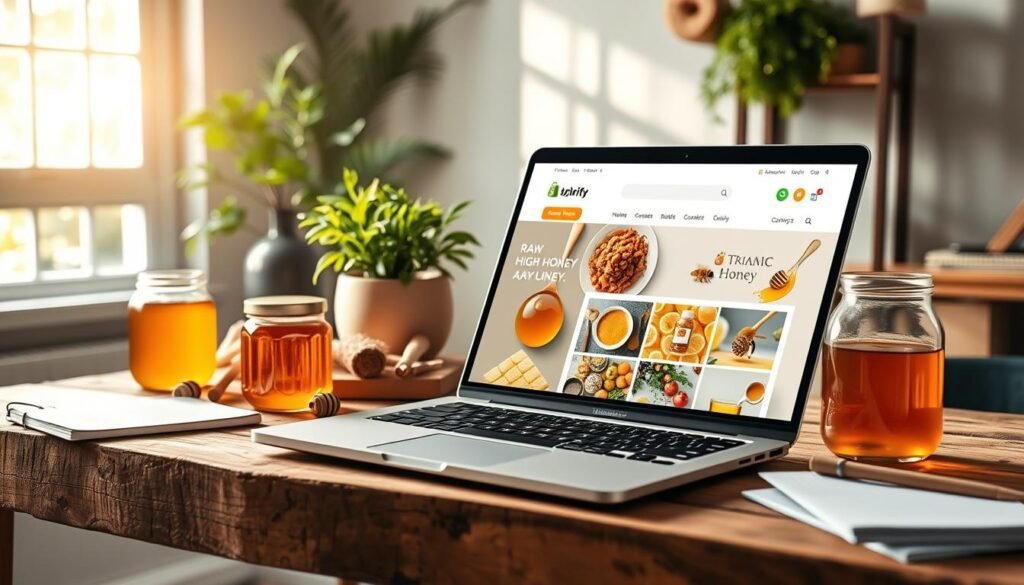
Your e‑commerce foundation should make discovery, trust, and checkout effortless. Choose a platform that matches your skill set and growth plan so the store remains manageable as orders rise.
Pick the right platform
Platforms like Shopify, WooCommerce, Etsy, or BigCommerce each solve different needs.
Shopify is a low‑maintenance choice. WooCommerce fits brands on WordPress. Etsy helps with marketplace discovery. Plan scalability and integrations before you build.
Frictionless UX and secure checkout
Design clear categories — varietal, size, gift sets — and a robust search to speed product discovery.
Prioritize mobile-first pages, fast load times, and one‑hand checkout. Offer multiple secure payment options and guest checkout to boost conversions.
Content, trust, and measurement
Pair high-quality images with origin notes, pairing ideas, and storage tips to improve persuasion and time on site.
- Use consistent brand visuals across the store and social media.
- Show ratings, reviews, UGC, and trust badges to reduce purchase anxiety.
- Instrument analytics to track audience paths and fix drop-off points.
Simple navigation, rich product content, and secure payments together drive higher conversion and repeat customers.
Optimize Product Listings that Highlight Quality and Purity
Make each listing act like a tasting note—clear, sensory, and practical for shoppers. Start with concise titles that include varietal, region, and jar size. Use “raw” only when your handling meets that term’s definition.
Descriptive titles, sensory-rich copy, and use cases
Write short, vivid descriptions that note aroma, texture, and flavor. Follow with practical use cases: tea, glazing, or cheese boards. This helps a customer picture the product in real life.
Trust signals: reviews, ratings, and transparent sourcing
Display verified reviews and clear sourcing details. Add beekeeper name, apiary location, and harvest notes to justify premium pricing. Show compliant labels in gallery images so buyers can check net weight and contact info.
- High-res media: include macro shots for color and viscosity and lifestyle shots for context.
- Comparison chart: show varietal differences, jar sizes, and suggested uses to speed decisions.
- FAQs: add storage tips and a simple explanation of crystallization to reduce returns and support queries.
| Listing Element | What to Include | Why it Helps |
|---|---|---|
| Title | Varietal • Region • Size • “Raw” if accurate | Improves search clarity and buyer expectations |
| Gallery | Label close-up, macro texture, lifestyle image | Builds trust and shows true color/consistency |
| Copy | Sensory notes, uses, harvest season | Drives conversion with relatable content |
| Social proof | Verified reviews, Q&A, ratings | Reduces hesitation and lifts sales |
“Clear titles and honest sourcing turn browsers into repeat buyers.”
Test image order, bullet placement, and headline phrasing across platforms and track conversions. For labeling and production specifics, consult this guide on honey production and labeling.
Effective SEO Strategies to Drive Organic Traffic
Search visibility grows fastest when you match queries for varietals and local pickup options.
Keyword research should capture varietals, “raw” when accurate, and local intent (city/region). Use phrase-match and question queries so pages answer buyer intent for recipes, gifts, and markets.
Technical foundations
Speed and mobile matter: compress images, use caching, and test Core Web Vitals. Add product, FAQ, and review schema to improve rich snippets and click-through rates.
Content engine
Publish recipes, pairing ideas, and practical guides that avoid health claims. Include beekeeping pieces focused on sustainability and seasonal notes to attract niche searchers.
Linking, local pages, and measurement
Earn backlinks with guest posts on food and gardening sites. Structure internal links so cornerstone guides and collections gain authority.
| Focus | Action | Benefit |
|---|---|---|
| Keyword research | Varietals, local intent, long-tail questions | Better match to searcher intent |
| Technical SEO | Speed, mobile, schema, clean URLs | Higher rankings and richer listings |
| Content | Recipes, buyer guides, sustainable beekeeping | More organic traffic and trust |
“Optimize for people first — search engines will follow.”
Social Media and Influencer Marketing for Honey Brands
Start with platforms that fit your strengths and where your audience already spends time. Choose Instagram for visual reels, Facebook for community groups, and YouTube for longer storytelling. This mix supports discovery and longer engagement.
Content formats that work
Plan concise pillars: hive-to-jar vignettes, recipe reels, seasonal harvest updates, and behind-the-scenes clips. Short video builds trust; long-form clips deepen context.
Influencer partnerships and measurement
Select creators by values alignment, demo fit, and real engagement. Give clear briefs with dos/don’ts (avoid health claims), story angles, and trackable codes or links to measure ROI.
- Blend organic posts with modest advertising to amplify top content.
- Repurpose creator assets into product pages and emails with usage rights.
- Listen to comments and DMs for product feedback and ideas.
| Goal | Action | Metric |
|---|---|---|
| Awareness | Short reels on Instagram | Impressions & followers |
| Consideration | YouTube harvest stories | Watch time & site visits |
| Conversion | Influencer codes | Code redemptions & UTM sales |
Consistency and authenticity win: steady posting and honest storytelling build a lasting audience.
For more planning resources, see this guide to beekeeping resources and books to inform seasonal content and creator briefs.
Product Photography that Makes Your Honey Shine
Great product photos start with soft, diffused light that shows color and texture without glare. That simple step ensures jars read true from pale yellow to deep amber and helps buyers trust what they see.
Lighting and color accuracy
Use soft boxes or window light with a diffuser. This reduces reflections and reveals viscosity and clarity.
Calibrate white balance and shoot raw files so post-processing keeps hues accurate. Accurate color is a direct signal of quality to your audience.
Styling, angles, and storytelling
Pick minimal props—wood spoons, bread, or a cheese board—to suggest use cases without cluttering the frame.
Capture multiple angles: macro texture, label legibility, pour shots, and a lifestyle sequence that shows a breakfast tray or tea moment.
- Keep jars clean, labels straight, and surfaces dust-free.
- Produce short motion clips (drips, dipper twirls) for social media and product pages.
- Show beekeeping cues—frames, wildflowers, or a hive tool—sparingly to connect origin to product.
“Consistent visuals reduce doubt and make it easier for shoppers to choose your jars.”
| Shot type | Purpose | Export guideline |
|---|---|---|
| Macro texture | Conveys viscosity and color | Web 1200px, keep original for print |
| Label close-up | Shows compliance and brand details | High-res JPG + 2x PNG for marketplaces |
| Pour/pour motion | Demonstrates pourability and shine | Short MP4, 720–1080p optimized for web |
| Lifestyle sequence | Helps the audience imagine use | Compressed JPEGs for fast load, keep masters |
Build a visual system with consistent backgrounds and tones so your catalog reads as a cohesive set of products. Save templates and shot lists to speed seasonal shoots and limited releases.
For more technical setups and shot styles, see this guide on types of product photography.
Email Marketing, Loyalty, and Repeat Sales
A focused email plan can guide customers from their first jar to regular reorder cycles.
Segmentation, personalized flows, and seasonal promotions
Segment customers by purchase history and preferences: first-time, repeat, and seasonal buyers. Use short welcome sequences and post-purchase flows that include replenishment reminders.
Personalize subject lines and offers for higher opens and clicks. Test send times and creative to refine open rate, CTR, and attributed sales.
Loyalty programs and post-purchase education to boost LTV
Offer points, tiers, and early access to limited batches to reward engagement and lift lifetime value. Share useful content—storage guidance, crystallization tips, and recipes—to encourage reorder behavior.
- Automate replenish reminders based on average consumption windows.
- Use limited-time seasonal promotions for harvest drops and bundles.
- Feature product updates and small-batch alerts as insider perks.
“Rewarding repeat buyers with useful tips and exclusive access builds trust beyond price.”
| Goal | Tactic | Metric |
|---|---|---|
| Welcome | Personalized 3-email flow | Open rate, first reorder |
| Retention | Loyalty points & educational content | Repeat purchase rate |
| Win-back | Targeted discounts + small-batch alert | CTR & reactivation rate |
Integrate reviews and UGC into emails to build social proof. For tactical setup and growth tips, see this guide on how to sell honey online.
Sales Channels: DTC, Farmers Markets, and Retail Partnerships
Match each channel to clear processes: compliant labels, transit-ready packaging, and steady production plans. A defined flow reduces damage, returns, and permit issues.
Setting up a compliant online store and shipping standards
Confirm food requirements before interstate expansion — FDA facility registration may apply. Build product pages with accurate labels, scannable barcodes, and clear packaging notes for carriers.
Farmers markets and local retailers: permits, wholesale pricing, and demos
Prepare a farmers markets toolkit: permits, insurance certificates, clear signage, and sampling procedures where allowed. Use simple card readers and receipts to speed checkout.
- Set wholesale pricing and case packs that protect margins and match retailer needs.
- Offer demos or tastings to drive trial and gather customer feedback.
- Use concise pitch decks and platforms to approach local shops; include origin story, sell sheets, and certifications.
| Channel | Must-haves | Key metric |
|---|---|---|
| DTC store | Labels, barcodes, shipping-tested packaging | Order accuracy & on-time delivery |
| Farmers markets | Permits, insurance, sampling plan | Units sold per event |
| Retail partners | Wholesale pricing, case packs, stock plan | Sell-through rate |
Keep production and inventory in sync across channels to avoid stockouts and to protect customer trust.
marketing & selling raw honey online: Operations, Fulfillment, and Scaling
Scaling requires repeatable systems that protect product quality and margin. Build simple rules for inventory, fulfillment, and capacity so production stays aligned with demand.
Inventory, storage, and seasonality planning
Implement an inventory system that tracks batch codes, velocity, and expiry windows in real time.
Store jars in cool, dark, food-grade containers to preserve quality and flavor. Follow basic beekeeping handling practices to reduce contamination and variability.
Plan buffer stock for harvest cycles and holiday spikes, and coordinate with other honey producers to smooth supply gaps.
Fulfillment, packaging for transit, and support
Choose between in-house packing or a 3PL based on order volume and SLAs. Engineer packaging with leak-proof seals and cushioning to cut damages.
Train customer support on shipping timelines, crystallization info, and replacement policies to limit refunds and build trust.
Data-driven optimization and expansion
Use dashboards to monitor SKU sales by channel, return reasons, and on-time delivery. Let data guide production scheduling and hive capacity upgrades.
Prepare interstate moves with FDA facility registration and compliance reviews. For practical business tips on growth, see a short resource on scaling your honey business.
“Operational clarity keeps bees, product, and customers aligned as you grow.”
Conclusion
Small, consistent improvements across product, packaging, and service compound into lasting business gains.
Validate demand locally, keep labels and permits current, and build a clear brand that tells where each jar comes from. Focus on product quality—packaging, labeling, and handling—to earn repeat customers and stronger sales.
Use SEO, social storytelling, and optimized listings to raise discoverability. Pair disciplined pricing and channel choices with solid operations: inventory, fulfillment, and basic insurance.
Honor ethical beekeeping and hive stewardship as core practice. Measure results, iterate your strategies, and reward loyalty with education and simple perks.
Action step: pick one area—one product, one channel, or one process—to improve this week and track the impact.
FAQ
What are the top tips for marketing and selling raw honey online effectively?
Focus on clear product stories, professional imagery, and strong SEO. Use platforms like Shopify or Etsy, optimize listings with sensory-rich copy, highlight origin and purity, and build email flows for repeat buyers. Offer bundles, subscriptions, and loyalty incentives to increase lifetime value.
How do I understand today’s honey market in the United States?
Track demand for natural sweeteners and wellness products, follow seasonal trends, and monitor competitors and regional price points. Attend farmers markets and trade shows, read USDA reports, and use social listening to spot opportunities for niche varietals or single-origin jars.
Who should I target — what are the ideal buyer personas?
Target health-conscious shoppers, foodies seeking unique flavors, families after clean-label pantry staples, and local-food supporters. Create personas based on age, purchasing channels, and use cases like cooking, skincare, or gifting to guide messaging and product development.
What research methods help define my audience?
Run short surveys, analyze analytics from your website and social pages, collect feedback at farmers markets, and use social listening tools to track conversations about bees, beekeeping, and natural sweeteners. Combine quantitative and qualitative data for accurate personas.
What legal and labeling requirements should I check first?
Start with your state Department of Agriculture and local extension office. Confirm cottage food rules versus commercial licensing, sales tax obligations, and necessary permits. Labeling must include product name, net weight in ounces and grams, ingredient list, and contact information.
What label claims are risky or illegal?
Avoid unapproved health claims such as treating or curing illnesses. Be precise with terms like “raw,” “unfiltered,” or “locally harvested” and have documentation to support origin or processing claims. If in doubt, consult your state regulator or a food attorney.
How should I register and protect my honey business?
Choose an appropriate business structure (LLC or sole proprietorship), obtain an EIN, register for sales tax where required, and secure local licenses. Purchase product liability insurance; many markets and retail partners require it before accepting products.
How do I craft a compelling brand story and positioning?
Emphasize authenticity — hive-to-jar practices, sustainable beekeeping, and regional terroir. Develop messaging pillars around quality, traceability, and stewardship to build trust and long-term loyalty with customers.
What packaging and label elements increase conversions?
Use food-safe jars, tamper-evident seals, and clear, legible labels. Include origin, floral source, certifications (e.g., organic if applicable), and storage instructions. Simple, consistent design and high-contrast fonts improve shelf and thumbnail appeal.
How should I price for profit while communicating quality?
Calculate cost-plus pricing then test value-based positioning against competitors. Use psychological pricing (e.g., .99), tiered sizes, and curated bundles to boost average order value. Track margins and adjust for wholesale or retail partnerships.
Which e-commerce platforms are best for small honey brands?
Shopify is strong for direct-to-consumer stores with apps for subscriptions and fulfillment. WooCommerce works if you prefer WordPress control. Etsy helps reach craft-focused shoppers and local producers. Choose a platform that supports mobile checkout and secure payments.
What makes a high-converting product listing for honey?
Use descriptive titles, sensory-rich descriptions (flavor, aroma, texture), precise weights, and clear shipping info. Add high-quality photos, customer reviews, and sourcing details to increase trust and reduce purchase hesitation.
What SEO strategies drive organic traffic for a honey brand?
Do keyword research with local intent terms, optimize page speed and mobile experience, implement schema for product and reviews, and publish content such as recipes, beekeeping guides, and buyer’s guides to capture long-tail queries.
How can social media and influencers help grow my brand?
Share behind-the-scenes content, recipe reels, and user-generated posts on Instagram and YouTube. Partner with food and wellness creators for honest reviews and trackable promo codes. Use paid campaigns to amplify top-performing organic posts.
What are photography tips that make honey stand out?
Use natural light, accurate color balance, and macro shots to show texture. Include lifestyle images showing usage ideas, and use consistent props to reinforce brand identity. Optimize images for web to preserve site speed.
How do I use email marketing and loyalty to boost repeat sales?
Segment customers by purchase behavior, deploy welcome and post-purchase education flows, and send seasonal promotions. Implement a points or rewards program to encourage repeat buying and referrals, and use automated replenishment reminders.
Which sales channels should I prioritize besides my website?
Sell direct-to-consumer first, expand to farmers markets for community connection, and approach local retailers or co-ops with wholesale pricing sheets. Ensure compliant packaging and carry proof of insurance and food safety practices for retail accounts.
What operational steps support scaling my honey business?
Implement inventory tracking, temperature-stable storage, and seasonality forecasting. Choose fulfillment partners that handle fragile glass jars and provide tracking. Use data to optimize SKUs, pricing, and channel performance for interstate growth.